screenshot of my post
Big new blogpost!
My guide to data visualization, which includes a very long table of contents, tons of charts, and more.
--> Why data visualization matters and how to make charts more effective, clear, transparent, and sometimes, beautiful.
www.scientificdiscovery.dev/p/salonis-gu...
09.12.2025 20:28 —
👍 799
🔁 316
💬 22
📌 50

Is it better to have standardised exams or teacher assessments?
Myself and my colleague @opmc1.bsky.social have read the literature so you don't have to. Our @iza.org world of labour summarises below #econsky
23.06.2025 11:57 —
👍 15
🔁 8
💬 1
📌 1

Artikkelin abstrakti: Despite increasing concerns over socioeconomic barriers in access to doctoral education, relatively little is known about the degree to which PhDs are selected in terms of their social background. In this paper, we use combined data on over 200 000 individuals from the European Social Survey, the European Values Study, and the World Values Survey to estimate the strength of the relationship between parental education and child PhD attainment within 26 European countries. We find that intergenerational mobility into PhD degrees is somewhat higher in the Nordic countries, and somewhat lower in the Eastern European countries in our sample, but also that mobility is generally high, that PhDs are socioeconomically diverse, and that mobility differences between the countries in our sample are generally small.
Miten valikoituneita tohtorikoulutetut ovat sosioekonomisen taustan perusteella Euroopassa?
➡️ Sosiaalinen liikkuvuus tohtoritasolle korkeinta Pohjoismaissa — mutta...
➡️ Liikkuvuus yleisestikin korkeaa
➡️ Erot maiden välillä pieniä
Uusi tutkimuksemme (open access): doi.org/10.1162/euso...
16.06.2025 07:02 —
👍 2
🔁 0
💬 0
📌 0
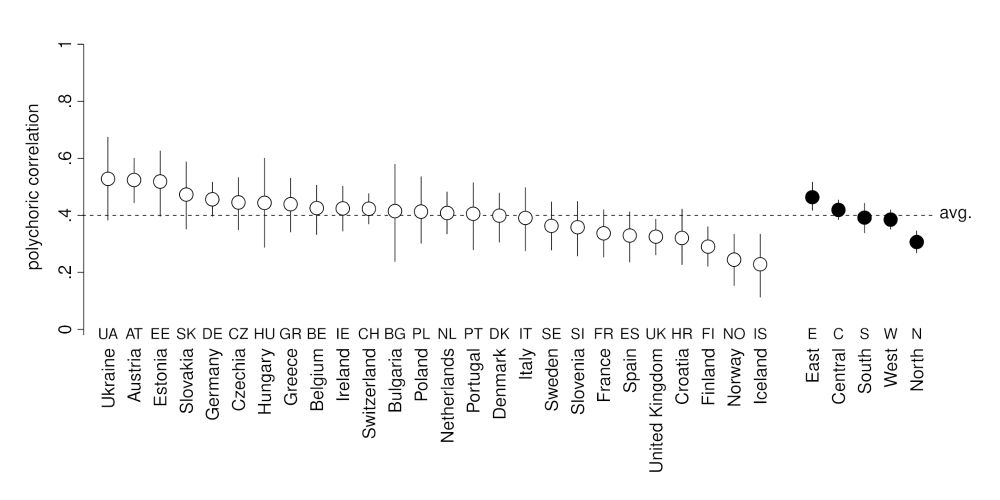
Figure showing intergenerational mobility estimates into doctoral education for 26 European countries and five regional country groups.
Nordics are slightly more mobile — no surprise — but across a highly diverse set of countries and education systems, the degree of intergenerational mobility into the PhD is both relatively high and remarkably similar.
13.06.2025 10:24 —
👍 5
🔁 2
💬 1
📌 0
We use data on over 200,000 individuals across 26 European countries to study intergenerational mobility into the PhD degree.
Here's what we find 👇
13.06.2025 10:24 —
👍 1
🔁 0
💬 1
📌 0
Screenshot of the title page of the paper titled "Intergenerational mobility into doctoral education across Europe". Abstract: Despite increasing concerns over socioeconomic barriers in access to doctoral education, relatively little is known about the degree to which PhDs are selected in terms of their social background. In this paper, we use combined data on over 200~000 individuals from the European Social Survey, the European Values Study, and the World Values Survey to estimate the strength of the relationship between parental education and child PhD attainment within 26 European countries. We find that intergenerational mobility into PhD degrees is somewhat higher in the Nordic countries, and somewhat lower in the Eastern European countries in our sample, but also that mobility is generally high, that PhDs are socioeconomically diverse, and that mobility differences between the countries in our sample are generally small.
Are European universities exclusionary ivory towers, limiting access to doctoral education to children of the elites?
Short answer: No.
New paper with @economistatwork.com et al forthcoming in @europeansocieties.bsky.social (🧵 1/4)
13.06.2025 10:24 —
👍 8
🔁 3
💬 1
📌 0
Thanks Per!
12.06.2025 15:37 —
👍 1
🔁 0
💬 0
📌 0
Shout out to the audience members who nod their heads when you’re discussing a paper
21.05.2025 15:52 —
👍 90
🔁 2
💬 6
📌 0
Niinpä. Jotain yritystä tuossa Leuven & Løkken (2020) paperissa muistaakseni olikin, vaan ei tainnut vastausta löytyä.
17.04.2025 14:33 —
👍 0
🔁 0
💬 0
📌 0
Joo, just tuota uudempaa tarkoitin!
17.04.2025 14:22 —
👍 1
🔁 0
💬 1
📌 0
Eikö toisaalta ollut niin, että Norjassa ei löydetty tällaisia pitkän aikavälin vaikutuksia?
17.04.2025 14:05 —
👍 0
🔁 0
💬 1
📌 0
Mahtavaa — tässähän oli monta uutta paperia lukulistalle! Kiitos paljon!!
21.11.2024 11:56 —
👍 1
🔁 0
💬 0
📌 0
Onkos tästä aiheesta julkaistu jotain sitten Karhusen & Uusitalon YP-artikkelin?
21.11.2024 10:42 —
👍 1
🔁 0
💬 1
📌 0
Kiinnostavaa, kiitos! Onko meillä koskaan vakavasti harkittu valtakunnallisia päättökokeita perusasteelle? Ja jos on, niin osaatko sanoa joitain keskeisiä asioita, joihin ehdotus on kaatunut?
21.11.2024 10:30 —
👍 1
🔁 0
💬 1
📌 0
Meidän tutkimuksemme on ehkä hyvä muistutus siitä, että tutkijakoulutetut kontribuoivat yhteiskuntaan myös monin muin tavoin, kuin teknologisten innovaatioiden kautta. (10/10)
17.06.2024 09:46 —
👍 0
🔁 0
💬 1
📌 0
Nämä alat jäävät helposti varjoon ehkä siksi, että tieteellisen tietotaidon siirtymistä tarkastellaan usein patenttien, spin-off-yritysten ja muiden helpommin saatavilla olevien indikaattorien kautta. (9/10)
17.06.2024 09:46 —
👍 0
🔁 0
💬 1
📌 0
Tutkijakoulutettujen liikkuvuus on lisäksi erityisen voimakasta tieteenaloilla, jotka ovat jääneet aiemmassa tutkimuskirjallisuudessa usein varjoon. Näitä ovat esimerkiksi kasvatus- ja yhteiskuntatieteet sekä humanistiset tieteet. (8/10)
17.06.2024 09:45 —
👍 0
🔁 0
💬 1
📌 0
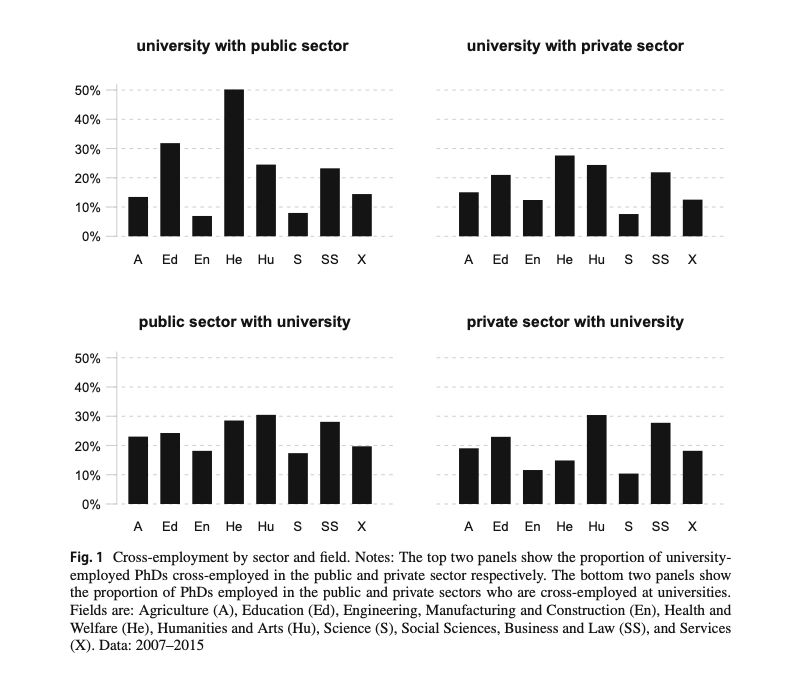
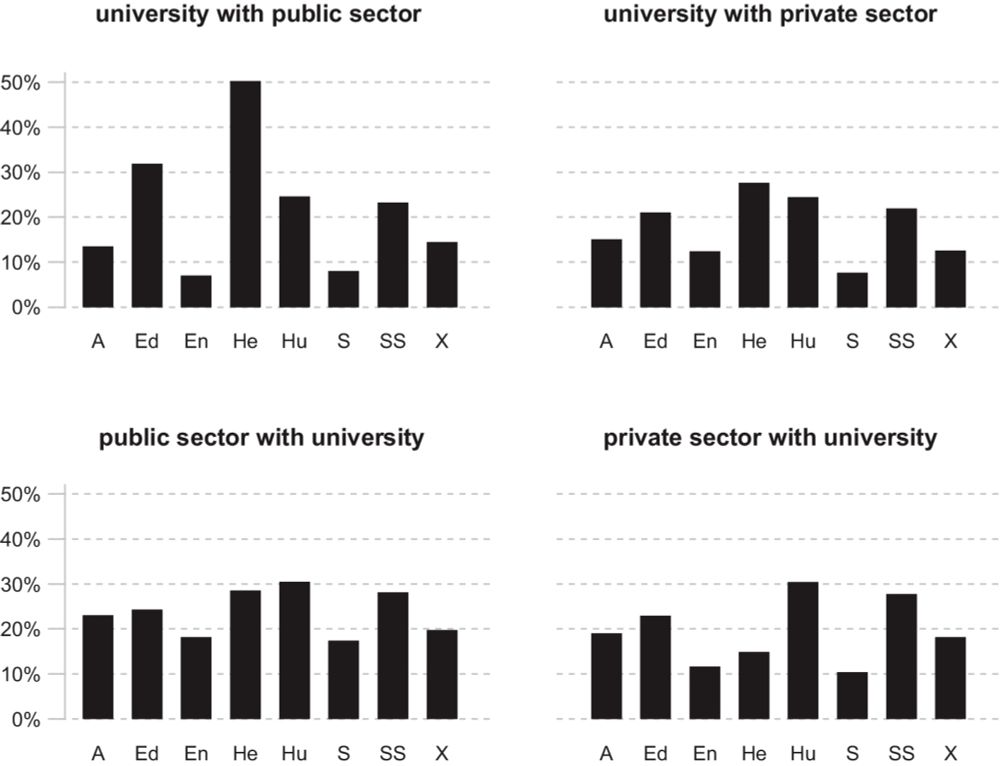
Figure shows cross-employment by sector and field. The top two panels show the proportion of university-employed PhDs cross-employed in the public and private sector respectively. The bottom two panels show the proportion of PhDs employed in the public and private sectors who are cross-employed at universities.
Keskimäärin joka kolmas yliopistotutkija tekee sivutoimisesti töitä yks. ja julk. sektorilla. Tämä on mielestämme aika merkittävä luku. Ilmiö esiintyy myös toiseen suuntaan: yks. ja julk. sektorin tutkijakoulutetut ovat vastaavissa määrin verkostoituneet yliopistoihin. (7/10)
17.06.2024 09:45 —
👍 0
🔁 0
💬 1
📌 0
On kuitenkin ollut empiirisesti hankalaa osoittaa missä määrin tällaista tapahtuu. Kiitos ainutlaatuisten suomalaisten rekisteriaineistojen, pystyimme tarkastelemaan tutkijakoulutettujen liikkuvuutta eri sektorien välillä päivätason tarkkuudella. Mitä löysimme? (6/10)
17.06.2024 09:44 —
👍 0
🔁 0
💬 1
📌 0
Teoriassa yksi keino olisi työskennellä 𝘀𝗮𝗺𝗮𝗻𝗮𝗶𝗸𝗮𝗶𝘀𝗲𝘀𝘁𝗶 eri sektoreilla: jos yliopistotutkija työskentelee sivutoimisesti esim. yksityisellä sektorilla, tietotaitoa siirtyy ilman, että portti akateemisella uralla etenemiselle sulkeutuu. (5/10)
17.06.2024 09:43 —
👍 0
🔁 0
💬 1
📌 0
Yliopistojen ja ympäröivän yhteiskunnan välillä on siis eräänlainen raja-aita, jonka takia työvoiman liikkuvuus näiden eri sektorien välillä on suhteellisen harvinaista. Miten raja-aidan voisi kiertää? (4/10)
17.06.2024 09:43 —
👍 0
🔁 0
💬 1
📌 0
Yliopistojen meritoitumisjärjestelmä ei varsinaisesti kannusta sektorien väliseen liikkuvuuteen: jos siirryt yliopistosta pidemmäksi aikaa esim. yksityiselle sektorille, palaaminen ja akateemisella uralla eteneminen voi olla hankalaa. Samaa pätee myös toiseen suuntaan. (3/10)
17.06.2024 09:43 —
👍 1
🔁 0
💬 1
📌 0
Kun työntekijä vaihtaa työpaikkaa, hänen mukanaan siirtyy paljon ns. "hiljaista" tietotaitoa. Työntekijöiden liikkuvuutta onkin pidetty yhtenä keskeisistä keinoista siirtää tieteellistä tietotaitoa yliopistojen ulkopuolelle. (2/10)
17.06.2024 09:42 —
👍 0
🔁 0
💬 1
📌 0
![Abstract: Tacit knowledge flows can be facilitated by employment transitions, such as for example the transitions of PhDs from university employment to industry. There are however barriers to transitions into and out of university employment, and as a consequence, such transitions are relatively rare. PhDs can circumvent the barriers to permanent transitions by simultaneous secondary employment relationships. Though we know that such cross-employment exists, we do not know how common it de facto is. In this paper, we use a nine-year panel of daily-level employment microdata on the full population of Finnish PhDs to show that about 30% of university-employed PhDs are cross-employed outside of universities. This is a substantial share, and its magnitude alone suggests a central but underappreciated role for cross-employment in contemporary knowledge production and dissemination. We furthermore find that [...]](https://cdn.bsky.app/img/feed_thumbnail/plain/did:plc:qxrv6nuq7ensn4rivkww42k2/bafkreiau6ki2ynkr5oty7ahhzvrjvboxgozzcezm4ne7un7rojpgcsh7u4@jpeg)
Abstract: Tacit knowledge flows can be facilitated by employment transitions, such as for example the transitions of PhDs from university employment to industry. There are however barriers to transitions into and out of university employment, and as a consequence, such transitions are relatively rare. PhDs can circumvent the barriers to permanent transitions by simultaneous secondary employment relationships. Though we know that such cross-employment exists, we do not know how common it de facto is. In this paper, we use a nine-year panel of daily-level employment microdata on the full population of Finnish PhDs to show that about 30% of university-employed PhDs are cross-employed outside of universities. This is a substantial share, and its magnitude alone suggests a central but underappreciated role for cross-employment in contemporary knowledge production and dissemination. We furthermore find that [...]
Yliopistojen ja ympäröivän yhteiskunnan välinen vuorovaikutus on aiemmin osoitettua voimakkaampaa — erityisesti tieteenaloilla, joilla sitä stereotyyppisesti voisi ehkäpä vähiten odottaa. Siinä pähkinänkuoressa uuden tutkimuksemme tulos. Lyhyt 🧵 (1/10)
17.06.2024 09:42 —
👍 3
🔁 0
💬 1
📌 1

Daniel Craig in a suit (left), and Daniel Craig looking a bit worn out (right)
Finland's PISA performance in 2006 vs. 2022
07.12.2023 11:09 —
👍 1
🔁 0
💬 0
📌 0
"The Economics Profession's Socioeconomic Diversity Problem" w/ Robert Schultz is now out in the JEP Here's the paper:
pubs.aeaweb.org/doi/pdfplus/...
and the Twitter thread from Mar 2022 (aka before I was on Bsky - sorry!)
twitter.com/annastansbur...
03.11.2023 16:56 —
👍 85
🔁 41
💬 3
📌 9