
Very pleased to see Matt's first dissertation chapter published.
26.06.2025 15:40 — 👍 4 🔁 0 💬 0 📌 0Very pleased to see Matt's first dissertation chapter published.
26.06.2025 15:40 — 👍 4 🔁 0 💬 0 📌 0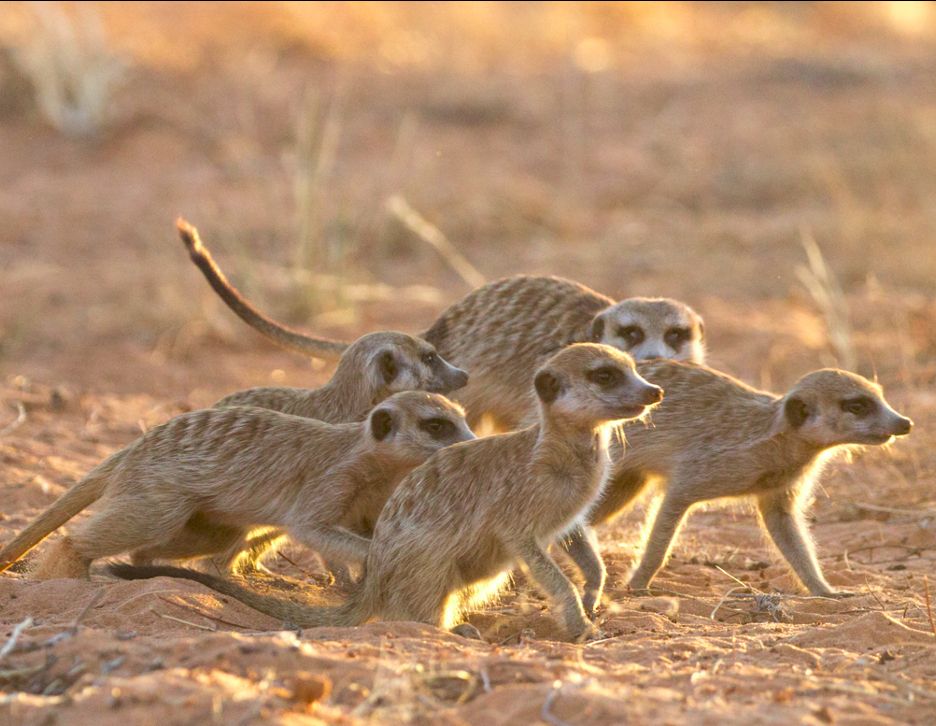
🚨 Out this week in @pnas.org 🚨
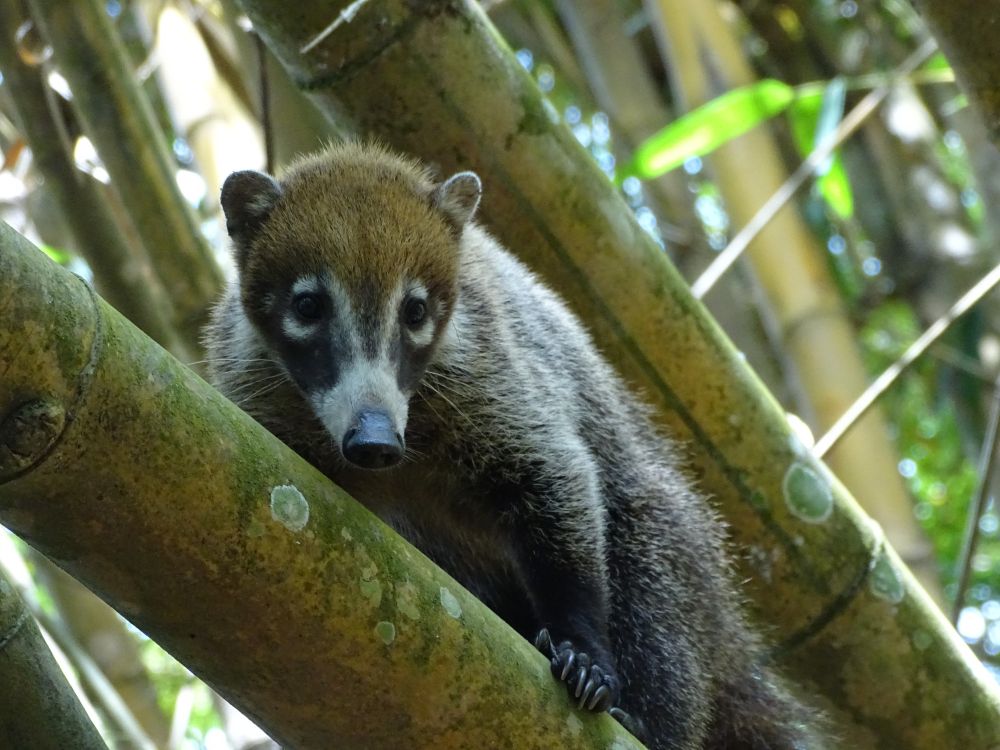
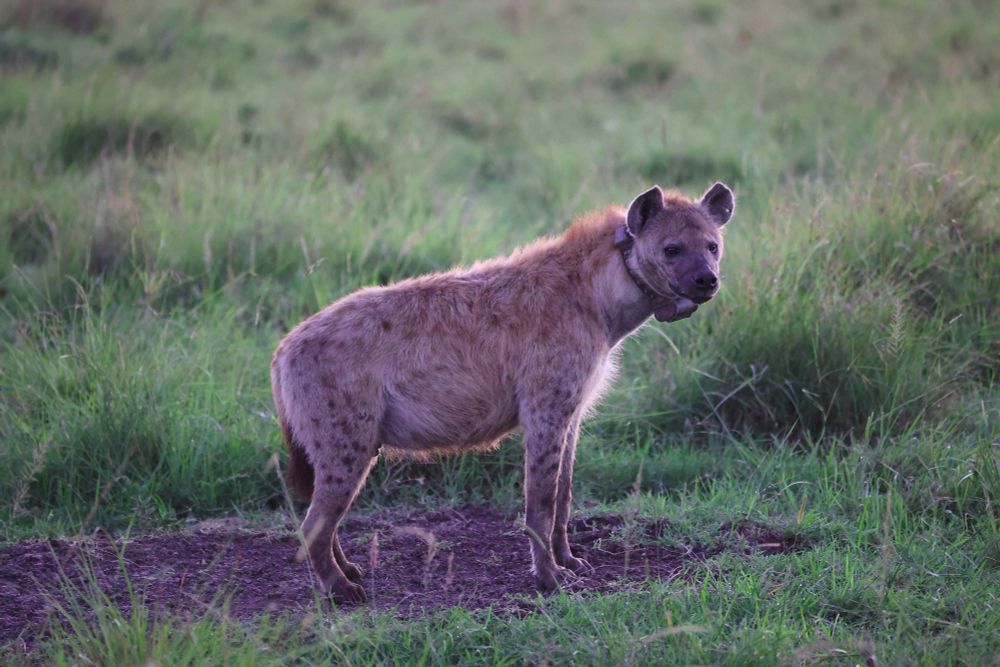
The flagship paper from my PhD @mpi-animalbehav.bsky.social @livingingroups.bsky.social - We show surprising statistical similarities in animal behaviour across states, individuals, and even species.
www.pnas.org/doi/10.1073/...
(🧵 1/10)
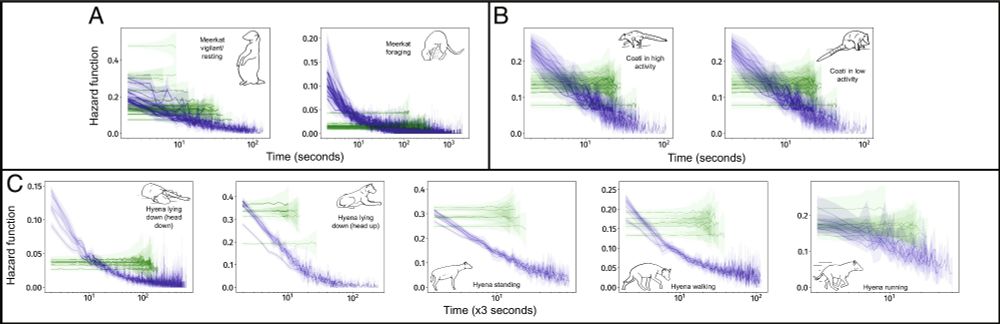
Behavioral sequences across multiple animal species in the wild share common structural features | PNAS www.pnas.org/doi/10.1073/...
15.05.2025 17:14 — 👍 7 🔁 3 💬 0 📌 0
MORNING MAGIC
Silhouetted kangaroos splash through coastal waters at daybreak. Kangaroos are excellent swimmers, using their tails as rudders.
📹 aerin kr

New research! Authors examine camera trapping trends in Australia, finding strong taxonomic, geographic, and analytical biases, but also new ways to meet big conservation objectives. Great stuff! Glad to play a very small part. Congrats Tom and WildObs! ⚡️
www.researchgate.net/publication/...
For a headliner, <1 hour is too short. Exceptions: 1) The Ramones (or any other band with short songs), who normally played 25 songs in <1hr, 2) a new band with <1hr of material, and 3) music festival with tight set-times.
11.12.2024 18:16 — 👍 1 🔁 0 💬 0 📌 0Very cool. Finally someone is working on urracas! I was amazed by their intelligence when I worked in Iguazu 20 years ago, and have always said someone has got to start working with them.
08.12.2024 00:17 — 👍 1 🔁 0 💬 0 📌 0Looks a lot like one of the bowers on JCU's campus. The second thing I noticed were the garden veggies in the photo.
06.12.2024 18:57 — 👍 1 🔁 0 💬 0 📌 0
Thanks for posting the starter pack. Can I be added?
Thanks

And a lay article summarizing our research. theconversation.com/why-did-prim...
12.11.2024 18:36 — 👍 5 🔁 0 💬 0 📌 0
Twitter migration post #2: Why do primates have bigger brains? Study shows that it’s not for efficient foraging. In the Panamanian rainforest, Ben Hirsch et al. compared how capuchins, spider monkeys, coatis, and kinkajous solve the same foraging puzzle. kops.uni-konstanz.de/server/api/c...
12.11.2024 18:34 — 👍 5 🔁 0 💬 1 📌 0
Tardy shift from Twitter post #1: Excited to share that our paper on white-nosed coati subgrouping dynamics is out in Animal Behaviour! Using high-resolution GPS collars to track entire groups, we found that coatis consistently split with their close relatives. www.sciencedirect.com/science/arti...
12.11.2024 18:22 — 👍 20 🔁 3 💬 0 📌 0