Thanks to @bnmorillon.bsky.social , @valentinwyart.bsky.social , @univ-amu.fr , @cognitionens.bsky.social and thanks @frm-officiel.bsky.social for the support.
27.02.2026 13:15 —
👍 1
🔁 0
💬 0
📌 0

Human inference emerges from multiple interacting processes. To understand learning, and its breakdown in specific cognitive deficits, we must study these systems together as an integrated architecture for building mental models of uncertain worlds.
27.02.2026 13:15 —
👍 1
🔁 0
💬 1
📌 0

To gain causal insights, we trained small RNNs with human-like learning limits and found that humans-like limitation in integration causally impaired rule discovery.
27.02.2026 13:15 —
👍 1
🔁 0
💬 1
📌 0
Integrating evidence and discovering the rule are deeply interconnected processes, but they are not similar! Adding temporal stochasticity selectively disrupted the rule discovery without affecting evidence integration.
27.02.2026 13:15 —
👍 2
🔁 0
💬 1
📌 0

The link went both ways: discovering the rule changed how people integrated evidence. They adapted their integration timescale accordingly, but also dynamically transformed their perception to anticipate for the discovered rule.
27.02.2026 13:15 —
👍 1
🔁 0
💬 1
📌 0

The task is hard! Only ~50% discovered the hidden rule. From rule-free data alone (static blocks), we could predict who would later succeed in finding the rule (switch blocks), revealing strong constraints from sensory integration. Bayesian modeling showed that the timescale of integration was key!
27.02.2026 13:15 —
👍 3
🔁 0
💬 1
📌 0

We tested ~600 participants in prediction games in which they had to predict future elements of the sequence. In static blocks, sensory integration was all you needed. In switch blocks, a hidden rule appeared: success required both integrating evidence and discovering the covert rule.
27.02.2026 13:15 —
👍 1
🔁 0
💬 1
📌 0
Learning abilities like sensory evidence integration, timing prediction, and abstract rule learning are often studied separately. We show here that they are tightly intertwined to form, together, a flexible learning system.
27.02.2026 13:15 —
👍 2
🔁 0
💬 1
📌 0

Excited to share our new paper in @pnas.org with @bnmorillon.bsky.social &
@valentinwyart.bsky.social www.pnas.org/doi/10.1073/...
We study three core inference systems, and how their interaction shapes human learning and decision-making.
27.02.2026 13:15 —
👍 39
🔁 13
💬 1
📌 0
Our #IASL26 conference on statistical learning aims to bring together scientists from different disciplines who study how humans👨👧🧑🦳, as well as other species 🐒🦜 and systems 🤖🔠, learn regularities.
↖️🔍🔎↗️ If your work touches on this theme from any angle, we would love to receive your abstract!
24.02.2026 14:11 —
👍 7
🔁 2
💬 2
📌 2

🔎Updated preprint "Humans use a dual policy to improve inferences during epistemic information seeking" by Yinan Cao, Clémence Alméras, Junseok Lee, Inès Maye, and Valentin Wyart. www.biorxiv.org/content/10.1...
19.02.2026 19:18 —
👍 15
🔁 5
💬 1
📌 0
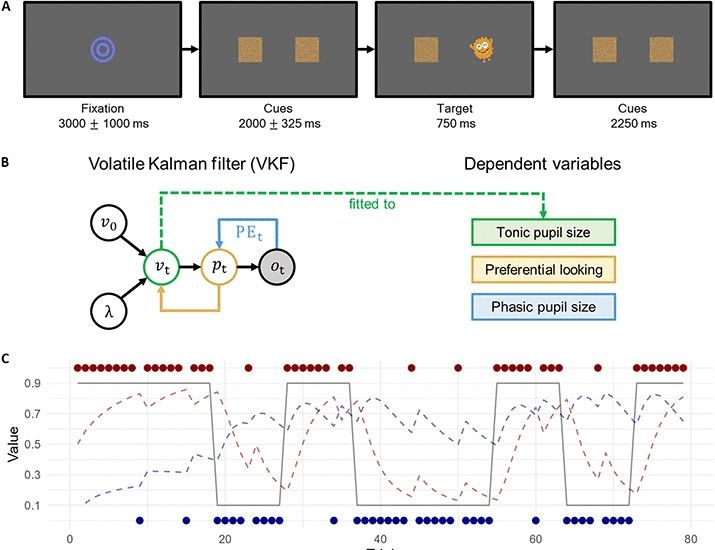
Volatility-driven learning in human infants
Infants estimate environmental volatility to learn optimally, with early individual differences linked to temperament.
Out now in Science Advances! We find that infants estimate environmental volatility to learn optimally, with early individual differences linked to temperament. This has be so much fun to work on and ended up being my favourite personal paper! So excited it's out!
www.science.org/doi/10.1126/...
25.06.2025 18:48 —
👍 47
🔁 16
💬 1
📌 3

Marseille folks: I’m organizing a one-day workshop on Distributed Computations for Flexible Behavior (Apr 16, Timone Campus) with a great line-up of speakers bridging theory, circuits & whole-brain dynamics! 🧠
Free registration (mandatory, incl. lunch): fannycazettes.limesurvey.net/172448?lang=...
17.02.2026 08:47 —
👍 24
🔁 11
💬 0
📌 0
@summerfieldlab.bsky.social and I are very happy to share this paper! Building on work by @scychan.bsky.social, we show that how people learn depends on the distribution of examples they see, and changes in a way that’s very similar to transformer models.
06.01.2026 11:16 —
👍 20
🔁 8
💬 1
📌 0
1/7 Can infants recognise the world around them? 👶🧠 As part of the FOUNDCOG project, we scanned 134 awake infants using fMRI. Published today in Nature Neuroscience, our research reveals 2-month-old infants already possess complex visual representations in VVC that align with DNNs.
02.02.2026 16:00 —
👍 155
🔁 70
💬 4
📌 8
Really cool to see the version of record finally out ! Hats off, Mathias :)
22.01.2026 18:36 —
👍 0
🔁 0
💬 0
📌 0

Seeing the Mind, Educating the Brain
If you are in Paris on October 1-3 : we are organizing a fantastic cognitive neuroscience conference at Collège de France, on topics ranging from language to math, education and consciousness, with many of my favorite scientists !
Full program here:
www.unicog.org/seeing-the-m...
23.07.2025 14:46 —
👍 78
🔁 33
💬 4
📌 2
Redirecting
Some numbers seem to show up everywhere. Think of 10, 12, 24, 36...
Others—like 26 or 34—don’t get the same attention.Why? In our new paper with @standehaene.bsky.social and @mathiassablemeyer.bsky.social, we argue it's because of how the mind builds number concepts.
🧵
doi.org/10.1016/j.co...
15.07.2025 15:57 —
👍 32
🔁 10
💬 2
📌 1
I'm very pleased to share our latest study:
‘Emergence of Language in the Developing Brain’,
by L Evanson, P Bourdillon et al:
- Paper: ai.meta.com/research/pub...
- Blog: ai.meta.com/blog/meta-fa...
- Thread below 👇
15.05.2025 16:00 —
👍 76
🔁 21
💬 4
📌 3
Deep bidirectional interplay between sensory integration and latent rule discovery https://www.biorxiv.org/content/10.1101/2025.04.29.651167v1
03.05.2025 20:15 —
👍 3
🔁 1
💬 0
📌 0
📢 New publication alert! 📢
👂Ever struggled to understand natural speech in a noisy environment? 🤔
Our new research shows that moving rhythmically can actually help you hear better!
royalsocietypublishing.org/eprint/ZWRPM...
with: @strijkers.bsky.social & Noémie teRietmolen
🧵👇
09.04.2025 09:38 —
👍 41
🔁 13
💬 2
📌 0
Hippocampal encoding of memories in human infants
Humans lack memories for specific events from the first few years of life. We investigated the mechanistic basis of this infantile amnesia by scanning the brains of awake infants with functional magne...
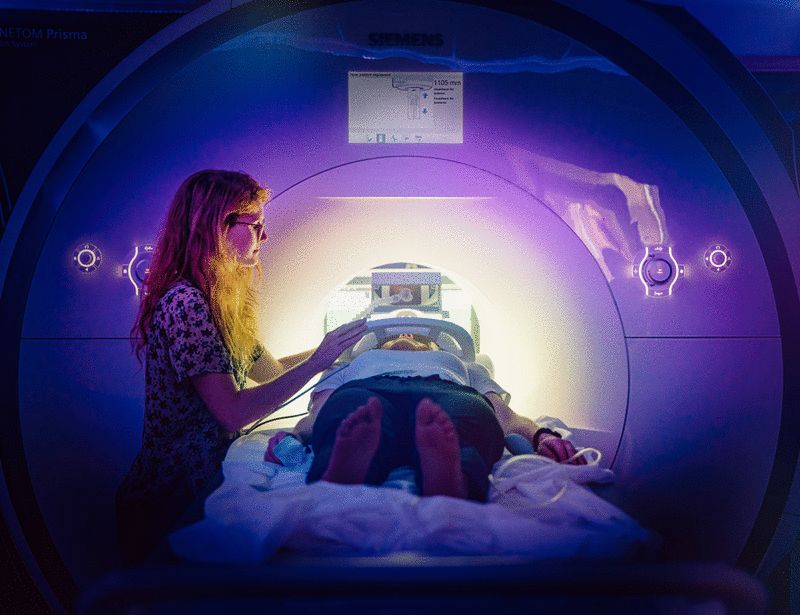
Why do we not remember being a baby? One idea is that the hippocampus, which is essential for episodic memory in adults, is too immature to form individual memories in infancy. We tested this using awake infant fMRI, new in @science.org #ScienceResearch www.science.org/doi/10.1126/...
20.03.2025 18:36 —
👍 482
🔁 165
💬 19
📌 22
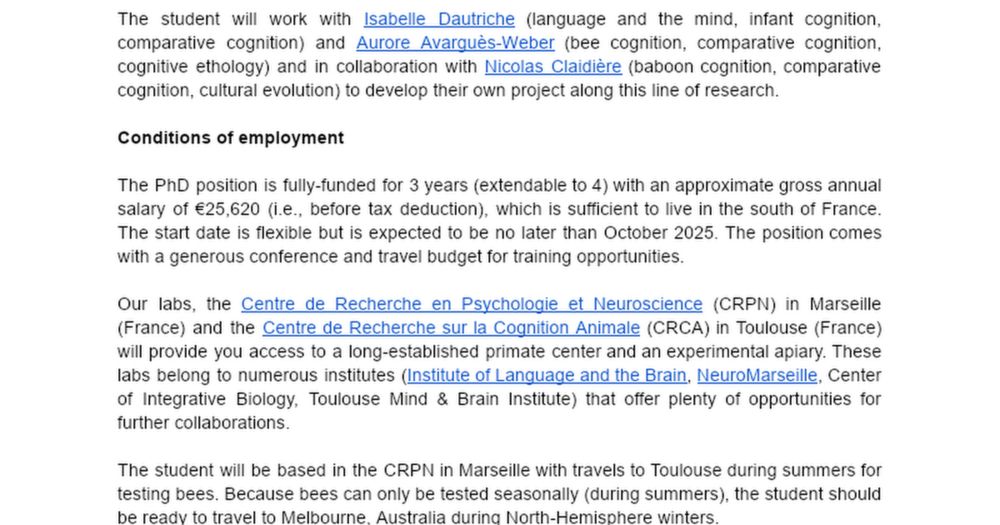
PhD opportunity - ERC ThoughtOrigins
We are seeking a graduate student in comparative cognition to work on a ERC-funded project (to Isabelle Dautriche) to investigate the format of thought in the absence of a language in two populations:...
I am looking for a PhD student to work on my ERC-funded project to investigate the format of thought in the absence of language in baboons and bees.
Details here: tinyurl.com/5ff9hcjj
Apply here: emploi.cnrs.fr/Offres/Docto...
17.03.2025 20:42 —
👍 21
🔁 22
💬 1
📌 3
A proposal for unifying statistical learning at different scales: Long-Horizon Associative Learning https://www.biorxiv.org/content/10.1101/2025.03.12.642610v1
14.03.2025 04:15 —
👍 3
🔁 2
💬 0
📌 0
We are hiring! Come work in sunny Marseille!
NeuroSchool PhD contracts in neuroscience are available at Aix Marseille University, France:
I submitted one project (#11) for the call for international PhDs:
"Investigating Music Listening in Human and Non-Human Primates."
05.03.2025 13:13 —
👍 8
🔁 8
💬 2
📌 0
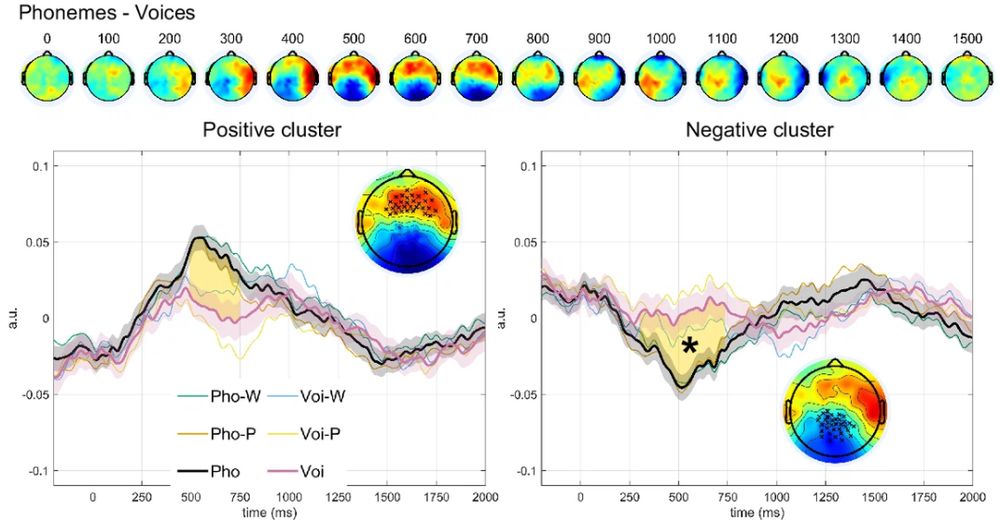
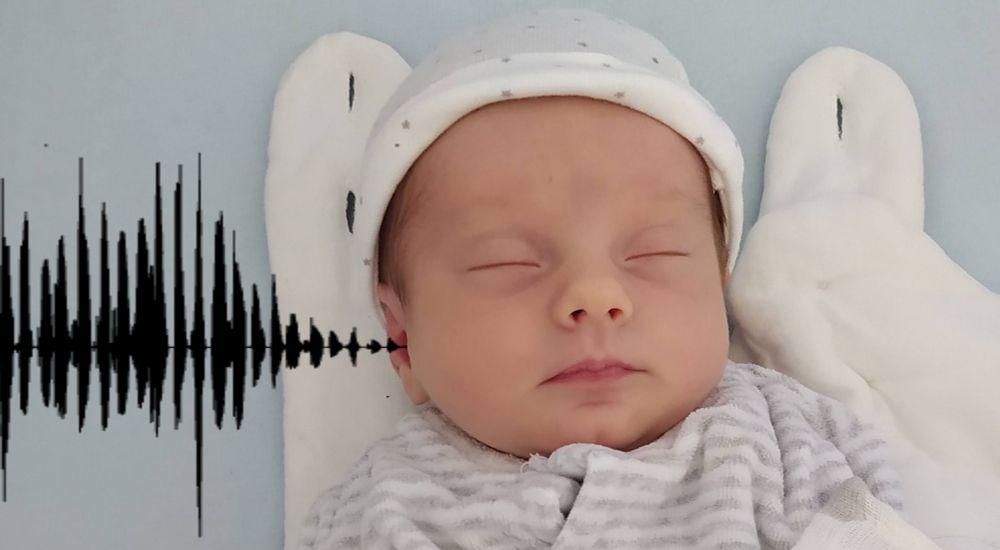
We also identified a specific ERP component, possibly an N400 precursor, only after newborns had been exposed to phonetic regularities, suggesting that these induced lexical search.
21.02.2025 12:58 —
👍 0
🔁 0
💬 1
📌 0
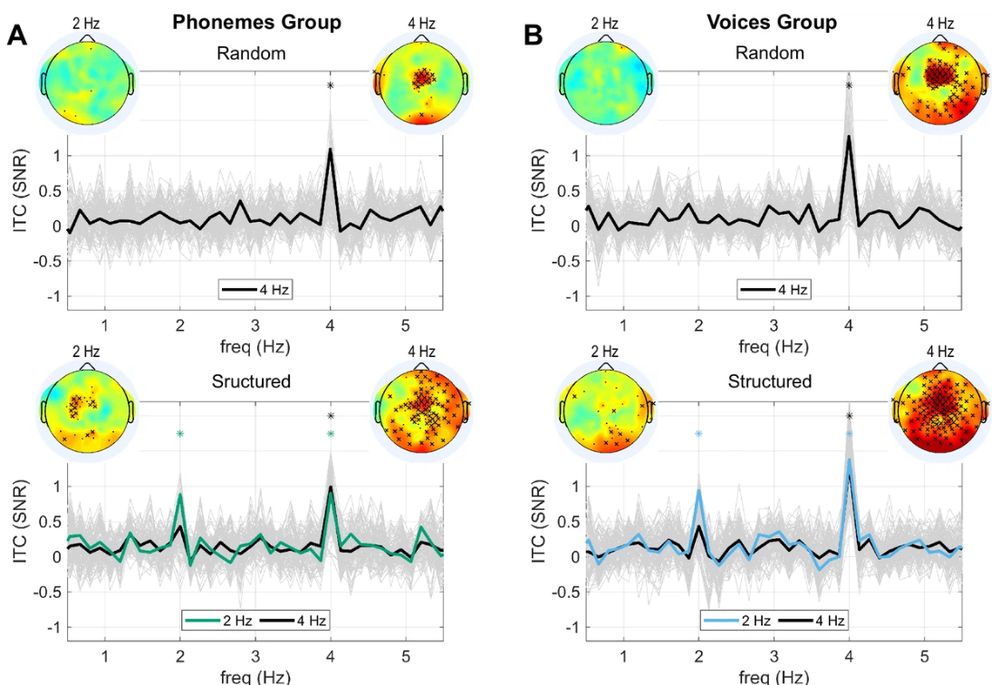
Frequency tagging analysis showed that statistical learning appears to be a general learning mechanism that operates over each dimension in which speech is factorised, generalising irrelevant variations on the other dimension.

21.02.2025 12:58 —
👍 0
🔁 0
💬 1
📌 0