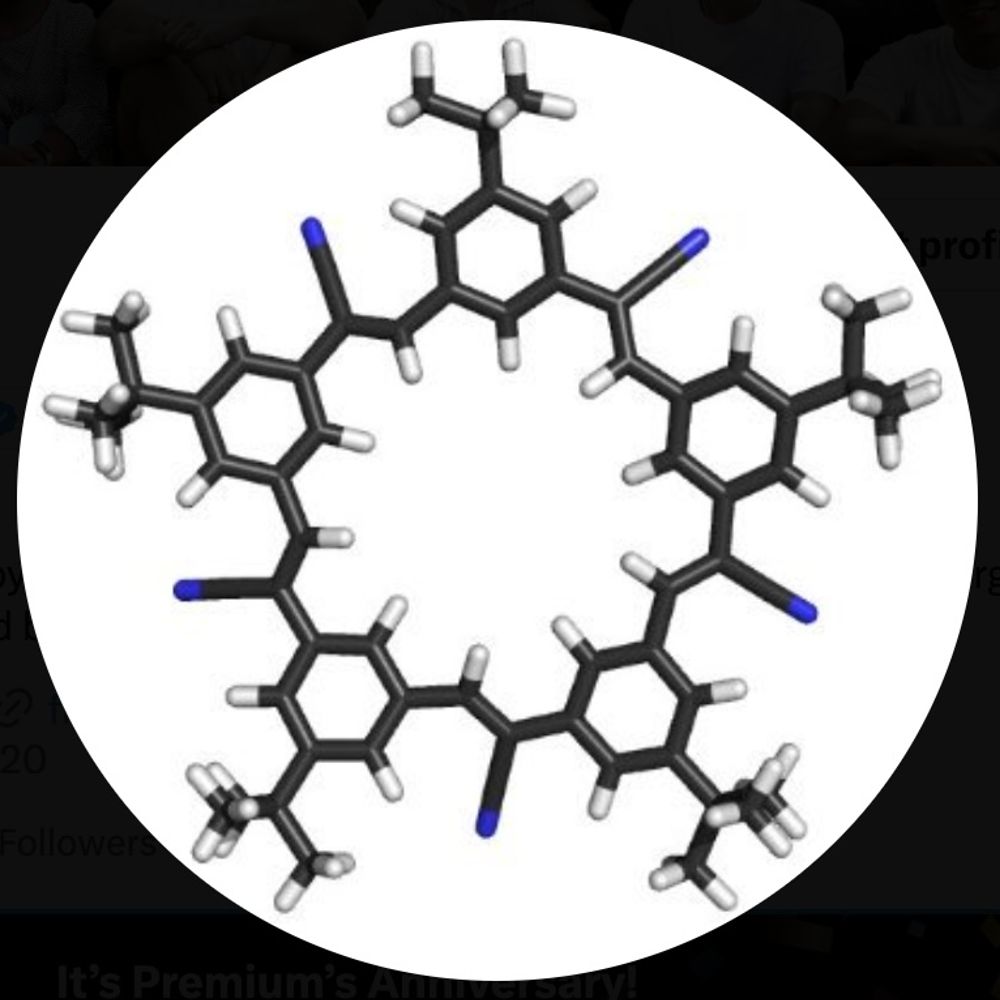

Get double out of your dye! Learn how we add bambusuril receptors as an alternative to cyanostar to bring two cyanine dyes into bright orange dimers! pubs.acs.org/doi/10.1021/...
#fluorescence #crystals #supramolecularchemistry
Get double out of your dye! Learn how we add bambusuril receptors as an alternative to cyanostar to bring two cyanine dyes into bright orange dimers! pubs.acs.org/doi/10.1021/...
#fluorescence #crystals #supramolecularchemistry

Bulky, non-coordinating anions are often innocent - until proven guilty!
Learn how to identify if BArF is associating with your cations under strong ion-pairing conditions – and how that association impacts target interactions between cations and anions.
pubs.acs.org/doi/10.1021/...

Yay! @gracegdhan.bsky.social for receiving the Cram Lehn Pedersen (CLP) Award in Supramolecular Chemistry at #ISMSC2025
29.05.2025 03:24 — 👍 32 🔁 5 💬 1 📌 0
#ISMSC2025 favorite anions, in order are BArF, PF6 and BF4. Least favorite is Cl. Favorite write-in was hydride — thanks to Yun Liu at PKU for the photo
27.05.2025 07:38 — 👍 8 🔁 0 💬 0 📌 0
Have you ever wanted to make Cyanostar for yourself? Now you can! Here, we share the detailed synthesis of CS on a large scale or in a rapid timeframe. @floodgroup.bsky.social www.tandfonline.com/doi/full/10....
02.05.2025 12:48 — 👍 8 🔁 1 💬 0 📌 0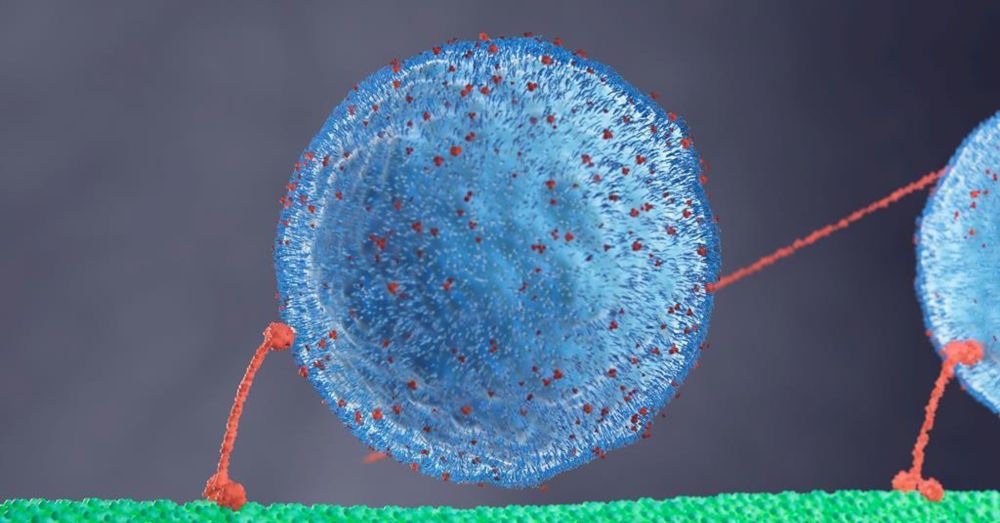
The 2016 Nobel prize in chemistry was awarded 'for the design and synthesis of molecular machines'. Ironically, we do not know exactly what constitutes a molecular machine. With the ultimate goal of unifying definitions and standardising terminology, Iupac needs your help!
#ChemSky #ScienceSky

We found a way to clean polluted water using a cyanostar molecules to grab bad ions—and then let go when hit with light! 🌟 Cyanostar removes fluorinated and radioactive anions, even at low levels (4 ppb) and with Dead Sea competition #WaterCleanup @nabarupa.bsky.social pubs.acs.org/doi/10.1021/...
27.04.2025 13:56 — 👍 12 🔁 2 💬 3 📌 0Stoked for Banruo and IU chemistry to welcome such an awesome new colleague.
05.04.2025 01:05 — 👍 1 🔁 0 💬 0 📌 0Always great to have a fan. Check out this cool photo of a kiwi 3D printed using SMILES 😁 by @kiwismile.bsky.social (guess who @bowlaursen.bsky.social)
05.04.2025 01:01 — 👍 1 🔁 0 💬 0 📌 0
Sunday 8:00 #ACSSpring2025 meeting in room 32B. Amar Flood @floodgroup.bsky.social and I will both be talking about our super bright #fluorescent SMILES materials. Including recent work in #ChemSci (doi.org/10.1039/D3SC...) #nanoparticles and in #AngewandteChemie (doi.org/10.1002/anie...) on #CPL.
23.03.2025 04:46 — 👍 6 🔁 2 💬 0 📌 0
What do you get when you mix 2D networks with silicon? You get January’s #POTM! This month’s paper comes from @dichtel.bsky.social. It was “stiff” competition this month, but these 2D mechanically interlocked materials (2D MIMs) have some “strong” properties.
www.science.org/doi/10.1126/...
Good luck! I’m sure you and your students are going to have a lot of fun!! And I look forward to comparing notes.
21.01.2025 17:56 — 👍 2 🔁 0 💬 1 📌 0
First day teaching Supramolecular Chemistry (at Mizzou, it is Jerry Atwood's former class🙂)! Excited for a fun semester ahead. I owe a huge debt of gratitude to Amar Flood @floodgroup.bsky.social for sharing materials!!
21.01.2025 17:54 — 👍 10 🔁 1 💬 1 📌 0
Great time at #NASC with the team. And a poster prize for Devika. Well done
18.12.2024 00:27 — 👍 4 🔁 0 💬 0 📌 0
The favorite anions of USF -- the big 3 are phosphate, chloride and cyanide
From Spotify wrapped to anions wrapped -- check out the favorites from University of South Florida's Chemistry students and faculty (thanks to Vince Liu for a great visit - vincentchemistry.com) phosphate, chloride, and cyanide top the charts #anions
11.12.2024 20:40 — 👍 3 🔁 0 💬 0 📌 0