Chris Cornwall's Avatar

Chris Cornwall

@chrisecornwall.bsky.social

Kelp forests, coral reefs, climate change, coralline algae, ecologist, physiologist, geochemist. Senior Lecturer of Marine Biology. Te Herenga Waka Victoria University of Wellington. Group leader of coastal eco physiology group (CEG)

1,602 Followers  |  586 Following  |  57 Posts  |  Joined: 19.11.2023
Posts Following

Posts by Chris Cornwall (@chrisecornwall.bsky.social)

Preview
Call for Abstracts – The Ocean in a High-CO2 World – 6th International Science Symposium Call for Abstracts The Call for Abstracts is now open. Please submit your abstract no later than 1 April 2026 (any time zone). Full submission guidelines

Call for abstracts is open for the 6th International Symposium of the Ocean in a High CO2 World! We are looking for work that examined the impacts of ocean acidification, deoxygenation, mCDR, and multiple drivers of change: highco2-vi.org/call-for-abs...

05.03.2026 04:26 β€” πŸ‘ 4    πŸ” 4    πŸ’¬ 0    πŸ“Œ 0

Does anyone have any JCP standard for coral geochemistry? I’ve reached out to most of my local contacts and we are starting to hit a wall! Please flick me a DM if you do. We only need a little bit and can repay the favour somehow

04.03.2026 18:54 β€” πŸ‘ 0    πŸ” 0    πŸ’¬ 0    πŸ“Œ 0
Preview
The future remains bleak for corals – but not all reefs are doomed Coral reefs are likely to erode even under low-emission scenarios, but some reefs may persist if corals evolve to become more resistant to ocean warming.

We describe the potential impacts of climate change on coral reef growth in our new article in The Conversation theconversation.com/the-future-r...

04.03.2026 05:25 β€” πŸ‘ 12    πŸ” 4    πŸ’¬ 0    πŸ“Œ 0

Flick me an email at Christopher.cornwall@vuw.ac.nz

20.02.2026 07:58 β€” πŸ‘ 0    πŸ” 0    πŸ’¬ 0    πŸ“Œ 0
Preview
Persistence of coral reef structures into the twenty-first century - Nature Reviews Earth & Environment Carbonate production and accretion is negatively affected by ocean warming and acidification, threatening coral reef persistence. This Review synthesizes understanding of environmental impacts on reef...

New paper out yesterday by us and a large group of collaborators in Nature Reviews Earth and Environment. We discuss the persistence of coral reef structures under climate change. We highlight several possible futures for coral reef carbonate production: www.nature.com/articles/s43...

19.02.2026 18:56 β€” πŸ‘ 16    πŸ” 4    πŸ’¬ 1    πŸ“Œ 3
Preview
Beyond the beaches, Wellington’s catastrophic sewage spill could be bad news for coastal ecosystems Sewage spills are often seen as short-term public health crises. But the ecological impacts can be lasting, especially if combined with marine heatwaves and storms.

theconversation.com/beyond-the-b...

17.02.2026 07:28 β€” πŸ‘ 13    πŸ” 1    πŸ’¬ 1    πŸ“Œ 0
Preview
Wellington sewage outflow could kill marine reserve's kelp forest ecosystem A marine biologist says the worst case scenario if untreated sewage continues to be dumped in Wellington could be the die-off of the kelp forest ecosystem.

Pretty sad to see this occurring of our awesome coastline

www.rnz.co.nz/news/nationa...

10.02.2026 07:31 β€” πŸ‘ 0    πŸ” 0    πŸ’¬ 0    πŸ“Œ 0
Preview
Similar sensitivity and resilience to marine heatwaves of giant kelp (Macrocystis pyrifera) sporophytes from the northern and southern edges of their distribution in Aotearoa New Zealand - Ocean Ecosy... Background Ocean warming and marine heatwaves have contributed to a global decline in kelp canopy cover, threatening the persistence of important kelp forest ecosystems in many locations. Kelp populat...

link.springer.com/article/10.1...

06.02.2026 21:52 β€” πŸ‘ 1    πŸ” 0    πŸ’¬ 0    πŸ“Œ 0
Post image

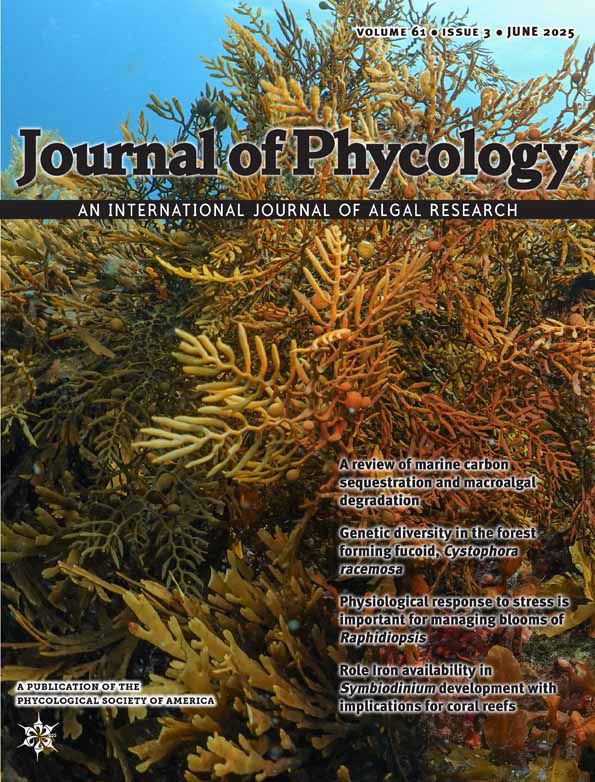
Check out our new paper exploring how giant kelp (Macrocystis pyrifera) sporophytes from populations across Aotearoa New Zealand respond to marine heatwaves in simulated experiments. We find general similar sensitivities that tend towards similar thermal tolerances across large geographic areas.

06.02.2026 21:51 β€” πŸ‘ 14    πŸ” 1    πŸ’¬ 1    πŸ“Œ 2
Preview
Introducing Ocean Ecosystems - Ocean Ecosystems Introducing Ocean Ecosystems Our ocean ecosystems are of immense ecological, climatic, and economic importance. Yet, the ecological functioning and diversity of these ecosystems remain largely unexplored. Historically, much greater effort has been placed in publishing research on terrestrial and freshwater ecosystems compared to the marine environment [ 1], and the importance of processes within these systems is considered comparatively overlooked by other disciplines [ 2].

'BMC's newly launched journal Ocean Ecosystems has published its first introductory editorial article! Read more now! 🌍

23.12.2025 20:00 β€” πŸ‘ 4    πŸ” 2    πŸ’¬ 0    πŸ“Œ 1

Ocean Ecosystems seeks manuscripts that cover the following topics:
1) Marine ecology
2)Biological oceanography
3)Global change biology
4)Ecological physiology
5)Evolutionary processes
6)Ecosystem...
@chrisecornwall.bsky.social @springernature.com @juliemeilland.bsky.social

06.01.2026 09:24 β€” πŸ‘ 3    πŸ” 3    πŸ’¬ 0    πŸ“Œ 0
Date and time: 9:00–15:30, Sunday, February 8, 2026

Location: University of Glasgow, room details TBA

Title of the event: Designing multiple driver experiments

Conveners: SinΓ©ad Collins, University of Edinburgh, Simin Gao, University of Edinburgh, Paul Renaud, Akvaplan-niva

Description: The MEDDLE resources were developed to help researchers design and carry out tractable and comparable multiple driver experiments. In this workshop, participants will learn how to use these resources to design multiple driver experiments. While the concepts and methods discussed can apply to many systems, examples used during the workshop will focus on manipulative experiments rather than observational data. 

The workshop is geared mainly towards PhD students, postdocs, and ECRs new to multiple driver research, and focuses heavily on the rationale of different experimental designs, and analysis strategies for multiple driver experiments. A basic working knowledge of statistics is needed (regression analysis), and statistical analysis examples will use R. Participants should bring a laptop with R and R studio installed. 

Topics include:
β€’	Defining a research question
β€’	Identifying relevant drivers
β€’	Identifying biological traits and responses
β€’	Experimental designs for multiple driver experiments
β€’	Statistical analysis plans

Hosted by the SCOR project β€œChanging Ocean Biological Systems”, this free workshop will be led by  SinΓ©ad Collins, University of Edinburgh (UK), Simin Gao, University of  Edinburgh (UK), Paul Renaud, Akvaplan-niva (Norway). Spaces are limited. If you would like to attend, contact SinΓ©ad Collins (s.collins@ed.ac.uk) by January 15, 2026 to register your interest. Limited to 24 people, so please register early!

Please include a brief (<150 words) statement outlining (a) your experience carrying out Ocean acidification or multiple driver experiments (if any) and (b) how you plan to incorporate multiple driver experiments into your work

Date and time: 9:00–15:30, Sunday, February 8, 2026 Location: University of Glasgow, room details TBA Title of the event: Designing multiple driver experiments Conveners: SinΓ©ad Collins, University of Edinburgh, Simin Gao, University of Edinburgh, Paul Renaud, Akvaplan-niva Description: The MEDDLE resources were developed to help researchers design and carry out tractable and comparable multiple driver experiments. In this workshop, participants will learn how to use these resources to design multiple driver experiments. While the concepts and methods discussed can apply to many systems, examples used during the workshop will focus on manipulative experiments rather than observational data. The workshop is geared mainly towards PhD students, postdocs, and ECRs new to multiple driver research, and focuses heavily on the rationale of different experimental designs, and analysis strategies for multiple driver experiments. A basic working knowledge of statistics is needed (regression analysis), and statistical analysis examples will use R. Participants should bring a laptop with R and R studio installed. Topics include: β€’ Defining a research question β€’ Identifying relevant drivers β€’ Identifying biological traits and responses β€’ Experimental designs for multiple driver experiments β€’ Statistical analysis plans Hosted by the SCOR project β€œChanging Ocean Biological Systems”, this free workshop will be led by SinΓ©ad Collins, University of Edinburgh (UK), Simin Gao, University of Edinburgh (UK), Paul Renaud, Akvaplan-niva (Norway). Spaces are limited. If you would like to attend, contact SinΓ©ad Collins (s.collins@ed.ac.uk) by January 15, 2026 to register your interest. Limited to 24 people, so please register early! Please include a brief (<150 words) statement outlining (a) your experience carrying out Ocean acidification or multiple driver experiments (if any) and (b) how you plan to incorporate multiple driver experiments into your work

The COBS working group is offering an experimental design workshop before Ocean Sciences in Glasgow in Feb 2026! 🌊

Join us for a day of learning about designing and analysing multiple stressor experiments without getting multiply stressed out.

forms.office.com/Pages/Respon...

11.12.2025 13:03 β€” πŸ‘ 7    πŸ” 5    πŸ’¬ 1    πŸ“Œ 0
Preview
The MEDDLE Data Analysis Guides as a Living Resource for Multiple‐Driver Marine Research Click on the article title to read more.

Our data analysis guides for multiple stressor/driver research 🌊

@christinamcgraw.bsky.social
@sineadcollins.bsky.social
@mridulkthomas.bsky.social
@chrisecornwall.bsky.social
+ Peter Dillingham, Steeve Comeau, Sam Dupont

aslopubs.onlinelibrary.wiley.com/doi/10.1002/...

08.12.2025 13:46 β€” πŸ‘ 8    πŸ” 4    πŸ’¬ 0    πŸ“Œ 0

New paper out by that describes data analysis tools creating by the Changing Ocean Biological systems Group last year at a workshop in Sweden. check them out for a good resource on coding and analysis: aslopubs.onlinelibrary.wiley.com/doi/10.1002/...

27.11.2025 19:57 β€” πŸ‘ 2    πŸ” 0    πŸ’¬ 0    πŸ“Œ 0
Preview
Frontiers | Editorial: Impacts of climate change on seaweeds Climate change is drastically altering the composition and abundance of seaweed-dominated ecosystems throughout our oceans. Ocean warming and associated inte...

New paper out by my group and collaborators: Impacts of climate change on seaweeds, an editorial: www.frontiersin.org/journals/mar...

04.10.2025 02:08 β€” πŸ‘ 7    πŸ” 2    πŸ’¬ 0    πŸ“Œ 0

Still plenty of time to submit papers to the Annals of Botany special issue on #Macroalgae and #EcosystemServices. Deadline for submissions is Nov 30th! #Kelp #Fucoid #seaweed #CCA @annbot.bsky.social @pippajmoore.bsky.social @jebyrnes.bsky.social @twernberg.bsky.social @chrisecornwall.bsky.social

30.09.2025 18:53 β€” πŸ‘ 9    πŸ” 13    πŸ’¬ 1    πŸ“Œ 0
This is figure 2, which shows reef accretion potential across western Atlantic reefs.

This is figure 2, which shows reef accretion potential across western Atlantic reefs.

Over 70% of coral reefs in the tropical western Atlantic Ocean are projected to be in a state of erosion by 2040, increasing to nearly all reefs in 2100 if warming exceeds 2 Β°C above preindustrial levels, a study in Nature suggests. go.nature.com/48m9Y8F 🌊 πŸ§ͺ

18.09.2025 13:18 β€” πŸ‘ 18    πŸ” 12    πŸ’¬ 1    πŸ“Œ 1

ps, paper led by Professor Chris Perry. Congrats Chris.

17.09.2025 19:54 β€” πŸ‘ 0    πŸ” 0    πŸ’¬ 0    πŸ“Œ 0
Preview
Reduced Atlantic reef growth past 2 Β°C warming amplifies sea-level impacts - Nature An analysis of coral reefs in the tropical western Atlantic suggests that nearly all will be eroding by 2100 if global warming exceeds 2 Β°C, which will worsen the effects of sea-level rise.

Our paper out today in @nature.com describes a grim fate for coral reef growth under climate change in the Western Atlantic. We also estimate that reef restoration could offer pockets of local hope, but overall cannot keep up with the effects of climate change www.nature.com/articles/s41...

17.09.2025 19:52 β€” πŸ‘ 15    πŸ” 4    πŸ’¬ 1    πŸ“Œ 2

Yes, definitely. We have an ECR committee who will help us ensure this is an ECR/student friendly conference

11.09.2025 23:49 β€” πŸ‘ 1    πŸ” 0    πŸ’¬ 0    πŸ“Œ 0

So excited to be apart of The Ocean in a High CO2 World international symposiumπŸͺΈ

October 12-16, 2026! See you there!

22.08.2025 04:56 β€” πŸ‘ 1    πŸ” 1    πŸ’¬ 0    πŸ“Œ 0
Post image

Excited to announce that we will be hosting the 6th International Symposium on Oceans in a High CO2 World October 12 to 16th in Wellington at the Tākina event center! This conference will bring together marine climate change scientists from multiple disciplines. Save the date!

21.08.2025 09:42 β€” πŸ‘ 17    πŸ” 10    πŸ’¬ 1    πŸ“Œ 3
Preview
Light limitation and water velocity modify the impacts of simulated marine heatwaves on juvenile giant kelp Coastal regions are complex habitats, where multiple natural and anthropogenic drivers can interact to affect the survival and growth of marine organisms. The giant kelp Macrocystis pyrifera is sensi...

Our new paper in Journal of Phycology has come out today. Low light and low water motion can exacerbate the effects of marine heatwaves on giant kelp:

onlinelibrary.wiley.com/doi/10.1111/...

19.07.2025 05:44 β€” πŸ‘ 6    πŸ” 2    πŸ’¬ 0    πŸ“Œ 0

If anyone is looking for regular updates on my group’s research or news, we are more frequently posting things on instagram. It’s not a perfect platform, but hey. Chrisecornwall is my handle, with my lab group updates and student work posted on coastal_eco_physio_group

06.07.2025 10:26 β€” πŸ‘ 5    πŸ” 0    πŸ’¬ 0    πŸ“Œ 0
Post image

See you all at the next #ITRS in #Tauranga, New Zealand πŸ‡³πŸ‡Ώ. Hosted by Chris Battersall, Chris Cornwall & Dave Schiel. Can’t wait to see you all there! @chrisecornwall.bsky.social @benthicecol.bsky.social @nessocon.bsky.social @katynicastro.bsky.social @pippajmoore.bsky.social @marclim-uk.bsky.social

06.07.2025 07:33 β€” πŸ‘ 20    πŸ” 5    πŸ’¬ 0    πŸ“Œ 1

Looking forward to it, see you all soon in Tauranga Aotearoa New Zealand 2028!!

06.07.2025 09:45 β€” πŸ‘ 6    πŸ” 0    πŸ’¬ 0    πŸ“Œ 0

Same here, loved catching up with friends! Now on to ITRS 2028 in Tauranga!

06.07.2025 09:42 β€” πŸ‘ 4    πŸ” 0    πŸ’¬ 0    πŸ“Œ 0

Thanks Trine, good to hear you liked the workshop!

02.07.2025 19:15 β€” πŸ‘ 0    πŸ” 0    πŸ’¬ 0    πŸ“Œ 0

Thanks for arranging this #ITRS2025 workshop 🀩 It was a very useful exercise, and I loved going through all the steps of planning our perfect will-never-ever-get-funded project πŸ˜‚ and to make our priorities when reality (i.e. huge funding cuts) were thrown at us πŸ˜‚

02.07.2025 15:43 β€” πŸ‘ 5    πŸ” 1    πŸ’¬ 1    πŸ“Œ 0
Post image Post image Post image Post image

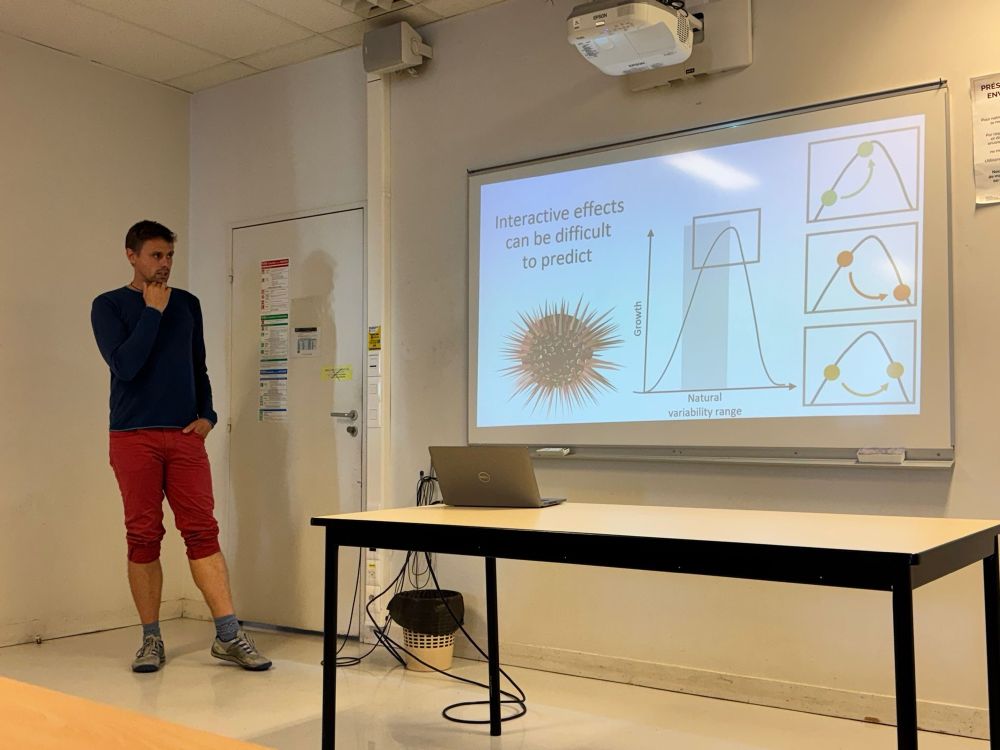
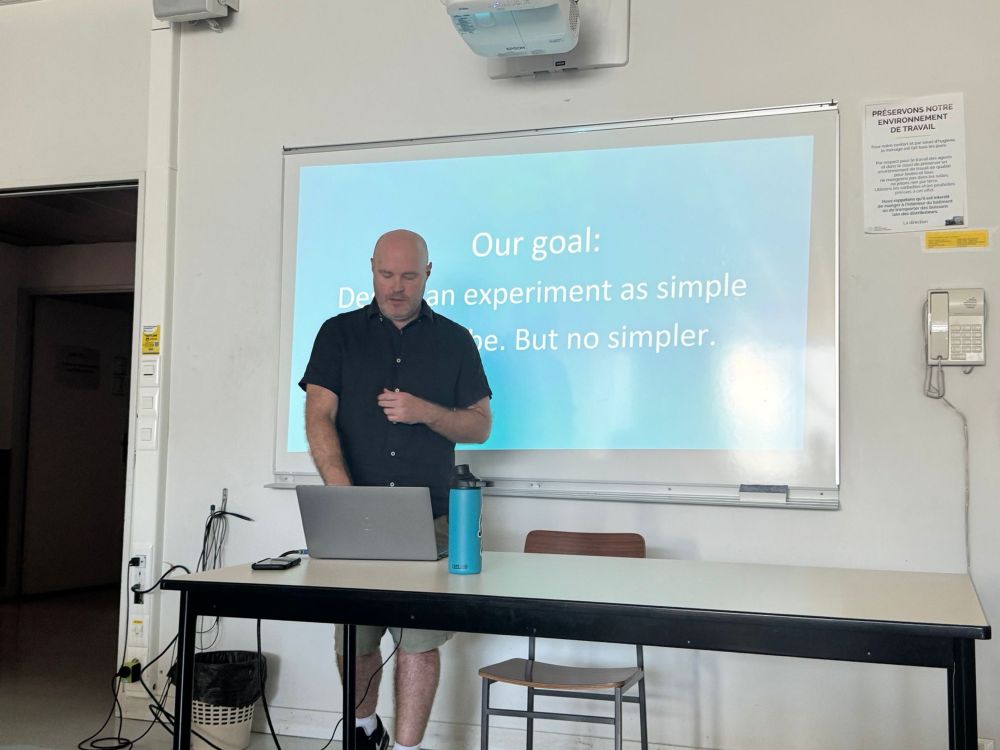
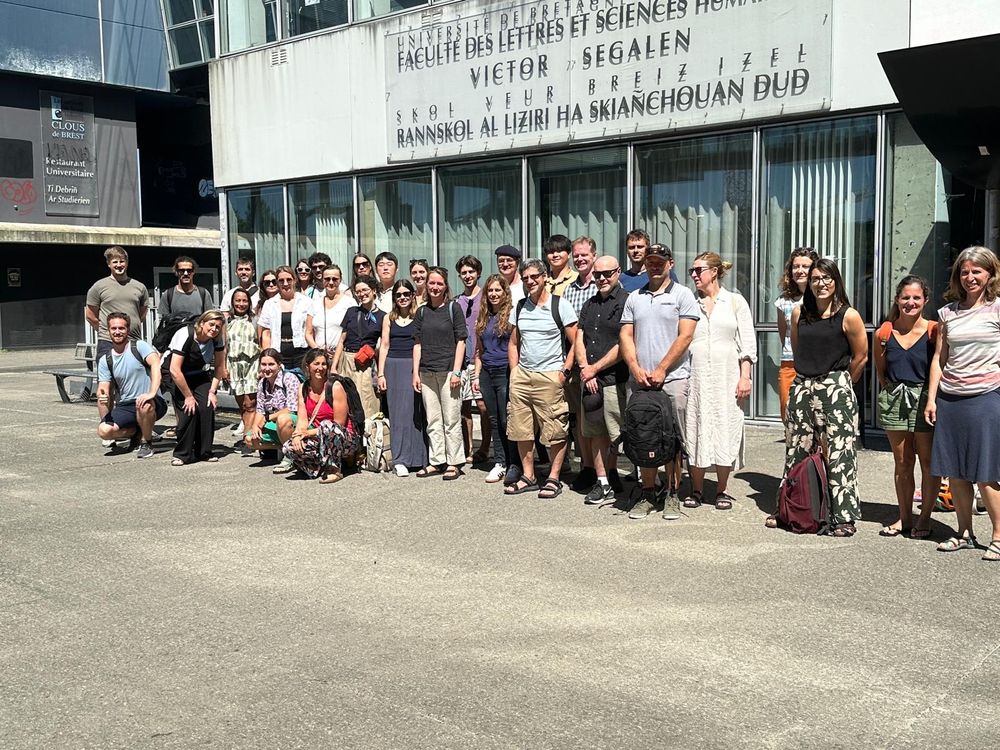
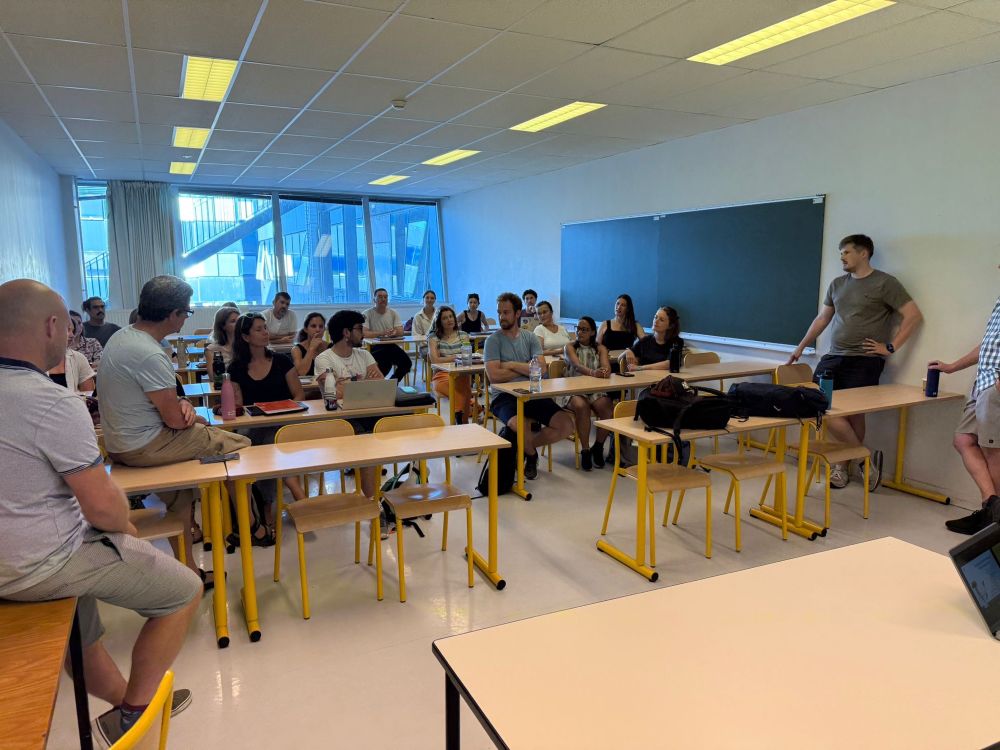
Check out some snaps from our recent MEDDLE workshop at #ITRS Brest, France on experimental design. Great participants! @scor-cobs.bsky.social

02.07.2025 14:41 β€” πŸ‘ 9    πŸ” 1    πŸ’¬ 0    πŸ“Œ 1