Book Review:
In 'Scarcity', Fredrik Albritton Jonsson and Carl Wennerlind set out a comparison of ideas about the use of natural resources and economic organisation, but the treatment of material is at times superficial and opportunities to engage with important contemporary debates are missed.
27.01.2025 09:41 —
👍 1
🔁 1
💬 1
📌 0
@theceme.bsky.social !
20.01.2025 16:24 —
👍 0
🔁 0
💬 0
📌 0
60/40
27.11.2024 11:44 —
👍 0
🔁 0
💬 0
📌 0

England has a poor record of building homes where they are needed | Institute for Fiscal Studies
This comment discusses how well housebuilding in England has responded to changes in local demand over the last 25 years.
Elaine Drayton, @peterlevell.bsky.social and @david-sturrock.bsky.social's paper finds that England is bad at building homes in areas with rising demand: ifs.org.uk/articles/eng...
This map allows you to examine changes in housing supply and prices over 25 years at a local level.
[2/8]
22.11.2024 12:24 —
👍 2
🔁 1
💬 1
📌 0
End of the year browman consumer surplus list
22.11.2024 13:16 —
👍 3
🔁 0
💬 1
📌 0
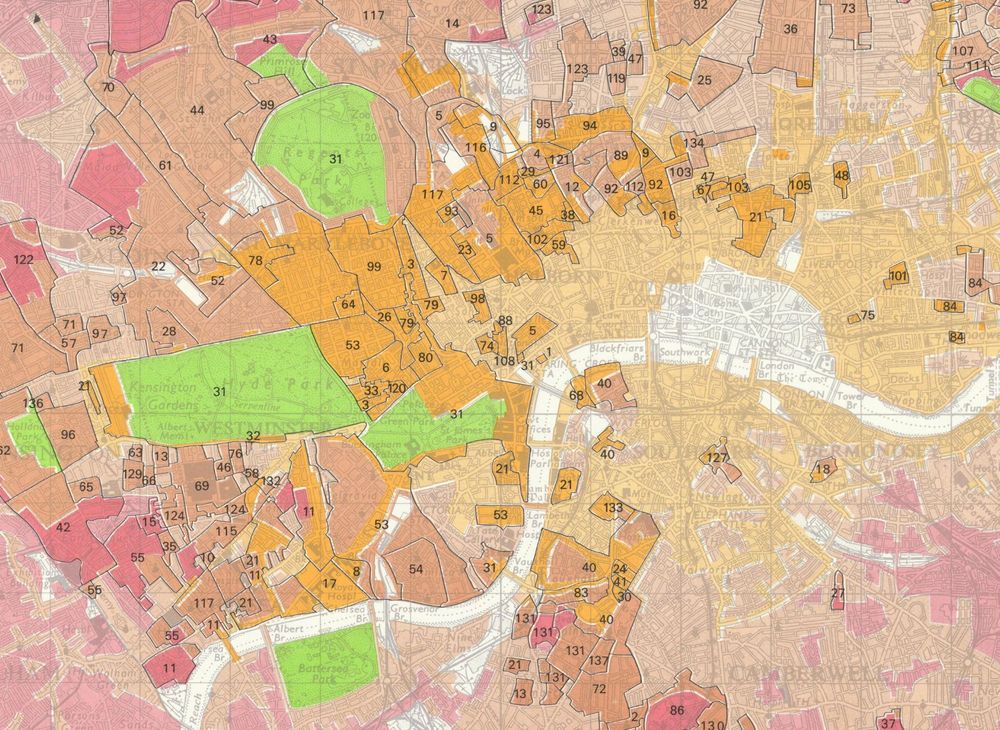

Urbanists often look to places like zoning-free Houston, the private places of St Louis, and privately-developed exurban communities like Irvine. There we see rules about land use emerge between residents and via developers.
I wrote about another example.
theceme.substack.com/p/private-pl...
🧵
20.11.2024 13:17 —
👍 20
🔁 8
💬 2
📌 0
All the news that’s unfit to print
20.11.2024 18:28 —
👍 1
🔁 0
💬 0
📌 0
cc: @sambowman.co @bswud.bsky.social @createstreets.bsky.social @johnrmyers.bsky.social
20.11.2024 13:19 —
👍 1
🔁 0
💬 0
📌 0

Read more about all of this (and more!) in my publication from last year which is available in print, pdf, and web-friendly Substack
(theceme.substack.com/p/private-pl...)
20.11.2024 13:17 —
👍 0
🔁 0
💬 1
📌 0
We continue to see some of these features (especially in commercial tenant curation and commercial street investment) but that is a topic for another day!
20.11.2024 13:17 —
👍 0
🔁 0
💬 1
📌 0

Of interest, is that this rebuilding also included multi-story houses being replaced by purpose-built flats (as in Howards End)
Much of this, of course, also occurred in areas with less concentrated land ownership. Though on the great estates this was done in more planned ways.
20.11.2024 13:17 —
👍 0
🔁 0
💬 1
📌 0

In the most extreme examples whole portions of neighborhoods like Hans Town and the area surrounding Mount Street in Mayfair (pictured) were rebuilt at a higher density in ways more suited to the market.
20.11.2024 13:17 —
👍 0
🔁 0
💬 1
📌 0
New floors were often added as part of the lease renewal. Mansion flats replaced terraced houses. Stables became mews houses. But even more interestingly, the great estates have examples of comprehensive regeneration.
20.11.2024 13:17 —
👍 0
🔁 0
💬 1
📌 0
This preserved market incentives to intensify as the price of land rose. When leases on a street came due, the landowner (and builders) could reassess the suitability of what was built (taking into account the total value of the area) without the issues of land assembly (leases were coordinated).
20.11.2024 13:17 —
👍 0
🔁 0
💬 1
📌 0
When the lease ended (terms varied but they were rarely longer than 99 years) the landlord would have ownership of the building itself and the underlying land.
20.11.2024 13:17 —
👍 0
🔁 0
💬 1
📌 0
The initial construction benefited from the ability to capture spillover effects through the concentrated ownership of the land. Continuing ownership also created a long-term pecuniary and reputational interest.
20.11.2024 13:17 —
👍 0
🔁 0
💬 1
📌 0
I show how the private planning enabled (builders often played crucial roles) and practiced by the estates allowed coordinated responses to changing markets. As tastes changed so did neighborhoods.
20.11.2024 13:17 —
👍 0
🔁 0
💬 1
📌 0

Because of the class of resident in the Grosvenor's Mayfair this also included things like restrictions on building works during the London social season (as seen in Bridgerton)
20.11.2024 13:17 —
👍 0
🔁 0
💬 1
📌 0
Through legal covenants and discretionary control they were also able to restrict negative spillovers by coordinating use and prohibiting users like butchers and blacksmiths whose work might annoy neighbors.
20.11.2024 13:17 —
👍 0
🔁 0
💬 1
📌 0
[Despite his being British, Pigou's foundational work on externalities discounts this exact calculation. "uncompensated services are rendered when resources are invested in private parks in cities; for these, even
though the public is not admitted to them, improve the air of the neighbourhood"]
20.11.2024 13:17 —
👍 0
🔁 0
💬 1
📌 0
John Weale in 1851 wrote "of course the quantity of ground appropriated to these ventilators is merely calculated so that the increased rental of houses enjoying the sight of the tree, may compensate for the loss of ground from the immeadiate purposes of the speculator"
20.11.2024 13:17 —
👍 0
🔁 0
💬 1
📌 0

The estates were able to provide things such as green space (including London’s famous private garden squares) when they added net value because they owned the surrounding real estate which captured the value.
20.11.2024 13:17 —
👍 1
🔁 0
💬 1
📌 0
In contracting with builders, agents of the landlord would engage in rudimentary site planning for basic infrastructure. They would also set parameters of what exactly the developers would agree to build and how common infrastructure was to be funded.
20.11.2024 13:17 —
👍 0
🔁 0
💬 1
📌 0
The legal and financial conditions of the time meant that this land was most often developed via leasehold. Builder/developers would pay to take out a termed lease on land owned by a landlord. Upon building a finished product they could sell the lease on but the lease would ultimately revert back.
20.11.2024 13:17 —
👍 1
🔁 0
💬 1
📌 0

The map above is one of many that show the historic landlords who owned much of inner London. Many of these landholders were often aristocratic families, religious institutions, or charities.
The most valuable estates like those held by the Duke of Westminster are sometimes called great estates.
20.11.2024 13:17 —
👍 1
🔁 0
💬 1
📌 0
Much of expanding middle-class London between the 17th and early 20th centuries was built on land held by a number of different parties.
But unlike our common perception of anarchic free-for-all, many of these developments took place on land which was owned by relatively few owners.
20.11.2024 13:17 —
👍 1
🔁 0
💬 1
📌 0
There is an interesting historical feature of inner London that shows similar features of the later developments in the US with the added benefit of seeing dynamics play out over a longer period of time with retained control by a single party.
I'll show a few of these features in this thread.
20.11.2024 13:17 —
👍 0
🔁 0
💬 1
📌 0
Urbanists often look to places like zoning-free Houston, the private places of St Louis, and privately-developed exurban communities like Irvine. There we see rules about land use emerge between residents and via developers.
I wrote about another example.
theceme.substack.com/p/private-pl...
🧵
20.11.2024 13:17 —
👍 20
🔁 8
💬 2
📌 0

old data from here but note how low the rates are at the low end of the UK threshold for children in other countries www.oecd.org/en/publicati...
20.11.2024 11:56 —
👍 2
🔁 0
💬 0
📌 0