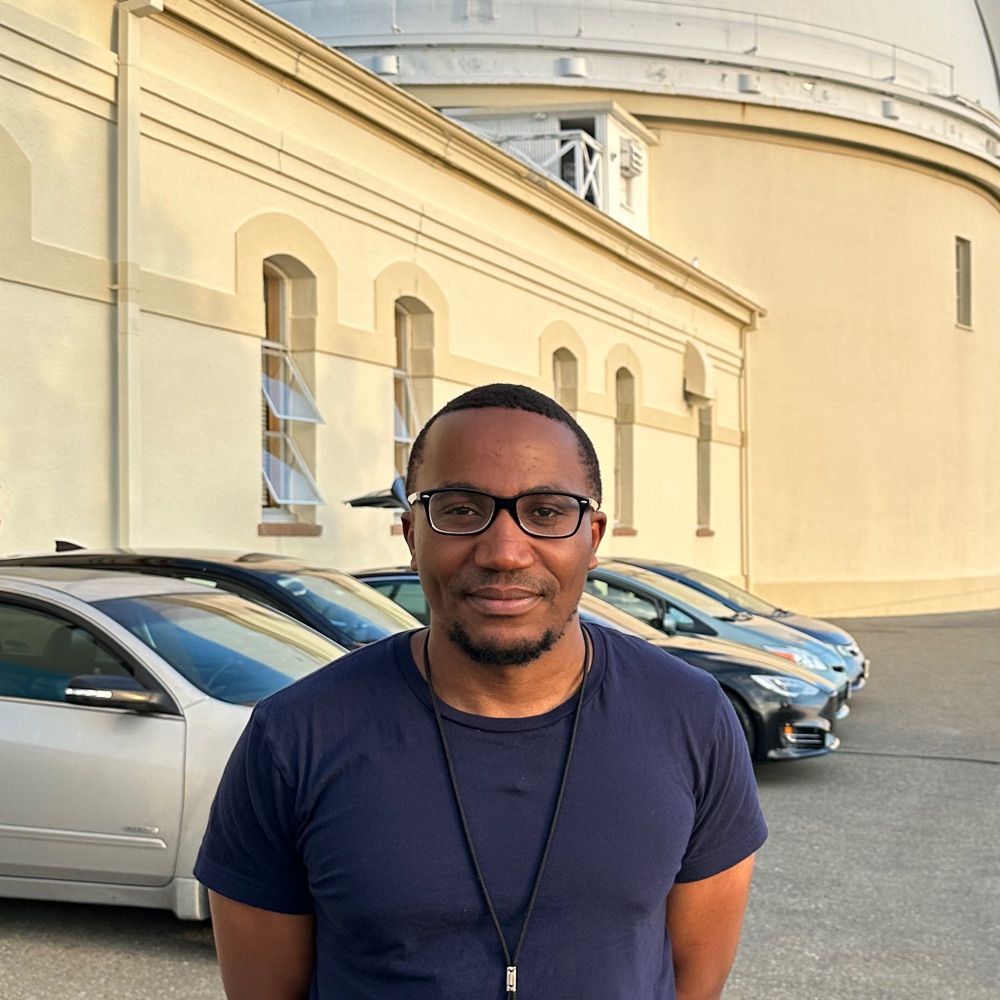

Thanks to the NSBP for the nomination. Honored ! www.aip.org/aip/2025-jos...
22.11.2025 04:57 — 👍 3 🔁 0 💬 0 📌 0
Thanks to the NSBP for the nomination. Honored ! www.aip.org/aip/2025-jos...
22.11.2025 04:57 — 👍 3 🔁 0 💬 0 📌 0Congratulations Dr @capricephillips.bsky.social !!
05.08.2025 03:17 — 👍 2 🔁 0 💬 0 📌 0
Check out this article from National Geographic to hear from @caganze.bsky.social and other scientists who worked hard to make the @vrubinobs.bsky.social and its massive camera a reality: www.nationalgeographic.com/science/arti...
24.06.2025 23:42 — 👍 4 🔁 3 💬 0 📌 0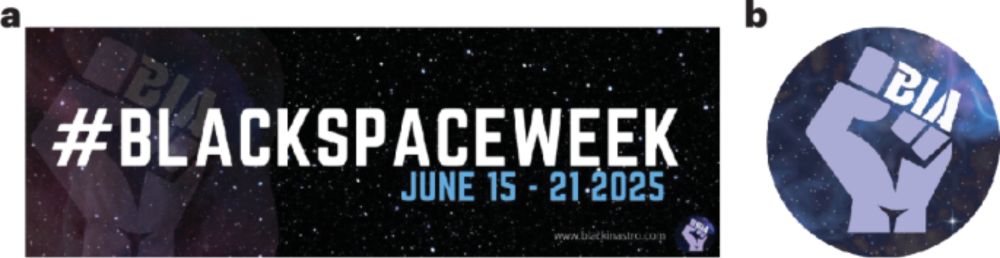
Black In Astro is a grassroots organization that offers support and networking for Black people working in or studying astronomy and space-related fields internationally. Now 5 yrs old, it is established & looking to grow the range of support it offers.
www.nature.com/articles/s41... / rdcu.be/esaqr
We are t-10 days from Rubin first light! www.scientificamerican.com/article/bloc...
13.06.2025 18:57 — 👍 2 🔁 0 💬 0 📌 0Listening to Angèle during an observing to keep me awake
01.06.2025 09:31 — 👍 1 🔁 0 💬 0 📌 0A Nice write-up by Astrobites of our preprint that went up on Axiv last week astrobites.org/2025/05/02/c...
03.05.2025 02:34 — 👍 0 🔁 0 💬 0 📌 0Congratulations Caprice !
01.04.2025 00:54 — 👍 0 🔁 0 💬 0 📌 0
I'm unfortunately not at #aas245, but here are some awesome student talks to catch!
Kiyan Tavangar (Galactic dynamics, 125.02) 10:20 today
Micah Oeur (Cosmo sims, 147.03) 14:30 today
Ella Mathews (binary stars, 352.07) poster Wednesday
@tomwagg.bsky.social (multiple stars, 449.07D) 15:00 Thursday
🔭
Folks who follow me but aren’t astronomers—you might not realize how MANY astronomers live in Pasadena—home to JPL, CalTech, & Carnegie Observatories, among others.
Of 3 close friends, at least 2 have lost their houses. Many non-astronomers (including support staff like janitors) have also.
1/

Promotional graphic for the LSST Discovery Alliance data science fellowship program. The program logo is at the center of a grid of headshots of previous fellows.
🚨Calling astronomy graduate students!
Want to build your data science skills while preparing for the deluge of Rubin data?
Applications are open for the 2025 LSST-DA 2025 Data Science Fellowship Program! 🔭🧪
Apply by Jan. 22: https://lsstdiscoveryalliance.org/programs/data-science-fellowship

Something to look forward to in 2025 www.technologyreview.com/2025/01/01/1...
02.01.2025 06:37 — 👍 20 🔁 6 💬 1 📌 1I can’t believe it’s 2025. 2015 was just two weeks ago!
28.12.2024 19:41 — 👍 1 🔁 0 💬 0 📌 0
Hi everyone, I'm looking to hire a postdoc this upcoming year, so if you're interested in coming to San Diego to work on low-mass stars, brown dwarfs, and exoplanets, please apply!
aas.org/jobregister/...
Caprice is an outstanding scientist, a great speaker, and on the postdoc job market this year! 🔭🧪⚛️
07.12.2024 03:53 — 👍 48 🔁 10 💬 1 📌 0
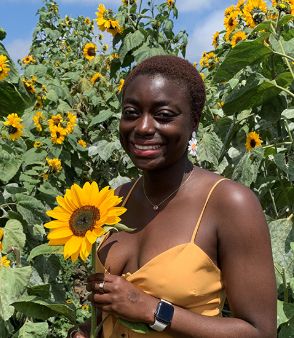

Beth Brown Memorial Award Winners for 2024
Three winners of the AAS-sponsored Beth Brown Memorial Awards announced at the recent joint meeting of the National Society of Black Physicists and National Society of Hispanic Physicists. aas.org/node/245460 🔭
I remember my first southern observing run as a young pup grad student, going out to check the sky and coming back in to tell my advisor: "It's pretty clear, just a few small clouds up in the south...."
25.11.2024 01:25 — 👍 20 🔁 3 💬 1 📌 0
From @astrolamb.bsky.social: What’s better than a single gravitational lens? A double gravitational lens! Learn about how light from a distant quasar zig-zags across the universe because of the first double gravitational lens to be observed! 🔭✨️
astrobites.org/2024/11/20/z...
Lots of brown dwarfs ?
26.07.2024 22:39 — 👍 1 🔁 0 💬 1 📌 0Here is how Bernie can still win
21.07.2024 23:00 — 👍 1 🔁 0 💬 0 📌 0
I enjoyed giving a public lecture at Lick Observatory last night
14.07.2024 19:11 — 👍 6 🔁 0 💬 0 📌 0
An illustration. An oval disk, which represents the Andromeda galaxy, is angled, pointing to the bottom left and top right, and takes up about one third of the view. Its core appears the brightest white and is surrounded by a thinner oval that is slightly less bright white and has a few brown lines running through it. Its edges have many small blue points representing stars. A few irregularly shaped lines representing globular cluster streams are present. A fainter blue arc is at top left. To its right is a larger, somewhat wider white line that is less than half the length of the galaxy. This straighter line has a gap, and then continues in a rough triangle. Near the bottom left of the galaxy’s blue star-filled region is another streamer that looks like an arc. It also has a gap, toward its right side. More irregular, fairly dim blue lines appear just below the right side of the galaxy. The background is black.
After the Nancy Grace Roman Space Telescope launches—by May 2027—astronomers will use its images to explore what exists between looping tendrils of stars that are pulled from globular clusters to potentially reveal dark matter in greater detail than ever before: www.stsci.edu/contents/new...
24.01.2024 18:13 — 👍 12 🔁 5 💬 0 📌 1www.nasa.gov/missions/rom...
17.01.2024 19:49 — 👍 0 🔁 0 💬 0 📌 0
Our paper has been accepted to ApJ ⬇️
Using mock observations, we show that Roman will detect gaps in streams created by subhalos with masses > 5 x 10^6 Msun in galaxies within 3 MPC, for ~1-hour exposures. Counting these gaps will help constrain the subhalo mass function. arxiv.org/abs/2305.12045
