Québec Science dévoile les 10 #découvertes de l'année 2025! Ce palmarès annuel, qui en est à sa 33e édition, met en lumière l'excellence de la recherche scientifique québécoise. Découvrez les 10 découvertes et votez pour votre préférée!
https://www.quebecscience.qc.ca/decouvertes2025/
17.01.2026 19:27 — 👍 2 🔁 1 💬 0 📌 1

Whirligig Beetles out for a whirl this afternoon.
#beetles #ento #UKwildlife
17.01.2026 19:03 — 👍 18 🔁 2 💬 0 📌 0
The de-skilled leading the unskilled is not what academia should be about.
08.01.2026 13:21 — 👍 75 🔁 12 💬 2 📌 2

screenshot of a post on facebook from Alex Lamoreaux, depicting two versions of the "same" photograph of a bobcat in front of a pine plantation, one labeled original game cam photo, one labeling AI processed
the markings have been altered on the AI photo, and the head changed and resized
text says:
Oh! A neat goose hybrid posted to ‘What’s this Bird?’ but when you zoom in on the photos the bill details have been too manipulated by AI photo editing to be accurately assessed for which species may be involved.
Scroll on… A cool-looking Red-tailed Hawk that someone is wondering which subspecies it might be - right up my alley! But when you zoom in on the photos literally every feather group has been so heavily manipulated and altered by AI editing that it’s impossible to determine subspecies because the photo is essentially fake now; just a mashup of whatever AI thinks parts of a Red-tail should look like.
Scroll on… WOW! That’s a remarkable trail cam photo of a Bobcat! It almost looks like a painting!… but the head looks oddly small…. hmmmm. After some prodding the original photo is produced and sure enough it had been so heavily altered by AI ‘post processing’ that the photo posted was essentially a digital mock-up with totally different proportions and fur markings. No longer the photo off the trail cam; it may as well have just been ‘created’ by AI from scratch.
This stuff is killing me. My days on social media are becoming very limited. We can’t even trust simple, everyday photos of animals to be real. The wildlife community needs to quit editing with AI, and we need to start calling out photographers that are using it. Our reality is being destroyed all around us.
this field biologist does a great job highlighting the insidiousness of AI editing
these one-click AI edit buttons are incredibly appealing to many photographers, amateurs and professionals alike, and are framed as innocuous
this is worth sharing and educating people about
15.12.2025 02:21 — 👍 8994 🔁 4863 💬 86 📌 157
Oui! Elle a filmé les insectes de l'insectarium la nuit
07.12.2025 15:58 — 👍 1 🔁 0 💬 1 📌 0

Mortality from fire & wind is increasing in Europe's forests, but what about biotic disturbances? A new, massive dataset compiled by @thlasny.bsky.social and many local experts shows a mixed picture: While wood borers increase strongly, defoliator activity generally decreases doi.org/10.1111/gcb....
30.10.2025 13:38 — 👍 33 🔁 14 💬 1 📌 0
Was awesome to have you! The day passed so fast! 💚
Can’t wait to get all the amazing data your team is generating out! 👏
21.11.2025 03:50 — 👍 3 🔁 2 💬 0 📌 0

Photo of three intricately carved jack-o'-lanterns. The legs of the arachnid at left are nearly radially symmetric; the arachnid in the middle has long forelegs and bright bands across its body; the insect at right has long, segmented antennae and converging arcs (barely visible from this angle) at the back. The background is leaf-covered lawn, very dark.
I'm pretty much ready for #Halloween.
L to R: whirligig mite (Anystis sp.), another prostig mite (family Rhagidiidae), and Western earwig (Forficula dentata). The pièce de résistance, a long-jawed orbweaver jack-o'-lantern (not shown), was completed this afternoon.
#arachtober 🐡
30.10.2025 23:39 — 👍 35 🔁 9 💬 2 📌 1


📢 On recrute! 📢 Un projet de doc ou de maîtrise vraiment trippant pour quelqu'un qui aime les insectes 🦋 🐝 et le plein air ⛰️ . Avec Maxim Larrivée à l'#Insectarium Espace pour la vie et Marc Bélisle à l'Université de Sherbrooke
Détails ci-dessous 👇
28.10.2025 14:08 — 👍 0 🔁 0 💬 0 📌 0

A vibrant illustrated poster featuring 14 species/varieties of isopods of various colors. They are illustrated on a yellow-vibrant orange background and have numbers with a key describing which species is which.
Isopods!! 🧡
25.10.2025 16:56 — 👍 1855 🔁 616 💬 29 📌 16

GM will introduce eyes-off driving in 2028 | CNN Business
General Motors, the 100-year-old car company, plans to offer Americans hands-free driving and the freedom to watch a movie on the go.
“Imagine you step into your vehicle, you push a button, and it drives you to the office. You catch up on work, send emails, or watch an episode of your favorite show,” said GM CEO Mary Barra.
This exists, it's called a bus
www.cnn.com/2025/10/22/c...
25.10.2025 18:40 — 👍 790 🔁 147 💬 29 📌 25

Les insectes nocturnes vous intéressent? Venez à ma conférence mercredi le 15 octobre à la maison de la culture #MHM! C'est gratuit, mais il faut réserver sa place ici 👉https://lepointdevente.com/billets/a1n251015001 @espacepourlavie.bsky.social
10.10.2025 13:52 — 👍 7 🔁 1 💬 1 📌 0
Help me, science Bluesky! Anyone know any fish biologists working on hybridized trout and other exotic and rare trout / salmonid subspecies? #biology #marinebiology #fishbiology
25.09.2025 19:41 — 👍 19 🔁 29 💬 7 📌 2
Cette tourbière était mon site expérimental pour ma maîtrise! En plus de contribution àla conservationdes milieux humides, le site aura permis de former plusieurs biologistes. www.ledevoir.com/environnemen...
26.09.2025 00:05 — 👍 2 🔁 0 💬 0 📌 0
Dans le jardin des arbustes, de part et d'autre du miroir d'eau.
10.09.2025 11:41 — 👍 0 🔁 0 💬 1 📌 0


35 monarques et une jolie vanesse de Virginie ce midi au Jardin botanique !
09.09.2025 21:50 — 👍 6 🔁 1 💬 2 📌 0

Congrès SEQ 2025
Fourwaves - Congrès SEQ 2025
La Société d’entomologie du Québec a l’immense plaisir de vous inviter à sa 152e réunion annuelle, qui se déroulera en présentiel les 20 et 21 novembre 2025 au Pavillon Alphonse-Desjardins de l'Université Laval à Québec. Il est maintenant possible de s’inscrire.🦋
12.06.2025 15:45 — 👍 1 🔁 1 💬 0 📌 0

CIFE XI
Pour une inscription en tant que membre voici le lien : https://forms.office.com/Pages/ResponsePage.aspx?id=hDvhYmAZYkWMf3JHKVHaj80vdZwcyv9IswtLiVmoIiJURU5OVEdaUVFMSkQ4RUI0N1pUTFRDWVlKQS4u&origin=QRCode La CIFE est une organisation dont les objectifs sont de promouvoir les activités des entomologistes francophones et de leur permettre de se rencontrer afin de partager leurs résultats de recherche et de consolider des collaborations au niveau international. La principale activité de la CIFE est l’organisation, tous les quatre ans, d’une conférence internationale en entomologie, la première ayant été organisée à Paris en 1982. Ces conférences couvrent l’ensemble des activités en entomologie et reflètent les champs d’études des entomologistes francophones. La CIFE XI est organisée à Liège, Belgique avec l’aide du laboratoire d’Entomologie fonctionnelle et évolutive de Gembloux Agro-Bio tech – Université de Liège (ULiège) et ses partenaires entomologistes de l’Université libre de Bruxelles (ULB), de l’Université de Mons (UMons), le Musée Royal d’Afrique Centrale (MRAC) et le Centre de recherches agronomiques wallon (CRAw) de Gembloux. La CIFE XI a pour thème général « L’entomologie face à la globalisation et à l’approche une seule santé ». Le concept One Health, ou "une seule santé" a émergé au début des années 2000, en réponse à la recrudescence des maladies infectieuses et à la prise de conscience de l'interdépendance entre la santé humaine, la santé animale et la santé de l'environnement. L'idée de l'interdépendance de ces trois domaines n'est pas nouvelle, mais l'approche « Une santé » a permis de la formaliser et de la mettre en pratique. En effet, tout changement intervenant dans les liens entre les protagonistes, le plus souvent incluant des insectes peut augmenter le risque d’apparition et de propagation de nouvelles maladies aux plantes, aux animaux et/ou à l’homme. « Une seule santé » est une approche visant à optimiser la santé des humains, des animaux et des écosystèmes en intégrant ces domaines, plutôt qu’en les séparant. La globalisation est un élément majeur dans l’évolution des protagonistes, des insectes en particulier. Cela intègre notamment le commerce, l’agriculture, l’urbanisation, les industries, le changement climatique, la fragmentation des habitats et l’exploitation des zones sauvages. La pandémie de COVID-19 a mis en lumière la nécessité d’établir un cadre mondial pour assurer une meilleure surveillance et mettre en place un système plus global et intégré. Les lacunes en matière de connaissances de l’approche « Une seule santé », de prévention et de mise en œuvre d’approches intégrées ont été considérées comme des éléments moteurs de la pandémie. En tenant compte des liens entre la santé humaine, la santé animale et la santé environnementale, l’approche « Une seule santé » est envisagée comme un facteur de transformation contribuant à améliorer la santé dans le monde. Les insectes et l’entomologie sont donc pleinement concernés. L’impact d’une approche « Une seule santé » et la globalisation sur l’entomofaune peut être déclinées en diverses thématiques abordées dans le cadre de sessions proposées, notamment : Vecteurs, zoonoses et enjeux entomologiques en santé globale Dispersion des insectes et changements globaux Insectes, écosystèmes et services écosystémiques Santé environnementale et protection intégrée des cultures Entomologie appliquée à la sécurité alimentaire et à l’économie circulaire Outils de diagnostic morphologique et moléculaire Technologies émergentes en entomologie Éthique, perceptions et culture … La conférence se veut être internationale et ouverte combinant les expertises au nord et au Sud, pour développer les collaborations tant fondamentales qu’appliquées, aussi dans le cadre de la coopération au développement pour étudier et trouver des solutions aux nombreuses questions en lien avec le concept d’une seule santé. Les propositions d’autres sujets de sessions et de workshop thématiques et/ou techniques sont les bienvenues.
La 11e Conférence internationale francophone d'entomologie se déroulera du 6 au 9 juillet 2026 en Belgique !
12.06.2025 15:47 — 👍 1 🔁 2 💬 0 📌 0

Fonds de la Société d’Entomologie du Québec
Note : Le féminin est utilisé pour alléger le texte, et ce, sans préjudice pour la forme masculine. La mission de notre Fonds est d’encourager les étudiantes à poursuivre des études supérieures dan…
Les applications pour la bourse étudiante du fonds SEQ sont ouvertes! Vous êtes à la maîtrise ou au doctorat en entomologie dans une université québécoise ? Vous pourriez recevoir une bourse de 1000$! Préparez votre dossier et envoyez-le à fondsseq@gmail.com d'ici le 28 septembre 2025.
28.08.2025 18:34 — 👍 1 🔁 1 💬 0 📌 0

35 monarques dans l'arbustaie du Jardin botanique de #Montréal ce midi !
02.09.2025 21:05 — 👍 10 🔁 1 💬 1 📌 0

Il n’y aurait pas suffisamment de pistes cyclables à Montréal, selon une étude
L’espace consacré à la micromobilité pourrait être doublé sans nuire indûment au transport automobile.
Y a-t-il une guerre à l'auto à Montréal? 98% des infrastructures routières sont consacrées aux chars (de plus en plus gros, polluants et dangereux rappelons-le) dans la métropole tandis que 2% sont consacrées à la micromobilité. Pourtant, sur le Plateau, 22% des déplacements se font en vélo...
19.08.2025 12:19 — 👍 50 🔁 8 💬 5 📌 1

Montreal study finds the city could double its number of bike paths
A study from McGill University in Montreal found that doubling the amount of bike lanes on the road would have a minimal effect on vehicle traffic, but a significant effect on cyclists.
🎯« Far from pushing cars off Montreal, the study “The cars are going to be alright: Examining micro-mobility infrastructure space allocation and potential improvement scenarios in Montreal," suggests that more space for bikes would barely affect motorized vehicle. » www.ctvnews.ca/montreal/art...
18.08.2025 20:55 — 👍 43 🔁 17 💬 4 📌 3
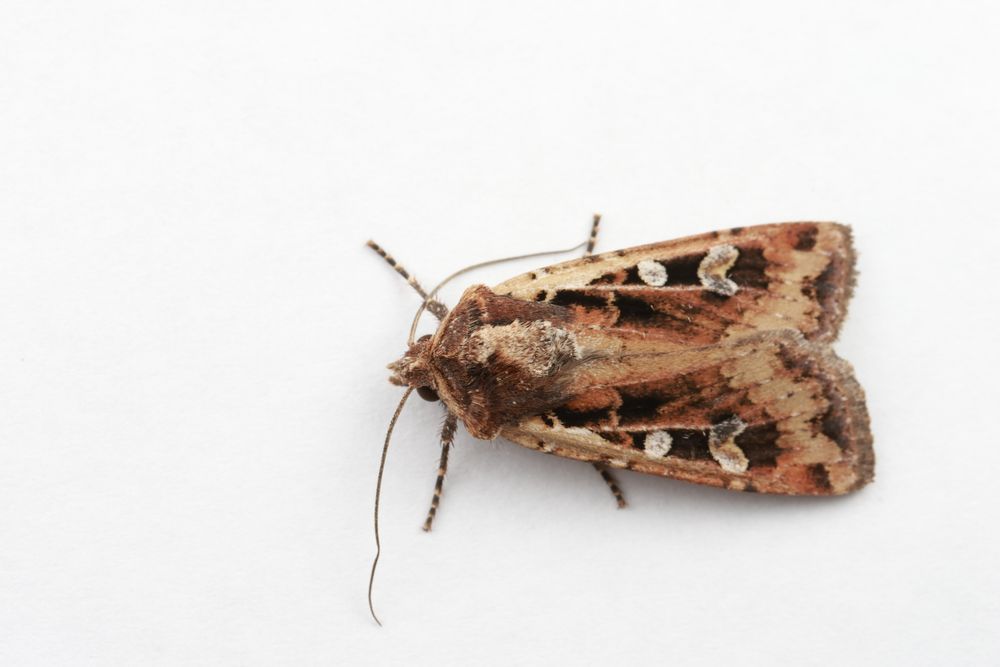
A large brown and gray moth, with two prominent silver spots on a dark triangle on each forewing. Pictured on white background.
Anyone recognize this Euxoa, from Makkovik in Labrador? The larvae were munching some planted vegetables. We reared it out in hopes of an ID.
13.08.2025 13:25 — 👍 12 🔁 4 💬 0 📌 0
Québec Science, le magazine scientifique québécois depuis 1962.
www.quebecscience.qc.ca
Associate Professor at Université Laval| Canada Research Chair in Insect Vectors Invasions and Emergent Plant Diseases 🌿🪲 |Chercheur CRIV, IBIS, EDS | Senior Editor Plant Disease | CoFounder Pride in Microbiology 🏳️🌈 - Lab News: @eplopez.bsky.social
Wasp lover
MSc student @ Université de Montréal
Studying the wonderful fairyflies🧚
Science-based invertebrate conservation nonprofit. Protecting the life that sustains us, since 1971. 🦋🐝🪲 linktr.ee/xercessociety
Annual Meeting of the Canadian Society for Ecology & Evolution / Société Canadienne d'Écologie & d'Évolution, Sherbrooke, 6-9/07/2025 #CSEE2025 #SCEE2025
https://event.fourwaves.com/scee2025/pages
https://www.instagram.com/cseemtgs/
Nous travaillons sur les forêts, surtout urbaines. Nous sommes un groupe de recherche à UQAM, Montréal, Canada.
We study forests, mostly urban. We are a Chair and research group at UQAM, Montreal, Canada.
Zoology correspondent. Author. Chatty man. BBC Radio 4 / Guardian. 'Infinite Life' / 'Martian Museum of Earth Animals' and more (did i tell you about my duck genitalia VR app?).
Professor, UW Biology / Santa Fe Institute
I study how information flows in biology, science, and society.
Book: *Calling Bullshit*, http://tinyurl.com/fdcuvd7b
LLM course: https://thebullshitmachines.com
Corvids: https://tinyurl.com/mr2n5ymk
he/him
Acfas | Depuis 1923, au service de la recherche scientifique en français 🌍 Soutenir la communauté de recherche et la relève 🧠 | Former à la vulgarisation scientifique 📚 | Rapprocher sciences et société 🔬
https://linktr.ee/_acfas
https://www.tiktok.com/@miss_entropie
https://linktr.ee/StephanieJolicoeur
Communicatrice scientifique - B.Sc. Physique
Chroniqueuse science - Radio-Canada
Éducatrice scientifique
** La #ComSci n'a pas de limites **
Canadian Society for Ecology & Evolution | Société canadienne d'écologie et d'évolution. Posts by Graduate Student & Postdoctoral Councillors
https://csee-scee.ca
Our upcoming events: https://csee-scee.ca/meetings-and-events/
Research biologist and lover of nature, mostly bacteria, insects and (lately) birds
Député de Rosemont—La Petite-Patrie
Chef adjoint du NPD
Open-access, peer-reviewed journal for taxonomy, phylogeny, biogeography, and evolution of animals of any geological age from any part of the world.
Published by @pensoft.net. Powered by ARPHA Platform.
Website: zookeys.pensoft.net
Coalition for Research Excellence • Coalition pour l’excellence en recherche. Uniting researchers across Canada to vote in #Elections2025. Les chercheur.e.s au Canada votent! #VotonsRecherche #ResearchersVote Info: https://core-coeur.ca
Biologiste, passionné de photographie, d'ornithologie et de voyages. Aussi amateur de microbrasseries, et grand fan de ses deux joueurs et sa joueuse de hockey. Montréal, Québec.
#oiseauxduquebec #oiseaux #ornithologie #birds #birding #ornithology #hockey