Grant Kinsler's Avatar

Grant Kinsler

@grantkinsler.bsky.social

Postdoc at UPenn thinking about mutations, cells, and evolution.

459 Followers  |  797 Following  |  42 Posts  |  Joined: 17.12.2023
Posts Following

Posts by Grant Kinsler (@grantkinsler.bsky.social)

Gotta love a peppered moth story (and a soft selective sweep to boot)!

28.02.2026 15:38 โ€” ๐Ÿ‘ 1    ๐Ÿ” 0    ๐Ÿ’ฌ 0    ๐Ÿ“Œ 0
Influenza hemagglutinin subtypes have different sequence constraints despite sharing extremely similar structures Hemagglutinins (HA) from different influenza A virus subtypes share as little as โˆผ40% amino acid identity, yet their protein structure and cell entry function are highly conserved. Here we examine the extent that sequence constraints on HA differ across three subtypes. To do this, we first use pseudovirus deep mutational scanning to measure how all amino-acid mutations to an H7 HA affect its cell entry function. We then compare these new measurements to previously described measurements of how all mutations to H3 and H5 HAs affect cell entry function. We find that โˆผ50% of HA sites display substantially diverged preferences for different amino acids across the HA subtypes. The sites with the most divergent amino-acid preferences tend to be buried and have biochemically distinct wildtype amino acids in the different HA subtypes. We provide an example of how rewiring the interactions among contacting residues has dramatically shifted which amino acids are tolerated at specific sites. Overall, our results show how proteins with the same structure and function can become subject to very different site-specific evolutionary constraints as their sequences diverge. ### Competing Interest Statement JDB consults for Apriori Bio, Invivyd, Pfizer, GSK, and the Vaccine Company. JDB and BD are inventors on Fred Hutch licensed patents related to the deep mutational scanning of viral proteins. National Institute of Allergy and Infectious Diseases, R01AI165821, 75N93021C00015 U.S. National Science Foundation, DGE-2140004 Howard Hughes Medical Institute, https://ror.org/006w34k90

In new work by @jahn0.bsky.social and I in @jbloomlab.bsky.social, we investigate how sequence constraints differ across influenza HA subtypes.

We find ~50% of sites in HA display substantially different amino-acid preferences across H3, H5, and H7.

doi.org/10.64898/202...

21.01.2026 19:22 โ€” ๐Ÿ‘ 23    ๐Ÿ” 10    ๐Ÿ’ฌ 1    ๐Ÿ“Œ 0
Preview
SpaceBar enables single-cell-resolution clone tracing with imaging-based spatial transcriptomics - Nature Methods SpaceBar is a cellular barcoding strategy for simultaneous analysis of cell clonal and spatial identities.

SpaceBar: a cellular barcoding approach for simultaneous analysis of cell clonal and spatial identities.

www.nature.com/articles/s41...

19.12.2025 19:36 โ€” ๐Ÿ‘ 7    ๐Ÿ” 1    ๐Ÿ’ฌ 0    ๐Ÿ“Œ 0

We designed SpaceBar to be as easy to use as possible:

Cells are labeled via lentivirus transduction, and barcode detection works with any standard imaging-based spatial transcriptomics workflow.

w/ Yael Heyman and @arjunraj.bsky.social

Check out the thread from the preprint for more info!

18.12.2025 19:55 โ€” ๐Ÿ‘ 3    ๐Ÿ” 2    ๐Ÿ’ฌ 0    ๐Ÿ“Œ 0
Preview
SpaceBar enables single-cell-resolution clone tracing with imaging-based spatial transcriptomics Nature Methods - SpaceBar is a cellular barcoding strategy for simultaneous analysis of cell clonal and spatial identities.

Excited that SpaceBar is now out in Nature Methods!๐Ÿฅณ

We combined clone tracing with spatial transcriptomics to untangle what drives gene expression in tumors: a cell's identity or its neighborhood?

Most genes were driven by location, but some showed strong clonal patterns.

rdcu.be/eVhpc

18.12.2025 19:55 โ€” ๐Ÿ‘ 17    ๐Ÿ” 6    ๐Ÿ’ฌ 1    ๐Ÿ“Œ 0
Post image

๐Ÿ—ž๏ธ New preprint from the lab, led by our postdoc Ana Garoรฑa (not on here) in collab with @andreagiometto.bsky.social: โ€œExperimental evolution of cellular miniaturization reveals a mechanism for cell size evolutionโ€, aka: โ€œhoney, we shrank the yeasts!โ€ ๐ŸŽฅ
www.biorxiv.org/content/10.6...

09.12.2025 17:07 โ€” ๐Ÿ‘ 71    ๐Ÿ” 24    ๐Ÿ’ฌ 2    ๐Ÿ“Œ 3

So excited to share this work led by @alexrob.bsky.social with Ben Kerr!

We investigated a poliovirus capsid inhibitor that exploits a breakdown in the genotype-phenotype map to prevent drug resistance evolution. Or does it?

See Alex's thread, but a few extras:

#socialviruses #evosky #virosky ๐Ÿงช

10.12.2025 21:07 โ€” ๐Ÿ‘ 26    ๐Ÿ” 10    ๐Ÿ’ฌ 1    ๐Ÿ“Œ 1
Preview
High-resolution mapping of a rapidly evolving complex trait reveals genotype-phenotype stability and an unpredictable genetic architecture of adaptation The extent to which adaptation can be predicted, particularly for traits with complex genetic bases, is unknown. Here, we leveraged a model complex trait, model species, and high-powered longitudinal ...

Thrilled to finally share the magnum opus of my PhD that focuses on the genetic basis of evolutionary change! Specifically, we know we can map the genetic basis of a trait, but can we tell which genes will underlie the trait shift when it evolves? doi.org/10.1101/2025...

18.11.2025 00:14 โ€” ๐Ÿ‘ 64    ๐Ÿ” 30    ๐Ÿ’ฌ 2    ๐Ÿ“Œ 3
Preview
Insertion of an invading retrovirus regulates a novel color trait in swordtail fish For over a century, evolutionary biologists have been motivated to understand the mechanisms through which organisms adapt to their environments. Coloration and pigmentation are remarkably variable wi...

I am so excited to share new work on a TE insertion that regulates iridescence in swordtails, led by fantastic grad student @nadiahaghani.bsky.social and with help from many coauthors! In a time that has been so difficult to navigate, this & other projects have kept my spirits up: shorturl.at/NE65A

12.11.2025 20:34 โ€” ๐Ÿ‘ 186    ๐Ÿ” 69    ๐Ÿ’ฌ 3    ๐Ÿ“Œ 15
Glass beads of all sorts balancing on wavy threads.

Glass beads of all sorts balancing on wavy threads.

How is functional variation at large-effect loci maintained in natural populations, even as environments change? In a paper led by @mkarag.bsky.social, we tracked known pesticide resistant alleles in outdoor ๐˜‹. ๐˜ฎ๐˜ฆ๐˜ญ๐˜ข๐˜ฏ๐˜ฐ๐˜จ๐˜ข๐˜ด๐˜ต๐˜ฆ๐˜ณ cages & inferred selection and dominance from temporal sequencing data.

06.11.2025 21:51 โ€” ๐Ÿ‘ 35    ๐Ÿ” 17    ๐Ÿ’ฌ 1    ๐Ÿ“Œ 0

Excited to share our recent work from @lowelab.bsky.social on the intersection of life history and cell type evolution: www.biorxiv.org/content/10.1...

06.11.2025 22:03 โ€” ๐Ÿ‘ 15    ๐Ÿ” 4    ๐Ÿ’ฌ 1    ๐Ÿ“Œ 1
Preview
Massively parallel interrogation of the fitness of natural variants in ancient signaling pathways reveals pervasive local adaptation The nature of standing genetic variation remains a central debate in population genetics, with differing perspectives on whether common variants are almost always neutral as suggested by neutral and n...

One of the most exciting works of my career, years in the making. We used high-throughput precision genome editing to test the fitness effects of thousands of natural variants. Our findings challenge the long-held assumption that common variants are inconsequential.

www.biorxiv.org/content/10.1...

22.10.2025 17:45 โ€” ๐Ÿ‘ 165    ๐Ÿ” 85    ๐Ÿ’ฌ 5    ๐Ÿ“Œ 6
Preview
Somatic mutation and selection at population scale - Nature A new version of nanorate DNA sequencing, with an error rate lower than five errors per billion base pairs and compatible with whole-exome and targeted capture, enables epidemiological-scale studies of somatic mutation and selection and the generation of high-resolution selection maps across coding and non-coding sites for many genes.

Our latest work is out in Nature today. In this paper, we introduce an improved version of NanoSeq, a duplex sequencing protocol with <5 errors per billion bp in single DNA molecules, and use it to study the somatic mutation landscape of oral epithelium in >1000 people www.nature.com/articles/s41...

08.10.2025 16:30 โ€” ๐Ÿ‘ 89    ๐Ÿ” 47    ๐Ÿ’ฌ 5    ๐Ÿ“Œ 1
Preview
Fluctuating DNA methylation tracks cancer evolution at clinical scale Nature - Cancer evolutionary dynamics are quantitatively inferred using a method, EVOFLUx, applied to fluctuating DNA methylation.

Cancer is an evolutionary disease, but does knowing a cancerโ€™s evolutionary past help predict its future? Out today in @nature, we learnt the evolution of 2000 lymphoid cancers and found it was highly correlated with clinical outcomes! (1/7)
rdcu.be/eFrrc

10.09.2025 16:17 โ€” ๐Ÿ‘ 46    ๐Ÿ” 19    ๐Ÿ’ฌ 1    ๐Ÿ“Œ 2
Video thumbnail

The constant barrage of terrible news on bluesky has made me feel weird about promoting papers, but people in the lab have been doing so much amazing work over the past few months that I want to share a few brief teasers/links:

10.09.2025 16:46 โ€” ๐Ÿ‘ 67    ๐Ÿ” 22    ๐Ÿ’ฌ 2    ๐Ÿ“Œ 1

Super cool work, Joao! This matches some hints we had in some of our work that this likely happens after just 1 or 2 adaptive steps in our yeast system! Glad to see it studied in detail!

22.08.2025 14:38 โ€” ๐Ÿ‘ 1    ๐Ÿ” 0    ๐Ÿ’ฌ 1    ๐Ÿ“Œ 0
Preview
Frequency-dependent fitness effects are ubiquitous In simple microbial populations, the fitness effects of most selected mutations are generally taken to be constant, independent of genotype frequency. This assumption underpins predictions about evolutionary dynamics, epistatic interactions, and the maintenance of genetic diversity in populations. Here, we systematically test this assumption using beneficial mutations from early generations of the Escherichia coli Long-Term Evolution Experiment (LTEE). Using flow cytometry-based competition assays, we find that frequency-dependent fitness effects are the norm rather than the exception, occurring in approximately 80\% of strain pairs tested. Most competitions exhibit negative frequency-dependence, where fitness advantages decline as mutant frequency increases. Furthermore, we demonstrate that the strength of frequency-dependence is predictable from invasion fitness measurements, with invasion fitness explaining approximately half of the biological variation in frequency-dependent slopes. Additionally, we observe violations of fitness transitivity in several strain combinations, indicating that competitive relationships cannot always be predicted from fitness relative to a single reference strain alone. Through high-resolution measurements of within-growth cycle dynamics, we show that simple resource competition explains a substantial portion of the frequency-dependence: when faster-growing genotypes dominate populations, they deplete shared resources more rapidly, reducing the time available for fitness differences to accumulate. Our results demonstrate that even in a simple model system designed to minimize ecological complexity, subtle ecological interactions between closely related genotypes create frequency-dependent selection that can fundamentally alter evolutionary dynamics. ### Competing Interest Statement The authors have declared no competing interest.

How common are frequency dependent fitness effects?

New preprint out today ๐Ÿ‘‡
doi.org/10.1101/2025...

21.08.2025 19:23 โ€” ๐Ÿ‘ 94    ๐Ÿ” 41    ๐Ÿ’ฌ 6    ๐Ÿ“Œ 0

Congratulations, Roshni! Excited to see all the great things from your lab!

06.08.2025 19:19 โ€” ๐Ÿ‘ 1    ๐Ÿ” 0    ๐Ÿ’ฌ 1    ๐Ÿ“Œ 0

Bittersweet to be leaving @docedge.bsky.social after a wonderful postdoc, but excited to share that I'm joining @uoregon.bsky.social next month as an Assistant Professor in the Department of Data Science.

06.08.2025 17:18 โ€” ๐Ÿ‘ 146    ๐Ÿ” 28    ๐Ÿ’ฌ 21    ๐Ÿ“Œ 4
Preview
Hypermutable hotspot enables the rapid evolution of self/non-self recognition genes in Dictyostelium Cells require highly polymorphic receptors to perform accurate self/non-self recognition. In the amoeba Dicytostelium discoideum, polymorphic TgrB1 & TgrC1 proteins are used to bind sister cells and e...

I'm excited to announce our new biorxiv preprint, wherein we investigate the evolution of the weirdest genetic locus I've ever seen! Behold the tgr genes of the social amoeba, which mediate self/non-self discrimination during facultative multicellularity ๐Ÿ… ๐Ÿงต 1/
www.biorxiv.org/content/10.1...

05.08.2025 00:56 โ€” ๐Ÿ‘ 219    ๐Ÿ” 98    ๐Ÿ’ฌ 9    ๐Ÿ“Œ 2
Preview
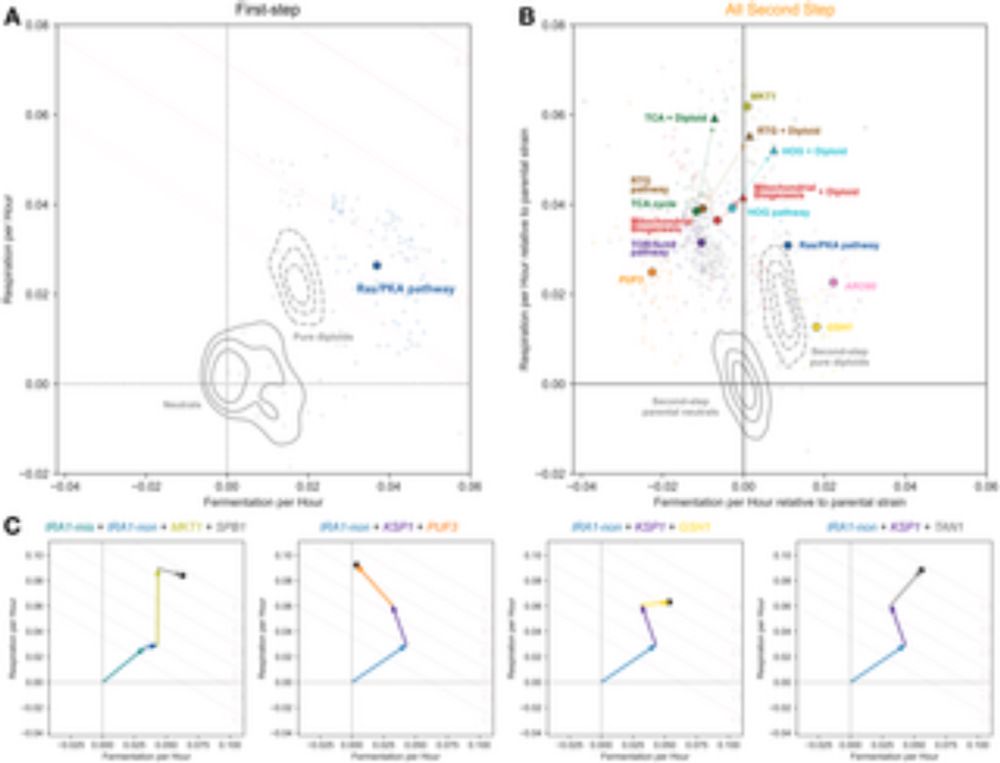
A high-resolution two-step evolution experiment in yeast reveals a shift from pleiotropic to modular adaptation Evolution is expected to involve mutations that are small and modular in effect, but recent findings suggest that mutations early in an adaptive process can have strong and pleiotropic effects. This s...

Having a great time at #smbe2025! So many great talks and conversations. Thank you again to @iamphioxus.bsky.social for the opportunity to present our work! Much of it is from the paper by @grantkinsler.bsky.social and @yuping-li.bsky.social journals.plos.org/plosbiology/... 1/n

22.07.2025 22:56 โ€” ๐Ÿ‘ 28    ๐Ÿ” 9    ๐Ÿ’ฌ 1    ๐Ÿ“Œ 0

Excited to read it!

21.07.2025 20:26 โ€” ๐Ÿ‘ 1    ๐Ÿ” 0    ๐Ÿ’ฌ 0    ๐Ÿ“Œ 0

New review article with @mmdesai.bsky.social is out today! Grateful for the opportunity to contribute something we hope will serve the community well

21.07.2025 17:30 โ€” ๐Ÿ‘ 47    ๐Ÿ” 15    ๐Ÿ’ฌ 3    ๐Ÿ“Œ 0
Preview
Junior, Assistant, or Associate Specialist โ€“ Xue Lab University of California, Irvine is hiring. Apply now!

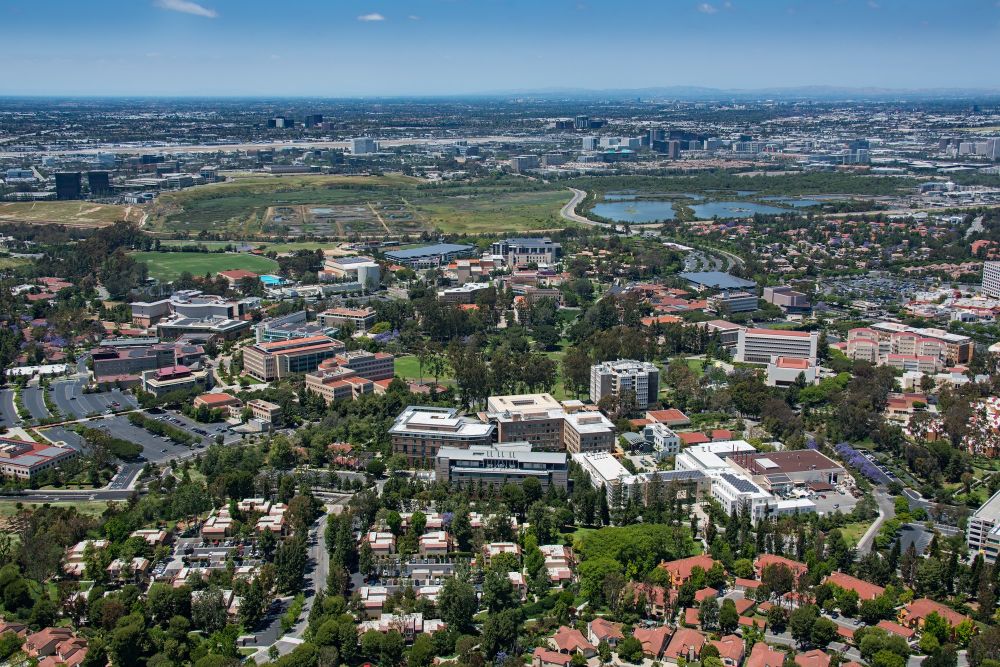
The Xue lab at UC Irvine is looking for a staff scientist to support our work investigating how microbes interact and evolve in the gut microbiome! Open to a wide range of previous experience levels, see ad for more.
recruit.ap.uci.edu/JPF09601

17.07.2025 20:32 โ€” ๐Ÿ‘ 117    ๐Ÿ” 112    ๐Ÿ’ฌ 0    ๐Ÿ“Œ 3
Preview
Gastruloid patterning reflects division of labor among biased stem cell clones Embryonic development typically requires precise coordination among cells to achieve reproducible outcomes, leading to the assumption that cellular heterogeneity must be minimized or buffered against....

[0/8] Stoked to share our work with @arjunraj.bsky.social on tissue organization in the gastruloid. We use lineage tracing and spatial transcriptomics to show that diversity among stem cell clones promotes, rather than hinders, gastruloid development: www.biorxiv.org/content/10.1...

15.07.2025 15:44 โ€” ๐Ÿ‘ 26    ๐Ÿ” 9    ๐Ÿ’ฌ 1    ๐Ÿ“Œ 3
Preview
Single-cell spatial mapping reveals reproducible cell type organization and spatially-dependent gene expression in gastruloids Gastruloids are three-dimensional stem-cell-based models that recapitulate key aspects of mammalian gastrulation, including formation of an anterior-posterior (AP) axis. However, we do not have detail...

Very excited to share our new work on gastruloids by the incredible Cat Triandafillou! We mapped gene expression across 26 individual gastruloids at single-cell resolution and discovered some pretty amazing patterns about how these "mini-embryos" organize themselves.
www.biorxiv.org/content/10.1...
15.07.2025 15:43 โ€” ๐Ÿ‘ 65    ๐Ÿ” 20    ๐Ÿ’ฌ 2    ๐Ÿ“Œ 1
Preview
Lineage-resolved analysis of embryonic gene expression evolution in C. elegans and C. briggsae The constraints that govern the evolution of gene expression patterns across development remain unclear. Single-cell RNA sequencing can detail these constraints by systematically profiling homologous ...

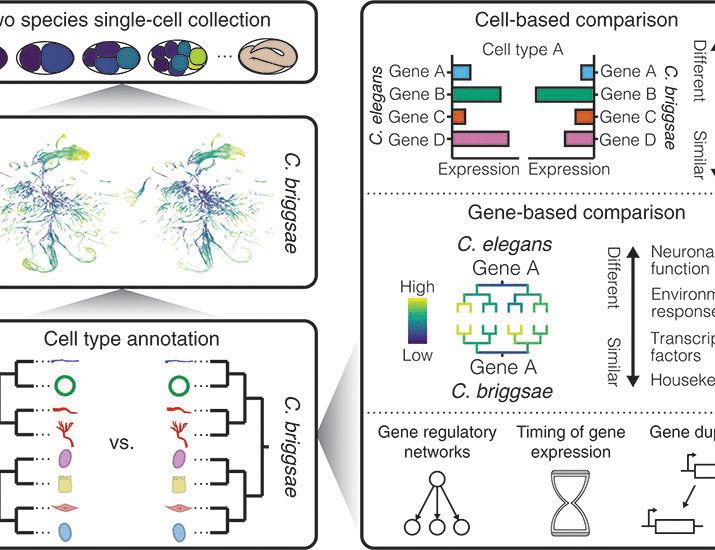
Happy to announce our paper comparing embryonic gene expression between C. elegans and C. briggsae, work led by Christopher Large with Rupa Khanal and in collaboration with Junhyong Kim and Bob Waterston. www.science.org/doi/10.1126/...

20.06.2025 20:25 โ€” ๐Ÿ‘ 81    ๐Ÿ” 32    ๐Ÿ’ฌ 5    ๐Ÿ“Œ 5

Team Avenir forever!

09.07.2025 17:15 โ€” ๐Ÿ‘ 1    ๐Ÿ” 0    ๐Ÿ’ฌ 0    ๐Ÿ“Œ 0
Post image

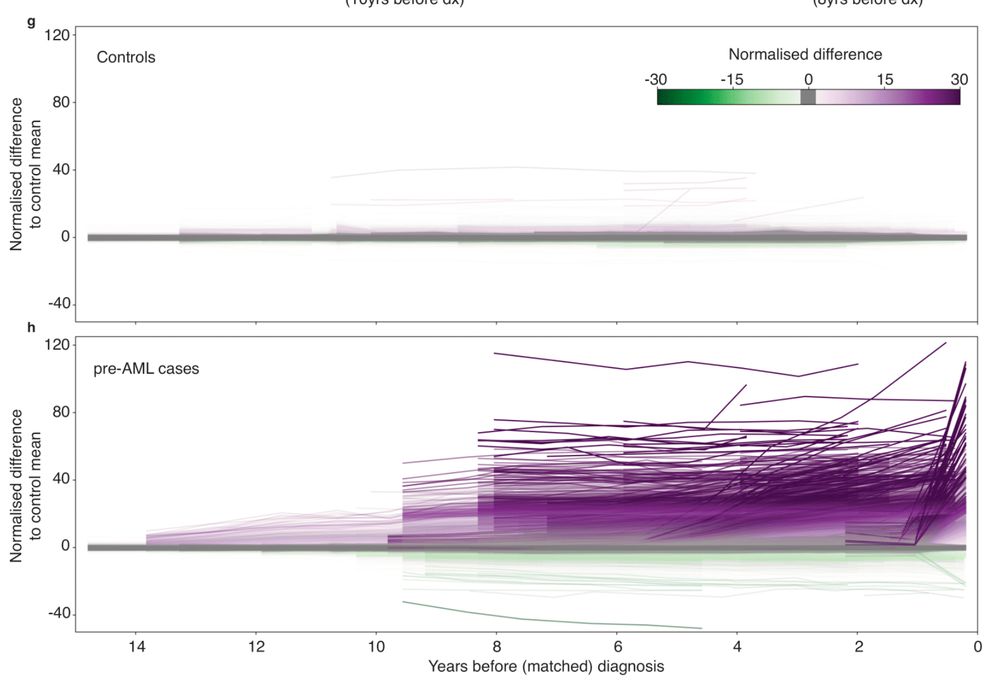
Delighted to share our latest on longitudinal methylation dynamics preceding cancer. Epigenetic signs of AML appear in blood DECADES before Dx.
๐Ÿ‘‰ Early cancer detection
๐Ÿ‘‰ Methylation drivers
๐Ÿ‘‰ Epimutation rates
๐Ÿ‘‰ CpG lineage tracing

www.biorxiv.org/content/10.1...

03.07.2025 20:47 โ€” ๐Ÿ‘ 22    ๐Ÿ” 13    ๐Ÿ’ฌ 1    ๐Ÿ“Œ 0

@jamie-blundell.bsky.social

09.07.2025 15:58 โ€” ๐Ÿ‘ 2    ๐Ÿ” 0    ๐Ÿ’ฌ 0    ๐Ÿ“Œ 0