With Eugene Koonin, we propose a concept of “the selfish ribosome”, under which evolution of life is viewed as a ribosomal takeover, where the ribosome evolved to consume most of the cell’s resources, while other cellular componentry ensures the propagation of the ribosome. arxiv.org/abs/2602.23268
03.03.2026 08:58 —
👍 221
🔁 95
💬 5
📌 12

These wee birds are just zen
28.02.2026 01:45 —
👍 7
🔁 1
💬 0
📌 0

Congratulations to Sonomi Yamaguchi for her paper at @nature.com. Sonomi discovered Clover defense and explained how nucleotide signals control each step of viral sensing, immune regulation, and viral restriction – named for her beautiful "four-leaf" structures 🍀
www.nature.com/articles/s41...
18.02.2026 17:11 —
👍 59
🔁 31
💬 0
📌 4
Post-Doctoral Associate
Job Description Summary Organization's Summary Statement: The Department of Biology at the University of Maryland, College Park seeks applications for three quantitative biology postdoctoral fellow po...
Three postdoctoral fellowships in quantitative biology are available as part of a new Quantitative Biology Initiative in the Department of Biology at the University of Maryland.
Best consideration date: 3/14
Job Ad:
umd.wd1.myworkdayjobs.com/en-US/UMCP/j...
Department:
biology.umd.edu/people
19.02.2026 02:49 —
👍 26
🔁 36
💬 1
📌 1

Image of a herpesvirus structure
I am excited to share our latest preprint - An evolutionarily divergent herpesvirus with a giant tail. Featuring symmetry breaking and genome annotation from structure using ModelAngelo. doi.org/10.64898/202...
14.02.2026 08:10 —
👍 73
🔁 24
💬 1
📌 1

Polyomaviruses are masters of persistence and dissemination: we show there are two forms of long-term persistent PyVs in the kidney: the majority being cryptic (non-shedding) and a minority that actively shed, and these fates are determined shortly after infection.
www.biorxiv.org/content/10.6...
13.02.2026 13:31 —
👍 9
🔁 4
💬 0
📌 0

Transcriptome mining reveals diversity and evolution of circulating and endogenous amphibian retroviruses - Retrovirology
Background The evolutionary history of retroviruses and their impact on vertebrate evolution remains poorly understood, particularly in non-mammalian hosts. In this study, we explore retroviruses associated with Amphibia through analysis of 169 RNA sequencing datasets from 102 amphibian species. Using a BLAST-based approach, we identified retroviral transcripts from assembled transcriptomes and phylogenetically characterise both their pol and env regions to elucidate their evolutionary history. Results We identified the transcription of 18 novel and two previously described retroviruses with closest relatives in gammaretrovirus, epsilonretrovirus, betaretrovirus and spumaretrovirinae. Despite their differing pol phylogenies, we found that all amphibian retroviruses belong to the gamma-type envelope group (GTE). This suggests a common selection pressure for amphibian retroviruses to retain GTEs. Within these GTEs we also observed a new clade of alpharetrovirus-like envelopes in amphibians which form a sister clade to avian alpharetrovirus envelopes. Furthermore, we observe correlations between amphibian taxonomical order and retroviral diversity, with Gymnophiona (caecilians) harbouring the widest diversity of retroviruses whilst Anura (frogs and toads) harbour the fewest. Through mapping these transcribed retroviruses to their respective genomes (seven available) supplemented with observing ORF intactness, we determined that 14 of the 20 retroviruses are likely endogenous in origin yet are still transcribed in many amphibian tissues. These amphibian endogenous retroviruses (ERVs) have high genomic copy numbers: most (5/7) ERVs investigated have > 100 copies, and one of which has 9,219 integrations within the Ichthyophis bannanicus caecilian genome. This high retroviral load in amphibian genomes may suggest that these retroviruses have low pathogenicity, or may reflect a lack of transposon control mechanisms in amphibian cells. Conclusions Through the characterisation of metatranscriptomic and genomic data from retroviruses in this study, we provide insights into their evolution in amphibians and exemplify the diversity of Retroviridae in vertebrate genomes. The identification of novel retroviral clades, widespread transcription of endogenous retroviruses in amphibians and abundance of ERV copies suggests that Retroviridae have played a significant role in amphibian evolution.
New study uncovers extensive diversity of circulating and endogenous #amphibian #retroviruses, identifying 20 retrovirus transcripts across 102 species, revealing deep evolutionary patterns in vertebrate hosts.🦎🧬#VirusEvolution
📄 https://doi.org/10.1186/s12977-025-00669-y
👤 EVBC member: Emma Harding
30.01.2026 13:08 —
👍 4
🔁 2
💬 0
📌 0

Registration form for iVoM4
After submitting this form, you will receive the instructions to join our webinars at the email address you provide.
New 2026 iVoM series coming up!
Each session includes SCR and 3 ECRs, & plenty of opportunities to interact with the speakers and ask questions.
Sign up for links/updates: docs.google.com/forms/d/1hAB...
First up: Viral Biotechnologies Wed, 28 th January at 17:00 CET / 11:00 EST / 08:00 PST
22.01.2026 02:42 —
👍 8
🔁 4
💬 0
📌 1

Stacks of book When Trees Testify by Beronda Montgomery
Grateful to @beaverdalebooks.bsky.social & Des Moines Botanical Garden for an amazing launch event for When Trees Testify: Science Wisdom History and America's Black Botanical Legacy. Amazing group of friends, colleagues, and new acquaintances celebrating this week's launch
#WhenTreesTestify
22.01.2026 04:52 —
👍 15
🔁 2
💬 0
📌 0
Ok. Maybe adenos next.
30.12.2025 08:11 —
👍 1
🔁 0
💬 1
📌 0
Not really - minimal effort on that if any. All effort on the same gig as usual, penguin ecology project.
28.12.2025 01:26 —
👍 1
🔁 0
💬 1
📌 0
She is 20-25 min helicopter ride away from Cape Royds.
27.12.2025 20:10 —
👍 1
🔁 0
💬 1
📌 0

A screenshot of the front page of Pathoplexus' website, showing the addition of a tile for Marburg Virus.
1/ 🚀 Pathoplexus now supports Marburg virus (MARV) and Ravn virus (RAVN) (sister viruses in the same genus). MARV has two main clades and causes severe disease with reported fatality rates of 24–88%.
You can read more detail about adding Marburg here: pathoplexus.org/news/2025-11...
28.11.2025 12:37 —
👍 30
🔁 17
💬 1
📌 1

📢 New preprint is out on bioRxiv 📢:
How much does virome prep influence our view of the human gut virome?
Short answer: a lot.
Long answer:
doi.org/10.1101/2025...
Different methods lead to distinct community structures, richness, and major virus-host abundance patterns.
🧵 1/5
27.11.2025 20:44 —
👍 26
🔁 13
💬 2
📌 0

A Cell So Minimal That It Challenges Definitions of Life | Quanta Magazine
The newly described microbe represents a world of parasitic, intercellular biodiversity only beginning to be revealed by genome sequencing.
According to the microbial ecologist Puri López-García, pictured here at a salt flat in the Chilean Andes, some 25% to 50% of all bacterial cells may be parasites of other cells.
25.11.2025 21:04 —
👍 49
🔁 12
💬 0
📌 1
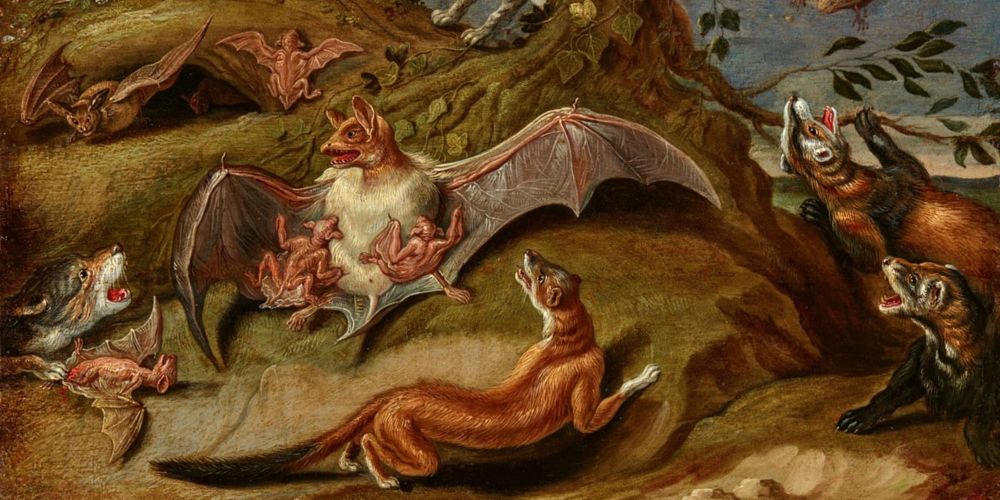
Bats and Viruses: Rumour, Intrigue, Deception, and Spectacle
Bats as Hyperreal Reservoirs of Viral Disease
"The hyperreal bat: more vivid, more coherent, and more narratively satisfying than any bat in nature."
Why does the idea of bats as special viral reservoirs endure?
New Substack post:
robertjgifford.substack.com/p/bats-and-v...
25.11.2025 15:35 —
👍 8
🔁 4
💬 0
📌 0

A group of Adélie penguins in #Antarctica. Photo courtesy Arvind Varsani/ASU.
Studying penguin virology in #Antarctica:
@arizonastateuni.bsky.social researchers lead in discovery of new viruses in Antarctic penguins, expanding knowledge of polar ecosystems @viralnomad.bsky.social
news.asu.edu/b/20251124-s...
25.11.2025 21:48 —
👍 4
🔁 2
💬 1
📌 0
Oh no!
🧪🌎🦑🦉🦊
25.11.2025 08:29 —
👍 16
🔁 5
💬 1
📌 1
Nice. I will be in CHC on route to the Antarctic early Dec and then mid/late Jan
06.11.2025 21:28 —
👍 2
🔁 0
💬 1
📌 0
Congrats
06.11.2025 16:27 —
👍 1
🔁 0
💬 1
📌 0

🚨 Another funded PhD alert🚨
We are recruiting again! For a PhD student to start with us in the @langridgelab.bsky.social October 2026 - please share 👀
If you are interested in foodborne pathogens, public health and phage, look no further 🦠🏥🧬
➡️ tinyurl.com/3zvavp2t ⬅️
Apply by 6 Jan 2026 🗓️
28.10.2025 13:17 —
👍 19
🔁 15
💬 1
📌 1

Postdoctoral researcher in molecular ecology - Uppsala University
Postdoctoral researcher in molecular ecology, Department of Ecology and Genetics, Uppsala University
📢 We have an open position for a postdoc to join my lab. It's a great position @animecol-uu.bsky.social, fully salaried for 2.5 years with all benefits.
www.uu.se/en/about-uu/...
The project is about transmission patterns of bacteria and antimicrobial resistance (AMR) in aquatic insects. 🧬🦠 (1/3)
27.10.2025 07:43 —
👍 69
🔁 78
💬 2
📌 3
Dr Jeremy Keown
Dr Jeremy Keown
warwick.ac.uk/fac/cross_fa...
I am advertising for a PhD position in my group. We'll be investigating how pathogenic RNA viruses replicate in the nucleus. The project will teach cryoEM/ET, virus culture, and in vitro assays.
If you're interested reach out and I'd be happy to have a chat.
24.10.2025 07:58 —
👍 15
🔁 18
💬 0
📌 1