Dr. Cole's presentations at the Neisseria meetings were delightful. So sorry he is gone.
26.02.2026 19:54 — 👍 1 🔁 0 💬 0 📌 0Dr. Cole's presentations at the Neisseria meetings were delightful. So sorry he is gone.
26.02.2026 19:54 — 👍 1 🔁 0 💬 0 📌 0
This is a great @cidjournal.bsky.social supplement for all you #gonorrhea, #STI, and #AMR enthusiasts. Or for anyone who’s heard about drug-resistant gonorrhea and wants to learn more.
Will link articles in 🧵 below - check it out and share! #openaccess
#IDsky #STIsky
bsky.app/profile/carb...

A small dish containing black-eyed peas, collard greens, a wedge of cornbread, and a Serrano pepper.
Wishing a happy and successful year to all of you
01.01.2026 18:56 — 👍 8 🔁 0 💬 0 📌 0
We mapped the whole human fallopian tube in 3D and at single-cell resolution via our CODA workflow.
More about this work here: biorxiv.org/content/10.1...

Excited to share my latest postdoctoral work in the Shen Lab at Tufts! In this study, we follow up on an exciting finding by former grad student @shailab.bsky.social that C diff uses its Class A PBP (PBP1) to drive cell division (unlike previously studied bacteria)! journals.plos.org/plosgenetics...
28.10.2025 01:25 — 👍 31 🔁 17 💬 1 📌 4Go Fuzzy Bees!
19.10.2025 22:07 — 👍 1 🔁 0 💬 0 📌 0
A Lyt at the end of the tunnel? Unraveling the complex interactions of the N-acetylglucosaminidase LytG in cell wall metabolism
RSC Chemical Biology
pubs.rsc.org/en/content/a...

STD cases have fallen, but not syphilis in newborns. Data for 2024 from the CDC showed a 3rd consecutive year of fewer gonorrhea cases & the 2nd year of fewer adult cases of chlamydia & the most infectious form of syphilis. However, congenital syphilis cases aren't seeing the same improvements👇
25.09.2025 10:46 — 👍 11 🔁 5 💬 1 📌 0
Cool work by @mkjos.bsky.social Daniel Straume showing that the competence-induced peptidoglycan hydrolase LytF promotes pilus extrusion, thereby enhancing the efficiency of DNA uptake in S, sanguinis. Is this also a major function of the pneumococcal CbpD fratricide?
www.biorxiv.org/content/10.1...
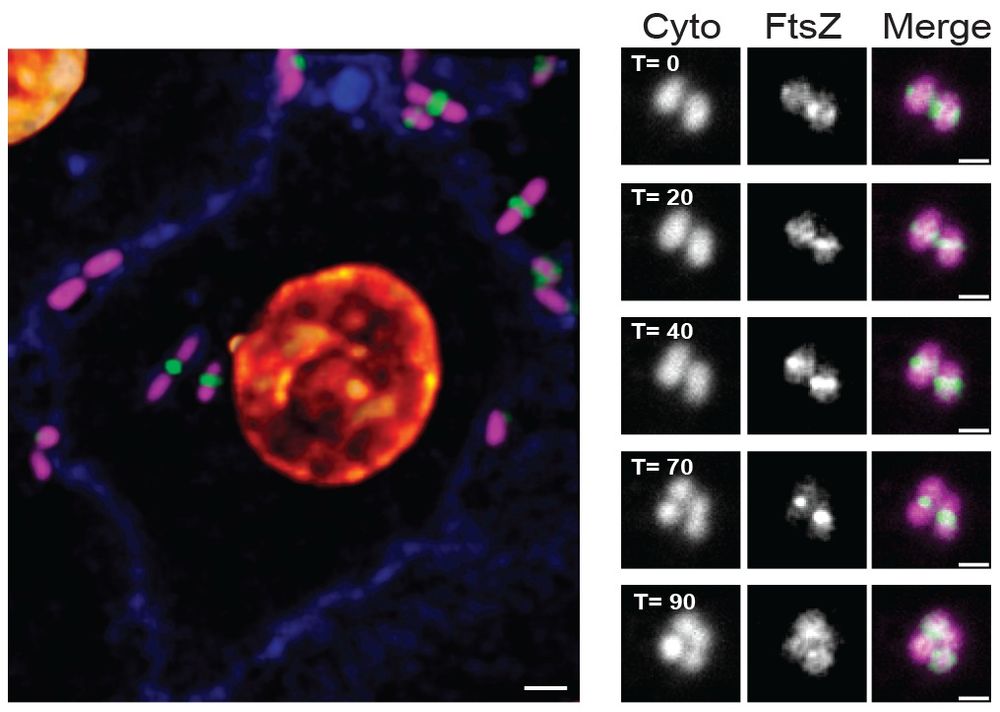
Divisome dynamics in intracellular UPEC cells during infection. Left: Representative confocal image of intracellular UTI89 expressing a division marker (FtsZ-mCitrine; pseudo coloured green) with mCherry (pseudo coloured magenta) as cytoplasmic marker, bladder cell membranes shown in blue (CellBrite Steady Membrane 405) and nuclei shown in gold (NucSpot Live Cell 650). Right: Still images of a time-lapse sequence showing FtsZ-mCitrine (pseudo coloured green) driven coccobacilli divisions imaged using HiLo illumination.
Uropathogenic #Ecoli #UPEC proliferate as round coccoid cells during intracellular infection; @alaskapokhrel.bsky.social @bill-lab.bsky.social &co show that accelerated division via FtsZ constriction drives this, the coccobacillus form persisting for generations @plosbiology.org 🧪 plos.io/4gdx97i
04.09.2025 08:53 — 👍 7 🔁 10 💬 1 📌 0
Our paper describing transformation of Gardnerella species is published in Infection and Immunity. We think this will lead to further molecular studies of bacterial vaginosis and potential therapeutics.
journals.asm.org/doi/10.1128/...

This first-author publication is my… first! Archaea kill bacteria by targeting their Achilles’ heel: peptidoglycan. Big shoutout to @ahocher.bsky.social, @valeriesoo.bsky.social, Pauline Misson, @tobiaswarnecke.bsky.social and MRC LMS Proteomics. A thread 🔽
journals.plos.org/plosbiology/...
Bacterial cell wall & periplasm paradigm shift - important read #MicroSky
www.nature.com/articles/s41...
Thrilled to share the first preprint from my group! Prevotella are predominant but understudied members of the respiratory microbiome. They have a reputation for being hard to work with, but understanding them is likely important for understanding how they contribute to respiratory health. 🧫🔬
12.07.2025 14:26 — 👍 34 🔁 17 💬 1 📌 1
Kurt-Jones et al. show that IFN-epsilon increases production of CMP-sialic acid from epithelial cells, allowing gonococci to add sialic acid to their lipooligosaccharide and become resistant to an antimicrobial peptide. www.cell.com/cell-host-mi...
10.07.2025 18:30 — 👍 1 🔁 0 💬 0 📌 0
I wrote a preview for Cell Host & Microbe about the article from Kurt-Jones et al. on IFN-epsilon enhancement of gonococcal infection. One cool facet of this work is that it provides a possible mechanism for Chlamydia to increase gonococcal co-infection. www.cell.com/cell-host-mi...
10.07.2025 18:30 — 👍 2 🔁 0 💬 2 📌 0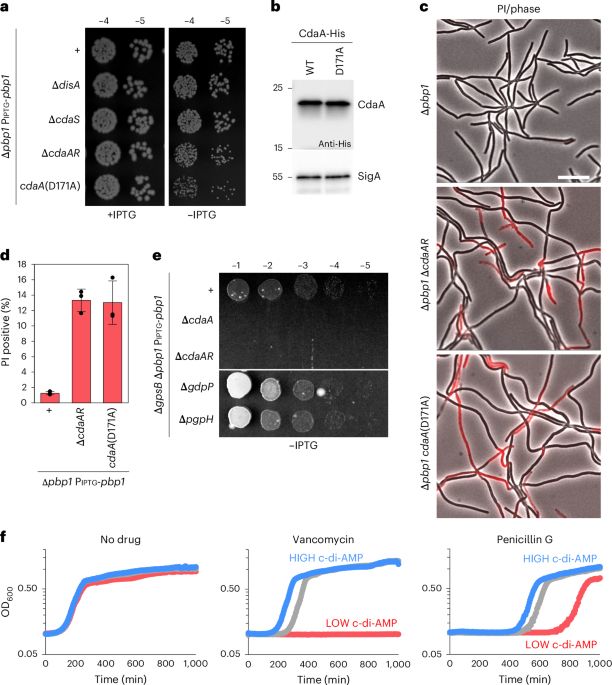
Very happy to share that a large part of my thesis work is out today: B. subtilis uses the second messenger c-di-AMP to modulate its turgor pressure in response to the state of its cell envelope. www.nature.com/articles/s41...
17.06.2025 12:20 — 👍 59 🔁 27 💬 4 📌 2That headline is a little misleading. The vaccine is the meningococcal vaccine 4CMenB. It's been licensed in the US for ten years, for protecting against group B meningococcal disease. Yes, it provides some protection against gonorrhea, but it's not a new GC vaccine, something that is still needed.
21.05.2025 18:29 — 👍 1 🔁 0 💬 0 📌 0
78 morel mushrooms, mostly of the yellow variety, dry on a metal dish rack.
It's the height of morel season in south-central Wisconsin.
16.05.2025 19:58 — 👍 23 🔁 0 💬 0 📌 0Being geneticists, we also needed to complement. We built a complementation construct that directs introduced DNA to a region on the chromosome that is conserved among Gardnerella species. I think these tools should be useful for the whole Gardnerella community.
12.05.2025 17:04 — 👍 0 🔁 0 💬 0 📌 0Finally, Amy made a plasmid that had mutated pheS as a counter-selectable marker. So, we were able to deliver mutation constructs to the chromosome by selecting for the plasmid to integrate and then selecting for it to resolve. The isolates could be screened to see if they kept the mutation.
12.05.2025 17:00 — 👍 1 🔁 0 💬 0 📌 0To get DNA constructs across the actinobacterial envelope, we grew the bacteria with a cell wall-weakening agent, D-cycloserine. To protect the DNA, we needed to methylate it, and circular DNA worked better than linear. So, suicide plasmids worked.
12.05.2025 16:57 — 👍 0 🔁 0 💬 2 📌 0The oligo work was nice, but we wanted to use selectable markers to knock-out virulence and colonization genes. Amy Klimowicz tried many different methods to make electroporation work better, to protect the DNA from degradation, and then to get insertions in the chromosome.
12.05.2025 16:53 — 👍 0 🔁 0 💬 1 📌 0I heard that Dr. Kim Jefferson's lab at VCU was doing oligo recombineering in Gardnerella, and she was nice enough to collaborate with us. Then Dr. Erin Garcia who was doing that work, came to post-doc with us. Erin taught us to electroporate Gardnerella with oligos.
12.05.2025 16:49 — 👍 0 🔁 0 💬 1 📌 0We've worked on Neisseria gonorrhoeae for decades. After an interesting session at the Neisseria meeting in Asilomar, I decided we needed to understand more about the other bacteria that gonococci interact with. Gardnerella was an obvious choice, since BV patients are more likely to get gonorrhea.
12.05.2025 16:46 — 👍 0 🔁 0 💬 1 📌 0
Checkout out our preprint describing mutagenesis methods for Gardnerellla species. We showed that a vaginolysin mutant was defective in lysing cervical cells in human cervix explants and that a sialidase mutant was deficient in degrading human cervical mucus.
www.biorxiv.org/content/10.1...

A scanning electron micrograph showing rod-shaped Gardnerella vaginalis bacteria colored purple interacting with coccal Neisseria gonorrhoeae bacteria colored pink, all surrounded by biofilm goo colored yellow. The experiment in the picture was done by Amy Klimowicz, and the false-coloring by Melanie Callaghan.
We have developed methods for making targeted mutations in Gardnerella species. It's been a long slog, and the bacteria put up a lot of hurdles. Thanks to the hard work and ingenuity of Amy Klimowicz and Erin Garcia, we can make deletions, point mutations, and complements. Preprint is on bioRxiv.
12.05.2025 15:47 — 👍 15 🔁 3 💬 3 📌 0
Our review on Z-ring placement mechanisms in cocci is out! This was a fun one to write!
#Microsky 🦠🧫

dx.plos.org/10.1371/jour... #MicroSky
18.04.2025 14:30 — 👍 5 🔁 3 💬 0 📌 0So…um…who is doing the testing for multi drug resistant gonorrhea and resistant trichomonas ????
03.04.2025 18:19 — 👍 203 🔁 65 💬 15 📌 6