JOB ALERT!
Lecturer in Biological Sciences
Come and join us in the world class Life Sciences Building at the University of Bristol!
Closing date: Sunday 8 March

JOB ALERT!
Lecturer in Biological Sciences
Interested in our research areas? Click the link in our bio to discover more!
Closing date: Sunday 8 March
JOB ALERT!
We are excited to announce that we are recruiting three new academics at lecturer level!
Click the link below for more info on how to apply, and don’t forget to explore our research themes too!
We look forward to receiving your applications!
www.bristol.ac.uk/jobs/find/de...
12.02.2026 09:13 —
👍 53
🔁 74
💬 0
📌 7

Uppsala in late autumn
Join us at the Evolutionary Biology Centre at Uppsala University. We’re searching for an Assistant Professor in Biology. www.uu.se/en/about-uu/...
28.01.2026 20:28 —
👍 158
🔁 186
💬 1
📌 5
Original post on sciences.social
"The relentless pursuit of academic success through publications in prestigious journals nearly broke me. Looking back, I’m not sure it was worth the sacrifice. " From, Zvonimir Marelja, PhD in Science Magazine (a prestigious journal) […]
30.01.2026 11:59 —
👍 7
🔁 7
💬 0
📌 0
Nice job (Prof in Animal Ecology) in a nice (unesco) city, in a great department: www.uni-regensburg.de/fileadmin/us...
26.01.2026 15:52 —
👍 8
🔁 6
💬 0
📌 0
Temporal synchrony between human odor rhythms and mosquito olfactory preference shapes host attraction
For anthropophilic mosquitoes such as Aedes aegypti, aligning host-seeking with human availability enhances foraging efficiency and reproductive success. Although time of day modulates mosquito activity and olfactory sensitivity, it remains unknown whether human hosts display rhythmic changes in odor cues and whether mosquitoes adjust their sensory responses accordingly. Here, we combine chemical, behavioral, genetic, and transcriptomic approaches to reveal that both mosquitoes and their human hosts in this interaction are temporally synchronized. Gas chromatography-mass spectrometry showed systematic daily shifts in human body odor composition between morning and evening. Correspondingly, mosquitoes prefer host odors that match their own active phase, a time-specific preference abolished in timeless mutants and under constant darkness. Silencing the timeless gene further induced an aversion for the host scent under light-dark conditions. Transcriptomic analysis of mosquito heads and antennae uncovered rhythmic expression of sensory and neuromodulatory genes, driven by both circadian and light-dark cycles and which peaks during mosquitoes' active periods, with rhythmic co-expression networks collapsing in timeless knockouts. Together, these results show that mosquito attraction to humans is temporally tuned by the interplay of host odor rhythms and mosquito sensory rhythms, revealing a previously unrecognized form of interspecific temporal synchronization in vector-host interactions. ### Competing Interest Statement The authors have declared no competing interest. National Institutes of Health, R01AI155785, R21AI166633, R01AI148551 National Institute of Food and Agriculture, VA-160212
Check out this new preprint from the lab: www.biorxiv.org/content/10.6...
Lan Lou, @juliendevilliers.bsky.social, @karthikeyanc.bsky.social, @lahonderelab.bsky.social, the Tu Lab, and @joshuabenoit.bsky.social show that mosquito olfactory rhythms are synced with daily rhythms in how we smell.
22.01.2026 12:21 —
👍 8
🔁 6
💬 1
📌 2

The commitments in the SAFE Labs Handbook.
A new community-driven lab handbook for reducing conflict and creating more positive and equitable work environments gets strong support from a survey of 200 researchers.
buff.ly/K7CGFLV
18.12.2025 21:02 —
👍 30
🔁 12
💬 0
📌 1

Dr Patrick Kennedy, winner of the ASAB Christopher Barnard Award.
🌟Huge CONGRATULATIONS to @patrick-kennedy.bsky.social who has won the @asab.org Christopher Barnard Award for Outstanding Contributions by a New Investigator. 🤗
Research on social evolution and what links climate & cooperation in a changing world, using #wasps as models.
#worthywinner #ECR #proud
17.12.2025 16:12 —
👍 48
🔁 8
💬 0
📌 0

ASAB spring conference 2026 logo with gorilla
If you’re sad #ASABWinter2025 is over, have no fear! #ASABSpring2025 🌼 is coming soon, from March 23-25 at Bristol University. It’s an especially fantastic meeting for students and ECRs 🤠
Don’t forget travel grants are due Feb 1!
www.asab.org/conferences-...
16.12.2025 17:08 —
👍 32
🔁 18
💬 0
📌 1
Excited to be part of the amazing team behind our upcoming symposium on Sex Evolution at #SMBE2026!
🔹 Daniel Jeffries
🔹 Paul Jay
🔹 @sphaeromeria.bsky.social
🔹 @astridboehne.bsky.social
🔹 @cbenvenuto.bsky.social
Join us in Copenhagen for cutting-edge discussions on #sex #evolution
17.12.2025 09:38 —
👍 17
🔁 10
💬 0
📌 0

Proud supervisor time! Well done @iswaryamohan.bsky.social for a lovely poster about her PhD on mosquito oviposition behaviour at #ASABWinter2025
16.12.2025 16:43 —
👍 15
🔁 1
💬 0
📌 0
Congratulations @kokkonut.bsky.social!
16.12.2025 16:13 —
👍 14
🔁 0
💬 0
📌 0

Ines in front of a slide reading „Animal Camouflage: evolutionary biology meets neuroscience, art and war“ with a chameleon

Ines in a camo Kilt in front of the podium
Starting with a public lecture by Innes Cuthill on camouflage… not only did he come dressed in camo, but a camo kilt 🏴 ! #ASABWinter2025
15.12.2025 09:37 —
👍 20
🔁 7
💬 0
📌 1
Sad to be missing the #ASABWinter2025
@asab-meetings.bsky.social conference this week, but two postdocs that may interest ASAB members:
15.12.2025 08:21 —
👍 10
🔁 11
💬 0
📌 1


Edinburgh at dawn and dusk today. Beautiful city to be in at this time of year - and lots of wonderful sensory information & behaviour talks/posters today at #ASABWinter2025 @asab.org @asab-meetings.bsky.social
15.12.2025 23:37 —
👍 24
🔁 3
💬 0
📌 0

A curated global dataset of social contact between diverse language communities
www.nature.com/articles/s41...
11.12.2025 19:34 —
👍 24
🔁 14
💬 0
📌 0

🧬✨ It’s official!
EMPSEB31 is coming to Germany, June 2026! Link in Bio 😉
Europe’s friendliest evolution meeting returns, by PhD students, for PhD students.
📍Oberwiesenthal, Germany
📅8–12 June 2026
🚨Save the date & follow us for updates!
#EMPSEB31 #EvoBio #PhDLife #ScienceCommunity #EMPSEB
11.12.2025 11:00 —
👍 15
🔁 11
💬 0
📌 0
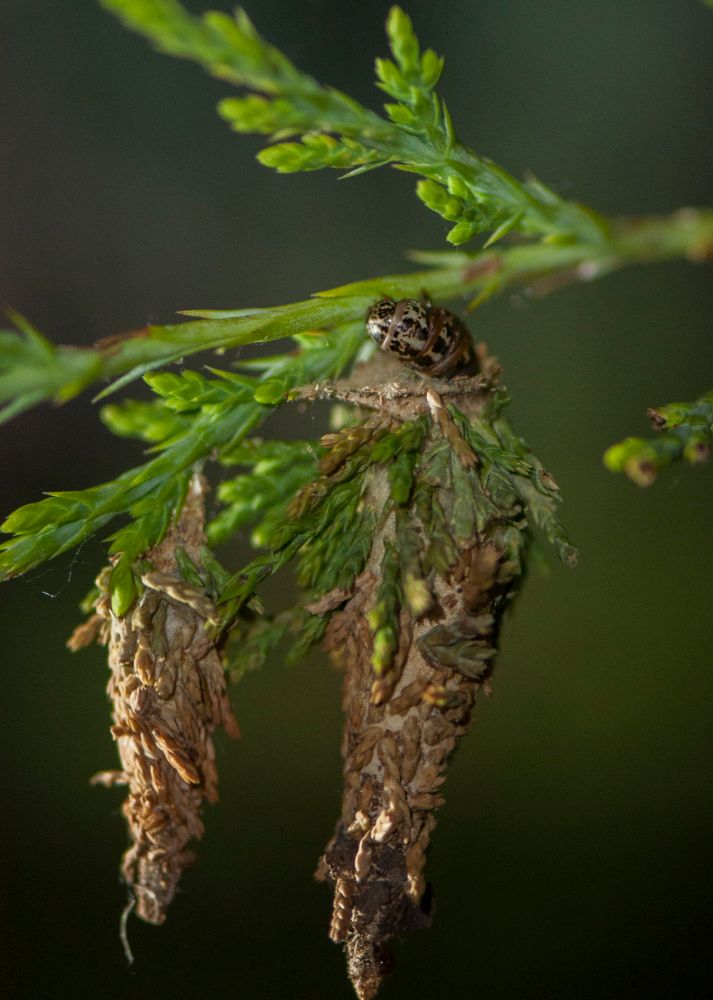
Two evergreen bagworms feeding

One abbot's bagworm hanging out
Pre-print and weird repro thread time!
I've posted here about scale insects a lot, but ~half of my research is on Lepidoptera. My lab is developing bagworm moths (Psychidae) as models for comparative genomics.
You probably know them like you see in the pics below: caterpillars that make cases.
09.12.2025 13:41 —
👍 19
🔁 6
💬 2
📌 1

Shades of blue and red in a slice through an immuno stained brain showing some deliciously lovely looking mushroom body lobes - ripe for investigation during a funded PhD - and the central complex. Image credit: Dr Max Farnworth
🚨RA/PhD position available in evolutionary neurobiology 🚨
Working on a deep dive into circuit changes during mushroom body expansion in Heliconius butterflies @camzoology.bsky.social
- employment benefits
- 4 years funding
- 1000% fun
Deadline: 14/1/2026
Details:
www.cam.ac.uk/jobs/researc...
21.11.2025 14:30 —
👍 72
🔁 65
💬 2
📌 4
This looks very interesting and combines some of my 'evo-passions' too - disease vectors and ageing!
05.12.2025 17:45 —
👍 5
🔁 0
💬 0
📌 0

A table showing profit margins of major publishers. A snippet of text related to this table is below.
1. The four-fold drain
1.1 Money
Currently, academic publishing is dominated by profit-oriented, multinational companies for
whom scientific knowledge is a commodity to be sold back to the academic community who
created it. The dominant four are Elsevier, Springer Nature, Wiley and Taylor & Francis,
which collectively generated over US$7.1 billion in revenue from journal publishing in 2024
alone, and over US$12 billion in profits between 2019 and 2024 (Table 1A). Their profit
margins have always been over 30% in the last five years, and for the largest publisher
(Elsevier) always over 37%.
Against many comparators, across many sectors, scientific publishing is one of the most
consistently profitable industries (Table S1). These financial arrangements make a substantial
difference to science budgets. In 2024, 46% of Elsevier revenues and 53% of Taylor &
Francis revenues were generated in North America, meaning that North American
researchers were charged over US$2.27 billion by just two for-profit publishers. The
Canadian research councils and the US National Science Foundation were allocated US$9.3
billion in that year.

A figure detailing the drain on researcher time.
1. The four-fold drain
1.2 Time
The number of papers published each year is growing faster than the scientific workforce,
with the number of papers per researcher almost doubling between 1996 and 2022 (Figure
1A). This reflects the fact that publishers’ commercial desire to publish (sell) more material
has aligned well with the competitive prestige culture in which publications help secure jobs,
grants, promotions, and awards. To the extent that this growth is driven by a pressure for
profit, rather than scholarly imperatives, it distorts the way researchers spend their time.
The publishing system depends on unpaid reviewer labour, estimated to be over 130 million
unpaid hours annually in 2020 alone (9). Researchers have complained about the demands of
peer-review for decades, but the scale of the problem is now worse, with editors reporting
widespread difficulties recruiting reviewers. The growth in publications involves not only the
authors’ time, but that of academic editors and reviewers who are dealing with so many
review demands.
Even more seriously, the imperative to produce ever more articles reshapes the nature of
scientific inquiry. Evidence across multiple fields shows that more papers result in
‘ossification’, not new ideas (10). It may seem paradoxical that more papers can slow
progress until one considers how it affects researchers’ time. While rewards remain tied to
volume, prestige, and impact of publications, researchers will be nudged away from riskier,
local, interdisciplinary, and long-term work. The result is a treadmill of constant activity with
limited progress whereas core scholarly practices – such as reading, reflecting and engaging
with others’ contributions – is de-prioritized. What looks like productivity often masks
intellectual exhaustion built on a demoralizing, narrowing scientific vision.

A table of profit margins across industries. The section of text related to this table is below:
1. The four-fold drain
1.1 Money
Currently, academic publishing is dominated by profit-oriented, multinational companies for
whom scientific knowledge is a commodity to be sold back to the academic community who
created it. The dominant four are Elsevier, Springer Nature, Wiley and Taylor & Francis,
which collectively generated over US$7.1 billion in revenue from journal publishing in 2024
alone, and over US$12 billion in profits between 2019 and 2024 (Table 1A). Their profit
margins have always been over 30% in the last five years, and for the largest publisher
(Elsevier) always over 37%.
Against many comparators, across many sectors, scientific publishing is one of the most
consistently profitable industries (Table S1). These financial arrangements make a substantial
difference to science budgets. In 2024, 46% of Elsevier revenues and 53% of Taylor &
Francis revenues were generated in North America, meaning that North American
researchers were charged over US$2.27 billion by just two for-profit publishers. The
Canadian research councils and the US National Science Foundation were allocated US$9.3
billion in that year.

The costs of inaction are plain: wasted public funds, lost researcher time, compromised
scientific integrity and eroded public trust. Today, the system rewards commercial publishers
first, and science second. Without bold action from the funders we risk continuing to pour
resources into a system that prioritizes profit over the advancement of scientific knowledge.
We wrote the Strain on scientific publishing to highlight the problems of time & trust. With a fantastic group of co-authors, we present The Drain of Scientific Publishing:
a 🧵 1/n
Drain: arxiv.org/abs/2511.04820
Strain: direct.mit.edu/qss/article/...
Oligopoly: direct.mit.edu/qss/article/...
11.11.2025 11:52 —
👍 642
🔁 453
💬 8
📌 66

Dr Hester Weaving giving seminar on the title slide

Hester visiting the tsetse lab

Gull at the window of our lunch in the LSB skylounge
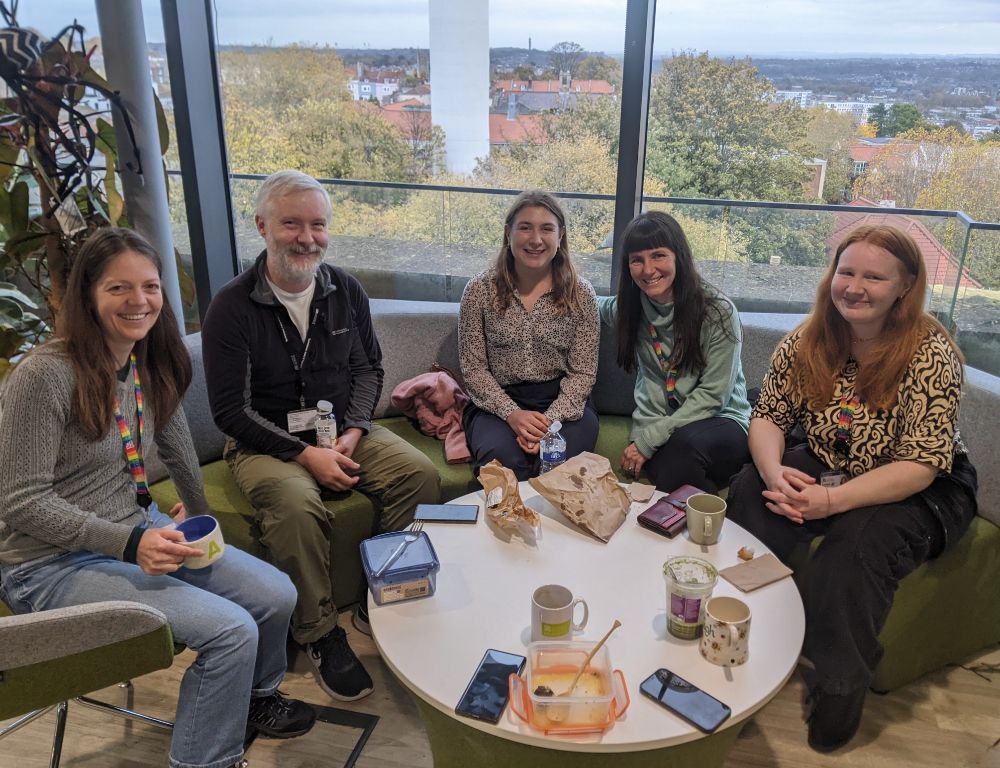
EVE lab at lunch in the Skylounge
Lovely visit yesterday from EVE lab alumna, Dr Hester Weaving, who gave a seminar about her research on evaluating fitness and environmental impact of gene drive mosquitoes in an ecological context - exciting work! She visited her old mates in the tsetse lab, and a young gull came to say hello too.
05.11.2025 16:52 —
👍 5
🔁 0
💬 0
📌 0
I love this! And there's also Alex Wolf looking out at the blood bath, that's how disagreements were settled back then!
05.10.2025 10:10 —
👍 2
🔁 0
💬 0
📌 0

Happy In Theory
This is the short story of my long, 20 year search for a stable academic home. There is a lot of success and a lot of pain here, and no happy ending.
New Substack post
It's very personal: my story of a 20-year academic career, and the many challenges of theoretical and cross-disciplinary work
As I put it in the subtitle: There is a lot of success and a lot of pain here, and no happy ending
thomscottphillips.substack.com/p/happy-in-t...
23.05.2025 09:28 —
👍 106
🔁 41
💬 18
📌 8