Their full article can be accessed here: onlinelibrary.wiley.com/doi/10.1111/...
02.12.2025 07:46 — 👍 5 🔁 2 💬 0 📌 0
@ftrauner.bsky.social
Professor of political science at the #VUB and Dean of the VUB’s @bsog.be | working on #EuropeanGovernance; #migration; #asylum; #InternalSecurity | teaching also at the @collegeofeurope.bsky.social
Their full article can be accessed here: onlinelibrary.wiley.com/doi/10.1111/...
02.12.2025 07:46 — 👍 5 🔁 2 💬 0 📌 0However, as the authors write, the inclusion into all types of agreements 'does not follow a strategic selection logic based on trade or migration interdependence'. In other words, by having migration control clauses into most agreements including trade, the EU undermined their actual relevance.
02.12.2025 07:46 — 👍 4 🔁 0 💬 1 📌 0@pzlotnik.bsky.social @lutzphilipp.bsky.social and Sandra Lavenex did research on this issue and traced the first migration control clauses in preferential trade agreements to the mid-1980s. They then became almost standard in different external agreements of the EU.
02.12.2025 07:46 — 👍 2 🔁 1 💬 1 📌 0@politico.eu reports that the EU considers withdrawing trade benefits if a third country refuses to cooperate on readmission. While the EU seems to be more determined this time, this line of thinking is actually not new at all from a longitudinal perspective.
02.12.2025 07:46 — 👍 5 🔁 1 💬 1 📌 0
🚨 New analysis of #Pact and #EU asylum governance 🚨
Which lessons to be drawn from the Dublin system for the implementation of the New Pact’s solidarity mechanism? This paper analyses all transfers that took place between 2008 and 2024 in the EU.
www.epc.eu/publication/...
Curious about how fairness and solidarity can reshape EU asylum policy—and what the Dublin system teaches us for the new solidarity mechanism? Join my talk on Monday, 24 Nov at 16:00 in Vienna (in English, online access available). Register and take part!
eif.univie.ac.at/downloads/ve...

Hey Saskia, the Press Release of the Commission summarizes the categories of the different countries in a precise way: ec.europa.eu/commission/p...
13.11.2025 11:06 — 👍 1 🔁 1 💬 1 📌 0I had a bit of a mix up with countries so I created a new one today. It also includes new information...
13.11.2025 08:45 — 👍 1 🔁 0 💬 0 📌 0👀 Let’s hope this outcome is avoided. The next steps in operationalising the Solidarity Mechanism will require close attention and political finesse. The stakes for EU asylum responsibility-sharing are high. 🇪🇺✨
13.11.2025 08:45 — 👍 2 🔁 0 💬 0 📌 0🔁 Some capitals have floated another condition: they might only accept relocations if 🇮🇹 Italy and 🇬🇷 Greece resume taking more Dublin transfers.
This could lead to zero-sum exchanges of migrants rather than genuine burden-sharing — hardly the goal of solidarity. ⚖️
➕ All in all, 18 Member States are experiencing some form of pressure — while 9 are not.
But here comes the political crunch: several governments, notably 🇭🇺 Hungary, strongly oppose relocations. So will the Council be able to assemble meaningful solidarity pledges? 🧠
So who remains? 🟢 Nine states are reported to have no migratory pressures: 🇩🇰 Denmark, 🇭🇺 Hungary, 🇱🇺 Luxembourg, 🇲🇹 Malta, 🇵🇹 Portugal, 🇷🇴 Romania, 🇸🇰 Slovakia, 🇸🇮 Slovenia, 🇸🇪 Sweden.
13.11.2025 08:45 — 👍 1 🔁 0 💬 1 📌 0🔄 Four countries sit in both categories: 🇧🇬 Bulgaria, 🇪🇪 Estonia, 🇭🇷 Croatia and again 🇵🇱 Poland.
They are simultaneously “at risk” and already facing “significant” challenges. These states can seek deductions and qualify for financial support. 🧰
🧮 Six Member States — among them 🇦🇹 Austria and 🇨🇿 Czechia — are classified as facing a significant migratory situation.
They can request deductions from their contributions to the Solidarity Pool. That means that they may not offer relocations, but financial contributions remain expected. 💼
💶 These states may access financial support, and their situation will be reassessed relatively quickly.
13.11.2025 08:45 — 👍 1 🔁 0 💬 1 📌 0Twelve others — including major players like 🇩🇪 Germany, 🇫🇷 France and 🇵🇱 Poland — are labelled at risk of migratory pressures.
This can stem from high arrivals, overstretched reception systems, or concerns about the weaponisation of migration. ⚠️
🌊 Four states are officially under migratory pressure: 🇬🇷 Greece, 🇨🇾 Cyprus, 🇪🇸 Spain and 🇮🇹 Italy.
They can tap into the full set of EU solidarity tools: relocations, financial aid, and operational or technical assistance. 🤝
🇪🇺📊 The @ec.europa.eu has released its first European Annual Asylum and Migration Report. It maps the migratory situation across all Member States and outlines who may receive support — and who is expected to provide it. The key question: can the system work in practice? 🧩
13.11.2025 08:45 — 👍 3 🔁 3 💬 2 📌 0I have to correct myself here: Bulgaria, Estonia, Croatia and Poland are counted for both categories (risk and significant situation). The total is then not 22 but 14. Apologies for the error.
12.11.2025 13:29 — 👍 0 🔁 0 💬 1 📌 0Here is the link to the full report: home-affairs.ec.europa.eu/document/dow...
12.11.2025 06:54 — 👍 1 🔁 0 💬 0 📌 0If that happens, solidarity stays a paper tiger 🐯 — more rhetoric than reality.
12.11.2025 06:54 — 👍 0 🔁 0 💬 1 📌 0Next up: turning solidarity into action. ⚙️
But here’s the catch — real, tangible support will rely on a small group of states carrying most of the weight.
Two big risks ahead:
1️⃣ Solidarity contributions may fall short of making a real difference 💶
2️⃣ Key member states might refuse to play along ❌
That’s very likely far more than the Commission initially hoped for — reflecting intense 🇪🇺 lobbying by governments eager for formal recognition of migratory pressures. Who is exactly on the list was probably a main reason why the publication of this report was delayed for about a month.
12.11.2025 06:54 — 👍 0 🔁 0 💬 1 📌 0🟡 18 others face the "risk of migratory pressures" or a "significant migration situation".
➡️ That’s 22 member states entitled to solidarity or to reduce their contributions regarding solidarity for others.
📊 4 countries officially under “migratory pressure”: 🇬🇷 Greece, 🇨🇾 Cyprus, 🇪🇸 Spain, 🇮🇹 Italy
12.11.2025 06:54 — 👍 0 🔁 0 💬 1 📌 0
Es freut mich, einen Beitrag für @bpb.de zum Thema
EU-Informationskampagnen zur Abschreckung irregulärer Migration verfasst zu haben. Frei online abrufbar👇
www.bpb.de/themen/migra...
🚨 New publication out!
Together with @linavosyliute.bsky.social, we examine the EU’s risk of falling into a far-right trap in the negotiations on the Return Regulation.
📄 Published as an open-access Policy Brief by @birmm.bsky.social l — free to read & share!
zenodo.org/records/1696...

Our article on the impact on Russia's war against Ukraine on the reform of the Common European Asylum System has finally ended its "early view"-status. It found a home in the current issue of European Politics and Society - and is still freely accessible to all.
www.tandfonline.com/doi/full/10....

Happy to have engaged with the 'Foundation for Family Businesses and Politics' on the subject of migration, skills shortages and Europe's strive to attract talent.
#SkillsShortage #EuropeanTalent #FamilyBusinesses
youtu.be/0CWWsldfufg?...
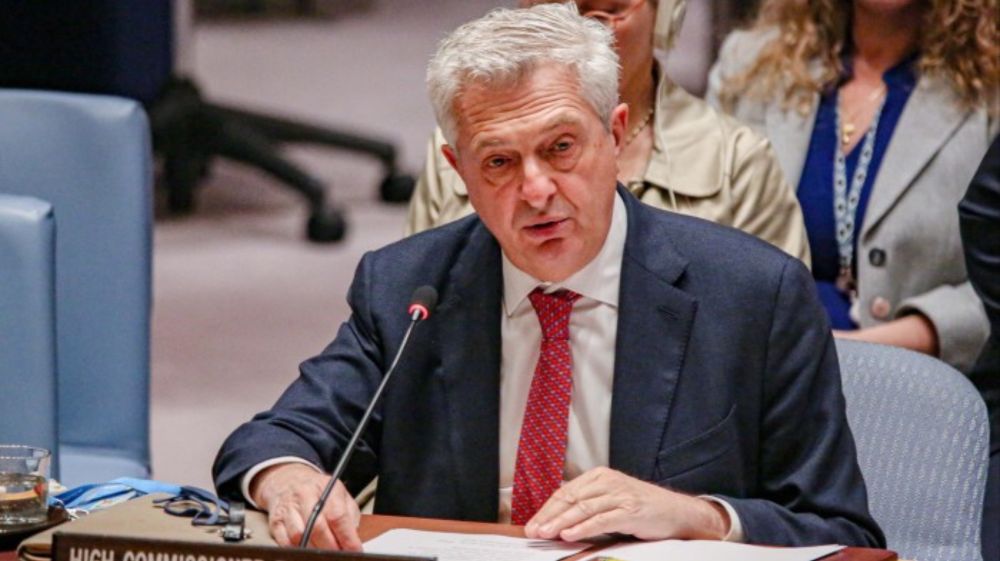
Before the 2015 refugee crisis, the cash-strapped World Food Programme had to drop 1/3 of its Syrian refugees from food vouchers in its Middle Eastern programme. A few months later, arrival numbers in Europe increased. Now, 10 years later, all of this seems forgotten...
www.ft.com/content/976f...