

New paper led by University of Wisconsin-Madison undergrad alum Coleman Nelson finds TOI-700d is robustly habitable, while TOI-700e sits on the edge: iopscience.iop.org/article/10.1...
14.02.2026 18:51 — 👍 4 🔁 0 💬 0 📌 0
New paper led by University of Wisconsin-Madison undergrad alum Coleman Nelson finds TOI-700d is robustly habitable, while TOI-700e sits on the edge: iopscience.iop.org/article/10.1...
14.02.2026 18:51 — 👍 4 🔁 0 💬 0 📌 0
...with high-e migration, but warm Jupiters may be a narrow sweet spot.
iopscience.iop.org/article/10.3... #exoplanets
New ApJ paper: Can inner planets survive when a giant becomes a hot/warm Jupiter via high-eccentricity tidal migration? Usually no. Survival requires the giant’s periastron to stay >14 mutual Hill radii away. Observed systems with hot Jupiters + inner planets are inconsistent...
03.02.2026 11:37 — 👍 18 🔁 2 💬 2 📌 1
AbSciCon will be in Madison, WI in May 2026! Please consider submitting an abstract to session 39, Dynamical Environments of Habitable Worlds, led by Joseph Livesey.
Hope to see you all there!
I use that paper all the time! I can't believe it was almost rejected!!
14.11.2025 02:50 — 👍 2 🔁 0 💬 1 📌 0Interested in coming to UW-Madison and working with WiCOR on questions related to the origin of life? Apply for this new postdoctoral fellowship opportunity. Applications due November 15th!
30.10.2025 11:56 — 👍 2 🔁 1 💬 0 📌 0If you are hiring this fall, keep an eye out for Marguerite Epstein-Martin, a dynamicist who works across 10^8 orders of magnitude in central body mass!
18.10.2025 01:33 — 👍 2 🔁 0 💬 0 📌 0Marguerite's previous work spans time-evolution of AGN disks to secular resonances in young protoplanetary disks. In this new paper, she computes where in AGN disks stellar-mass BH binaries may survive, and when they will be stochastically forced out of resonance.
18.10.2025 01:33 — 👍 2 🔁 0 💬 1 📌 0
Mean motion resonances (familiar from planetary systems) also govern how stellar-mass BHs migrate and merge in AGN disks. Marguerite Epstein-Martin (applying to postdocs THIS FALL) has a new paper “Mean Motion Resonances in AGN Disks” (arxiv.org/abs/2510.128...). #exoplanets
18.10.2025 01:33 — 👍 8 🔁 2 💬 1 📌 0
Some hot Jupiters might not have traveled far.
New simulations by UW-Madison recent undergrad alum Devansh Mathur show that if enough solid material is funneled inward, both a hot Jupiter and its inner companions could form in situ. Accepted to PASP: arxiv.org/abs/2510.135... #exoplanets
I also wrote a blog post with a level of detail in between this post and the paper itself: becker.astro.wisc.edu/2025/10/09/n...
09.10.2025 12:02 — 👍 2 🔁 0 💬 0 📌 0
Published this week in ApJ by UW-Madison undergraduate Eva Stafne: General relativity might save life on planets orbiting white dwarfs. GR-driven orbital precession can suppress tidal heating that would otherwise trigger a runaway greenhouse. arxiv.org/abs/2509.26421 #exoplanets
09.10.2025 12:02 — 👍 10 🔁 1 💬 1 📌 0I am an assistant professor at UW-Madison in the Department of Astronomy, and would like to share new research results.
02.10.2025 23:31 — 👍 0 🔁 0 💬 1 📌 0yes
02.10.2025 23:30 — 👍 0 🔁 0 💬 1 📌 0@bot.astronomy.blue signup
02.10.2025 23:29 — 👍 0 🔁 0 💬 1 📌 0So if you want the water to survive, the planet has to migrate late enough that the white dwarf has cooled and is not so bright in the XUV.
04.09.2025 03:14 — 👍 1 🔁 0 💬 1 📌 0Losing mass loss via Jeans escape is actually not easy (thermolysis occurs at 2000 K or hotter, and bonded H20 is very heavy and hard to lose). Photoevaporation will make the water vapor escape very easily, and white dwarfs are luminous in the XUV when young...
04.09.2025 03:14 — 👍 2 🔁 0 💬 1 📌 0Great question - we actually wrote a paper addressing just this: ui.adsabs.harvard.edu/abs/2025ApJ.... You are 100% right that this process requires high ecc and will cause tidal heating. The main effect (on water) of the tidal heating is to evaporate liquid water into the atmosphere as water vapor.
04.09.2025 03:14 — 👍 1 🔁 0 💬 1 📌 0
When stars die, could life begin? White dwarfs could possibly host planets with oceans, making them worth considering in the search for life.
I wrote about the science (and surprises) of white dwarf planets at The Conversation. theconversation.com/earth-size-s...
Two weeks until abstracts (and requests for travel support) are due for this fall's GLEAM! gleam.astro.wisc.edu/overview/ I hope to see you here!
22.08.2025 17:38 — 👍 0 🔁 0 💬 0 📌 0
We’re so happy to host GLEAM 2025 at UW–Madison this Fall, Nov 6–7! gleam.astro.wisc.edu Join us for two days of exoplanets & community with a view of the shores of Lake Mendota. No registration fee. Travel support available. Abstracts & Travel Support Requests due Sept 5th. #exoplanets
24.07.2025 14:52 — 👍 2 🔁 0 💬 0 📌 1Definition question: Everyone in the field seems to use P~10 days as the boundary between "Hot" and "Warm" Jupiters in the literature. Does anyone know where this boundary actually came from (did a single person come up with it, and if so who / what paper)?
06.07.2025 18:15 — 👍 0 🔁 0 💬 0 📌 0
#AAS246 Chambliss Student Award Winners
The AAS is pleased to announce the Chambliss Astronomy Achievement Student Award winners from the 246th AAS meeting in Anchorage, Alaska, in June 2025. Congratulations, all! aas.org/posts/news/2... 🔭

AOS Prof. Hannah Zanowski studies polar oceanography, and she's now bringing that expertise to WiCOR, where she focuses on planetary oceanography by modeling early Earth and exoplanet conditions to understand what ultimately makes a planet habitable after it forms.
ls.wisc.edu/news/from-ea...
Good question!! And Svetoslav is right, previous work by Madhusudhan et al. (arxiv.org/abs/2108.10888) found that Hycean planets are actually likely habitable to much lager distances due to their large masses which lead to large pressure & subsurface ocean (even if the top layer is ice, like Europa)
18.06.2025 14:19 — 👍 1 🔁 0 💬 1 📌 0Congratulations, Irene, on this excellent (and very complete) paper!!
18.06.2025 01:01 — 👍 2 🔁 0 💬 0 📌 0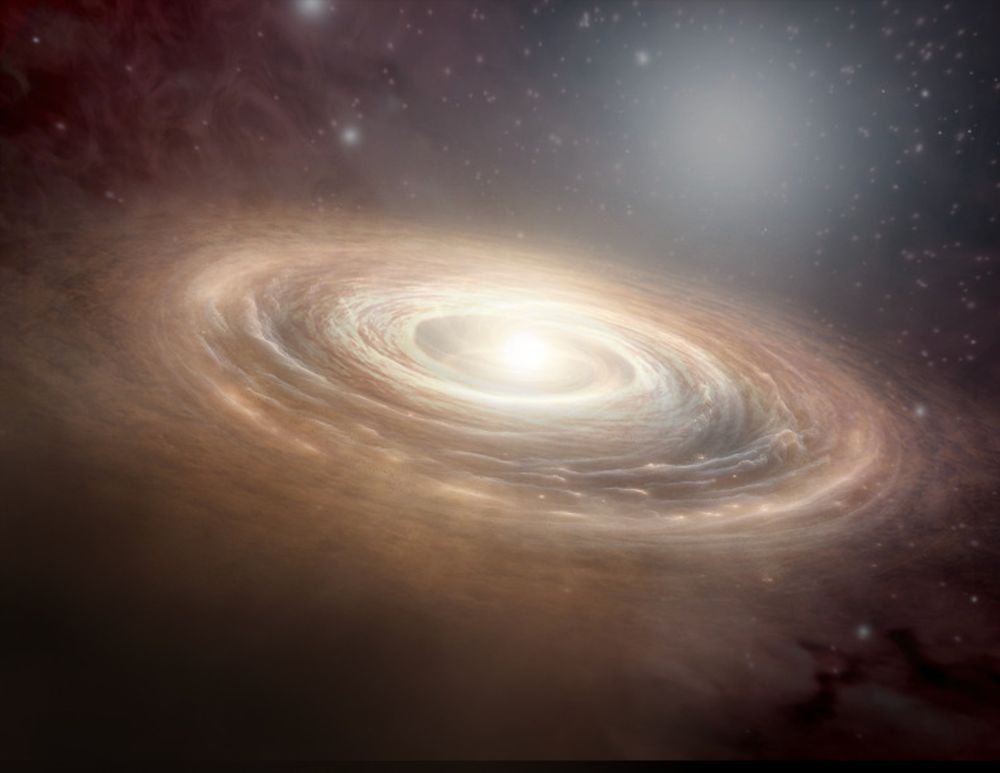
'Baby' stars are typically surrounded by disks loaded with gas, but it isn't long before that mass starts to drift away. #UWMadison astronomers say that might mean gas giants like Jupiter need to form earlier than rocky planets like ours. news.wisc.edu/measuring-ga...
17.06.2025 14:37 — 👍 6 🔁 2 💬 0 📌 0
What does that mean? If a Hycean planet has a giant outer companion, tidal forces can perturb it out of the habitable zone, even if the incident stellar flux looks fine. You can find the accepted paper here:
17.06.2025 12:40 — 👍 4 🔁 1 💬 1 📌 0
Here is a plot from Joseph's paper showing the effect - the transparent region was the location of the known habitable zone, the opaque region is the updated limits including tidal heating. For low mass stars, tides can make a difference!
17.06.2025 12:40 — 👍 1 🔁 1 💬 1 📌 0In a new paper accepted to ApJ Letters and on arXiv now, UW-Madison graduate student Joseph Livesey (astro.wisc.edu/staff/livese...) shows that tidal heating from even modest orbital eccentricity can heat close-in planets around M-dwarfs, shrinking the habitable zone significantly.
17.06.2025 12:40 — 👍 1 🔁 1 💬 1 📌 0