When I was a teenager there was a bus direct from my hometown in Germany to London - we had a British army base, and this direct bus connection was one of the benefits of that. One summer I went on that bus to go volunteer in an old people's home in Southend-on-Sea. I had just turned 18 and was... 🧵
29.09.2025 12:32 —
👍 874
🔁 404
💬 22
📌 118

A screenshot of AI tracking assistance on Royal Mail website. I wrote "there are no options" to which the assistant responds "please select one of the options" to which I responded "there are no options" to which the assistant responded "please select one of the options" - this is going in circles
Hey, @royal-mail.bsky.social I think your bot is broken haha
29.09.2025 18:15 —
👍 0
🔁 0
💬 0
📌 0
Historian of tech @histoftech.bsky.social on how AI hype is a way of gaming the system by "reengineering society around the technology." The goal is to "create an environment—a labor environment, a regulatory environment, a user environment—that will bring that unlikely thing closer to reality."
22.08.2025 11:00 —
👍 75
🔁 41
💬 2
📌 1

#PrimaryCare #GeneralPractice #FamilyMedicine Fabulous collegiate scholarship in clinical education, research and policy at #SAPCCardiff25 international conference- mostly funded by #NIHR highlights: Oxford team delivering useful relevant PC research ready to implement in the #UK10yearHealthPlan -
10.07.2025 07:46 —
👍 5
🔁 1
💬 1
📌 1
This is a laundry list of rhetorical strategies to defend the adoption of a given technology for the purposes of advancing an ideology & economic regime: inevitability, unquestioning praise of “innovation,” buy-in from concerned stakeholders, assurances that partnership is not capitulation. 1/n
09.07.2025 10:57 —
👍 483
🔁 200
💬 9
📌 21
Read our paper about what hospital respiratory clinicians think about offering rescue packs to patients discharged following #COPD exacerbation.
Respiratory clinicians consider a variety of factors and prioritise more immediate risks over the more distant ones.
www.tandfonline.com/doi/full/10....
07.07.2025 13:56 —
👍 0
🔁 0
💬 0
📌 0
Very important work! We’ve been recommending COPD rescue packs for over a decade in the UK national guideline, but the first RCT assessing their efficacy has only started this year 🤯
This publication is part of the bigger research programme and lends an insight into clinicians’ perspective.
03.07.2025 18:27 —
👍 2
🔁 2
💬 0
📌 0
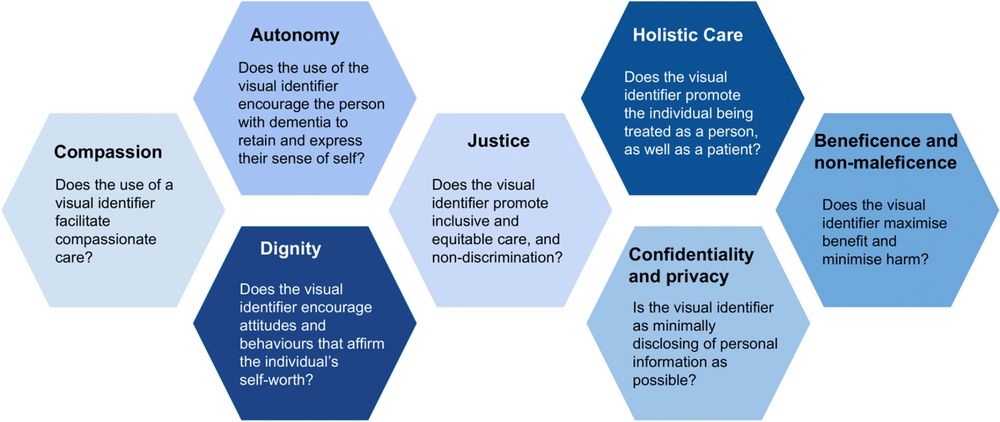
Good care for people with #dementia is very important.
Here's a paper in which @instagraham.bsky.social and I argue that visual identifiers used for hospitalised people with dementia may not be a useful indicator of the quality of care.
onlinelibrary.wiley.com/doi/10.1111/...
03.07.2025 11:20 —
👍 1
🔁 0
💬 0
📌 0

Major statement of changes to the Immigration Rules raises Skilled Worker thresholds and ends overseas recruitment of care workers
138-page statement of changes to the Immigration Rules begins White Paper's "complete reset" of the immigration system
Feeling slightly thrown for a loop finding out about recent changes to the skilled worker visa late last night and not reall seeing much chatter about it elsewhere…
But again, most British citizens do not care about immigrants, so shouldn’t be surprised 😮💨
www.ein.org.uk/news/major-c...
02.07.2025 05:33 —
👍 64
🔁 26
💬 6
📌 9
Who Will Count as Disabled Tomorrow?
The dangerous redefinition of welfare disguised as Labour's compassionate reform.
NEW FROM ME -
Britain is abandoning international medical consensus on disability.
Every other developed nation recognizes cumulative impairment as genuine severity.
We're about to become an anomaly—and the logic of 4+ suggests it was deliberate.
tinyurl.com/mwwb5xv4
29.06.2025 14:29 —
👍 182
🔁 106
💬 3
📌 19
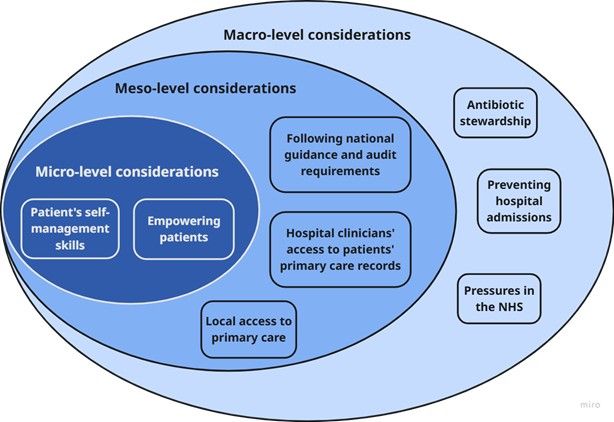
A diagram of clinicians’ considerations around offering rescue packs to patients discharged following COPD exacerbation
There are three nested ovals depicting different levels of considerations, with text inside.
The largest oval has the heading “Macro-level considerations” and includes three text boxes: antibiotic stewardship; preventing hospital admissions; and pressures in the NHS.
The middle oval has the heading “Meso-level considerations” and includes three text boxes: following national guidance and audit requirements; hospital clinicians’ access to patients’ primary care records; and local access to primary care.
The smallest oval has the heading “Micro-level considerations” and includes two text-boxes: patient’s self-management skills and empowering patients.
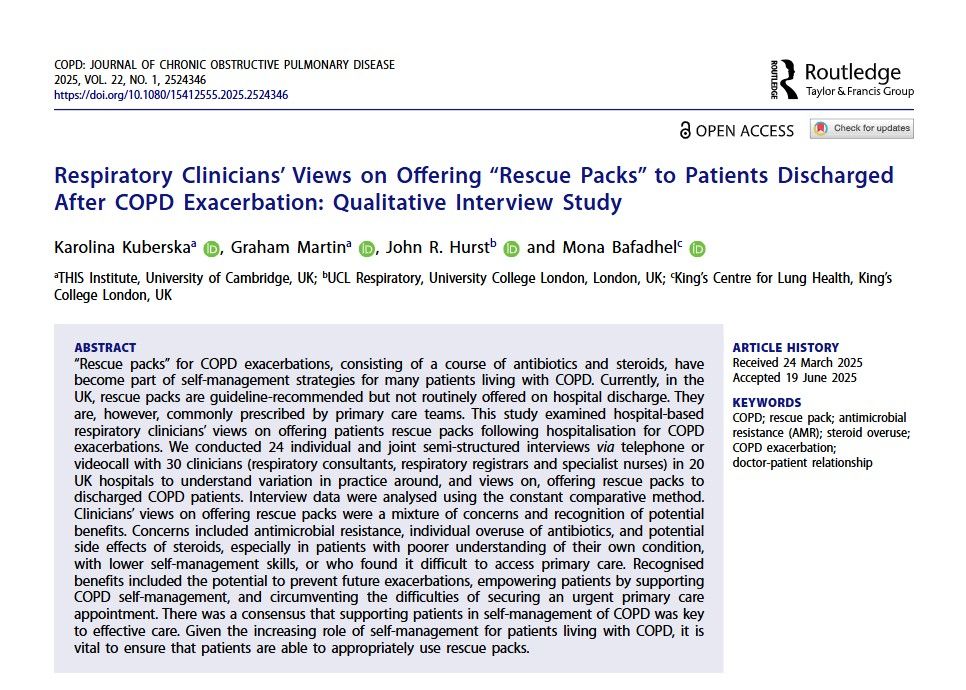
Screenshot of the paper's pdf.
Title: Respiratory Clinicians’ Views on Offering “Rescue Packs” to Patients Discharged After COPD Exacerbation: Qualitative Interview Study
Authors: Karolina Kuberska, Graham Martin, John R. Hurst, Mona Bafadhel
Abstract
“Rescue packs” for COPD exacerbations, consisting of a course of antibiotics and steroids, have become part of self-management strategies for many patients living with COPD. Currently, in the UK, rescue packs are guideline-recommended but not routinely offered on hospital discharge. They are, however, commonly prescribed by primary care teams. This study examined hospital-based respiratory clinicians’ views on offering patients rescue packs following hospitalisation for COPD exacerbations. We conducted 24 individual and joint semi-structured interviews via telephone or videocall with 30 clinicians (respiratory consultants, respiratory registrars and specialist nurses) in 20 UK hospitals to understand variation in practice around, and views on, offering rescue packs to discharged COPD patients. Interview data were analysed using the constant comparative method. Clinicians’ views on offering rescue packs were a mixture of concerns and recognition of potential benefits. Concerns included antimicrobial resistance, individual overuse of antibiotics, and potential side effects of steroids, especially in patients with poorer understanding of their own condition, with lower self-management skills, or who found it difficult to access primary care. Recognised benefits included the potential to prevent future exacerbations, empowering patients by supporting COPD self-management, and circumventing the difficulties of securing an urgent primary care appointment. There was a consensus that supporting patients in self-management of COPD was key to effective care. Given the increasing role of self-management for patients living with COPD, it is vital to ensure that patients are able to appropriately use rescue packs.
📢New publication📢
Respiratory Clinicians’ Views on Offering “Rescue Packs” to Patients Discharged After COPD Exacerbation: Qualitative Interview Study
doi.org/10.1080/1541...
@instagraham.bsky.social @profhurst.bsky.social @monabafadhel.bsky.social
30.06.2025 09:30 —
👍 4
🔁 4
💬 1
📌 0
Research participants needed📢
Do you have experience recruiting patients into clinical trials in the UK and Ireland? Do you think recruitment targets are motivating? Are they communicated well? Then we would love to hear from you as a participant in our focus group study.
25.06.2025 11:07 —
👍 0
🔁 4
💬 1
📌 1
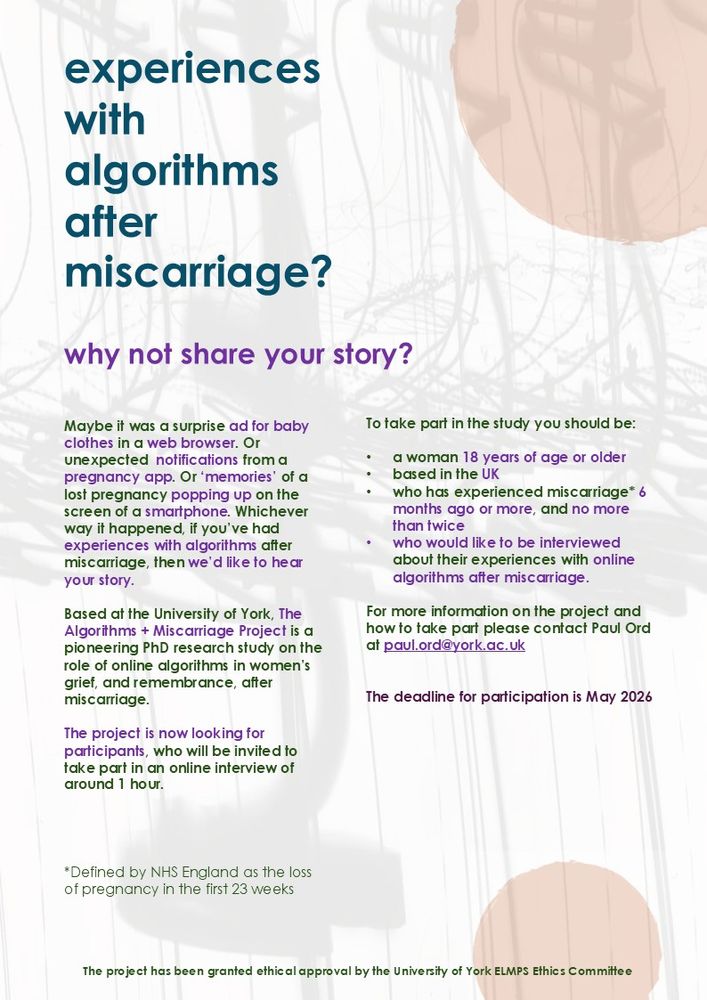
The Algorithms + Miscarriage Project is now seeking participants!
Experiences with algorithms after miscarriage? Why not share your story?
*Please share widely*
#miscarriage #pregnancyloss #algorithm #socialmedia #onlinesafety
16.06.2025 12:09 —
👍 4
🔁 2
💬 0
📌 1
🚨A welcome Government U-Turn on the winter fuel payment, which they have restored to 7.5 million pensioners.
These cuts should never have been proposed in the first place - to save another embarrassment, the Government should reverse their disability benefit cut plans now too.
10.06.2025 09:40 —
👍 38
🔁 10
💬 3
📌 0
This paper was a long time coming and I am so pleased to see it out!
@instagraham.bsky.social and I argue that the use of visual identifiers for hospitalised people with dementia comes with many well-documented issues and that perhaps it's time to rethink what we can expect from such identifiers.
30.05.2025 15:46 —
👍 5
🔁 0
💬 0
📌 0
What Is an Identifier Good for?
Issues in Using Visual Identifiers to Improve Care for People With Dementia in Hospital
📢New research paper from Karolina Kuberska and Graham Martin onlinelibrary.wiley.com/doi/10.1111/...
#DementiaCare @thisinstitute.cam.ac.uk
09.05.2025 12:17 —
👍 0
🔁 2
💬 0
📌 0
ORCID
And a great editorial:
Identifying patients with additional needs isn’t enough to improve care: harnessing the benefits and avoiding the pitfalls of classification
Natalie Armstrong, Elizabeth Sutton, Sarah Chew, Carolyn Tarrant
qualitysafety.bmj.com/content/33/3...
@bmj.com BMJ Q&S
09.05.2025 09:04 —
👍 0
🔁 0
💬 0
📌 0
Participatory approach
Using experience-based co-design (EBCD) to develop high-level design principles for a visual identification system for people with dementia in acute hospital ward settings
bmjopen.bmj.com/content/13/5...
AS Macdonald, K Kuberska, N Stockley, B Fitzsimons
@bmj.com BMJ Open
09.05.2025 09:04 —
👍 0
🔁 0
💬 1
📌 0
For info on how visual identifiers are used in UK hospitals:
Visual identifier systems for patients with cognitive impairment in healthcare settings: a survey of practice in UK hospitals
by @kkuberska.bsky.social @marydixonwoods.bsky.social, @instagraham.bsky.social in @intjnlopn.bsky.social
09.05.2025 09:04 —
👍 0
🔁 1
💬 1
📌 0

Developing a visual identification method for people with cognitive impairment in institutional settings
This paper follows a series of other papers examining the use of visual identifiers for people with dementia that came out of the DA VINCI study (Developing a visual identification method for people with cognitive impairment in institutional settings)
www.thisinstitute.cam.ac.uk/research/pro...
09.05.2025 09:04 —
👍 1
🔁 0
💬 1
📌 0
Using visual identifiers for hospitalised people with dementia has well-documented unintended consequences.
This paper explores the sometimes surprising degrees of trust put in such (low) tech solutions.
We unpack reasons for some aspects of this trust - and argue for caution over techno-optimism.
09.05.2025 09:04 —
👍 0
🔁 0
💬 1
📌 0

Screenshot of the journal header with the paper title and authors:
DISCURSIVE PAPER
Open Access
What Is an Identifier Good for? Issues in Using Visual Identifiers to Improve Care for People With Dementia in Hospital
Karolina Kuberska, Graham Martin
First published: 08 May 2025 https://doi.org/10.1111/jan.17039
'ejournals@cambridge - find full text'

Aims
To examine practical, ethical, and organisational implications of the use of a key technology deployed in the care of hospitalised people with dementia—visual identifiers—through a comparative analysis with parallel interventions in other spheres of healthcare and social activity.
Design
Discursive paper
Methods
We contrast visual identification systems used for hospitalised patients with dementia with other, ostensibly similar, systems to understand how they differ in key characteristics: what they disclose, to whom and with what intended consequence
Results
Certain distinctive features of the ways identifier systems are used to improve dementia care appear particularly consequential for their impact. Given how much is expected of such identifiers, they are likely to fail at least a proportion of patients.
Conclusion
We argue that it is important to critically evaluate the interests served by visual identifiers, identifying the dimensions of quality they can enhance and those that may be negatively impacted.
Implications for the Profession and/or Patient Care
Visual identifiers for people with dementia can contribute to the ‘taskification’ of nursing care, implying that achieving person-centred care is a matter of following defined protocols rather than an emergent, relational, time-consuming process. Staff may end up prioritising risk avoidance and hospital routines (tasks that are measurable and auditable) rather than embracing the unpredictability of developing relationships with patients
Impact
Visual identifiers are a part of well-established strategies to improve hospital care for those with cognitive impairment. While these identifiers aim to prompt healthcare professionals to deliver individually tailored care, research suggests that they are unable to consistently ensure the desirable quality of care. Understanding influences on how they are deployed can help reshape the expectations placed on such low-tech interventions and inform more reflective use
📢New publication alert 📢
@instagraham.bsky.social and I wrote a paper!
What Is an Identifier Good for?
Issues in Using Visual Identifiers to Improve Care for People With Dementia in Hospital
doi.org/10.1111/jan....
09.05.2025 09:04 —
👍 5
🔁 3
💬 2
📌 1
YouTube video by Mahindra Humanities Center
Tanner Lecture One with Ruha Benjamin
“There is a reason, after all, that some people wish to colonize the moon, and others dance before it as before an ancient friend.” —Baldwin’s words grounded my Tanner lectures at Harvard, “Imagining Beyond the Artificial Intelligentsia”🤖
Lecture 1, Who Owns the Future? youtu.be/ZseJigkUhuE?...
01.05.2025 15:12 —
👍 243
🔁 68
💬 7
📌 9
Today, on #InternationalWorkersDay, I've given two teachouts - on academic mobility, borders and the hostile environment, and on reading workload models, as part of our @ducu.bsky.social #NoToCuts strike week. A few thoughts: 👇
01.05.2025 17:32 —
👍 25
🔁 11
💬 1
📌 3
Maybe these?
Bloch, Maurice. 1991. “Language, anthropology, and cognitive science”, Man, N.S., 26(2): 183-198.
Kirmayer, Laurence J. 1992. “The body’s insistence on meaning: Metaphor as presentation and representation in illness experience”, Medical Anthropology Quarterly, 6(4): 323-346.
13.03.2025 12:28 —
👍 2
🔁 0
💬 1
📌 0