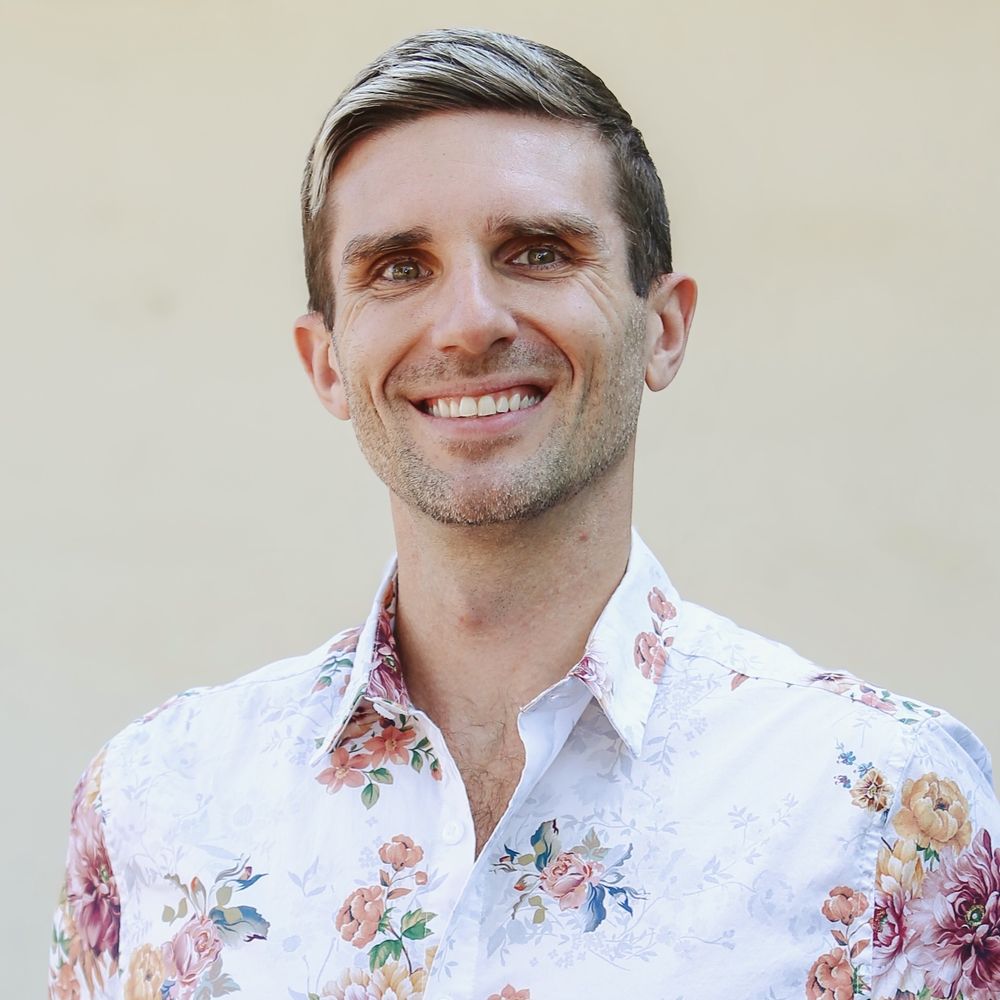
Congrats Dr. Christopher Phillipson on your new publication titled "The Political Economy of Ageing and the Second Coming of Neoliberalism: Building an Emancipatory Gerontology."
link.springer.com/article/10.1...
@eslab.bsky.social
We're a network of scholars, practitioners, artists, and activists. Visit us: https://emancipatorysciences.ucsf.edu Our lab promotes knowledge building and the realization of dignity, access, equity, healing, and social justice through collective power.
Congrats Dr. Christopher Phillipson on your new publication titled "The Political Economy of Ageing and the Second Coming of Neoliberalism: Building an Emancipatory Gerontology."
link.springer.com/article/10.1...

Divya Babbar Licensed Clinical Psychologist and founder of Interwoven Psychotherapy & Liberatory Praxis Divya also holds an adjunct clinical faculty position at the George Washington University Professional Psychology Program, where she supervises doctoral students learning to conduct individual and couples therapy. Divya maintains a strong clinical interest in complex trauma, interpersonal distress, dis(ability), and gender and sexual identity development. In particular, Divya’s work with clients actively explores how their distress might be influenced by their lived experiences within interlocking systems of oppression. Divya earned their doctorate degree at George Washington University and completed their doctoral internship at Stony Brook University Counseling Center. Recent publication: Babbar, D. (2025). The Identified Patient and their Illegible Healer: Power, Relationality, and the Erasure of Disability in Therapeutic Training Discourse. Studies in Gender and Sexuality, 26(2), 138–146. https://doi.org/10.1080/15240657.2025.2503592
We wanted to highlight Dr. Babbar who recently published an article about experiences of disabled people in therapeutic training. #emancipatorysciences. #FeatureFriday
01.08.2025 15:02 — 👍 0 🔁 0 💬 0 📌 0
Capitalizing on Disability: Labor Process and Governance in Disability Employment Programs In my dissertation I focus empirically on job training programs for workers with disabilities, combining historical research on the development of this industry with nineteen months of ethnographic fieldwork across two contemporary employment programs. My analysis highlights the contradictory status of disability under neoliberalism, showing that disability is presently defined by the simultaneous purported inability to work and imperative to work, and reveals how the state and private capital mobilize these contradictions to produce disabled workers as a workforce suited to the hiring needs of contemporary corporations. Papers from this project have been published in the American Sociological Review, Work and Occupations, Social Science & Medicine, and Critical Sociology. Emily Ruppel
This week we want to highlight Emily a PhD candidate at Berkley! #emancipatorysciences #ThesisThursday
31.07.2025 15:03 — 👍 0 🔁 0 💬 0 📌 0
Social model of Disability This term was developed by people with disabilities during the 1960s to 1970s in the UK. Although he wasn’t responsible for creating the concept, Dr. Mike Oliver is the one who officially named the model. This term refers to the way that problems that disabled people face aren’t because of their disability but rather the way that society isn’t organized in a way to support disabled people. This concept was instrumental in changing the narrative of disabilities from being a medical issue to a human rights issue. It has been criticized for not talking into account the experiences of impairment, or the individual issues that people face. In response, Dr. Oliver maintains that this models is simply a tool that people can use in order to make sense their disability, and if it’s not helpful, then find another model. Social Model. (n.d.). Disability Equality Education. https://www.disabilityequalityeducation.org/social-model
This week's theme is research in disabilities studies. #emancipatorysciences #TerminologyTuesday
29.07.2025 15:02 — 👍 0 🔁 0 💬 0 📌 0
To finish off this week we want to highlight another person within our network doing incredible research! #emancipatorysciences #FeatureFriday
18.07.2025 15:09 — 👍 0 🔁 0 💬 0 📌 0
This graphic features a photo of Benjamin Klebanoff, as well as a dark blue background with bright blue titles and white text. It shows the title of the blog "Chronic Pain: A Call to Listen" as well as a quote that reads: "The cry of chronic pain is crucial information about the world we are living in. It constitutes collective embodied knowledge on a massive scale about the most impactful issues of our times: power, inequality, and systemic violence. We shouldn't be asking how to get rid of chronic pain, we should be asking how to better listen to it."
Benjamin Klebanoff, recent MSW graduate from Silberman School of Social Work, wrote a NEW blog post titled “Chronic Pain: A Call to Listen.” This blog features both an essay and poem by Benjamin. Read the blog post here: emancipatorysciences.ucsf.edu/eslabblog/ch...
17.07.2025 18:01 — 👍 1 🔁 0 💬 0 📌 0
This Thesis Thursday we want to feature someone who is working on a dissertation about the affects of eugenics. #emancipatorysciences #ThesisThursday
17.07.2025 15:05 — 👍 0 🔁 0 💬 0 📌 0
Structured Intersectional Oppression Structured Interesectional Opression is a fremework that attemps to understand and quantify the ways that overlapping structural and systematic opression shape health disparities, espeically at a state level. Homan, P., Brown, T. H., & King, B. (2021). Structural Intersectionality as a New Direction for Health Disparities Research. Journal of health and social behavior, 62(3), 350–370. Finlay, J., Esposito, M., Langa, K. M., Judd, S., & Clarke, P. (2022). Cognability: An Ecological Theory of neighborhoods and cognitive aging. Social science & medicine (1982), 309, 115220. Minnesota Indian Women’s Sexual Assault Coalition. (n.d.). Walking in Two Worlds: Understanding the Two-Spirit & LGBTQ Community.
For this week the theme is racism in healthcare. #emancipatorysciences #TerminologyTuesday
15.07.2025 15:04 — 👍 1 🔁 0 💬 0 📌 0
To finish off this week we wanted to highlight another person within out network! #emancipatorysciences #FeatureFriday
04.07.2025 15:03 — 👍 1 🔁 0 💬 0 📌 0
Understanding Ageism: Perspectives from Those Who Experience and Perpetuate It What is the guiding question of your dissertation research? My research focuses on ageism, specifically on how ageist attitudes, beliefs, and comments directed toward older adults shape their everyday experiences. As global populations continue to age, it is essential to understand and address the social implications of this demographic shift. My work examines how evolving cultural norms and social policies can foster a more inclusive, equitable, and age-diverse society. Aaron Li (he/him)
To continue with our theme this week, we wanted to highlight Aaron Li, a Ph.D. Student in at Washington University who is currently working on his dissertation on experiences with aging. #emancipatorysciences #ThesisThursday
03.07.2025 15:03 — 👍 0 🔁 0 💬 0 📌 0
Cognability According to Dr. Jessica Finlay's work, cognability refers to an area's ability to support people's cognitive health as they age. Her work examines features related to physical activity, social interaction and cognitive stimulation in later life which could help protect against cognitive decline. Along with this she created an interactive map which rates the cognability of an area based on positive features such as how many park or rec centers there are, how many places there are to connect with others like religious organization, schools or museums, while also taking into account negative features like highways or sites of pollution. Finlay, J., Esposito, M., Langa, K. M., Judd, S., & Clarke, P. (2022). Cognability: An Ecological Theory of neighborhoods and cognitive aging. Social science & medicine (1982), 309, 115220. Minnesota Indian Women’s Sexual Assault Coalition. (n.d.). Walking in Two Worlds: Understanding the Two-Spirit & LGBTQ Community. #emancipatorysciences #TerminologyTuesdays
For this week we are highlighting work in the field of gerontology. This term coined by Dr. Jessica Finlay talks about ways to determine if our neighborhoods are aging friendly. #emancipatorysciences #terminologytuesday
01.07.2025 18:01 — 👍 0 🔁 0 💬 0 📌 0
This photo features a bright blue banner at the bottom with matching bright blue title text and frame around a picture of the author of the blog post, Three Merians. It also features a quote in white text about community and collective action. This image has a dark blue background.
Three Merians, a rising second-year MSW student at the Silberman School of Social work, wrote a NEW blog post titled "Building from Within: Collective Action, Community Care, and a Vision for Silberman." Read the blog post here: emancipatorysciences.ucsf.edu/eslabblog/bu...
30.06.2025 17:01 — 👍 0 🔁 0 💬 0 📌 0
Angie Perone (she/her) Assistant Professor at the Director, Center for the Advanced Study of Aging Services School of Social Welfare at University of California, Berkeley Dr. Perone is an interdisciplinary community-engaged scholar and licensed attorney. She is an Assistant Professor in the School of Social Welfare at UC Berkeley and the Director of the Center for the Advanced Study of Aging Services (CASAS). Her work engages diverse communities and partners that builds from prior experience as a civil rights attorney, community organizer, social worker, and nonprofit leader. As a civil rights attorney, she focused on discrimination, healthcare, and transformative justice and oversaw a national LGBTQ+ Elder Law Project. She subsequently served as a founding executive director of SAGE Metro Detroit (now MiGen), which focused on services and advocacy for/with LGBTQ+ same-gender-loving older adults in the Detroit Metro area. She then served as an RWJF Health Policy Fellow in U.S. Senator Tammy Baldwin's office and the Centers for Medicare and Medicaid Services (CMS). Her research foregrounds equitable aging across three areas: long-term care and caregiving, workplace rights, and LGBTQIA+ issues.

Angie Perone This project includes 23 inter- and intra-categorical focus groups with 208 LGBTQIA+ older adults in California--focusing on communities that are underrepresented and often underserved through programs, services, and policies (and funding). We employed a community-engaged framework and worked closely with 18 formal community partners. We examined challenges, strengths, and recommendations--focusing on intersections across race, ethnicity, gender, gender identity, sexual orientation, age, immigration, (dis)ability, and geographic location. We used the Equitable Aging in Health conceptual framework to ground the study across systems and levels (micro, mezzo, macro). The project produced a 6-part video series, 10-part handout-series, and Powerpoint slidedeck for community partners that share findings from the study. You can find materials from the project on the CASAS website: www.casas.berkeley.edu. This project was funded by the California Health Care Foundation, The SCAN Foundation, and Metta Fund.
27.06.2025 15:04 — 👍 1 🔁 0 💬 0 📌 0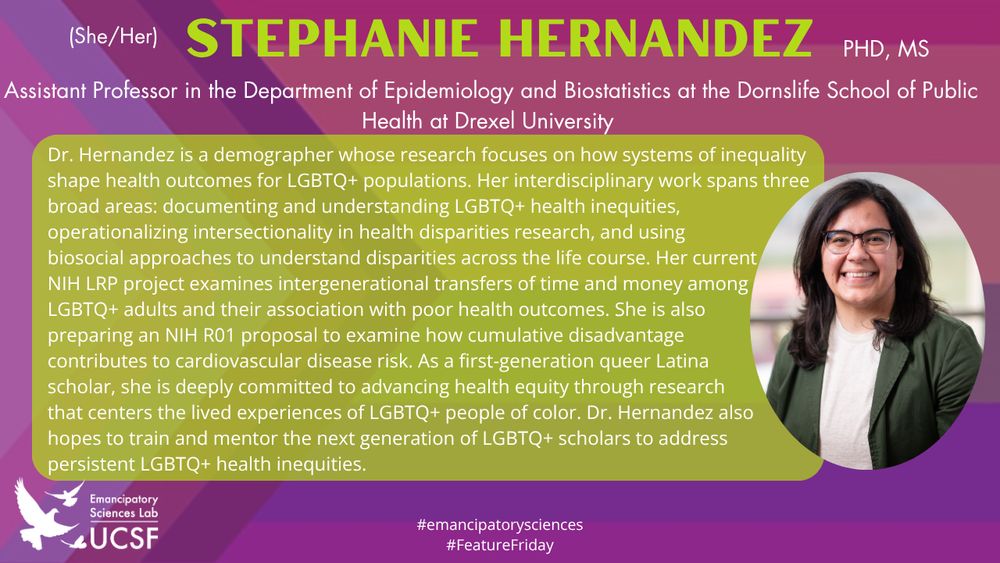
Stephanie Hernandez (she/her) Assistant Professor in the Department of Epidemiology and Biostatistics at the Dornslife School of Public Health at Drexel University Dr. Hernandez is a demographer whose research focuses on how systems of inequality shape health outcomes for LGBTQ+ populations. Her interdisciplinary work spans three broad areas: documenting and understanding LGBTQ+ health inequities, operationalizing intersectionality in health disparities research, and using biosocial approaches to understand disparities across the life course. Her current NIH LRP project examines intergenerational transfers of time and money among LGBTQ+ adults and their association with poor health outcomes. She is also preparing an NIH R01 proposal to examine how cumulative disadvantage contributes to cardiovascular disease risk. As a first-generation queer Latina scholar, she is deeply committed to advancing health equity through research that centers the lived experiences of LGBTQ+ people of color. Dr. Hernandez also hopes to train and mentor the next generation of LGBTQ+ scholars to address persistent LGBTQ+ health inequities.
As pride month is coming to an end we wanted to finish with highlighting two researchers who are using their specialties, in demography and law, to advocate for the LGBTQ+ community. #emancipatorysciences #FeatureFriday
27.06.2025 15:04 — 👍 0 🔁 0 💬 1 📌 0
Normative Family Formation Under U.S. Immigration Law What is queer migration? My research examines how U.S. immigration law shapes the family formation of queer immigrants in the era of marriage equality. Making claims for legal inclusion necessitates embodying the values of the nation-state. Queer immigrants must make themselves legible to immigration authorities as members of legitimate, non-fraudulent, and (hetero)normative families to receive citizenship rights. terms: homonationalism, sexual citizenship, claims-making, non-adversarial lawyering Juhwan Seo (he/him)
For the last week of pride month we wanted to highlight a researcher working in the intersection between queer identities and immigrant identities. #emancipatorysciences #ThesisThursday
26.06.2025 15:04 — 👍 0 🔁 0 💬 0 📌 0
For the last week of pride month we wanted to highlight a term coined by José Esteban Muñoz about the intersection between people of color and queerness. #TerminologyTuesday #emancipatorysciences
24.06.2025 15:05 — 👍 0 🔁 0 💬 0 📌 0
Aaron Guest Assistant Professor, Center for Innovation in Healthy and Resilient Aging at the Edson College of Nursing and Health Innovation of Aging at Arizona State University Dr. Guest is an interdisciplinary trained social-environmental gerontologist whoes overarching aim of his research program, and indeed life’s work, is to create an equitable society for aging for all people. To accomplish this goal, he takes a disease/condition-agnostic approach to address the challenges faced by aging, underrepresented, and underserved populations. His research has centered on the aging experiences of older adults in rural areas and those who identify as lesbian and gay. Through his work, he aims to create the optimal person-environment fit for the most advantageous health benefits for individuals as they age.

Aaron Guest Dr. Guest is also on the board of the LGBTQ Health Caucus. For over 50 years the LGBTQ Health Caucus has been committed to furthering LGBTQ issues within the field of public health. The Caucus is committed to combating discriminatory health policies, systems and practices against sexual and gender minority individuals and communities. For more information visit https://www.aphalgbtq.org/ He also recently published a paper titled “Assessment of LGBT Needs and Health in Kentucky: Results of a Statewide Needs Assessment”. You can find the article https://link.springer.com/article/10.1007/s10900-025-01470-w
Dr. Aaron Guest is another person part of our network doing work in LGBTQ+ studies and aging. We wanted to highlight his recent publication as well as his work on the LGBTQ Health Caucus. #emancipatorysciences #FeatureFriday
20.06.2025 15:05 — 👍 0 🔁 0 💬 0 📌 0
This #TerminologyTuesday we wanted to highlight a term used by many Native America groups. #emancipatoryscienceslab
17.06.2025 15:07 — 👍 0 🔁 0 💬 0 📌 0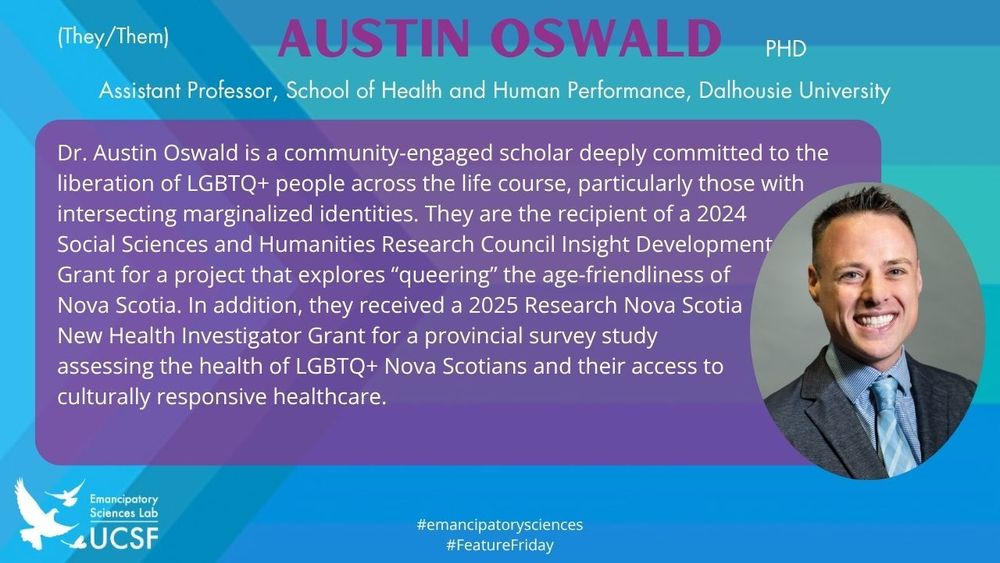
Austin Oswald, (They/Them) Assistant Professor, School of Health and Human Performance, Dalhousie University Dr. Austin Oswald is a community-engaged scholar deeply committed to the liberation of LGBTQ+ people across the life course, particularly those with intersecting marginalized identities. They are the recipient of a 2024 Social Sciences and Humanities Research Council Insight Development Grant for a project that explores “queering” the age-friendliness of Nova Scotia. In addition, they received a 2025 Research Nova Scotia New Health Investigator Grant for a provincial survey study assessing the health of LGBTQ+ Nova Scotians and their access to culturally responsive healthcare. #emancipatorysciences #FeatureFriday
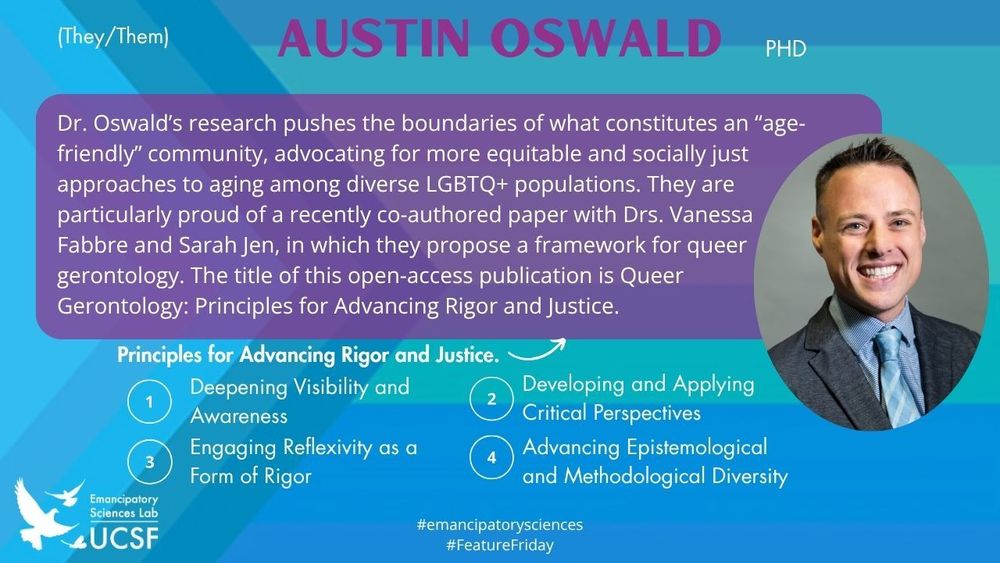
Austin Oswald Dr. Oswald’s research pushes the boundaries of what constitutes an “age-friendly” community, advocating for more equitable and socially just approaches to aging among diverse LGBTQ+ populations. They are particularly proud of a recently co-authored paper with Drs. Vanessa Fabbre and Sarah Jen, in which they propose a framework for queer gerontology. The title of this open-access publication is Queer Gerontology: Principles for Advancing Rigor and Justice. Principles for Advancing Rigor and Justice. 1. Deepening Visibility and Awareness 2. Developing and Applying Critical Perspectives 3. Engaging Reflexivity as a Form of Rigor 4. Advancing Epistemological and Methodological Diversity #emancipatorysciences #FeatureFriday
13.06.2025 15:04 — 👍 2 🔁 1 💬 0 📌 0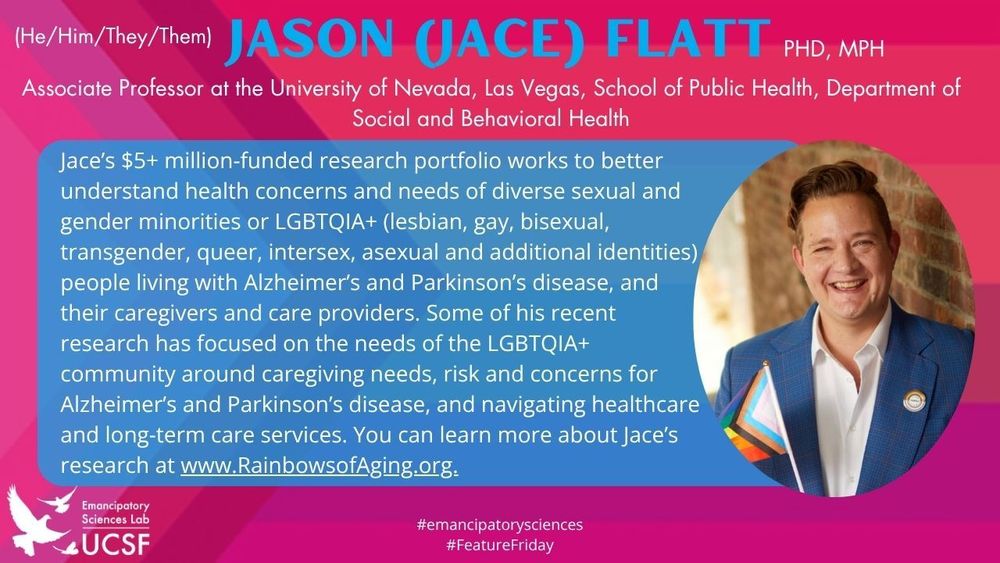
Jason (Jace) Flatt, (He/Him/They/Them) Associate Professor at the University of Nevada, Las Vegas, School of Public Health, Department of Social and Behavioral Health Jace’s $5+ million-funded research portfolio works to better understand health concerns and needs of diverse sexual and gender minorities or LGBTQIA+ (lesbian, gay, bisexual, transgender, queer, intersex, asexual and additional identities) people living with Alzheimer’s and Parkinson’s disease, and their caregivers and care providers. Some of his recent research has focused on the needs of the LGBTQIA+ community around caregiving needs, risk and concerns for Alzheimer’s and Parkinson’s disease, and navigating healthcare and long-term care services. You can learn more about Jace’s research at www.RainbowsofAging.org. #emancipatorysciences #FeatureFriday
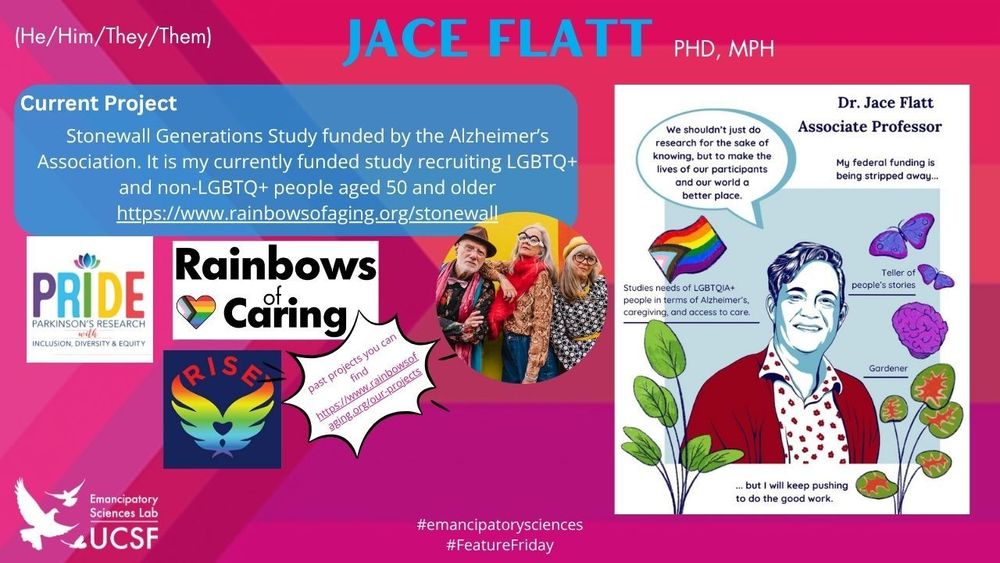
Jace Flatt Stonewall Generations Study funded by the Alzheimer’s Association. It is my currently funded study recruiting LGBTQ+ and non-LGBTQ+ people aged 50 and older https://www.rainbowsofaging.org/stonewall
Dr. Flatt and Dr. Oswald are two people within our network that are doing incredible work in the intersection of queer identities and aging. #FeatureFriday #emancipatorysciences
13.06.2025 15:04 — 👍 1 🔁 1 💬 1 📌 0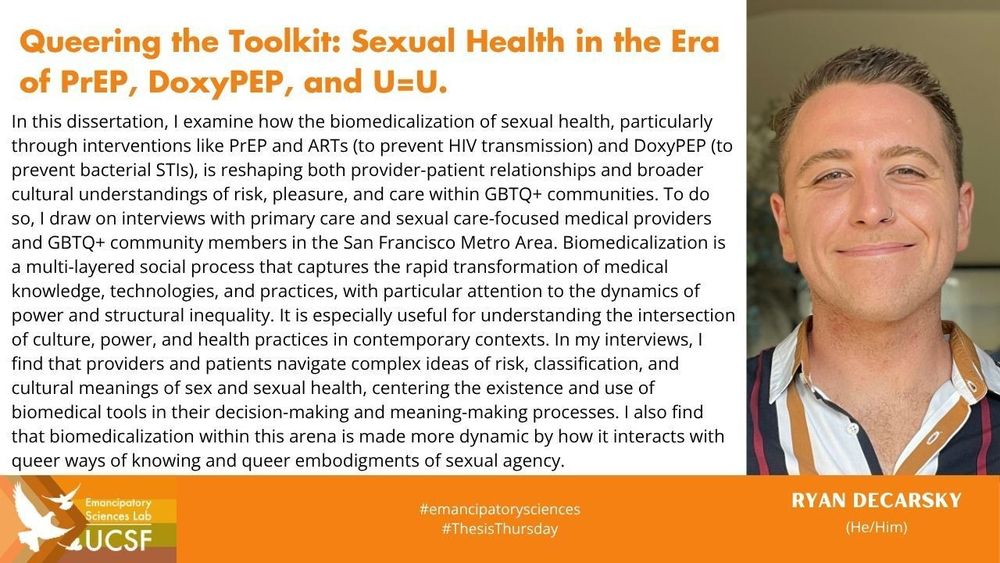
Queering the Toolkit: Sexual Health in the Era of PrEP, DoxyPEP, and U=U. In this dissertation, I examine how the biomedicalization of sexual health, particularly through interventions like PrEP and ARTs (to prevent HIV transmission) and DoxyPEP (to prevent bacterial STIs), is reshaping both provider-patient relationships and broader cultural understandings of risk, pleasure, and care within GBTQ+ communities. To do so, I draw on interviews with primary care and sexual care-focused medical providers and GBTQ+ community members in the San Francisco Metro Area. Biomedicalization is a multi-layered social process that captures the rapid transformation of medical knowledge, technologies, and practices, with particular attention to the dynamics of power and structural inequality. It is especially useful for understanding the intersection of culture, power, and health practices in contemporary contexts. In my interviews, I find that providers and patients navigate complex ideas of risk, classification, and cultural meanings of sex and sexual health, centering the existence and use of biomedical tools in their decision-making and meaning-making processes. I also find that biomedicalization within this arena is made more dynamic by how it interacts with queer ways of knowing and queer embodigments of sexual agency. #emancipatorysciences #ThesisThursday Ryan DeCarsky (He/Him)
This week we wanted to highlight a Doctoral Candidate from the University of Washington doing research in Queering and sexual health! #emancipatorysciences #ThesisThursday
12.06.2025 15:04 — 👍 1 🔁 1 💬 0 📌 0![queer
Historically, queer was used as a derogatory term to label someone who is homosexual as "outisde, not from within." In the late 20th and early 21st century, this term was reclaimed by the LGBTQ+ community and used as a term of resistance in movemnets like Queer Nation (fighting for LGBTQ+ rights and visibility). Now, queer is an umbrela term that means non-heteronormative identities and sexualities.
Archives, T. N. (2021, February 9). The National Archives - “Queer” history: A history of Queer [Text]. The
National Archives Blog. https://blog.nationalarchives.gov.uk/queer-history-a-history-of-queer/
#emancipatorysciences
#TerminologyTuesdays](https://cdn.bsky.app/img/feed_thumbnail/plain/did:plc:7kms3mvtor5au3rjfd7wmn2d/bafkreigeheenhskmq3stg5cwgozvslui6pl2ckhu6wyskdlxmmqfvb5qg4@jpeg)
queer Historically, queer was used as a derogatory term to label someone who is homosexual as "outisde, not from within." In the late 20th and early 21st century, this term was reclaimed by the LGBTQ+ community and used as a term of resistance in movemnets like Queer Nation (fighting for LGBTQ+ rights and visibility). Now, queer is an umbrela term that means non-heteronormative identities and sexualities. Archives, T. N. (2021, February 9). The National Archives - “Queer” history: A history of Queer [Text]. The National Archives Blog. https://blog.nationalarchives.gov.uk/queer-history-a-history-of-queer/ #emancipatorysciences #TerminologyTuesdays
In the 2nd week of pride month we wanted to highlight a term that has had a large influence within the community. #emancipatorysciences #TerminologyTuesdays
10.06.2025 15:05 — 👍 1 🔁 1 💬 0 📌 0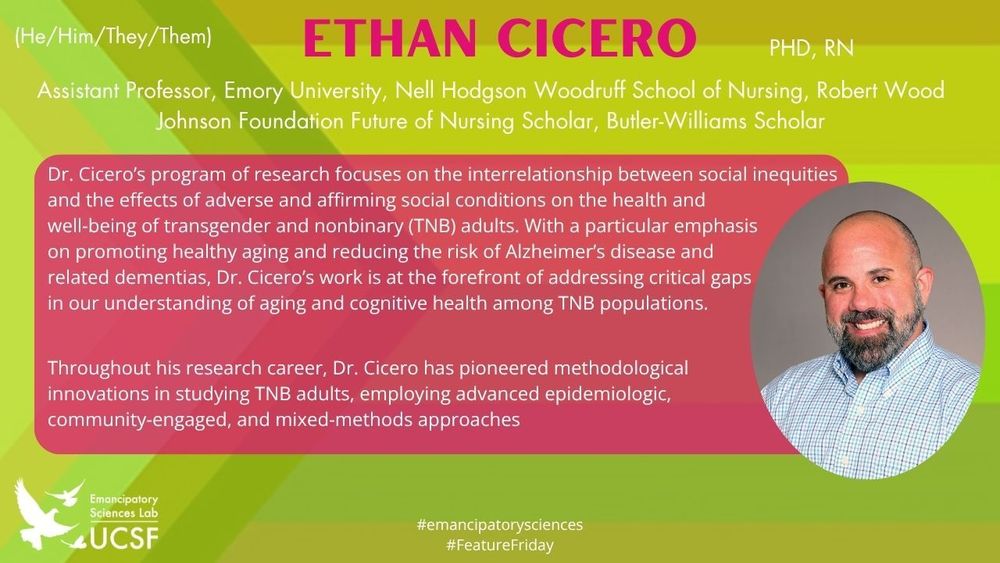
Ethan Cicero Assistant Professor, Emory University, Nell Hodgson Woodruff School of Nursing, Robert Wood Johnson Foundation Future of Nursing Scholar, Butler-Williams Scholar Dr. Cicero’s program of research focuses on the interrelationship between social inequities and the effects of adverse and affirming social conditions on the health and well-being of transgender and nonbinary (TNB) adults. With a particular emphasis on promoting healthy aging and reducing the risk of Alzheimer’s disease and related dementias, Dr. Cicero’s work is at the forefront of addressing critical gaps in our understanding of aging and cognitive health among TNB populations. Throughout his research career, Dr. Cicero has pioneered methodological innovations in studying TNB adults, employing advanced epidemiologic, community-engaged, and mixed-methods approaches #emancipatorysciences #FeatureFriday
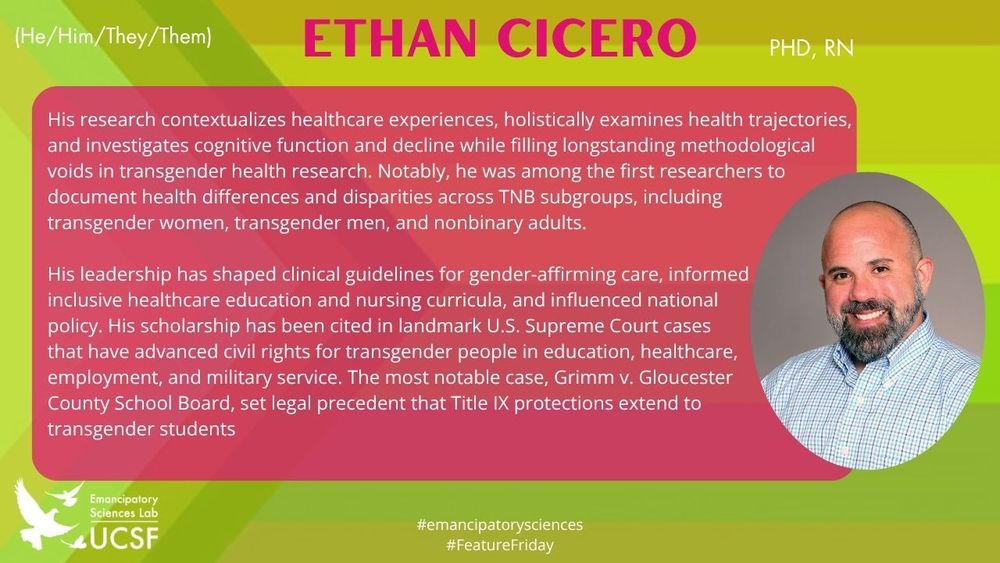
Ethan Cicero His research contextualizes healthcare experiences, holistically examines health trajectories, and investigates cognitive function and decline while filling longstanding methodological voids in transgender health research. Notably, he was among the first researchers to document health differences and disparities across TNB subgroups, including transgender women, transgender men, and nonbinary adults. His leadership has shaped clinical guidelines for gender-affirming care, informed inclusive healthcare education and nursing curricula, and influenced national policy. His scholarship has been cited in landmark U.S. Supreme Court cases that have advanced civil rights for transgender people in education, healthcare, employment, and military service. The most notable case, Grimm v. Gloucester County School Board, set legal precedent that Title IX protections extend to transgender students #emancipatorysciences #FeatureFriday
Dr. Cicero focuses his research on understanding and addressing aging amongst trans and nonbinary people. #FeatureFriday #emancipatorysciences
06.06.2025 15:08 — 👍 2 🔁 2 💬 0 📌 0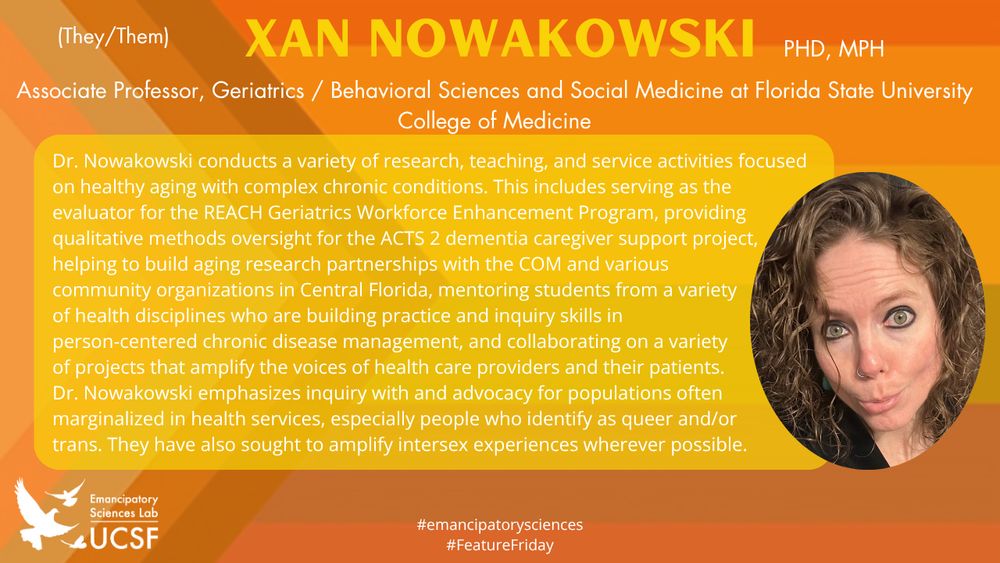
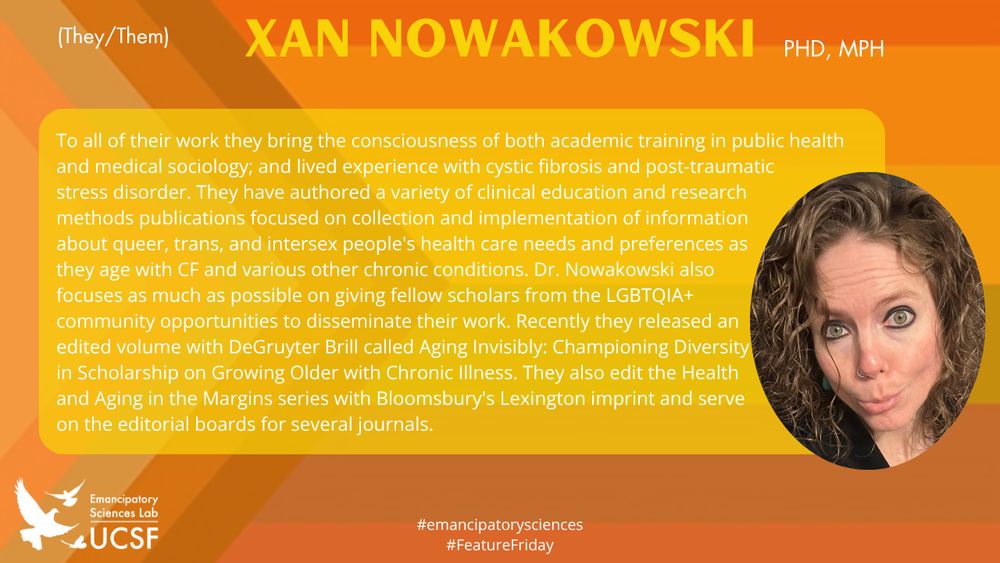
As we are kicking of pride month, we wanted to highlight two people within our network Xan Nowakowski and Ethan Cicero. Dr. Nowakowiski does work in LGBTQ+ Studies as well as work in aging with chronic conditions. #FeatureFriday #emancipatorysciences
06.06.2025 15:08 — 👍 2 🔁 2 💬 1 📌 0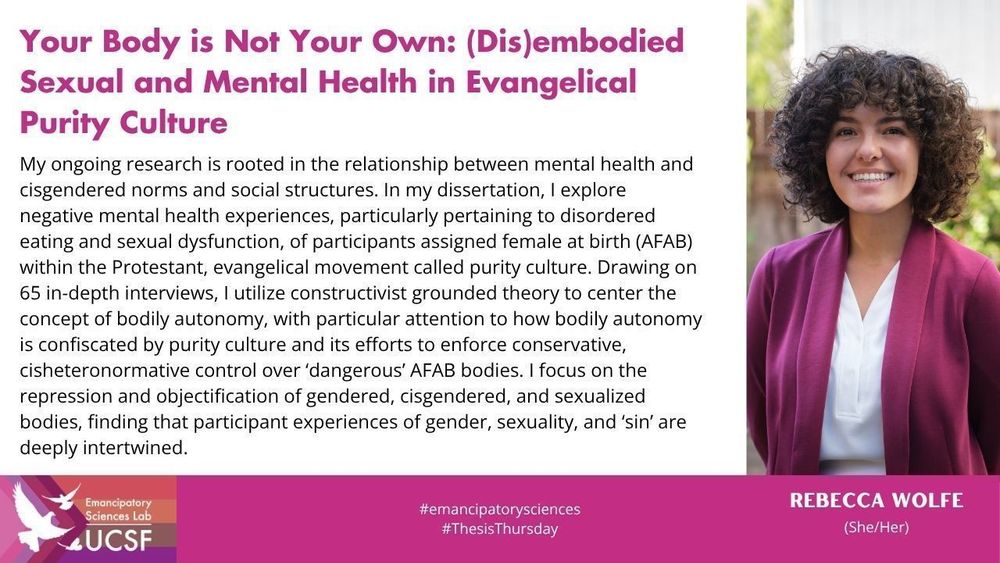
Your Body is Not Your Own: (Dis)embodied Sexual and Mental Health in Evangelical Purity Culture My ongoing research is rooted in the relationship between mental health and cisgendered norms and social structures. In my dissertation, I explore negative mental health experiences, particularly pertaining to disordered eating and sexual dysfunction, of participants assigned female at birth (AFAB) within the Protestant, evangelical movement called purity culture. Drawing on 65 in-depth interviews, I utilize constructivist grounded theory to center the concept of bodily autonomy, with particular attention to how bodily autonomy is confiscated by purity culture and its efforts to enforce conservative, cisheteronormative control over ‘dangerous’ AFAB bodies. I focus on the repression and objectification of gendered, cisgendered, and sexualized bodies, finding that participant experiences of gender, sexuality, and ‘sin’ are deeply intertwined. #emancipatorysciences #ThesisThursday
There are many scholars who are doing important research in LGBTQ+ studies that we wanted to highlight. Rebecca Wolfe recently finished her PhD in Sociology from the University of California and focuses her studies on gender, sexuality, and mental health. #ThesisThursday #emancipatorysciences
05.06.2025 15:05 — 👍 5 🔁 2 💬 0 📌 0
Epistemology of the Closet Using the metaphor of the "closet" to describes the ways that literature and heteronormative Western culture limit our understanding of sexual identity, Sedgwick examines the ways in which the closet reinforces social power dynamics and structures promoting shame, but also explores idea of secrecy being used both to exclude and privilege. Eve Kosofsky Sedgwick. (1990). Epistomology of the Closet. #emancipatorysciences #FeatureFriday
For the month of June, the Emancipatory Science Lab has decided to highlight people who are doing work in LGBTQ+ Studies! This Terminology Tuesday we are highlighting a term coined by Eve Kosofsky Sedgwick. #terminologytuesday #emancipatorysciences
03.06.2025 18:26 — 👍 2 🔁 1 💬 0 📌 0How much Elon Musk makes from the government a day: $8 million.
How much a senior on Social Security gets a day: $65
Guess which budget Musk and Trump want to cut?
Republican Senators just voted to put RFK Jr., who wants to destroy Medicare, in charge of Medicare.
Nobody voted for the destruction of our earned benefits.
Attention Medicaid Recipients-
I’m planning to write an op ed about proposed Medicaid cuts and would like to include 2 real life examples of those who depend on this lifeline.
Can you please reply to this post?
@petermorley.bsky.social