“In her obituary, her mentee, Catherine Veil, says that [Marcelle Lapicque] fought against the prejudices of her time … it may be that the prejudices included race and not just sexism,” says @oligoclonalband.medsky.social.
#neuroskyence
www.thetransmitter.org/history-of-n...
27.02.2026 17:12 —
👍 9
🔁 5
💬 0
📌 1

White House stalls release of approved US science budgets
The US Congress rejected sweeping cuts to science agencies. But the NIH, the NSF and NASA have had their spending slowed.
"The US National Institutes of Health (NIH) has so far not received approval to spend any of the research funding allocated in a budget bill signed into law on 3 February. " www.nature.com/articles/d41...
27.02.2026 16:46 —
👍 2
🔁 0
💬 0
📌 0
Thanks to @oligoclonalband.medsky.social, Alexis Simpkins, @manon-auffret.bsky.social and Jean-Gaël Barbara for the research; to Frank Stahnisch for the historical context; and to Ninetynine Films for the lovely video work.
25.02.2026 14:12 —
👍 3
🔁 0
💬 0
📌 0
It was so fun to work with @rebeccasky.bsky.social on this video about the life and work of pioneering neuroscientist Marcelle Lapicque! Check it out here:
25.02.2026 14:12 —
👍 4
🔁 2
💬 2
📌 0

Infant brain categorizes common objects by two months of age
Brain activity patterns in the ventral visual cortex appear to distinguish images across 12 categories, including birds and trees, fMRI scans suggest.
Functional MRI scans of more than 100 2-month-old infants suggest that they are capable of distinguishing among a variety of different objects. The findings challenge perceptions of cognitive development as a gradual process.
By @helenak.bsky.social
www.thetransmitter.org/cognitive-ne...
24.02.2026 15:44 —
👍 21
🔁 10
💬 1
📌 0
Thanks Angie! If you’re starting out your career in neuroscience check out our early career newsletter. It features articles catered towards early career researchers, job opportunities and much more!
20.02.2026 22:12 —
👍 5
🔁 2
💬 0
📌 0

Are there any traditions or practices from the labs you trained at that you will implement in your lab?
I did my Ph.D. in György Buzsáki’s lab. Whenever anyone left the lab, György would give an awkward speech about the story of the person’s time in the lab. The person leaving would, in turn, give their own speech from their perspective and talk about what they learned from György and the other lab members. It was all quite touching, and I think it really helped the lab feel like a community that valued the people who came through and the time they spent there. It also showed new lab members just how nonlinear research can be—no one ended up doing the project they had planned when they joined. I’ve seen a lot of amazing speeches, and I hope to have a similar “celebration of the time in the lab” practice in my own group. The other thing I’d like to carry forward is that the lab always has lunch together. Both my Ph.D. and postdoc labs did this, and it’s quite nice for building a sense of community.
And I love @dlevenstein.bsky.social's ideas for building community in the lab:
20.02.2026 18:58 —
👍 2
🔁 0
💬 1
📌 0

Are there any traditions or practices from the labs you trained at that you will implement in your lab?
I plan to use a “slide stack”—a practice that worked well for me when I was a trainee. Basically, every trainee will maintain a running Google Slides document, and every week, the trainee can add updates about their projects. This allows me to preview everything before one-on-one meetings, making them more efficient. For the trainee, the slide stack will act as an archive of checkpoints—which is helpful for “debugging” things throughout the projects—and as a template for making polished materials for talks and papers.
There are always great mentoring tips in @thetransmitter.bsky.social's early career newsletter, Launch. This one from new PI @qlu.bsky.social in today's edition stood out to me as being a particularly useful idea!
20.02.2026 18:57 —
👍 8
🔁 2
💬 2
📌 0
Ken Catania's class at Vanderbilt that covered the neurobiology of fascinating animals like the star-nosed mole is one of the reasons I pursued a career in neuroscience! So fun to read this Q&A:
09.02.2026 20:18 —
👍 13
🔁 3
💬 0
📌 0
#neuroskyence
30.01.2026 15:23 —
👍 6
🔁 3
💬 0
📌 0

Exclusive: key NIH review panels due to lose all members by the end of 2026
Thirteen of the agency’s advisory councils, which must review grant applications before funding is awarded, are on track to have no voting members.
🚨 New from me: Grant review at more than half of NIH's institutes could be frozen by the end of the year.
That's because crucial NIH grant-review panels are slated to be empty at those institutes by Jan 2027.
A wonky bureaucratic problem with big implications.
A short 🧵
22.01.2026 19:46 —
👍 322
🔁 259
💬 2
📌 36

A list of appropriation amounts from the "minibus" bill that includes the NIH budget.
Reposting with comments.
NIDDK budget appears to be cut because there is a separate fund for diabetes, elsewhere in the bill.
NINDS budget is increased because of funds transferred from the Office of the Director (OD) for ALS, Alzheimer's.
NIEHS seems like a real cut.
OD cut is related to NINDS.
21.01.2026 13:35 —
👍 21
🔁 7
💬 2
📌 0
A mathematical glitch means that lesion network mapping, which aims to find condition-specific dysfunctional networks, produces strikingly similar results regardless of the condition being studied:
16.01.2026 15:25 —
👍 14
🔁 6
💬 0
📌 0

What can the Brain Knowledge Platform do for you? 🧠📈
Join us on Jan. 14, 11am-12pm PT for a webinar on the new features and data in world's most comprehensive brain cell atlas.
🔗 https://alleninstitute-org.zoom.us/webinar/register/WN_Le5E4CXGSA2clMJ2VesyBw#/registration
05.01.2026 21:14 —
👍 16
🔁 14
💬 1
📌 0
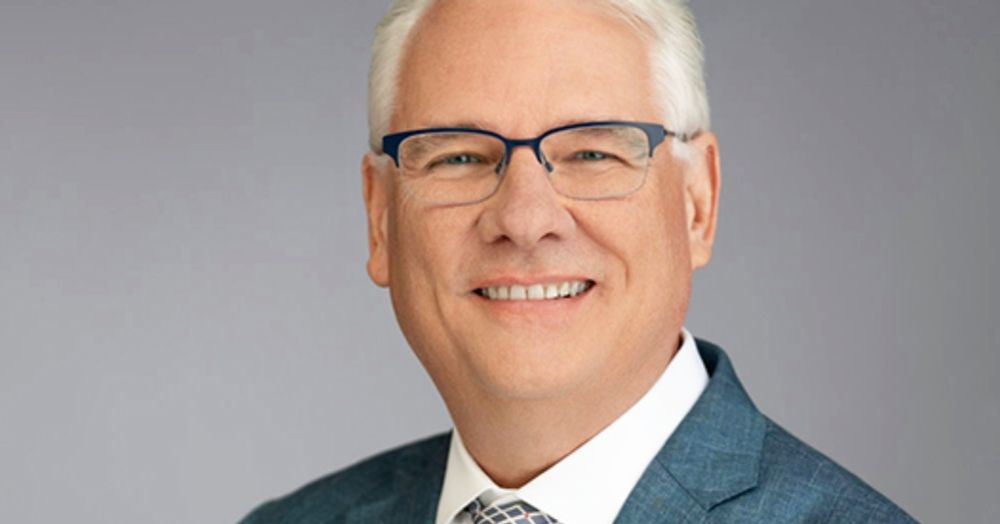
A change at the top of SfN as neuroscientists gather in San Diego
Kevin B. Marvel, longtime head of the American Astronomical Society, will lead SfN after a year of uncertainty in the neuroscience field.
Given the issues facing neuroscience around government policy and funding, the naming of an outsider to SfN’s top position caught some neuroscientists by surprise.
By Natalia Mesa
#neuroskyence #SfN2025 #SfN25
www.thetransmitter.org/teaching/kev...
17.11.2025 22:05 —
👍 6
🔁 4
💬 1
📌 0
While I was out on maternity leave, the Transmitter team produced this incredibly rich and informative special report on the state of neuroscience as a field. It's out now — go explore it here!!
#neuroskyence
17.11.2025 16:14 —
👍 6
🔁 1
💬 0
📌 0

Neuroscience Cell Types Webinars
Neuroscience webinars from the Allen Institute to hear about latest cell types researchers from various scientists.
Join us on Dec. 2 for a webinar on the major advances in basal ganglia mapping, including cross-species cellular mapping and open-access visualization tools.
📅 Dec. 2, 9-10:30am PT
📍 Online
🔗 Register: https://alleninstitute.org/events/neuroscience-cell-types-webinars/
#studyBRAIN #neuroskyence
13.11.2025 16:12 —
👍 7
🔁 2
💬 0
📌 0

Stimulus-modulated approach to steady state (SASS): a flexible paradigm for event-related fMRI
Nature Methods - Stimulus-modulated approach to steady state (SASS) is an acquisition scheme for event-related fMRI that generates data with high temporal signal-to-noise ratios interspaced with...
14 months after submission, our article “Stimulus-modulated approach to steady state (SASS): a flexible paradigm for event-related fMRI" is now out in @natmethods.nature.com . You can read it here rdcu.be/ePJo6
It is the first first author paper from my student @renilmathew.bsky.social 👏🏽👏🏽👏🏽 …1/N
13.11.2025 12:23 —
👍 53
🔁 20
💬 4
📌 8