
Day 5: Now for the Science, Part 1. Join me every day this week to follow this early 19th century shoe’s journey to conservation.
#mudlarkingfinds #mudlark #mudlarking
Day 5: Now for the Science, Part 1. Join me every day this week to follow this early 19th century shoe’s journey to conservation.
#mudlarkingfinds #mudlark #mudlarking


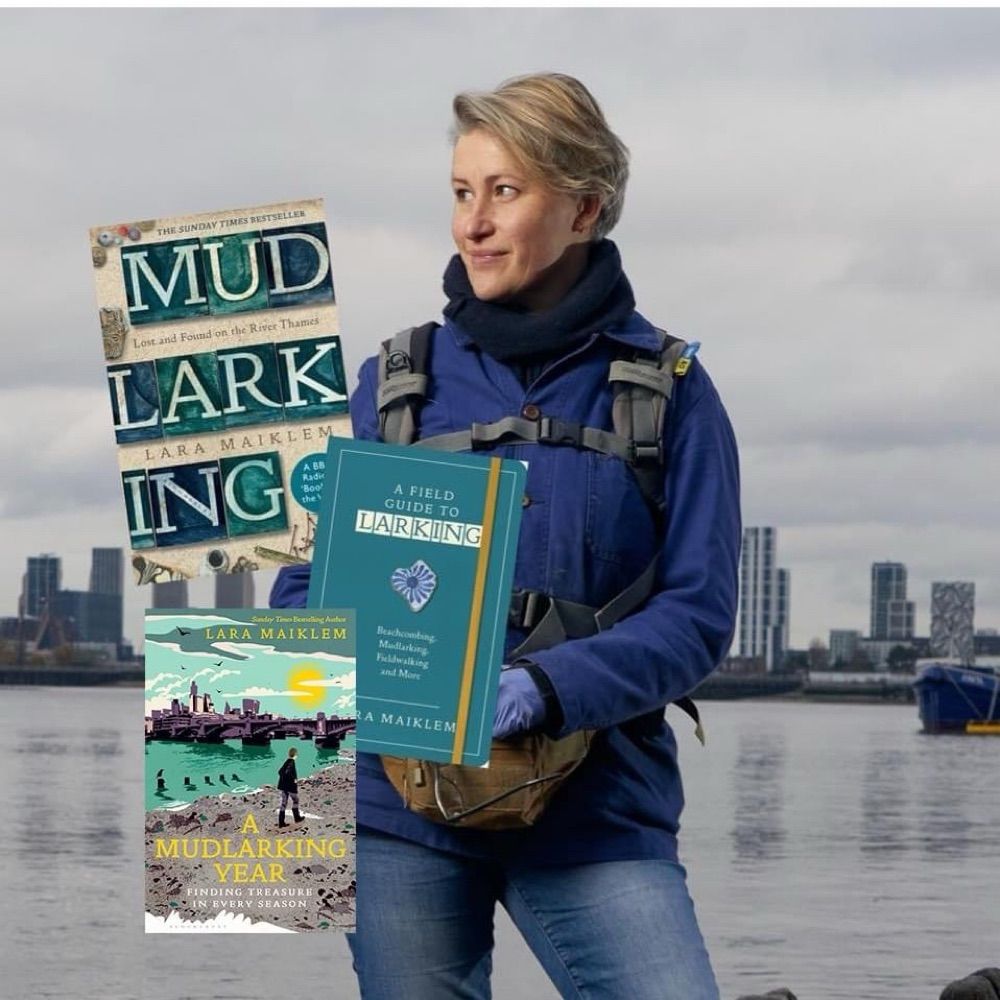
In @financialtimes.com this week, my guide to how, when and where to mudlark on the Thames…
There’s more in my Field Guide to Larking, available from wherever you buy your books ☺️
#mudlarking #mudlark #mudlarkingfinds
@bloomsburybooksus.bsky.social


Can anyone help me ID this? It’s iron (magnetic), I think it’s cast, could it be some king of cannon shot?
#mudlarkingfinds #mudlark #mudlarking
Join me every day this week to follow this early 19th century shoe’s journey to conservation.
#mudlarkingfinds #mudlark #mudlarking
Colin Torode at Lionheart Replicas
31.03.2025 19:07 — 👍 1 🔁 0 💬 0 📌 0Join me every day this week to follow this early 19th century shoe’s journey to conservation. #mudlarkingfinds #mudlark #mudlarking
31.03.2025 14:34 — 👍 42 🔁 3 💬 0 📌 0
A pocket knife with a copper handle (or the bone/ivory/wood/horn scale is missing), late 18th to early 19th century. Found by eye on the Thames foreshore.
#mudlarkingfinds #mudlark #mudlarking


14th/15th century pewter buckle plate. It would have had a separate buckle frame attached to it and is probably a cheaper copy of the more upmarket copper alloy or silver versions that were produced at the time.
#mudlarkingfinds #mudlark #mudlarking
yup
27.03.2025 22:24 — 👍 1 🔁 0 💬 0 📌 0
“Whoso pulleth out this sword of this stone…”
(You never know what you’ll find on the Thames foreshore)
#mudlarkingfinds #mudlarking #mudlark
What a beautiful day to be beside the river…
#mudlarkingfinds #mudlark #mudlarking

Nigh on 250 years in the mud has created the most beautiful iridescent patina on this tombac button.
#mudlarkingfinds #mudlark #mudlarking

An odd ball find today (found on my local beach yesterday), who can tell me what this is… top marks for the best answer 😉
#mudlarkingfinds #mudlark #mudlarking


16th cast copper alloy decorated lock plate, or escutcheon, as found on the Thames foreshore. It looks as if it has been prised off the box or casket it was originally attached to.
If finds could talk, I’m sure this one could tell a tale or two.
#mudlarkingfinds #mudlark #Mudlarking

Lost tools. I find a lot of tools in one particular spot, where boats were repaired from the 18th century well into the 20th.
#mudlarkingfinds #mudlark #mudlarking
Meet Bartmann…
#mudlarkingfinds #mudlark #mudlarking

3/
The zander is considered to be an invasive non native species that is a particular threat to native species, such as gudgeon, bullhead and roach. They are apparently also quite tasty.

2/
They are native to Eurasia and were introduced to the UK in 1878 by Francis Russell, 9th Duke of Bedford, into lakes on his Woburn Abbey estate and soon after that into the Great Ouse Relief Channel in The Fens. Zander were also illegally introduced the canals network in the 1970s


I don’t think this is the jaw from a pike, I think it’s a zander, a member of the perch family with the predatory feeding behaviour of a pike.
1/
#mudlarkingfinds #mudlark #mudlarking
Bottom left could be a lead pot mend
15.03.2025 08:23 — 👍 1 🔁 0 💬 1 📌 0
I found a spotless die. I assume it’s unfinished, lost, dropped or for some reason thrown away before its maker drilled the little dots onto its sides.
#mudlarkingfinds #mudlark #mudlarking

This stunning gold toilet case with tooth-pick and ear-pick dates from around 1600 and is in the British Museum’s collection.
Next to it is the unhallmarked silver version I found on the Thames foreshore is a poorer man or woman's version of it.
#mudlarkingfinds #mudlark #mudlarking


The first glutinous glob of frog spawn, lamb’s tails, bursting buds and primroses. Spring has crept into my favourite wood.
#mudlarkingfinds #mudlark #mudlarking
6/
In truth, only the river really knows how these glowing red seeds became embedded in its skin.
5/
I’ve also heard stories of sailors getting a commission for bringing garnets back from overseas. It is said they made holes in the sacks to let some of the stones trickle down onto the foreshore and returned on the low tide to collect their spoils from the mud.
4/
They may be older than 19th century or, owing to their hardness, some think they may have been used more recently as an abrasive for industrial cleaning.
3/
They may have been washed down an old drain and flushed out onto the foreshore, or perhaps someone stole a bag of them, thinking they were better quality than they are, and dumped them in the Thames rather than risk getting caught.
2/
One theory is that they fell off an East India ship in 1810, another is that they are the floor sweepings of a jewellery shop that were dumped on the foreshore, rejects from a larger bag that would explain why so many are of such poor quality.

I’ve found hundreds of raw garnets on the Thames, so far at four different locations. Some have been quite big, but none as large as this whopper. They are not native, so how did they end up in the Thames?
1/
#mudlark #mudlarking #mudlarkingfinds

Not a particularly old sole, perhaps 100 years or so, but real treasure. Just look at those patches and the metal studs on one side where it wore down quicker. It’s as personal as a fingerprint and spine tinglingly evocative.
#mudlarkingfinds #mudlark #mudlarking


