While waiting for the next @schmidtocean.bsky.social dive here's a look back at my favorite benthic ctenophores they've filmed. Dive 366 Lihou Reef, Coral Sea Marine park on east coast of Australia, Queensland Plateau (sound is a tad loud) #VisioningCoralSea #MarineLife
24.01.2026 02:07 —
👍 309
🔁 51
💬 9
📌 1

Confocal microscopy image of a juvenile sea star (Patiria miniata) viewed from the oral side. The animal has a five-armed, star-shaped body with a central nerve ring. The nervous system is labeled in green, forming radial nerve cords extending into each arm, and cell nuclei are labeled in red throughout the animal. The image appears against a black background and has a holiday-ornament-like appearance.
Felt a little festive at the microscope this morning for #FluorescenceFriday 🎄
Here’s the nervous system of a juvenile sea star ⭐️
Green = acetylated tubulin, red = nuclei
Happy holidays!
19.12.2025 17:32 —
👍 579
🔁 132
💬 11
📌 12

An MBARI researcher with short gray hair and a gray beard wearing a black headset, navy blue polo, blue jeans, and tan slip-on shoes points to a wall of video monitors in the dark submersible control room of a research ship. The researcher is seated in a black leather chair with his legs up on a black plastic milk crate. In the background are two submersible pilots seated in chairs and operating submersible controls and a third submersible pilot holding a cup of coffee. The video monitors on the right side of the frame are displaying a live feed from a deep-sea submersible showing an array of clear plastic sampling canisters and a bright red jelly.

A submersible pilot and two biologists sit in black leather chairs and watch video monitors in the dark submersible control room aboard a research ship. The pilot is in the foreground. He has wavy salt-and-pepper hair, is wearing a headset, a black hooded sweatshirt, and gray pants, and is holding a black rubber joystick. The biologist in the center has short blonde hair. She is wearing a headset and a navy-blue jacket. The biologist in the background has short blonde hair. She is wearing glasses and a headset. All three are watching a wall of video monitors on the left side of the frame displaying a video feed and data from the deep sea. A bright red comb jelly swimming in open blue water is displayed on the two monitors at the center of the wall.

A submersible pilot operates the robotic arm of a deep-sea submersible from the dark control room of a research ship. The pilot has long brown hair and is wearing glasses, a black headset, and a green jacket. She is seated at a desk with various controls on the counter. She is holding a jointed black metal arm and watching a video monitor displaying the silver metal robotic arm of a submersible as it grips a rock on the deep seafloor attached to a red coral.

A Monterey Bay Aquarium biologist examines a red deep-sea jelly in the lab aboard a research ship. The biologist has short blonde hair and is wearing an orange beanie cap, blue hooded sweatshirt, yellow vest, and black pants. She is leaning over looking at a clear plastic canister filled with water and a bulbous red comb jelly. On the right side of the frame is a black fiberglass frame with water hoses. In the background are white walls and windows looking out to black night sky.
First ROV science mission for R/V David Packard ✅
After months of work to integrate the ROV Doc Ricketts, our team conducted the first ROV science dives from our flagship research vessel during an expedition with our partners at @montereybayaquarium.org.
Learn more: www.mbari.org/news/mbari-c...
18.12.2025 20:38 —
👍 37
🔁 8
💬 1
📌 1

Nautilus Live | Ocean Exploration Trust
Explore the ocean with us! We seek out new discoveries while conducting scientific exploration of the seafloor and stream live to the world aboard Exploration Vessel Nautilus.
🧪📍🌊 🦑🍎 Attention students and recent grads! opportunity for #oceanscience interns to sail aboard #EVNautilus next year in a paid position for 3-5 weeks. Whether you’re studying #marinebiology, #geology, or any other type of #oceanography. Learn more and apply by Jan 4 at NautilusLive.org
11.12.2025 23:07 —
👍 43
🔁 33
💬 0
📌 3

Seven-arm octopus • Animals of the Deep • MBARI
The seven-arm octopus is a rarely seen deep-sea giant who feeds on gelatinous animals.
Fresh from the deep—a rarely seen giant in Monterey Bay. 🤩
Last month, MBARI Senior Scientist Steven Haddock and the Biodiversity & Biooptics Team spotted a seven-arm octopus (Haliphron atlanticus) holding a crimson helmet jelly (Periphylla periphylla). Learn more: www.mbari.org/animal/seven...
03.12.2025 22:04 —
👍 54
🔁 18
💬 1
📌 5

Hydra (Hydra vulgaris) ✨Small but mighty! Hydra can regenerate its entire body, even its head 🧠 A classic model for regeneration, stem cell dynamics, and body axis patterning 📸 Image by Daniel Bressan de Andrade #ModelMonday #DevBio #Regeneration
11.11.2025 02:28 —
👍 87
🔁 23
💬 0
📌 2
YouTube video by MBARI (Monterey Bay Aquarium Research Institute)
MBARI's team of mechanical technicians make innovative new tech come to life
MBARI’s mechanical technicians and engineers collaborated closely to build a titanium frame capable of holding cameras, sensors, and instruments used in the SINKER—SINKing Ecology Robot—imaging system, which collects vital carbon data. 🔧 🌊 🔬
Learn more: youtu.be/6_elP8a1o0M?...
11.11.2025 22:54 —
👍 27
🔁 9
💬 0
📌 0

Pictures of a pink sea anemone sitting on top of a hermit crab shell.
Oh, I love this. A new species of sea anemone was discovered recently that parks itself on top of a hermit crab shell like a hat. It seems to feed partly off the crab's faeces, but it also excretes a hard shell that extends the crab's home. In return, it's carried around the seafloor like a king.
10.11.2025 21:57 —
👍 5411
🔁 981
💬 132
📌 98

Cassini narrow-angle RGB composite taken 2009-12-26 05:30 UTC.
Prometheus is seen casting a shadow onto the material it pulled out of the F-ring core with its gravitational interaction. Also visible in the lower right corner is what appears to be a small ring clump or moonlet in the F-ring core itself.
Distance: 58 600 km
Phase angle: 18 deg
Prometheus - From Gordan Ugarković (ugordan.bsky.social) - https://flic.kr/p/8FBbLN
28.10.2025 22:00 —
👍 117
🔁 12
💬 0
📌 3

Super pumped to be a guest speaker in the COBRA webinar series in two weeks’ time, along with Olivia Pereira from @mbarinews.bsky.social! We’ll be talking about our Science Communication strategies & experiences. Register for Zoom link here: cobra.bigelow.org/webinars/
21.10.2025 16:33 —
👍 11
🔁 6
💬 0
📌 2

A Phronima mom in her barrel with dozens of babies. Inside her head is bright pink and all her babies are pink blobs wirh transparent limbs. The mom also features some sick claws.
Ummm, who was going to tell me that Phronima eat Beroe abyssicola and that when they do they and all their little babies turn pink??
Photo from today when I learned that from putting them in a kreisel together.
🦑🐙
25.06.2025 02:16 —
👍 99
🔁 17
💬 3
📌 3

A spherical comb jelly floating against a dark background, with its tentacles deployed, tentilla (side branches) fanned out. There is a number 1 above the body and number 2 below the body. Photo by S. Haddock taken around 1990.
For CTENOPHORE DAY, a little survey:
Which end of this fishing Pleurobrachia is the mouth on? Please just "vote" in the comments — no definitive answers. 🦑🧪🌊
P.S. this is one of my earliest #ctenophore photos, shot on film in a home-built kreisel.
P.P.S. Legit data-gathering for a future paper.
04.10.2025 14:38 —
👍 67
🔁 19
💬 15
📌 3

A graphic that reads Happy Ctenophore Day in glowing pink text twice between three rows of different ctenophore species. The top row is lobate ctenophores including Bolinopsis microptera, Leucothea pulchra, Mnemiopsis leidy, and the bloody belly comb jelly Lampocteis. The second row has three different Beroe species. The lowest row has Pleurobrachia bachei, Dryodora glandiformis, red-x, and Euplokamis dunlapae.
Happy Ctenophore Day!
🐙🦑🧪
04.10.2025 07:36 —
👍 430
🔁 140
💬 6
📌 13
Our science photo book The Radiant Sea is out Sept 2nd!!
30 years of research, 10 years of "we should", and a year of collating pix and writing.
Sönke and I show (mostly for the first time) images of how organisms produce, use, and interact with light in the sea. #bioluminescence #fluorescence 🦑🧪🌊
28.08.2025 02:22 —
👍 215
🔁 69
💬 15
📌 9
In the deep ocean & Antarctic waters, sponges grow at a rate of fewer than 2cm/yr. While life on land seems to move at an oft dizzying pace, the size of this sponge suggests this animal may have been alive for hundreds of years. #AntarcticClimateConnections
21.07.2025 22:02 —
👍 151
🔁 34
💬 2
📌 2
mikewong's astroblog
As currently configured, NASA newest grant opportunity release represents an ****82%**** cut to planetary science research funding.
research.ssl.berkeley.edu/~mikewong/bl...
11.07.2025 22:43 —
👍 167
🔁 68
💬 12
📌 8
BEHOLD! One of Earth's greatest lineages of life: the lil wiggle arm guys, Meteora.
These single-celled critters, originally found in deep-sea sediments, are SO DIFFERENT from other lifeforms on Earth that they're likely in their own kingdom (as in, the Animal Kingdom, the Plant Kingdom etc). 🧪🌿
10.07.2025 20:06 —
👍 1422
🔁 439
💬 39
📌 54
Death net
Not much escapes from the sticky, stinging tentacles of a #siphonophore. Body of ~7”, and a net of tentacles extending >6’.
Yes, this creature is on the Do Not Lick list.
#forsakaliaedwardsi #nematocysts #blackwater #blackwaterdiving #chrisgug #gugunderwater #gug
07.07.2025 21:12 —
👍 119
🔁 44
💬 3
📌 1
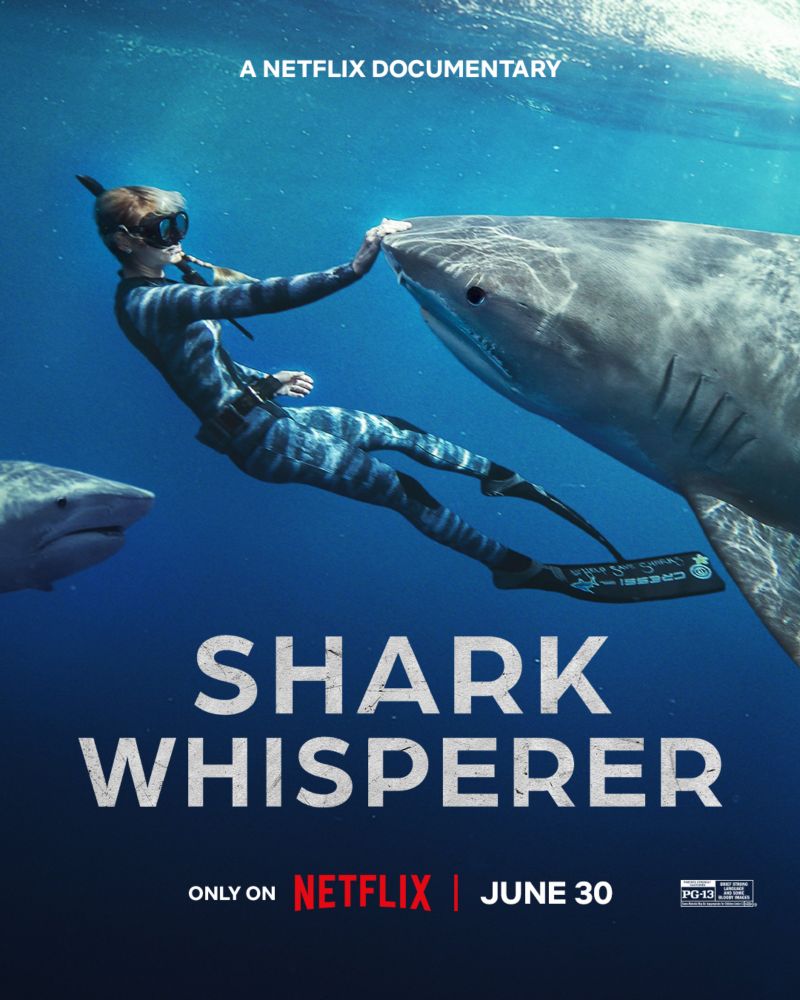
What Ocean Ramsey does is not shark science or conservation: some brief thoughts on “the Shark Whisperer” documentary
Netflix has a new (sarcastic air quotes) “documentary” out about Ocean Ramsey, who longtime readers and followers know is a serial wildlife harasser who also coordinates massive online …
Enough of you asked me about this that I wrote some brief thoughts on Ocean Ramsey's particular brand of pseudoscientific nonsense. I believe this addresses almost all of the frequently asked questions I receive, but as always I am happy to answer serious questions asked in good faith.
🧪🦑🌎🦈
02.07.2025 20:25 —
👍 688
🔁 255
💬 41
📌 32
It's #InternationalPolychaeteDay, and we've got something for you to celebrate. ❤️
Flame on: The vibrant red gossamer worm is the race car of the deep sea: youtu.be/PII8AvmEvnE?...
01.07.2025 17:23 —
👍 47
🔁 15
💬 0
📌 2

rainbow colored underside of segmented polychaete worm
MORE of Alexander Semenov's gorgeous worm photography! #worldpolychaeteday
01.07.2025 13:59 —
👍 209
🔁 48
💬 3
📌 3

Marine snow provides new clues about the export of carbon to the deep sea • MBARI
Genetic sequences in microscopic particles of sinking organic material reveal the mechanisms of carbon transport into the deep sea that can help improve satellite-based models of carbon export.
Microscopic particles, global impact 🌊🔬
MBARI scientist @cadurkin.bsky.social and her team are using microscopic particles to reveal the mechanisms of carbon transport into the deep sea that can help improve satellite-based models of carbon export.
Learn more: bit.ly/carbonexport...
20.06.2025 21:15 —
👍 36
🔁 5
💬 0
📌 1

Two pictures of a ctenophore in the genus Callianira, collected during blue-water scuba dives off the coast of Hawaii. The figure on the left is a rather poor photo, in an aboral view, against a black background.
The photo on the right is a lateral view on a white background. The ctenophore is shaped like an arrowhead, and in the white-background view you can see that it is covered with small reddish-brown speckles. Larger spots cover the body, and small spots are arranged in rows parallel to the base of each comb plate. One tentacle is extended showing the pink-pigmented tentilla.
I am used to photographing #ctenophores in darkfield, but under those conditions it is hard to see the pigment spots on this little (5mm) specimen.
Fun to see the patterns that show up when viewed against a white background. 🧪🦑🌊
11.06.2025 22:02 —
👍 55
🔁 19
💬 2
📌 3
For the first time, scientists have filmed microscopic worms called nematodes in the wild as they glom together and form large wriggling masses.
Learn more: scim.ag/3FBwSx3
11.06.2025 18:20 —
👍 177
🔁 27
💬 14
📌 5


