
Here's a great publication hoax perpetrated by Pascal Diago, possibly comparable to the Sokal hoax (look it up if you're not familiar with it), about pregnancy cravings for prime numbers!
retractionwatch.com/2026/01/30/g...

@olgakepinska.bsky.social
multilingualism, language acquisition & neurolinguistics. researcher @cnrs.fr @univ-amu.fr @ilcb.bsky.social; previously postdoc @brainlanglab.bsky.social @univie.ac.at, UCSF/UConn brainLENSlab, LUCL Leiden & LIBC Leiden. https://olgakepinska
Here's a great publication hoax perpetrated by Pascal Diago, possibly comparable to the Sokal hoax (look it up if you're not familiar with it), about pregnancy cravings for prime numbers!
retractionwatch.com/2026/01/30/g...

‼️ Nous recherchons toujours des personnes bilingues français-allemand pour une importante étude sur le multilinguisme ! N'hésitez pas à partager et à participer si vous le pouvez ! Merci ! @nocelab.bsky.social @nccrlanguage.bsky.social
07.01.2026 09:10 — 👍 2 🔁 4 💬 0 📌 0
Nine subcortical/cerebellar atlases included in the subcortex_visualization Python package (and subcortexVisualizationR package in R). The atlases are depicted in two-dimensional vector graphic format.
The extended version of my thesis procrastination project/subcortex visualization package is out now in both Python and R, now that I’ve graduated 🤠 This figure shows the 9 atlases included (and counting)!
Preprint: www.biorxiv.org/content/10.6...
Website: anniegbryant.github.io/subcortex_vi...

Awake infant fMRI offers a rare window into early brain and cognitive development. In a new paper out now in Infancy, we leverage data from hundreds of infant scans from the Saxe and Turk-Browne Labs to reveal what factors drive scanning success — and how future studies can maximize data retention!
31.01.2026 22:45 — 👍 46 🔁 18 💬 1 📌 0An abbreviation (ABB) in a journal article (JA) or Grant Application (GA) is rarely worth the words it saves. Every ABB requires cognitive resources (CR) and at my age by the time I'm halfway through a JA or GA I no longer have the CR to remember what your ABB stood for.
15.08.2025 09:39 — 👍 402 🔁 123 💬 12 📌 22
This is 🤯
All publicly available. Looks like an amazing new histology-based human probabilistic atlas and parcellation tool.
#neuroskyence #mri #brainmapping
A probabilistic histological atlas of the human brain for MRI segmentation | Nature share.google/5AD0iW7pxgb4...

Cover of this week's Nature showing a brain rendering Cover caption from the journal: Brain development: Our ability to process information into complex emotions, behaviours and decisions relies on the rich diversity of cell types that make up the human brain. Uncovering the molecular and cellular events that take place during brain development could reveal not only the mechanisms that give rise to this diversity but also shed light on how this process might go awry in neurodevelopmental disorders such as autism and schizophrenia. In this week’s issue, the BRAIN Initiative Cell Atlas Network (BICAN) builds on its previous work creating atlases of cell types in the adult mouse, non-human primate (NHP) and human brains to present cell-type atlases of the developing human, mouse and NHP brains. Across a suite of papers, nine of which are published in Nature, the researchers uncover the complex programs through which cell types emerge during brain development in humans and animals, revealing both the shared and unique features of the human brain. The latest work, along with future research directions, is summed up in a Perspective article by Tomasz Nowakowski and colleagues
New issue of Nature - with NINE studies on #brain #development from the BRAIN Initiative Cell Atlas Network (BICAN) 🧠🧪🔬
An amazing set of resources for all scientists working on the brain!
🧠 Immersive feature:
www.nature.com/immersive/d4...
🧠 Perspective:
www.nature.com/articles/s41...
📰 new paper! lnkd.in/dYdrvZAz, by @irenebalboni.bsky.social , Alessandra Rampinini, @olgakepinska.bsky.social, @berthele.bsky.social, @nargolestani.bsky.social, @nccrlanguage.bsky.social showing the importance of multimodal approaches for uncovering brain-behaviour relationships
17.09.2025 13:41 — 👍 5 🔁 5 💬 0 📌 0thank you!!! 😃
08.09.2025 10:29 — 👍 0 🔁 0 💬 0 📌 0
Rozdane wczoraj przez @erc.europa.eu granty #ERCStG trafiły także do 6️⃣ polskich naukowców, którzy swoje badania będą prowadzić w Niemczech, Austrii, Francji i Szwajcarii. Czego dotyczą ich projekty? ⬇️
@aniaczark.bsky.social @magda-sznurkowska.bsky.social @olgakepinska.bsky.social
I'm more than happy to share that I have been awarded an ERC Starting Grant @erc.europa.eu for my project on fetal language acquisition. In DiverseSounds, we'll focus on prenatal language environment and its effects on neural plasticity and language development post-birth. Exciting times ahead!
08.09.2025 08:49 — 👍 50 🔁 1 💬 2 📌 0fMRI functional connectivity: compares correlations of BOLD signal from different brain regions
11.07.2025 09:43 — 👍 2 🔁 0 💬 1 📌 0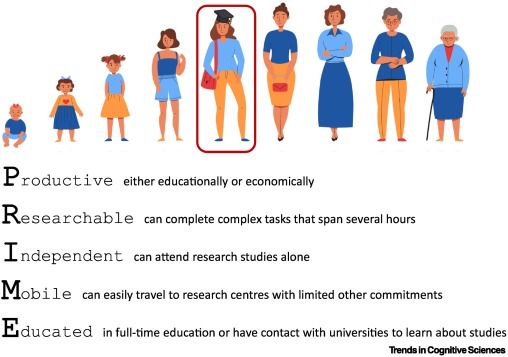
“Relying on PRIME young adults limits cognitive science” www.cell.com/trends/cogni... new @cp-trendscognsci.bsky.social piece with @connectedmindslab.bsky.social we highlight how a focus on young adults as a benchmark of ‘human’ behaviour has shaped cognitive science in several ways 👇
02.07.2025 07:26 — 👍 31 🔁 12 💬 2 📌 0
You can hear the sounds, but can you distinguish the words? 🤔
Here's the postprint version of our new, soon-to-be SSLA paper!
osf.io/6zbgt
Celia Gorba, Pilar Prieto and I revisit the tricky link between L2 sound & word recognition—with a fresh look at methods
Experimentology cover: title and curves for distributions.
Experimentology is out today!!! A group of us wrote a free online textbook for experimental methods, available at experimentology.io - the idea was to integrate open science into all aspects of the experimental workflow from planning to design, analysis, and writing.
01.07.2025 18:25 — 👍 534 🔁 228 💬 9 📌 15
Out now at Nat. Neuro.
"Addressing artifactual bias in large, automated MRI analyses of brain development"
Huge congrats to Josh Roffman team on this herculean effort.
www.nature.com/articles/s41...
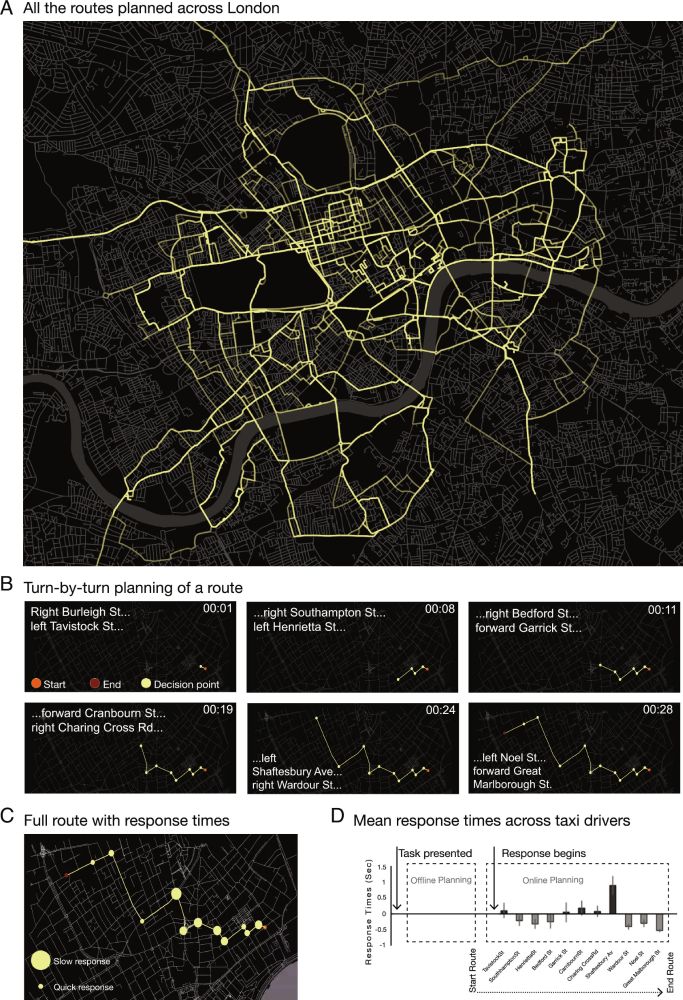
We recently published this paper in PNAS exploring how London cab drivers plan routes.
We found that entropy of streets & successor representations explain planning speed.
It was fantastic working on this with Eva Griesbauer, Dan McNamee, and Hugo Spiers.
www.pnas.org/doi/10.1073/...
Alert! ... for the child development world!
@fluxsociety.bsky.social @fitngin.bsky.social
The Healthy Brain and Child Development (HBCD) Study has released its first data wave - it’s massive.
Check here:
docs.hbcdstudy.org
and here:
nbdc-datahub.org
Here’s why it matters 🧠🍼
Yes, my favourite blog post!
In all our studies (3 twin, 2 longitudinal), we consistently found: how well children read → how much they enjoy reading.
In 2/5, we also saw some evidence for the reverse.
Different samples, countries, ages, and measures—but same key finding: skills shape motivation.
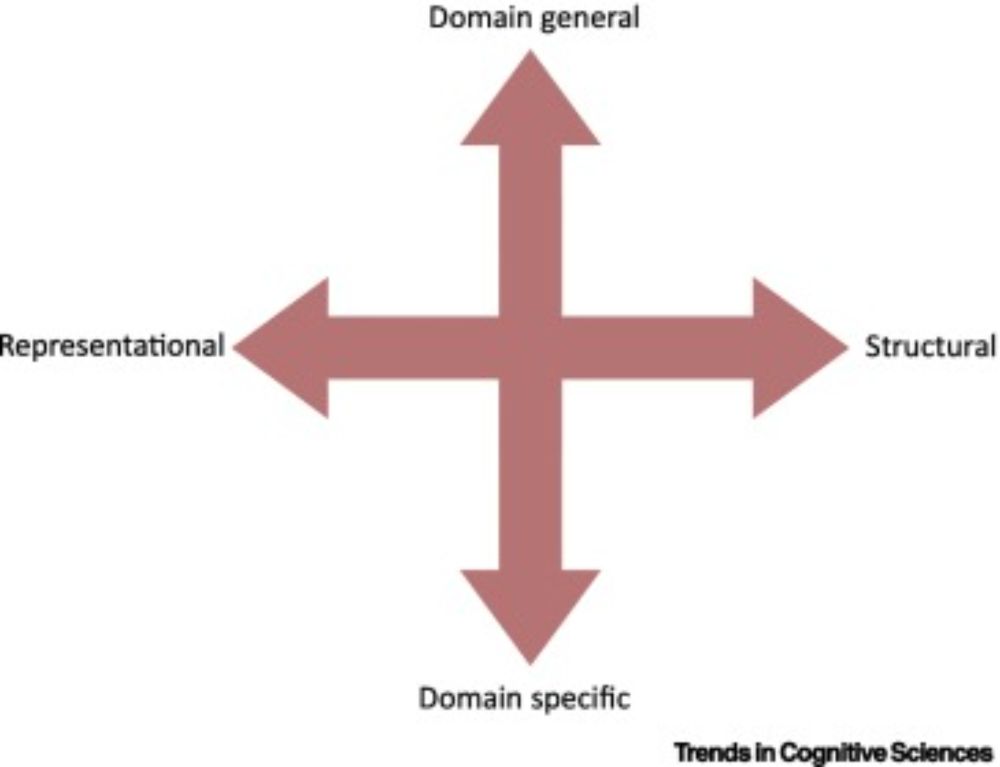
Children are incredible language learning machines. But how do they do it? Our latest paper, just published in TICS, synthesizes decades of evidence to propose four components that must be built into any theory of how children learn language. 1/
www.cell.com/trends/cogni... @mpi-nl.bsky.social
😭
26.06.2025 15:51 — 👍 1 🔁 2 💬 0 📌 0Thanks! Looking forward to joining forces! :D
26.06.2025 09:18 — 👍 1 🔁 0 💬 0 📌 0🚨🚨🚨Big, BIG news!!! 🎉 In Fall 2025, I'm starting as a CNRS Researcher at LPL @univ-amu.fr in Aix-en-Provence, South of France. Thrilled to join the amazing @ilcb.bsky.social community and launch my research on fetal language acquisition & brain development in multilingual contexts. 🫄🗣️🧠 Stay tuned!
26.06.2025 09:09 — 👍 23 🔁 1 💬 1 📌 0It doesn't get reiterated enough that "human on a bicycle" is not only the most efficient way that a person can move, it's the most efficient form of motion ***ever observed in land animals***.
23.05.2025 02:53 — 👍 2251 🔁 658 💬 67 📌 44
my lab (lacns.github.io) at @mpi-nl.bsky.social and @dondersinst.bsky.social is recruiting for two PhD and two postdoctoral positions funded by an @erc.europa.eu Consolidator - come join us!
PhD: www.mpi.nl/career-educa...
Postdoc: www.mpi.nl/career-educa...
(please share widely)


Do caregivers exaggerate vowels when talking to infants? Prior findings are inconsistent () & the mechanisms unclear. We meta-analyzed 35 studies across 10 languages to disentangle systematic cross-linguistic and methodological variation. Paper: osf.io/preprints/ps... 🧵
21.05.2025 13:46 — 👍 40 🔁 16 💬 1 📌 2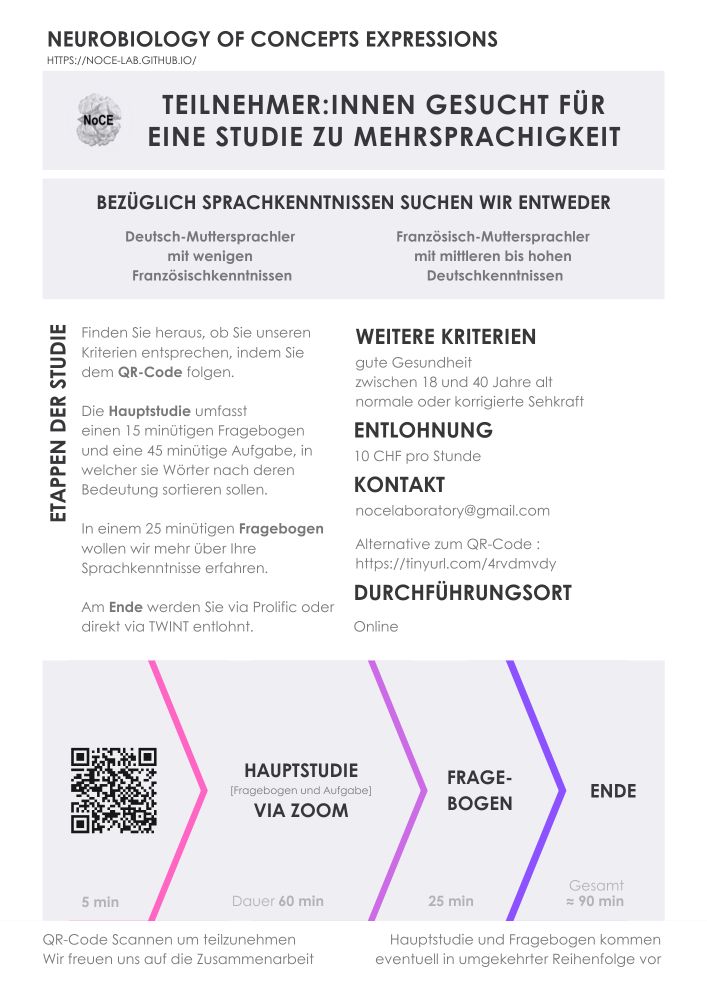
Sind Sie deutschsprachig mit wenigen Französischkenntnisse? Dann nehmen Sie an einer wissenschaftlichen Online-Studie über Sprache von @nocelab.bsky.social teil und helfen Sie dabei, den Einfluss der Sprache auf die Kognition zu verstehen.
12.03.2025 08:46 — 👍 7 🔁 9 💬 1 📌 2This is wonderful, Yannick! Congratulations!!!
16.05.2025 16:19 — 👍 1 🔁 0 💬 0 📌 0
Thanks to everybody who chimed in!
I arrived at the conclusion that (1) there's a lot of interesting stuff about interactions and (2) the figure I was looking for does not exist.
So, I made it myself! Here's a simple illustration of how to control for confounding in interactions:>