
So this chilling effect is not just theoretical, it will have real impacts on people’s rights, by slowing down and already overtaxed judicial system.
29.04.2025 22:17 — 👍 0 🔁 0 💬 0 📌 0So this chilling effect is not just theoretical, it will have real impacts on people’s rights, by slowing down and already overtaxed judicial system.
29.04.2025 22:17 — 👍 0 🔁 0 💬 0 📌 0Recall that the White House has argued that it “cannot possibly” provide trials for all the people it wants to deport, as if “Due Process is HARD” is a sufficient excuse. (It isn’t.)
29.04.2025 22:17 — 👍 0 🔁 0 💬 1 📌 0So, it becomes much clearer that this EO will be used to attempt to circumvent normal Due Process for people in the country by threatening the Judiciary with prosecution if they attempt to, you know, do their duly assigned job under the constitution.
29.04.2025 22:17 — 👍 0 🔁 0 💬 1 📌 0
6) Use of Homeland Security Task Forces
On the surface, this seems like boilerplate, but recall that these task forces were created in the context of declaring Tren de Aragua and MS-13 terrorist organizations.
But they also tie this to anything that might hamper law enforcement or endanger citizens.
Remember the whole “the LA fires were the ‘result’ of DEI” hogwash? It’s baaaaaack. But now, they’re threatening to prosecute local officials.
This is where the EO includes the subsection about DEI, again attempting to create some kind of record for this new legal theory that they’re peddling that DEI is actually a civil rights violation.
29.04.2025 22:17 — 👍 0 🔁 0 💬 1 📌 0This is intended to have a chilling effect on anyone who might question whatever law enforcement wants to do or how they are doing it. That’s bad.
29.04.2025 22:17 — 👍 0 🔁 0 💬 1 📌 0That was the attempt to “make an example,” and this is the warning to any other state and local officials that if they do anything similar, the federal government will come after them.
29.04.2025 22:17 — 👍 0 🔁 0 💬 1 📌 0
5) Holding State and Local Officials Accountable
This is the Judge Hannah Dugan section. Remember how she was arrested for obstructing law enforcement proceedings?
If you militarize a local police force and tell them how to do their policing, then you don’t have to deploy the US military (so you’re not violating the Posse Comitatus Act). We’ve seen decades of police militarization in the US, and this aims to ramp that process up
That is and has been concerning
4) Using National Security Assets for Law and Order
This is probably the most worrying section to most people, because this starts to sound a lot like Martial Law without declaring Martial Law.
This is important, because the federal government often intervenes in issues related to civil rights. So if someone was, say, complaining that their Due Process had been violated, the federal government might step in. Not anymore.
29.04.2025 22:17 — 👍 0 🔁 0 💬 1 📌 0
Unless Martial Law is declared.
This doesn’t declare Martial Law. So why is everyone up in arms?
This section doesn’t declare Martial Law, but it does direct the Attorney General (the nation’s top lawyer) to review ongoing issues related to law enforcement AND to take a hands-off approach.
Now you’ve likely heard a bunch of people who got their law degrees out of Cracker Jack boxes try to explain that undocumented immigrants aren’t afforded Due Process.
They’re wrong. Every person (not every citizen, not every legal resident; every person) in the US is entitled to Due Process. Period
they have to do at least two very basic things:
- They have to tell you.
- They have to give you an opportunity to tell your side of the story.
Martial Law interrupts those rights.
Due Process is a guarantee of the US Constitution. It comes from several different parts of the constitution, in fact, and it essentially says that if the government wants to infringe on your rights (your many, various, not-particularly-clearly-defined-but-understood-to-be-very-broad rights),
29.04.2025 22:17 — 👍 0 🔁 0 💬 1 📌 0Well, our discussions lately concerning this immigration enforcement have revolved around the concept of “due process.” And to understand Martial Law, you need to understand that.
29.04.2025 22:17 — 👍 0 🔁 0 💬 1 📌 0Well, Martial Law is a pretty specific thing. And Congress has specifically passed a law (it’s called the Posse Comitatus Act) to prevent the US military from involving itself in domestic law enforcement without authorization. But what does it really mean?
29.04.2025 22:17 — 👍 0 🔁 0 💬 1 📌 0
Because, while the Federal government does have *some* law enforcement duties, the vast majority of them are conducted by states and municipalities. And those bodies have a lot of flexibility in how they operate.
So… where’s the Martial Law?
The US Constitution (you know, That Bitch?) reserves the policing power to the states. So that’s why all of this is couched in terms of “creating best practices” and “providing support.”
29.04.2025 22:17 — 👍 0 🔁 0 💬 1 📌 0
So maybe providing additional funding for this, and training, wouldn’t be so bad?
Not so fast.
First off, we need to understand where State/Local and Federal law enforcement intersects and where it doesn’t.
3) Empowering State and Local Law Enforcement
Here’s where things start to get trickier. Some of this, at first, doesn’t even look so bad. In places like where I live, the prisons and jails are so desperately underfunded they keep literally killing inmates with their inadequate custody.
I think a lot of people looked at that issue and were like “I think it’s bad, but I don’t know why…”
This is why. Those pro bono hours are going to go to defending the Derek Chauvin’s of this world.
2) Legal Defense of Law Enforcement
This is where this EO intersects with some other headlines we’ve been seeing lately. Remember how the White House extorted a bunch of big law firms into agreeing to provide pro bono hours?
In the law enforcement context, this means programs that have attempted to understand disparities in policing, disparities in sentencing, and community-based policing programs that attempt to rectify some of these disparities.
29.04.2025 22:17 — 👍 0 🔁 0 💬 1 📌 0- “harmful, illegal race- and sex-based “equity” policies”; if you aren’t aware, the administration is not only trying to discourage practices that increase diversity, but also to declare them a form of illegal discrimination.
29.04.2025 22:17 — 👍 0 🔁 0 💬 1 📌 0
It identifies a couple of targets, though, if we look carefully at the text:
- when law enforcement is “demonized” or has “handcuffs imposed” that prevent agressive policing. This is targeting policies that make it possible for LEOs to face civil liability or criminal prosecution.
6) Use of Homeland Security Task Forces
7) General Provisions
1) Purpose and Policy
The first part of this is pretty vague but lays out a roadmap and some context. In general, it covers all the standard “red meat” for a law-and-order candidate to cover in a stump speech.
I want to go through each part of this point by point.
1) Purpose and Policy
2) Legal Defense of Law Enforcement Officers
3) Empowering State and Local Law Enforcement
4) Using National Security Assets for Law and Order
5) Holding State and Local Officials Accountable
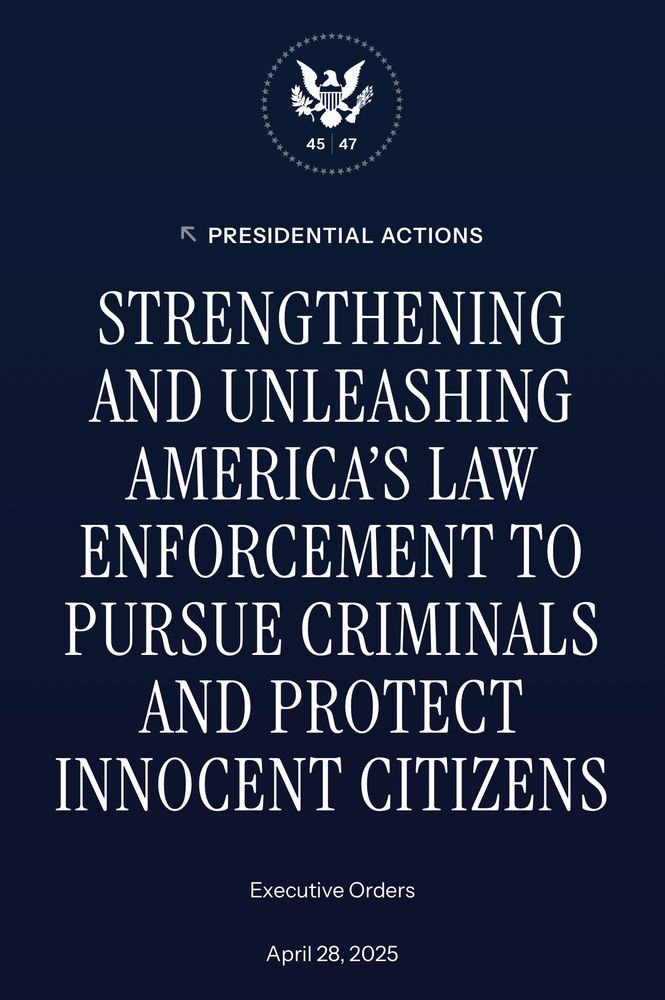
You’ve likely seen this by now, and you have probably seen people discussing this in the context of Martial Law. You may have questions. As a lawyer, I wanted to take a moment to explain some of the things in this Executive Order in as neutral and calm terms as possible. Buckle up. 🧵
29.04.2025 22:17 — 👍 2 🔁 0 💬 1 📌 0