
Be part of the global biodiversity genomics community 🌍🧬🚀
Join the conversation by referencing biodiversity genomics or 🌍🧬
Be part of the global biodiversity genomics community 🌍🧬🚀
Join the conversation by referencing biodiversity genomics or 🌍🧬

English: Stylized graphic of a human face formed by colorful horizontal bars (red, yellow, blue, and green) on a dark background. Text reads “Where It All Began” and “Every global genome effort starts with a first success,” with a white arrow pointing forward. Español: Gráfico estilizado de una doble hélice de ADN formada por barras horizontales de colores (rojo, amarillo, azul y verde) sobre un fondo oscuro. El texto dice “Where It All Began” y “Every global genome effort starts with a first success,” con una flecha blanca apuntando hacia adelante.

English: World map illuminated with glowing connection lines across continents, symbolizing global collaboration. Overlaid text explains that the Human Genome Project was the first international effort to assemble an entire genome—3 billion base pairs—and laid the foundation for initiatives like the Earth BioGenome Project to scale from one species to all life. Español: Mapa del mundo iluminado con líneas brillantes que conectan los continentes, simbolizando la colaboración global. El texto superpuesto explica que el Proyecto Genoma Humano fue el primer esfuerzo internacional para ensamblar un genoma completo—3 mil millones de pares de bases—y sentó las bases para iniciativas como el Earth BioGenome Project para escalar de una especie a toda la vida.
One genome changed everything.
The Human Genome Project showed us that:
• reference genomes are scientific infrastructure
• open data accelerates discovery
• collaboration makes scale possible
Those same principles now power a far bigger vision — understanding life across the entire Tree of Life. 🌳🧬

A sperm whale swims upward through deep blue ocean water, its massive head and body illuminated by filtered sunlight from the surface above. “High-quality genomes at scale reveal: • the genetic basis of resilience, longevity, and adaptation • smarter conservation strategies • lasting biological knowledge for future discovery”

A view of Earth from space shows continents lit by city lights and sunlight along the horizon, representing global collaboration and planetary-scale science. “The Earth BioGenome Project is a global collaboration working to generate high-quality reference genomes for all eukaryotic species, unlocking the biological knowledge needed to understand, protect, and sustain life on Earth.”
🌍 ✨Thank you to the global community making this possible. This is collaboration at #global scale. 🚀 👉 go.bsky.app/CRvXDF4
EBP-affiliated projects worldwide are building a shared scientific foundation — powered by collaboration, open #data, and a collective vision to sequence life at scale.

A microscopic image of Volvox, a spherical green colonial alga composed of many small cells arranged in a hollow globe, glowing against a dark background. “Beyond Humans: The Eukaryotic Frontier”

A collage grid showing diverse eukaryotic life — including fungi, a seahorse, insects, deer, protists, bees, trees, birds, mammals, plants, and marine invertebrates — representing the breadth of species across Earth. “A moonshot for LIFE on Earth: deliver reference genomes for all known eukaryotic species — 1.8 million — in the next decade.”

A stylized image of Earth encircled by a glowing DNA double helix, surrounded by animals, plants, fungi, and marine life, symbolizing the genetic unity and diversity of life on the planet. “What secrets are hidden in the DNA of life on Earth?” image generated by AI
Beyond humans lies the eukaryotic frontier. 🧬🌍
Sequencing the human genome showed us how powerful a single reference can be.
Now the challenge is scaling that insight across all eukaryotic life — plants, animals, fungi, and the vast unknown diversity of the Tree of Life.

Mark Blaxter from @sangerinstitute.bsky.social describes the ambition of the @ebpgenome.bsky.social to #Biology26 in Switzerland
13.02.2026 12:53 — 👍 18 🔁 8 💬 0 📌 0

🪲🦋🐝 The workshops help build local capacity for pollinator monitoring in Cyprus, training citizen scientists and introducing #genomic tools to support conservation of endemic species @horizoneu.bsky.social @birdlifecyprus.bsky.social @ebpgenome.bsky.social @biogeneurope.bsky.social #citizenscience
17.02.2026 10:52 — 👍 5 🔁 3 💬 0 📌 0
Alt EN: Image shows a large green and brown American bullfrog partially submerged in bright green duckweed, with only its head and eyes above the water. Text on image: “Inform invasive species management. Sequencing invasive amphibians, like the American bullfrog, helps track introductions, spread, and rapid adaptation.” Alt ES: Imagen de una rana toro americana grande, verde y marrón, parcialmente sumergida entre lentejas de agua verde brillante, con la cabeza y los ojos sobre la superficie. Texto en la imagen: “Informan la gestión de especies invasoras. Secuenciar anfibios invasores, como la rana toro americana, ayuda a rastrear introducciones, expansión y adaptación rápida.”

Alt EN: Image shows a smooth, legless caecilian lying on wet soil and leaf litter in a forest floor setting. Text on image: “Fill major gaps in the Tree of Life. Amphibians remain underrepresented in genomic databases. Sequencing them strengthens phylogeny and comparative research across vertebrates.” Alt ES: Imagen de una cecilia lisa y sin patas sobre suelo húmedo y hojarasca en el suelo del bosque. Texto en la imagen: “Llenan grandes vacíos en el Árbol de la Vida. Los anfibios siguen poco representados en las bases de datos genómicas. Secuenciarlos fortalece la filogenia y la investigación comparativa en vertebrados.”
🧩 From #salamanders with some of the largest, most complex genomes to #invasive species like the American #bullfrog, #amphibian genomics is pushing #sequencing forward — while filling major gaps in the #vertebrate Tree of Life.🧬💻
Big thanks to @crawfordaj.bsky.social for helping shape this post! 🧬✨

Alt EN: Colorful collage of diverse amphibians including frogs, salamanders, newts, caecilians, and an axolotl arranged on a black background. Text on image: "Why sequence amphibian genomes?" Alt ES: Collage colorido de diversos anfibios incluyendo ranas, salamandras, tritones, cecilias y un ajolote sobre un fondo negro. Texto en la imagen: "¿Por qué secuenciar los genomas de los anfibios?"

Alt EN: A tiny brown frog perched on a person’s fingertip, highlighting its small size and delicate features. Text on image: "More than 40% of amphibian species are at risk of extinction. Genomes help identify genetic vulnerability, resilience, and adaptive potential for targeted conservation." Alt ES: Una pequeña rana marrón posada sobre la yema del dedo de una persona, destacando su diminuto tamaño y fragilidad. Texto en la imagen: "Más del 40% de las especies de anfibios están en riesgo de extinción. Los genomas ayudan a identificar vulnerabilidad genética, resiliencia y potencial adaptativo para una conservación dirigida."
🌍✨ Why sequence amphibian genomes?
🚨 More than 40% of amphibian species are at risk of extinction.
🧬 Their genomes reveal vulnerability, resilience, and adaptive potential — helping conservation act before populations are lost.
🐸 Proteger a los anfibios es proteger el futuro de la biodiversidad. 💻🧬

4/ See how we're decoding life on Earth to protect it for future generations → goo.gle/4qckKn8
02.02.2026 19:49 — 👍 9 🔁 2 💬 5 📌 0

🚀🌱 From vision to impact, this issue spotlights the global infrastructure, governance, and collaboration powering biodiversity genomics—showcasing how people around the world are building the future together.
#ConservationGenomics #ClimateResilience #PlanetaryScience


🦋🧬 A milestone for biodiversity genomics.
Project Psyche is building chromosome-level genomes for ~11,000 European butterflies & moths — 1,000 sequenced, 3,000+ collected, across 34 countries.
🔗 Read the publication: bit.ly/ProjectPsyche
@projectpsyche.bsky.social
#BiodiversityGenomics 🧬🌍


Why genome sequence nudibranchs? 🌈🧬
Because these vibrant sea slugs hide some of the ocean’s most extraordinary biological tricks.
From toxin evolution and chemical defenses 🧪 to symbioses, pigmentation, and extreme metabolic adaptations, nudibranch genomes reveal how life innovates in the sea. 🌊


🐝 i5k Annual Meeting — New Date Announced!
🧬🌍 The 2025–2026 i5k Initiative Annual Meeting takes place on February 4, 2026 🗓️
✨Join the i5k community sharing insights from the Beenome100 Project — advancing bee genomics and biodiversity science 🐝🧬
🔗 Register today: i5k.github.io/2025_annual_...

🌍🧬 From our global network to yours—Happy Holidays and a Happy New Year!
Thank you for an incredible year. More genomes and discovery ahead in 2026 ✨

🎉 5,000+ genome assemblies sequenced!
EBP affiliates are building momentum, and we’re already looking ahead to the next genome sequencing milestone on the road to 2026.
Congratulations to everyone who worked together to make this happen. Happy holidays and a happy New Year! ✨🧬
Generating difficult-to-sequence genomes fills critical gaps in the Tree of Life and ensures researchers everywhere can advance their work using high-quality reference genomes. We’re producing reference genomes across diverse taxa — helping position Canada as a leader in global genomics. 🇨🇦🧬✨
05.12.2025 22:15 — 👍 8 🔁 3 💬 0 📌 0
💡EBP Chair Dr. Harris Lewin explains why the Earth BioGenome Project matters: these genomes are vital for confronting the biodiversity crisis, advancing bio-economies, improving agriculture, and unlocking countless innovations. 🌍🧬
youtu.be/Zb4MzYH9GoA?...
Thank you Beijing Genomics Group (BGI)! 🙌🌍
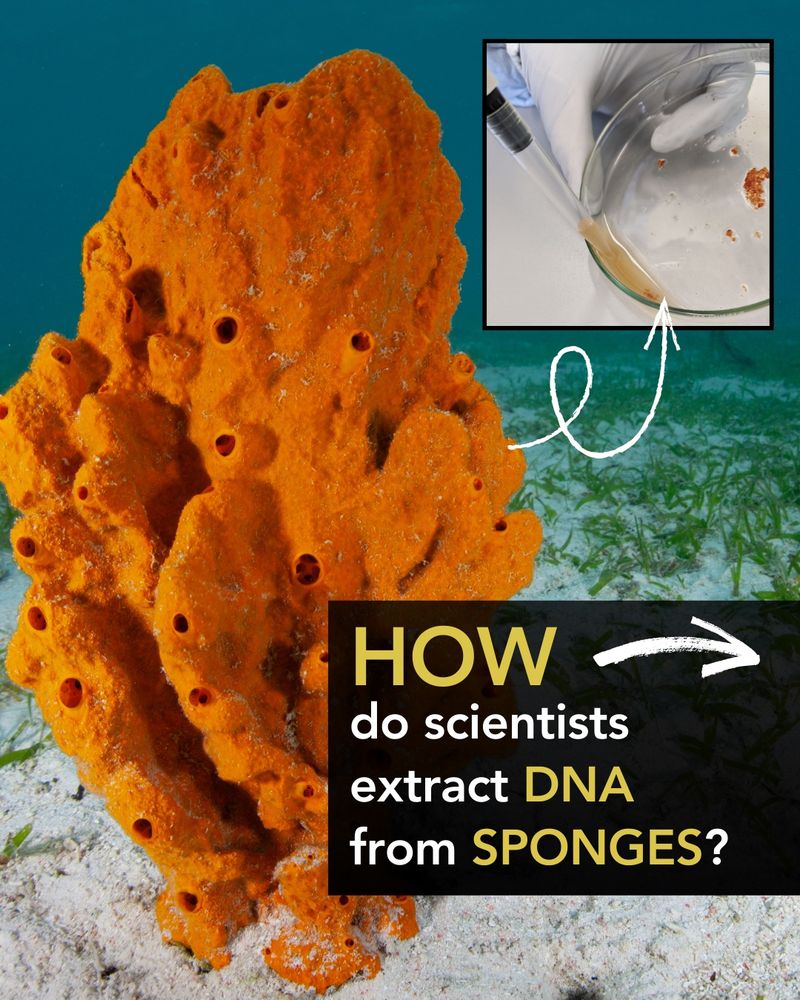


🚨🧬 #Breakthrough alert! 🧬
Caroline Howard and the Tree of Life Core Laboratory at the @sangerinstitute.bsky.social are releasing powerful new extraction methods designed for the toughest #species on Earth. These #innovations are helping #genome scientists crack samples once considered impossible.
Huge congratulations to everyone who made this milestone possible! 🎉🦋 Field teams out exploring 🥾🌿 and lab teams powering the sequencing 🧬 — every single contribution mattered. 🙌✨
27.11.2025 16:56 — 👍 31 🔁 12 💬 1 📌 0

Insects make up 80% of all known animal life — and their genomes capture millions of years of innovation, resilience, and ecological superpowers. Unlocking their DNA helps us protect ecosystems, track change, and discover new biology. 🐞🧬✨
#InsectLovers #TreeOfLifeProject #GlobalGenomics #LifeCodes


💥🧬 Why sequence ALL insect genomes?
Because insects run the planet. They pollinate our crops, recycle nutrients, build soils, drive food webs, and shape ecosystems on every continent. 🌍
Yet we’ve only scratched the surface of their genomic diversity.
#InsectBiotech #BiodiversityMatters #InsectLovers


🌍✨ As sequencing ramps up, how will EBP-affiliates keep quality high?
By building smarter, scalable tools and infrastructure to manage a global flood of genomic data. 💻🧬
📖👉Evaluation of sequencing reads at scale using rdeval: academic.oup.com/bioinformati...
@vertebrategenomes.bsky.social

Check out this map of megadiverse countries around the world! 🌍
EBP-affiliated groups are actively sequencing in several of these biodiversity hotspots as we move toward 5,000 high-quality reference genomes.
👉 Follow other EBP-affiliated projects — we’re in this together! go.bsky.app/CRvXDF4


🌍✨ Why genome sequence mega-diverse countries?
A handful of countries hold >70% of Earth’s terrestrial biodiversity — packed with species found nowhere else. These places are evolution’s playground… and extinction’s front line.
#Biodiversity 🌿 #GenomeSequencing 🧬
#Genomics 🔬 #ConservationGenomics 🌍


🌊✨ The Ocean Genome Legacy Center joins the Earth BioGenome Project, helping advance the sampling of marine species across our ocean. With over 2.2 million eukaryotic marine species, the ocean remains one of Earth’s greatest frontiers for new genome discoveries. 🧬🌍
@oceangenomelegacy.bsky.social


Is your school mascot genome-sequenced? 🧬
If not… maybe it’s time! 👀🧬
Big news from UCSC — researchers have just completed the first end-to-end reference genome of the Pacific banana slug 🐌🍌, an iconic resident of California’s redwood forests (and UCSC’s beloved mascot 🌲).
@ucsantacruz.bsky.social


🌿 Lots of EBP-affiliates are sequencing plant genomes, want to stay informed on all plant genome insights and discoveries as they crop up? 🌾 Make sure to follow our curated EBP-affiliate list to find new plant-focused initiatives around the world!
💚➡️ Follow other EBP-affiliates: go.bsky.app/CRvXDF4


🙌 Thanks to all those involved in driving this effort forward
@sangerinstitute.bsky.social | @vertebrategenomes.bsky.social | @atlasea.bsky.social |@cmazzoni.bsky.social| @philmor1964.bsky.social|@erichjarvis.bsky.social |@kurakulabmsm.bsky.social | @vertebrategenomes.bsky.social go.bsky.app/CRvXDF4


Why is DNA extraction so tough?
🐜 Tiny insects provide too little material.
🌱 Plants fight back with tough walls and chemical inhibitors.
🐚 Shells, chitin, and slime — all evolved to protect DNA.
From coral skeletons to cactus spines, extraction is where fieldwork meets chemistry 🔬🌎💪