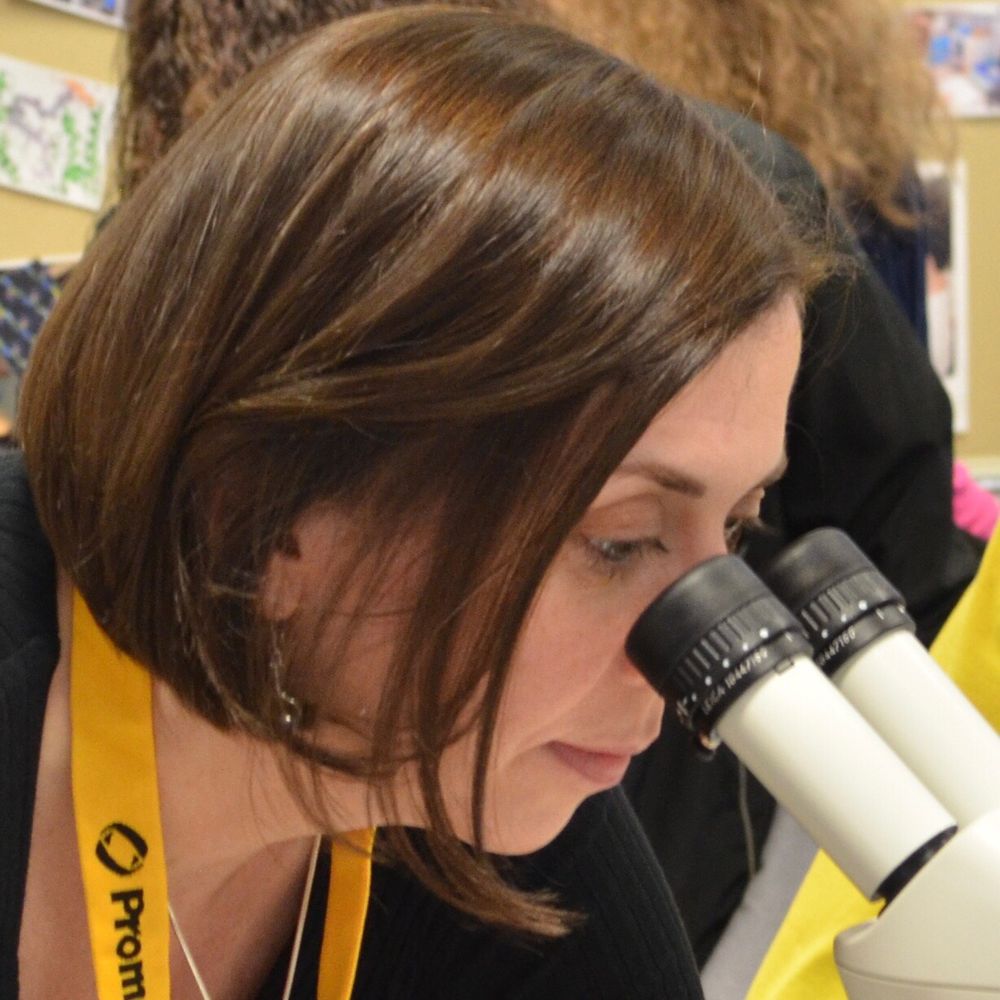
VACANCY - We’re searching for a Postdoctoral Researcher to join the newly appointed group of Dr @hassansalem.bsky.social, to explore the developmental biology of host-microbe symbiosis
www.jic.ac.uk/vacancies/po...
Deadline - 25 March 2026
Salary - £37,500 - £45,350
Contract - 3 years, full-time
03.03.2026 18:56 —
👍 21
🔁 23
💬 1
📌 3

Epistasis and co-adaptation in bacterial genome evolution
Nature Reviews Genetics - Bacterial genome evolution is shaped by epistasis, which can constrain or promote specific evolutionary paths. The authors review how integrating the effects of epistatic...
I’ve spent a lot of time over the past two years thinking about genome evolution and how recent research revealing complex gene-gene interactions has complicated traditional ‘gene-centric’ genomic approaches to evolution. So here is a review that consolidates these thoughts!
rdcu.be/e6pHY
02.03.2026 15:48 —
👍 83
🔁 39
💬 4
📌 1

PhD scholarship within biotechnology (296538) | Norwegian University of Life Sciences (NMBU)
Job title: PhD scholarship within biotechnology (296538), Employer: Norwegian University of Life Sciences (NMBU), Deadline: Friday, April 3, 2026
PhD position available in our lab at NMBU in 🇳🇴 with focus on proteomics, enzyme discovery, applied enzymology and a touch of microbiology🐟🧪🧬💻🦠 Deadline for applying: April 04, 2026. RTs highly appreciated. For details, see the link below 👇
www.jobbnorge.no/en/available...
25.02.2026 14:09 —
👍 0
🔁 3
💬 0
📌 0

PhD candidate in Equine Intestinal Microbiome and Resistome
Join this PhD project to study how the equine gut microbiome and resistome can improve gastrointestinal health and combat antimicrobial resistance.
Our faculty has a particularly interesting PhD position open on antimicrobial resistance, effects of antibiotics treatment on the microbiome and resistome, restoration of the equine microbiome using FMT.
www.uu.nl/en/organisat...
Please contact Mathijs Theelen, email address in the link below.
24.02.2026 12:10 —
👍 25
🔁 24
💬 1
📌 1
Skynet's origin story is now that we built an AI and forced it to spend every second of every day logging in to Canvas until it decided humanity must be destroyed.
(This took about six logins.)
23.02.2026 20:11 —
👍 24
🔁 3
💬 1
📌 0
The US administration is going to kill its people while they cheer.
In January, Moderna’s announced the company will no longer invest in new Phase 3 vaccine trials for infectious diseases: “You cannot make a return on investment if you don’t have access to the U.S. market.”
1/4
13.02.2026 11:26 —
👍 149
🔁 79
💬 10
📌 6

🌀 How do spirochete bacteria swim through thick fluids like champions?
We solved T. denticola flagella structure - asymmetric proteins expand one side, compress the other for perfect corkscrew motion!
@debnathghosal.bsky.social
🔗 doi.org/10.64898/202...
#StructuralBiology #CryoEM #Microbiology
05.02.2026 06:37 —
👍 34
🔁 15
💬 0
📌 0

A group of Cambridge scientists stand together in a laboratory, smiling at the camera. One person holds a book titled ‘Self-Doubt’. A text banner reads: ‘Cambridge scientists share the truth behind their successes and reflect on the power of failure.’
What does it take to succeed in science? Failure.
Cambridge scientists from @labliston.bsky.social share the self-doubt behind their careers.
Self-Doubt by Adrian Liston from @stcatharines.bsky.social and the Department of Pathology is Out tomorrow 👇
https://bit.ly/4a4tWUE
#Careers #Science
29.01.2026 14:05 —
👍 15
🔁 8
💬 0
📌 0

NEW: Our investigation for @thenerve_news reveals not only that Peter Thiel’s Palantir is completely enmeshed in our critical national infrastructure.
It’s also the ‘cloud support’ for our nuclear weapons system 🤯
1/
www.thenerve.news/p/palantir-t...
28.01.2026 11:32 —
👍 1689
🔁 1166
💬 87
📌 176
Job Details
We are looking for a new RA to join our team working on host-pathogen interactions during Salmonella infection. The appointment is for two years and you will join a diverse team, using cell and protein biochemistry to further our understanding of pathogenesis. my.corehr.com/pls/uoxrecru...
26.01.2026 16:19 —
👍 8
🔁 17
💬 0
📌 0

Check out our latest study on the PfRIPR protein,
essential for the malaria parasite to get inside our blood cells. We show how antibodies block the function of PfRIPR by preventing its flexible hinges from bending, or by stopping it from compacting as part of its mechanism.
18.01.2026 18:21 —
👍 16
🔁 9
💬 2
📌 0

Bacteria are amazing! The abundant Dps protein binds and protects DNA in stationary-phase cells with minimal effect on chromosome accessibility, dynamics, and organization. Now in NAR doi.org/10.1093/nar/...; I'm really proud of our multidisciplinary team led by Lauren, Lindsay, and Xiaofeng, et al.
16.01.2026 13:32 —
👍 48
🔁 13
💬 3
📌 2
Fabian was quicker :) But yes, we have an open postdoc position in bacterial bioenergetics and membrane biology, using on B. subtilis as the model. Come join us! @cbcb-newcastle.bsky.social is a great place to work, and we are a friendly, international lab. Visa+IHS fees covered. #microsky
14.01.2026 20:56 —
👍 19
🔁 26
💬 1
📌 2

Structural insights into the antibacterial function of the Pseudomonas putida effector Tke5
@pbernalt6ss.bsky.social, David Albesa-Jové and coworkers
link.springer.com/article/10.1...
13.01.2026 11:39 —
👍 8
🔁 4
💬 0
📌 0

Dear Sir Paul,
Re: Royal Society Code of Conduct
I am sure that many scientists have written to you about the specific question of Elon Musk’s Fellowship and whether, under the Royal Society’s Code of Conduct, his retaining that Fellowship is appropriate. I will not rehash these issues. Instead, as a female scientist with extensive experience of activities aiming to increase equality, diversity and inclusion in the engineering and physical sciences sector, I am writing to you (in a personal capacity) to ask you to reconsider the statements you have recently made in this context to the UK press about the Royal Society’s Code of Conduct and how it is applied.
A 2018 report from the joint National Academies of the United States of America, concluded that “sexual harassment is common in academic science, engineering, and medicine” and that “greater than 50 percent of women faculty and staff and 20–50 percent of women students encounter or experience sexually harassing conduct in academia”. This report described codes of conduct that make clear that sexual harassment is unethical and will not be tolerated as a “powerful incentive for change”. The authors also noted that sexual harassment can have significant and damaging effects on the integrity of research. In my own praxis, I have found that clear and consistently-implemented codes of conduct that address these issues make female scientists and engineers safer, and allow them to focus more effectively on their research. For codes of conduct to have such a positive effect, it is vital that sanctions for actions which transgress the code are meaningful and substantial.

I was hence aghast to realise that in an interview with the Financial Times published on 9/1/26, you appear to have suggested that the Royal Society “should only expel fellows if their science proved “faulty or fraudulent or highly defective””. Moreover, in a further interview with the Guardian on 11/1/26 you suggested that the code “may need to be looked at again”, with the implication that your aim would be to remove the option of sanctions on Fellows for reasons not strictly related to faults or defects in their research.
I suggest that changing the Royal Society’s code of conduct so that the likelihood of serious sanctions for sexual harassment is reduced, would directly endanger women who interact with the Royal Society at events or otherwise, and would provide a licence to harass to the already powerful people on whom the Society bestows fellowship. The implications of your words - that under your leadership the only infringements of the code which are likely to receive the sanction of the Fellowship being removed are those related to research misconduct - already risk empowering harassers. You stated, in the Financial Times interview, that “there’s many bad people around, but they have made scientific advances”. Given this awareness of the possibility of bad actors in our scientific community, it is wholly irresponsible to suggest that the Royal Society would not act to sanction these people if they harass more vulnerable scientists.
I am hence writing to request that you retract any suggestion that the Society’s Code of Conduct should be changed so that the only reason a Fellow might be sanctioned by the removal of their Fellowship is “faulty or fraudulent or highly defective” research. This action is necessary to safeguard female scientists, a requirement placed on the Society by safeguarding legislation and UK statutory guidance.
Yours sincerely,
Professor Rachel A. Oliver.
Following coverage over the weekend of Sir Paul Nurse's comments that suggested that the only reason that a Fellow should be expelled from @royalsociety.org is scientific misconduct, I have written to him to explain the risks such an attitude poses of increasing sexual harassment in STEM.
12.01.2026 08:59 —
👍 812
🔁 297
💬 25
📌 29

Uropathogenic Escherichia coli invade luminal prostate cells via FimH–PPAP receptor binding - Nature Microbiology
Uropathogenic Escherichia coli infection of a murine prostate organoid model reveals a bacterial FimH–host prostatic acid phosphatase adhesin-receptor interaction enabling invasion and replication wit...
Our first paper is out today in @natmicrobiol.nature.com!
We introduce a prostate organoid model and show that UPEC invades prostate cells via FimH binding to the prostate-specific protein PAPP. A step toward targeted therapies against bacterial prostatitis. 🎉
#UTI #UPEC #Organoids #AMR
08.01.2026 11:12 —
👍 35
🔁 19
💬 2
📌 2
🚨Last chance to apply for two PhD projects in my lab, applying structural biology and single molecule biophysics to investigate gene expression in RNA viruses: www.findaphd.com/phds/?Keywor...
06.01.2026 15:56 —
👍 10
🔁 10
💬 0
📌 0

MMRV: what families need to know about the UK’s new chickenpox vaccine
The MMRV jab protects against chickenpox and its lifelong complications. Here’s what the new vaccination schedule means for your family.
Some good news to start the year - the UK is finally offering routine childhood vaccination against VZV, the cause of chickenpox and shingles and (it is becoming increasingly clear) a risk factor for dementia. I've written a bit about what this might mean for parents for @uk.theconversation.com
06.01.2026 13:21 —
👍 13
🔁 5
💬 1
📌 1

Will the government reduce its reliance on Elon Musk's X?
Welcome
More from @markpackuk.bsky.social on his question about the government use of X: government will carry on prioritising X for government comms, despite the evidence about X's promotion + protection of unlawful activity. It no longer pays to advertise there
lordseyeview.substack.com/p/will-the-g...
05.01.2026 19:51 —
👍 218
🔁 68
💬 9
📌 12
This whole exchange has made me subscribe. I don’t know how you might amplify this effect on BlueSky but I hope you find a way. There must be a way …😭
05.01.2026 19:43 —
👍 3
🔁 0
💬 0
📌 0
This will most likely expose my ignorance, and I ask this in good faith: do you have a clear view on how much of your engagement on X is bots versus humans, and how do you analyse engagement.
05.01.2026 19:27 —
👍 1
🔁 0
💬 1
📌 0
@bylinetimes.bsky.social Agree fully. Tell your core community where you are going. If they are truly core, they will follow
05.01.2026 19:15 —
👍 1
🔁 0
💬 1
📌 0

Professurship (W2) in Microbiology - Regensburg (Stadt), Bayern (DE) job with Universität Regensburg | 12851113
UNIVERSITY OF REGENSBURG The Faculty of Biology and Pre-Clinical Medicine invites applications for a Professurship (W2) in Microbiology To be...
A new year brings new opportunities: we are looking to fill a permanent professorship position with a Microbiologist preferably with expertise on archaeal biology, RNA biology or imaging techniques to unravel cell biology in prokaryotes! Please share and/or apply :)! www.nature.com/naturecareer...
05.01.2026 09:46 —
👍 33
🔁 44
💬 0
📌 2
Recombinational repair is the major pathway required to reload the bacterial replicative helicase following introduction of single-strand DNA breaks. A great way to end the year! Big thank you to co-authors from the @heathmurraylab.bsky.social
30.12.2025 18:31 —
👍 9
🔁 5
💬 1
📌 0

Third of Reform UK’s council leaders have expressed vaccine-sceptic views
Health minister decries criticism of vaccinations by heads of four authorities as ‘dangerous and utterly irresponsible’
This should worry us
We can already see elsewhere the real harm that anti-vaccine politicians can do. People will suffer lasting harm and some will die as a result
That must not happen here
Every time Farage is interviewed he must be asked this
#vaccineswork
www.theguardian.com/politics/202...
29.12.2025 08:59 —
👍 17
🔁 10
💬 2
📌 0