Tracing Creative Commons Licenses Across AI: Training Data, Models, Outputs
Copyright issues in AI model training and generated outputs are widely discussed, but less attention is paid to how copyright licenses, the actual mechanism for granting permission, shape these wor…
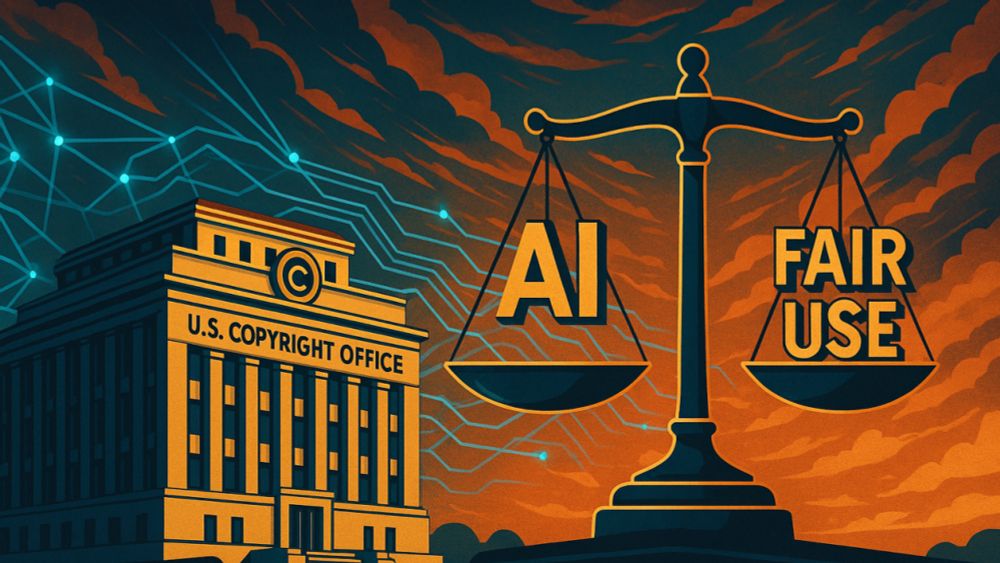
Do CC licenses reach AI outputs? I’ve summarized how Creative Commons terms may (or may not) apply across the AI workflow, from training data to output.
To be clear, CC obligations do not automatically propagate to every output, but misunderstandings here are common.
shujisado.org/2026/02/16/t...
16.02.2026 09:50 —
👍 0
🔁 0
💬 0
📌 0

クリエイティブ・コモンズはAIモデルやAI出力にどのように影響を及ぼすか?
AIモデルの学習やAI出力の利用において著作権の扱いが論じられることは世界的に多いが、著作権の許諾であるライセ…
【新作】クリエイティブ・コモンズはAIモデルやAI出力にどのように影響を及ぼすか?
CCの学習データがモデルや出力にどう条件が及ぶのか、CCのモデルが出力にどう条件が及ぶのかをまとめた解説。AI開発者だけでなく半分は利用者にもライセンスの影響範囲の示唆になると思う。
shujisado.com/2026/02/16/t...
CC側のAIガイドラインを再構成したものに近いが実務的にはなってると思う。非営利条件の発動するタイミングが他のCC条件とは異なること、保守的と法的に必要とみた場合の差が大きいことあたりを押さえればOKという感じ。他のライセンスもCCの延長線上で考えることができる。
16.02.2026 00:23 —
👍 0
🔁 0
💬 0
📌 0
While the initial uproar from the 2021 launch of GitHub Copilot has subsided, the theory that copyleft licenses like the GPL could extend to AI models trained on them is far from dead.
27.11.2025 13:18 —
👍 3
🔁 0
💬 1
📌 0

Public Proposal for Building an Open AI Society and Digital Sovereignty Based on Open Source AI
— Reducing the Risks of US-China Dependence and Buildin…
This is not just a tech policy. It is a "central strategic imperative" for Japan's "economic security" and the creation of a "democratic and open AI society".
opensource.jp/2025/11/10/p...
10.11.2025 10:07 —
👍 1
🔁 1
💬 0
📌 0
We call on the Japanese government to adopt this indivisible 3-part strategy:
- Promote OSI-Compliant Open Sourcing: Mandate that publicly funded AI models be released under the official Open Source AI Definition.
- Protect Developers:
- Open Up Training Data:
10.11.2025 10:07 —
👍 0
🔁 0
💬 1
📌 0
As the US, EU, and China all strategically promote Open Source AI to secure their own interests (market innovation, risk-based regulation, or state-led influence), Japan cannot afford to be a passive consumer. OSG-JP are urging the Japanese government to act now to avoid technological subordination.
10.11.2025 10:07 —
👍 0
🔁 0
💬 1
📌 0
What's needed is not a one-size-fits-all template, but a "right-sized" approach. Projects should autonomously create CoC tailored to their specific scale, culture, and goals.
30.09.2025 11:32 —
👍 0
🔁 0
💬 0
📌 0
My conclusion: A CoC should be a simple "shield" to protect the community's core function--building software. It must not become a complex "weapon" that can be turned against the community itself.
30.09.2025 11:32 —
👍 1
🔁 0
💬 2
📌 0
The post explores historical turning points:
- Debian -> Ubuntu developer migration (2004)
- Lessons from Donglegate at PyCon 2013
- The standardization by Contributor Covenant
- The mass resignation of Rust mod team
- Ruby CoC is built on Matz's principle of MINASWAN
30.09.2025 11:32 —
👍 2
🔁 0
💬 2
📌 0
ESR called the trend "infectious social insanity," and
DHH labeled the Contributor Covenant a "Trojan horse."
Are CoC really unnecessary? I share their concerns, so I examined the issue through the lens of history and practical application in my article.
30.09.2025 11:32 —
👍 1
🔁 0
💬 1
📌 0

From Permission to Contract: Dual Enforcement and Rising Risk in Open Source Licensing
While a previous article detailed the long-held view in the United States that Open Source licenses were not contracts but “unilateral permissions” — a perspective that gained leg…
I’ve published a piece that traces how US law moved Open Source licenses from permission to a regime where contract and copyright remedies coexist—and explains how today’s violation risks have evolved and intensified, plus what the community should do in response. shujisado.org/2025/09/17/f...
17.09.2025 12:52 —
👍 2
🔁 0
💬 0
📌 0
The Legal Hack: Why U.S. Law Sees Open Source as “Permission,” Not a Contract
In Japan, the common view is to treat an Open Source license as a license agreement, or a contract. This is also the case in the EU. However, in the United States—the origin point for almost every …
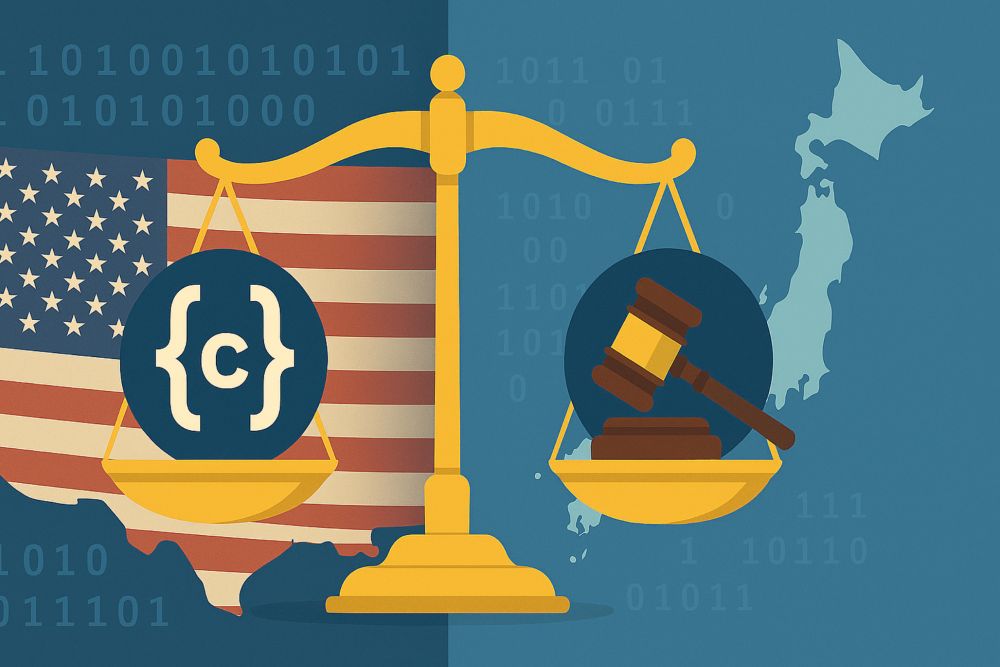
Ever wonder why US law treats Open Source licenses as "permission," but in the EU/Japan they're seen as contracts?
The answer is a fascinating Legal Hack in US Copyright Act that hackers used to build the entire Free movement. I wrote a deep dive on this secret history:
shujisado.org/2025/07/24/w...
24.07.2025 12:02 —
👍 2
🔁 1
💬 0
📌 0
When explaining the concept of open source, I often say, “We have to accept that Open Source software can also be used in warfare.” However, I never thought I would actually learn that it was used to discuss the operational plans of the world's most powerful military.
25.03.2025 00:39 —
👍 0
🔁 0
💬 0
📌 0

The Missing Piece in Japan’s Open Source Journey: Strong, Visionary Leadership
Back in the 1990s, I was concerned that Japan was beginning to lag behind the United States in software technology. The primary reason for this delay was likely Japan’s heavy focus on hardware at the ...
Although more Japanese companies are gradually setting up OSPO, over the past few years I’ve felt that simply having an OSPO is not enough for JP companies to truly embrace Open Source. I intended to explain my thoughts here, but the explanation grew lengthy, so I wrote a blog post about it instead.
20.03.2025 10:34 —
👍 1
🔁 0
💬 1
📌 0
This article explores balancing our “freedom-first” philosophy with privacy/copyright law, Open Source community norms, and real AI/ML constraints. It also shows why some compromises on data requirements may be necessary right now.
18.02.2025 15:11 —
👍 0
🔁 0
💬 0
📌 0
Should ‘Open Source AI’ Mean Exposing All Training Data?
DeepSeek has had a major global impact. This appears to stem not only from the emergence of a new force in China that threatens the dominance of major U.S. AI vendors, but also from the fact that t…
I joined the OSI’s early discussions on the Open Source AI Definition. From that experience, I wrote an article (personally) about requiring full training data in Open Source AI. If you’re curious about AI/ML openness, you might find it interesting.
shujisado.org/2025/02/18/s...
18.02.2025 15:11 —
👍 0
🔁 0
💬 1
📌 0
本稿は、自由の哲学を維持しながら、プライバシー法や著作権法、我々のコミュニティの慣習、あるいはAI/ML技術の現実との実用的なバランスを取る思考過程を解説するものである。言ってしまえば、まあデータ要件における妥協は現時点で何故必要であるかを説明するものとも言える。
18.02.2025 00:04 —
👍 0
🔁 0
💬 0
📌 0
基本的には完全なデータの公開を求める勢力と求めない勢力の対立であるわけだが、前者はDebian的な完全な自由を求める勢力が支持し、後者は巨大ベンダーやAIコミュニティの一部の支持が強い。現在のオープンソースAIの定義はその中庸的でありながら若干データ完全性を求めない所に線を引いている。
18.02.2025 00:04 —
👍 0
🔁 0
💬 1
📌 0
AIモデルがオープンソースであるために完全な学習データの公開は必要なのか?
DeepSeekは世界に衝撃を与えているが、その要因としては、中国から米国の巨大AIベンダーを脅かす新たな勢力…
【完全保存版】DeepSeekのおかげでAIのオープンソース性について関心が高まっているが、AIがオープンソースであるための要件を考えると非常に面倒な問題もある。最たるものが学習データの完全な公開を必要とするかである。そこで、その点の世界で最も詳しい解説を書いた。
shujisado.com/2025/02/18/n...
18.02.2025 00:04 —
👍 4
🔁 3
💬 1
📌 0