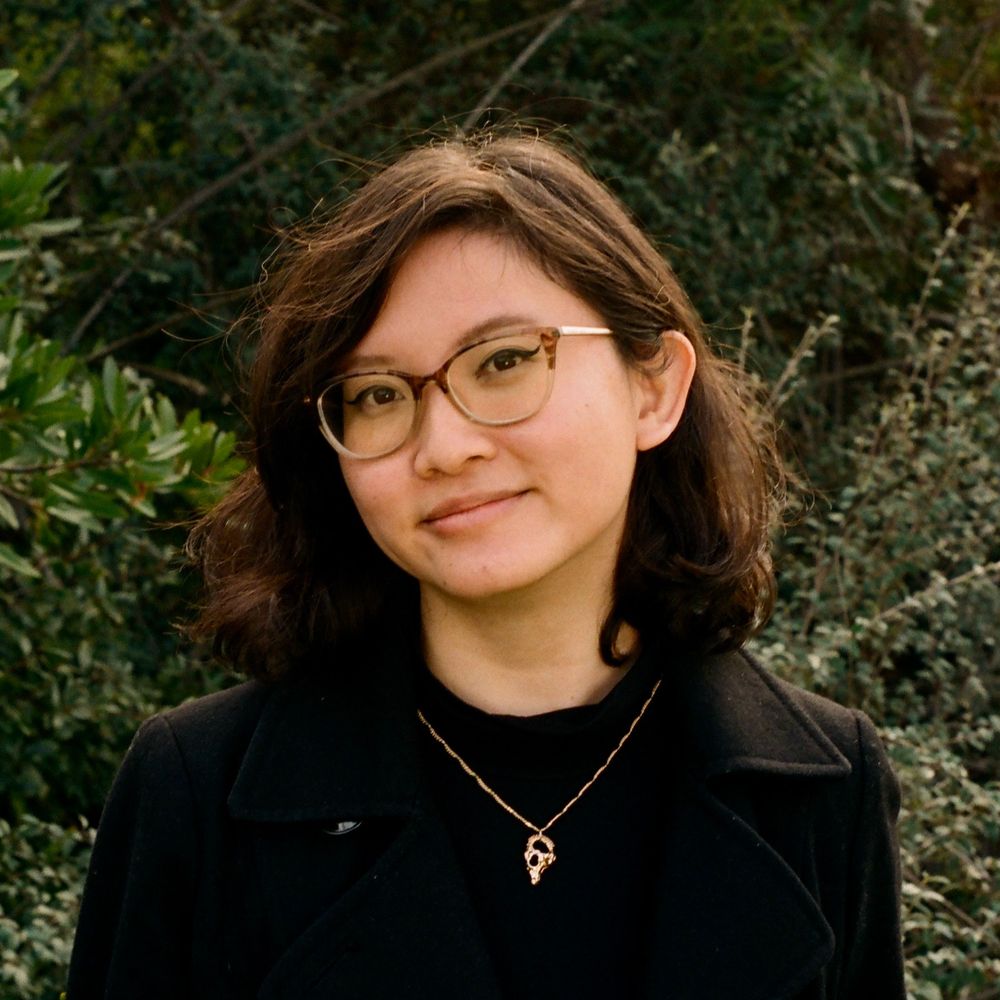
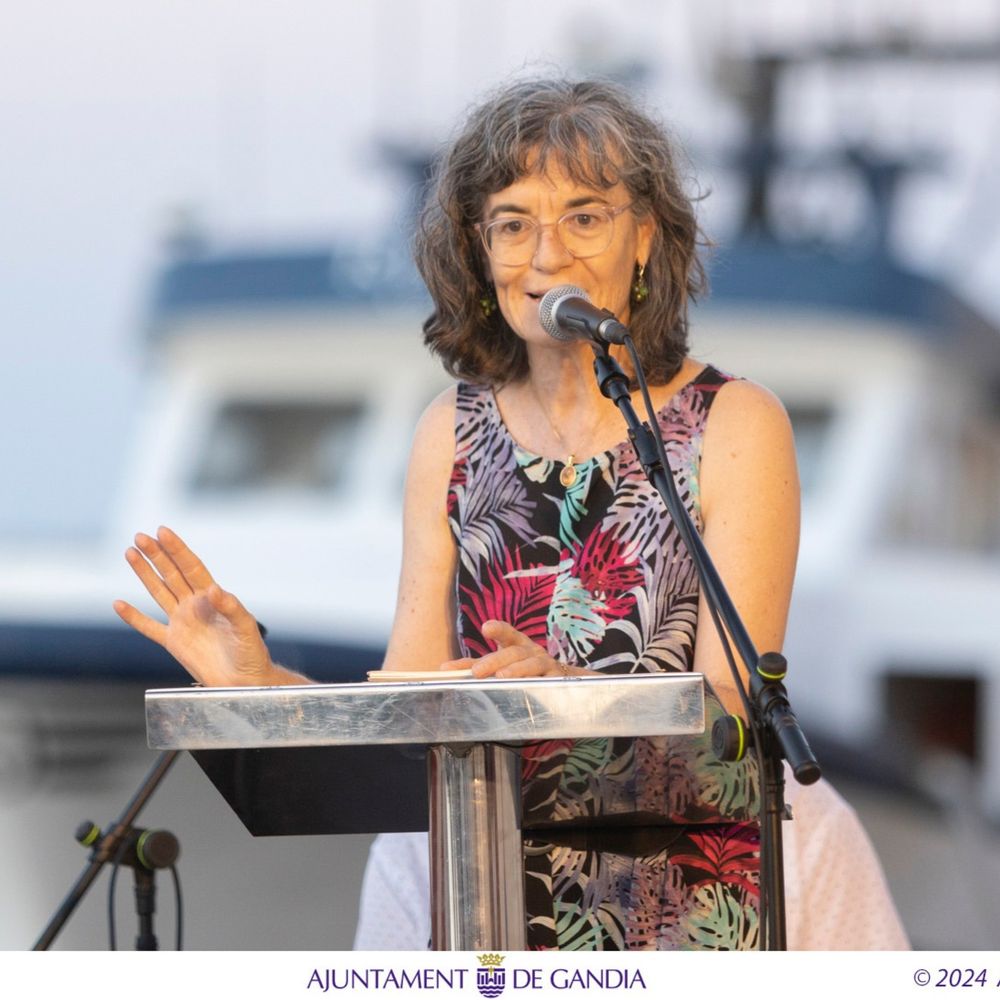
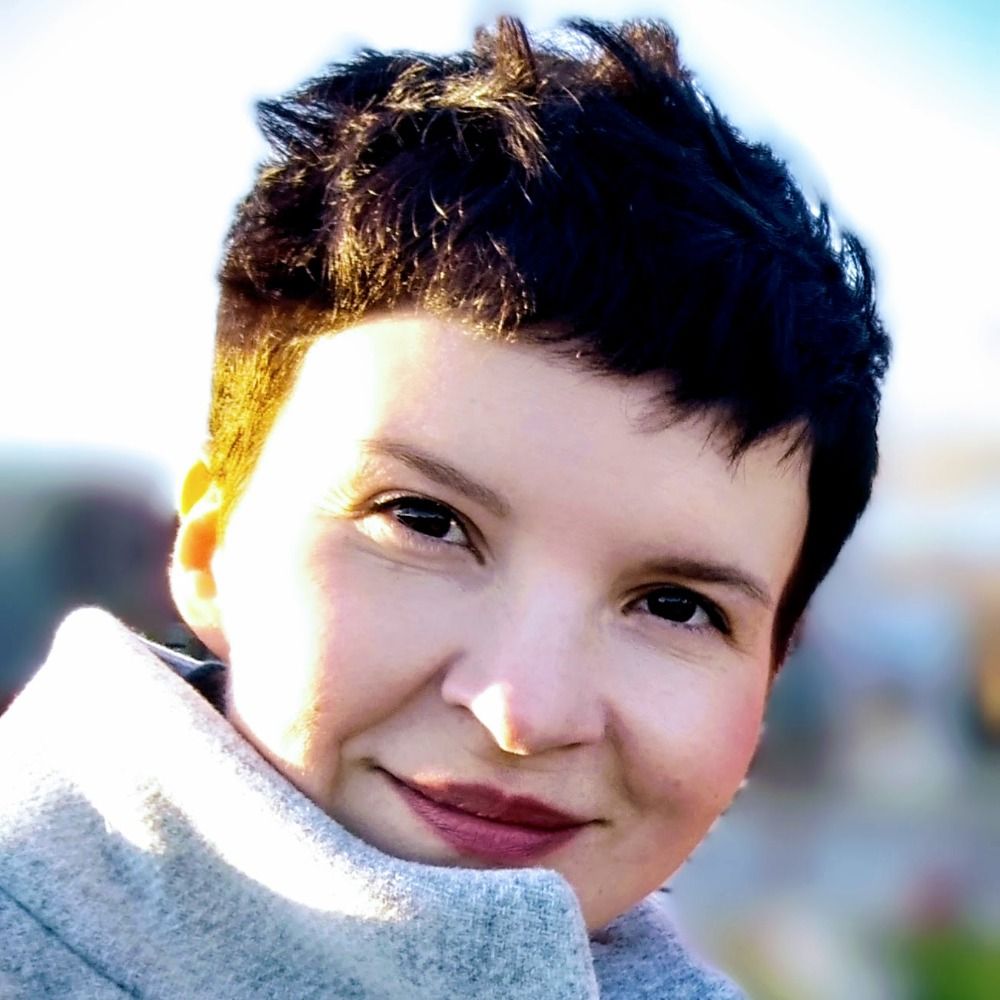
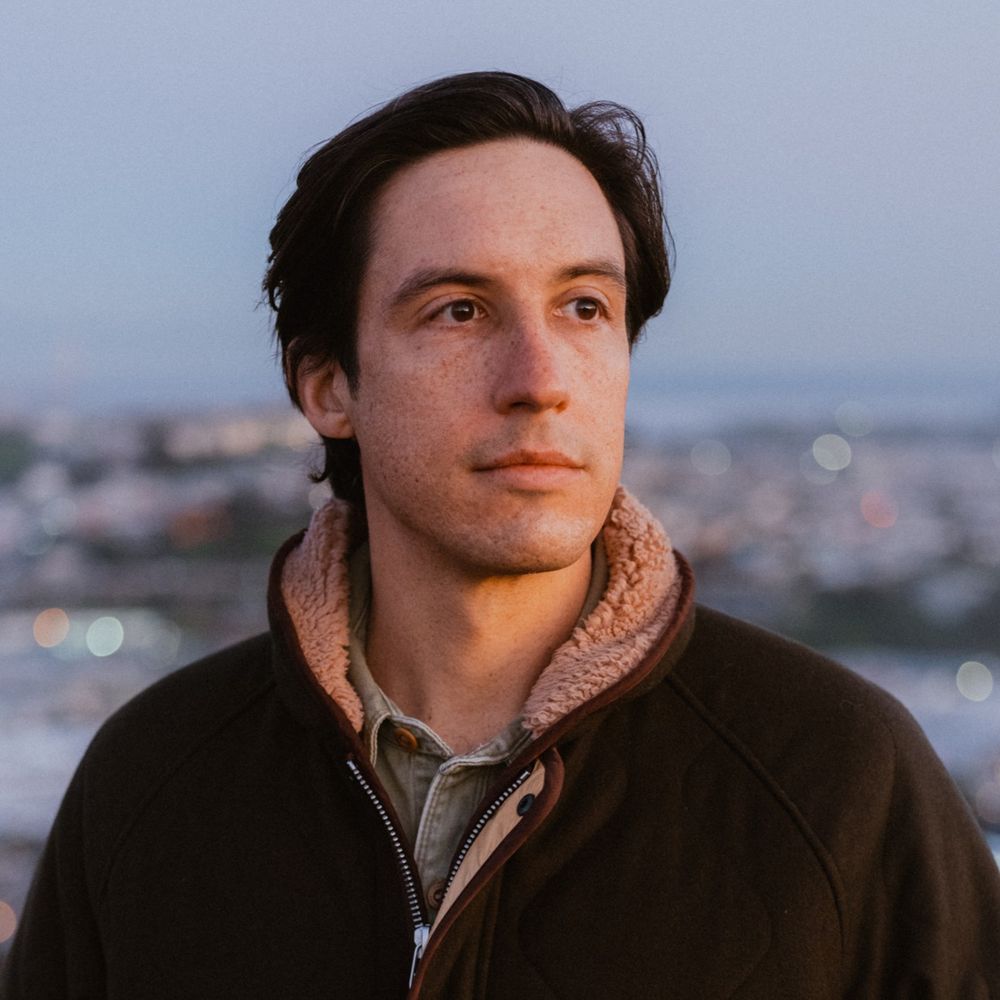
"When I think about how Amman became Amman, I think of its small houses as a cover of moss, creeping up haphazardly over the mountains."
Translator Wiam El-Tamami reads Yara Ghunaim's "City/Non-City" from Issue 29 of The Common.

@commonmag.bsky.social
The Common is a print and online literary magazine publishing stories, essays, poetry, and art with a modern sense of place. Based at Amherst College, we highlight writers and work from around the world.
"When I think about how Amman became Amman, I think of its small houses as a cover of moss, creeping up haphazardly over the mountains."
Translator Wiam El-Tamami reads Yara Ghunaim's "City/Non-City" from Issue 29 of The Common.
"Pain is an inevitability of embodiment, but it doesn’t have to be the only consequence of embodiment, and I love a good stanky, sweaty, musky body in a poem."
Rosa Castellano interviews Diamond Forde about her new poetry collection The Book of Alice.

"I find myself dazzled / by a shaft of sun on the innermost / wall of the cairn"
A visit to a burial mound prompts reflections on life and death in Allison Funk's poem, "At Newgrange on the Winter Solstice." Find it in Issue 30 or using the link below!
“Something broken and unnameable / hanging between us—perhaps it is me, / writing this poem, watching myself / shrink as a ten-year-old, watching him / sacrifice another pawn.”
Carson Wolfe’s Issue 30 poem “Every Other Weekend,” is available to read online now. buff.ly/NXUNmZq

A new translation by Daniel Carden Nemo finally brings Marin Sorescu, "one of the literary world's best kept secrets," to life in English.
Read "Map" below!
buff.ly/zOaVdUj
"The woman comes back each week / to look at me, to look / at regret—that motor stuck in the living / room wall, ropes tied / to each object, spooling everything in. She / comes back to watch / what leaving does."
Read more from Mary Angelino's dispatch, online now.

"The mystery of mysteries / There it is / Visible / Manifest / But no one knows what it is / Only he who painted reality / In all its nakedness."
Listen to Maria de Caldas Antão read her translation of Alberto de Lacerda's poem "Vermeer" from Issue 30 of The Common, online now.

Cover of BEST LITERARY TRANSLATIONS 2026, guest-edited by U.S. Poet Laureate Arthur Sze.

An interior page of BEST LITERARY TRANSLATIONS 2026, featuring the opening sentence of "The Fish Market" by Esther Karin Mngodo, translated from the Swahili by Jay Boss Rubin, and originally published in THE COMMON. "The smell of fish at the ferry landing is so different from how they smell at home, stored away in the freezer, you tell your driver Ibrahimu as the two of you walk toward the fish market."
Honored to be included in BEST LITERARY TRANSLATIONS 2026, guest-edited by U.S. Poet Laureate Arthur Sze, to be published by @deepvellum.bsky.social on 4/14. Thanks to @koimolove.bsky.social for writing the beautiful story; thanks to @commonmag.bsky.social for publishing it and nominating it to BLT.
30.01.2026 18:30 — 👍 10 🔁 6 💬 1 📌 0
"Crumbs of snow we hold onto to keep the path clear, / subtitles accumulating as they embrace."
In "On Their First Date," Diana Keren Lee imagines her parents meeting and wonders if they knew what life they would lead back then. Read it and other Issue 30 poems below!
"why would I want to hurry / back to the crawlspace / my life has become?"
Allison Funk's new poem, "At Newgrange on the Winter Solstice," examines the allure of death's release and the unexpected moments of beauty in life. Find it in issue 30 or by using the link below!

"In the end, I am her child and owe her my life."
In the aftermath of a toxic relationship, a young man learns to rebuild his life with the company of a dog and a glass cow. Read Cory Beizer's gripping debut story below!

“Every Other Weekend” by Carson Wolfe offers a child’s day with their father consisting of moments colored with something heavy yet ineffable. Read the Issue 30 poem online now.
31.01.2026 14:02 — 👍 2 🔁 0 💬 0 📌 0"'Anatomy. Monotony.' may not offer American readers the satisfaction of a neatly tied-up ending. The narrative suggests that time doesn’t necessarily heal wounds but instead makes them less visible."
"Anatomy.Monotony.' by Edy Poppy reviewed by Britta Stromeyer
buff.ly/x51dm3v%E2%8...
"After a year in the arms of South Beach ... where sex is sex is sex, I’ve accepted that I like women, and that I’m okay with that. But that’s as far as I’ve gotten."
In "Juiced," an excerpt from the novel "How to Be Loved," Neysa King explores the push-pull between desire and self-denial.

"Wouldn’t all these things, along with a working knowledge of the 'sum' function in Excel, be enough?"
Our Editor in Chief reflects on a lifetime of working alongside her mother, now 80 and still a volunteer at The Common. Full article available on Substack at the link below!
buff.ly/966Xy4p
"The spider beneath the stairs is the many-times-great-granddaughter of the spider of my childhood. Weaving through years, and who’s to say she doesn’t remember?"
Evelyn Maguire writes from her mother's home in her dispatch "Cape May, midsummer."
"The floor / Geometric / Cleared of all / But the past and the present."
Translator Maria de Caldas Antão reads "Vermeer" by Alberto de Lacerda from Issue 30 of The Common. Click the link to listen now!
"Connect the dots between each falling flake. / My brothers and I were born, making five of us— / a star, a line that returns to where it began."
Diana Keren Lee imagines her parents' first outing in the appropriately titled "On Their First Date," featured in Issue 30.
“Inside the bubble there is love and a giddy sense of possibility. When reality rushes back in, I attempt to hold on to both.”
Read Rebecca Worby’s “Body Stories: On Miscarriage and Cancer,” a featured essay in Issue 30, available online now. buff.ly/CCYvsSl

"They could have danced straight out / of a Brueghel painting into our basement"
A dance between mother and daughter becomes an entryway into shared trauma in Robert Cording's, "Polka," a poem examining how the past shapes who we are. Find it in Issue 30 or using the link below!
"Before my mother can return to her life and stop watching me eat, she says she must give me a dog."
Cory Beizer's debut story, "Smith," is a frenetic warning that encompasses a dog, a glass cow, and a chokehold of control. Read it below!
"It is a daring story that seamlessly blends fiction with autobiographical elements, creating a narrative that is both emotionally raw and poetic."
Britta Stromeyer reviews Edy Poppy's novel "Anatomy. Monotony."
buff.ly/x51dm3v%E2%8...
"Like Adam walking from paradise, we are made strangers, our senses sharpened to look at the world anew. In this way, we can come to appreciate the everyday, the worldly."
Jill Pearlman (jillpearlman.bsky.social) describes the peculiar feeling of emptiness in her poem "U-topia."
"Why do I keep wanting from the world when I haven’t made use of what I already have?"
Neysa King explores lived sexuality and sensuality -- desire, identity, and the creation and potential limitation of sexual labels -- in "Juiced," an excerpt from her novel "How to Be Loved."

Ready to write more in 2026? You can still sign up for Weekly Writes!
Each week, you get:
- 3 writing prompts from the editorial staff at The Common
- behind-the-scenes advice about writing, revising, and submitting your work
- an accountability incentive
*Sign ups close 1/26* buff.ly/TzkYEUY
"Aren’t I the boss? Why was my mother (still!) telling me what to do?"
Our Editor in Chief reflects on a lifetime of working alongside her mother, now 80 and still a volunteer at The Common. Full article available on Substack at the link below!
buff.ly/966Xy4p
"The problem was a question of narrative, the difficulty in lining up the facts in a story with so much nuance and so many shades of meaning."
Mar Gomez Glez's "Playing Chicken," translated by Sarah Thomas, explores a complex academic relationship and its troubles.
buff.ly/ZSxnR0Y
"I become a house lived-in. Living in my mother’s house, again, it’s easy to drift into the past. Blue bottle light, dust motes, a silver rattle. The sound of it: butterfly wings."
Read more from Evelyn Maguire's dispatch from Cape May, NJ.
Keep your New Year's writing resolutions with Weekly Writes, a ten-week program designed to help you create original place-based writing in the new year with custom prompts and accountability benchmarks!
**Sign up before Monday, January 26!**
Learn more: buff.ly/TzkYEUY
“I think of the Southwest as a kind of palimpsest, or a place where the languages of governance, extraction, mapping, militarization, and belonging sediment over one another to produce the hyperreal.”
Read more from Daisy Atterbury’s interview with July Westhale.