
Card with 5 strips of light to dark shades of red. Each strip has a small hole in the middle

Reverse of the blood test card giving details on directions of use
Sometimes if you don't have a proper bookmark handy, anything else will suffice!
This blood test card was found amongst the pages of one of our books. The card (c.1950) has 5 shades for comparing a small blood sample. Fortunately this card is sample free!
#bookmarks #libraries #historyofmedicine
02.07.2025 10:08 —
👍 65
🔁 13
💬 3
📌 0

A blocky instrument with little slits at the bottom, out of which protrudes many blades.
Scarificator, late 17th century. This instrument with spring-loaded blades delivered many cuts simultaneously. Afterwards, the doctor placed a heated cup over the site. As it cooled, blood was forced out of the wounds.
Photo: University of Melbourne.
21.06.2025 14:49 —
👍 92
🔁 12
💬 12
📌 4
Farhud DD, Zarif Yeganeh Marjan. A brief history of human blood groups. Iranian J Pub Health 2013;42:1-6.
pmc.ncbi.nlm.nih.gov/articles/PMC...
29.05.2025 17:49 —
👍 0
🔁 0
💬 0
📌 0
YouTube video by Wellcome Library
Blood transfusion: laboratory technique (1929)
www.youtube.com/watch?v=Oi-O...
29.05.2025 17:37 —
👍 0
🔁 0
💬 0
📌 0
YouTube video by Wellcome Library
Blood grouping (1955)
www.youtube.com/watch?v=Tu8O...
08.05.2025 20:18 —
👍 0
🔁 0
💬 0
📌 0

New life in the veins
From Soviet scientists to tech moguls, blood has been the subject of our wildest experiments
✨ New online:
Peter Salmon on the bizarre history of blood transfusion - with illustration by @martinrowson.bsky.social
14.01.2025 15:29 —
👍 3
🔁 2
💬 0
📌 0
YouTube video by OPRFHistSociety
Ask the Historians- Dr. Bernard Fantus
www.youtube.com/watch?v=t9KN...
16.04.2025 18:31 —
👍 0
🔁 0
💬 0
📌 0
 19.03.2025 18:51 —
👍 0
🔁 0
💬 0
📌 0
19.03.2025 18:51 —
👍 0
🔁 0
💬 0
📌 0

Blood Groups and Human Heredity, 1900-1950
This book presents a detailed analysis of the beginning and rapid establishment of blood group research in the first half of the twentieth century.
Seroanthropology was a big deal in early 20th century. Workers tried to use blood groups to classify mankind. As more was learned about genetics, it fell out of favor. But the history is still useful and interesting. A detailed account is found in this new book.
link.springer.com/book/10.1007...
15.03.2025 17:35 —
👍 0
🔁 1
💬 0
📌 0

A photo of a single bottle in a museum display case. The case is entangled in a web of blood red threads framing the object within. It is a glass milk bottle-style receptacle with a rubber stopper and orange rubber tubing poking through it.
The first blood collection in 1930s Britain was stored in reused milk bottles. The milk bottle design remained standard until the NHS introduced blood bags in 1975.
The bottles were nicknamed "the Janet Vaughan" after the doctor who helped set up the first national blood bank.
27.02.2025 21:07 —
👍 8
🔁 7
💬 1
📌 0

Alexander S. Wiener: The Man and His Work
To mark the 100th anniversary of the birth of Alexander Solomon Wiener, a lecture was presented before the 2007 Wiener Award winner's talk at the New …
A bio article about Alexander Wiener, who with Landsteiner, discovered the Rh blood groups. Wiener did extensive work on Rh and performed some of the earliest exchange transfusions for hemolytic disease of the newborn.
www.sciencedirect.com/science/arti...
23.02.2025 18:12 —
👍 1
🔁 0
💬 0
📌 0
Transfusion reaction research looking into mtDNA
18.02.2025 15:37 —
👍 1
🔁 2
💬 1
📌 0
YouTube video by Z
Blood Transfusion - Geoffrey Keynes
A 1931 film
www.youtube.com/watch?v=z06L...
17.02.2025 21:10 —
👍 0
🔁 0
💬 0
📌 0
YouTube video by NewYork-Presbyterian Hospital
Meet Dr. Charles Drew, pioneer in blood banking
www.youtube.com/watch?v=zx_Z...
12.02.2025 18:49 —
👍 0
🔁 0
💬 0
📌 0

A nice new book by Zdravko Kvržić covers transfusion history from its beginnings to modern day. Includes a section on history of transfusion in Slovenia. #book #transfusion
01.02.2025 21:18 —
👍 0
🔁 0
💬 0
📌 0

Karl Landsteiner – founder of the feast of blood groups – reported the first groups (A, B and O) in 1900, in a brief footnote to a paper on another topic. His more complete report appeared in 1901. He later also discovered the blood group antigens M, N, P, Hu, He and (probably) Rh(D).
31.01.2025 20:37 —
👍 0
🔁 0
💬 0
📌 0
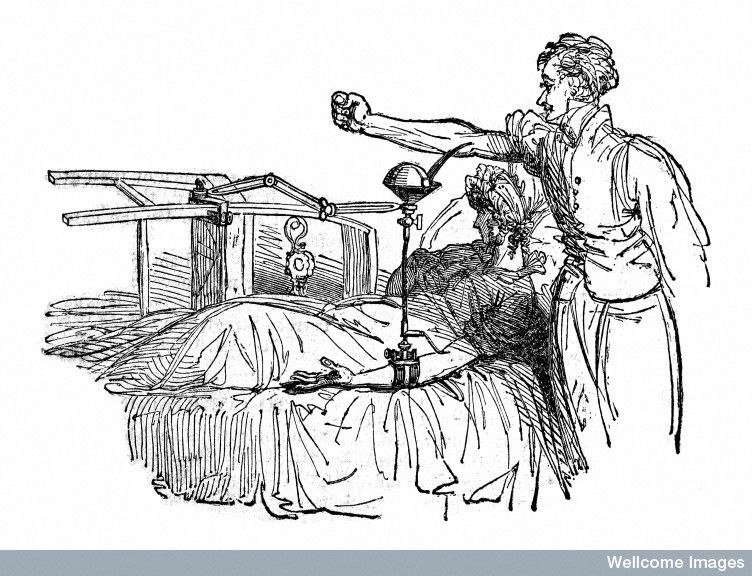
Blundell first used animal blood for transfusion, but then switched to human donors, as suggested by his friend John Leacock, for practical reasons. Sheep or calves were of ideal size, but difficult to get upstairs to the patient's bedroom. They were also dirty and seldom housebroken!
28.01.2025 20:29 —
👍 1
🔁 0
💬 0
📌 0

James Blundell is credited with reviving the practice of blood transfusion in the 19th century. He probably performed his first human transfusion in 1818, but that and later attempts did not go well. Blundell persisted, performing his first successful transfusion in 1825.
27.01.2025 21:06 —
👍 0
🔁 0
💬 0
📌 0
 27.01.2025 20:53 —
👍 0
🔁 0
💬 0
📌 0
27.01.2025 20:53 —
👍 0
🔁 0
💬 0
📌 0


