It’s better to differentiate by classroom than by desk, but not everyone understands that.
15.02.2026 03:16 —
👍 0
🔁 0
💬 0
📌 0
 13.02.2026 04:02 —
👍 1
🔁 0
💬 0
📌 0
13.02.2026 04:02 —
👍 1
🔁 0
💬 0
📌 0
I like when n is a fraction, like 3/8. It makes more of a chrysanthemum than a daisy.
13.02.2026 03:59 —
👍 1
🔁 0
💬 1
📌 0

The triangle is equiangular.
The triangle is acute.
The triangle is obtuse.
The triangle is a right triangle.
The triangle is equilateral.
The triangle is isosceles.
The triangle is scalene.
The triangle is a 45-45-90 triangle.
The triangle is a 30-60-90 triangle.

The shape is regular.
A median is perpendicular to a side.
None of the medians is perpendicular to a side.
Only one angle bisector is perpendicular to a side.
Two of the angle bisectors are perpendicular to sides.
One side is also an altitude.
Only one altitude intersects a side.
An altitude intersects a side at its midpoint.
All the altitudes intersect sides at their midpoint.

The perimeter is 50 cm.
The perimeter is 99 cm.
The perimeter is not less than 50 cm.
The perimeter is not less than 100 cm.
The perimeter is not greater than 50 cm.
The perimeter is not greater than 100 cm.
All sides have integer lengths.
Two sides have integer lengths.
All sides have integer lengths.

Sides are Pythagorean triples.
Side lengths are 6, 8, & 10
Side lengths are 8, 15, 17
Side lengths are 7, 24, & 25
Side lengths are 13, 14, 15
Side lengths are 10, 20, √300
Side lengths are 20, 20, 20√2
Side lengths are 17, 17, 17
Side lengths are 14, 14, 20
Some more cards. I've got more pages of cards but these should give you a good sense of the game.
07.02.2026 21:15 —
👍 1
🔁 0
💬 0
📌 0

Consistency!
Consistency! is designed for students who are about halfway through a typical Geometry course. It’s excellent for review and revision because it promotes discussion and argument.
GAME PLAY
A Round of Play:
- The cards are dealt counter-clockwise and any remaining cards are set face down to form a draw pile. Each player gets the number of cards as in the table.
- The player to the dealer’s right begins the round by placing any card face-up in the middle of the table.
- Each player in turn lays down a card (face-up) that is consistent with all cards already in play:
For example: A middle card has the image at right. The next card could be “cos〖A=1/2〗 ” or “one exterior angle is 120° ” but not “Side lengths are Pythagorean triples.”
- A player who cannot lay down a consistent card draws 1card and play moves to the right.
- Players can bluff and lay down a card that is inconsistent with one or more of the cards already played. Anyone can challenge a card at any time. Allow 30 seconds or so for players to decide whether to challenge.

End of the Round:
• The round ends in one of two ways
1. A player lays down a consistent card and no one else around the table can do so, then that player wins the round. Example: 5 people (A, B, C, D, E) are playing and C plays a consistent card. If none of the players D, E, A, and B can play a card in turn, then C has “played the last consistent card” and wins the round. In a two-player game, the second player must pass twice.
2. If a player in their turn lays down their last card (and it’s consistent!), they immediately win the round.
• The player that wins the round receives 1 point for each card in play and sets these cards aside. Gloating and performing a TikTok dance are optional.
• The dealer’s role moves counter-clockwise.
• The rest of the cards are combined, shuffled, and a new round is dealt.
Challenges:
• If a player lays down an inconsistent card, then anyone can challenge the card by describing how it is inconsistent. It is important to remove inconsistent cards because further play is impossible.
• Penalties depend on when the challenge is made:
o In the 30 seconds: If the challenge is upheld, the “offender” takes back the inconsistent card and draws four more. If the challenge fails, the challenger draws two cards.
o Later in the round: the bluffer takes back the inconsistent card and draws only two more cards (if the challenge fails, the challenger draws just one card).
Teacher Notes:
• We played several rounds in class before implementing the challenge penalties in order to encourage challenges and discussions.
• With the challenges, the goal is to encourage the development of the paragraph proof. As students get used to the game, insist on more complete explanations in a more logical order.
• Instead of calling “UNO” when down to their last card, players call “EUCLID”.

Two exterior angles add to 270°
One exterior angle is 135°
All exterior angles are 120°
One exterior angle is acute.
This triangle has two acute angles.
The measures of all angles are integers.
sin𝐴 is a rational fraction.
tan𝐶 is a rational fraction.
sin𝐵 is a rational fraction.

Area is an integer
Area is 100 𝑐𝑚2
Area is less than 70 𝑐𝑚2
Area is less than 40 𝑐𝑚2
Area is greater than 100 𝑐𝑚2
Area is greater than 20 𝑐𝑚2
No side is longer than 20 cm.
No side is shorter than 20 cm.
One side of this triangle is twice as long as another side.
It's a Geometry game that @unsolvedmre.bsky.social had tossed into the ether. I tweaked it some, set it aside for a couple years, and tweaked it some more. Here are the instructions, and some of the cards.
What do you think?
Playable?
Enjoyable? (For your students, ...)
#ITeachMath
07.02.2026 21:15 —
👍 3
🔁 1
💬 1
📌 0
It's a concentration camp.
I'm sure they've got a use for that part, too.
07.02.2026 20:55 —
👍 1
🔁 0
💬 0
📌 0
*BOOP*
07.02.2026 20:29 —
👍 1
🔁 0
💬 0
📌 0
"should advocate for"
07.02.2026 16:46 —
👍 0
🔁 0
💬 0
📌 0
This sounds like you don't think Democrats should take advocate for, legitimately take credit for, and defend good legislation that helped Americans ... and that Republicans who voted aginst it but took credit for its benefits should reap some reward for trying to kill it.
F*** That.
07.02.2026 16:45 —
👍 1
🔁 0
💬 1
📌 0
Why not?
It happened under his watch.
07.02.2026 16:18 —
👍 5
🔁 1
💬 1
📌 0
I doubt “The Man Formerly Known as Prince But Not That Prince” will ever testify.
If you’re willing to do such a thing, then “failing victims” is not an incentive to confess.
01.02.2026 12:51 —
👍 1
🔁 0
💬 0
📌 0
Yeah, but ...
Someone's gotta do it and no one's beating down the door of the school to take over.
08.11.2025 00:51 —
👍 1
🔁 0
💬 1
📌 0

WODB graphs of parabolas with lines: tangent, intersecting two pts, not intersecting, parabola (a=-1)
WODB leaf types: jagged edge, smooth edge, simple compound

Numbers: 3, 27, 123, 31
Numbers: 9, 16, 25, 43
Numbers: 121, 16, 9, 73
Superheroes: Batman, Batgirl, Wolverine, Green Lantern

Scientists: Newton, Einstein, Marie Curie, Darwin

Parabolas in different quadrants, different x-intercepts, different values of a.
Chemicals: Li, O, C, He
Algebra: y=4x+3, y=-4x+5, y=0.25x+5, y=4x-5
details in alt text.
05.11.2025 15:14 —
👍 1
🔁 0
💬 0
📌 0

"Which one doesn't belong?" display in a school hallway.

all of the display
I like that we can do this with math and other subjects, even the headline!
05.11.2025 15:06 —
👍 2
🔁 0
💬 1
📌 0

5/9x(70-32)=21.111

5/9(70-32)=0.014619883
Simple Fahrenheit to Centigrade conversions on a calculator.
Life should be more simple.
#Calculators
#PEMDAS
#GEDMAS
20.09.2025 01:32 —
👍 1
🔁 0
💬 0
📌 0
Hope they don't try that in Vermont.
14.06.2025 16:53 —
👍 0
🔁 0
💬 0
📌 0
Loading Activity...
Desmos activity dashboard lets the teacher see where each kid is and what they’ve entered. Also has pacing and other tools.
I like it for exploration. If you can find an activity, it’s great. Making one from scratch is time consuming.
Here’s a teacher-built one:
student.desmos.com/join/h7ufmq
06.06.2025 23:25 —
👍 2
🔁 0
💬 0
📌 0
Reading some of the other replies, I think I may have gone about slightly differently. I found (a1+an), which gave me the middle term and the value of n. Took a few minutes to back up and realize the final answer.
Nice one!
24.05.2025 21:26 —
👍 2
🔁 0
💬 0
📌 0
At the point where the derivative equals the slope between the two end points. IVT in Real World!
18.05.2025 20:43 —
👍 2
🔁 0
💬 0
📌 0
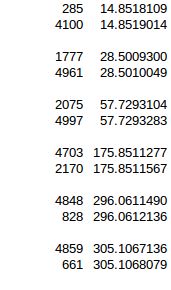
285 14.8518109
4100 14.8519014
1777 28.5009300
4961 28.5010049
2075 57.7293104
4997 57.7293283
4703 175.8511277
2170 175.8511567
4848 296.0611490
828 296.0612136
4859 305.1067136
661 305.1068079
5000, epsilon<0.0001
Done for now.
285 14.8518109
4100 14.8519014
1777 28.5009300
4961 28.5010049
2075 57.7293104
4997 57.7293283
4703 175.8511277
2170 175.8511567
4848 296.0611490
828 296.0612136
4859 305.1067136
661 305.1068079
17.05.2025 21:17 —
👍 1
🔁 0
💬 0
📌 0
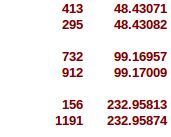
413 48.43071
295 48.43082
732 99.16957
912 99.17009
156 232.95813
1191 232.95874
Nothing within 0.0001 up to the first 1500.
17.05.2025 20:58 —
👍 0
🔁 0
💬 0
📌 0
413 48.43071
295 48.43082
732 99.16957
912 99.17009
156 232.95813
1191 232.95874
Up to the 1500th triangle and none are within 0.0001
413 48.43071
295 48.43082
732 99.16957
912 99.17009
156 232.95813
1191 232.95874
I'm beginning to think that, maybe, subtracting irrational numbers isn't going to be near 0.
17.05.2025 20:57 —
👍 1
🔁 0
💬 1
📌 0
Not yet.
17.05.2025 19:35 —
👍 0
🔁 0
💬 1
📌 0
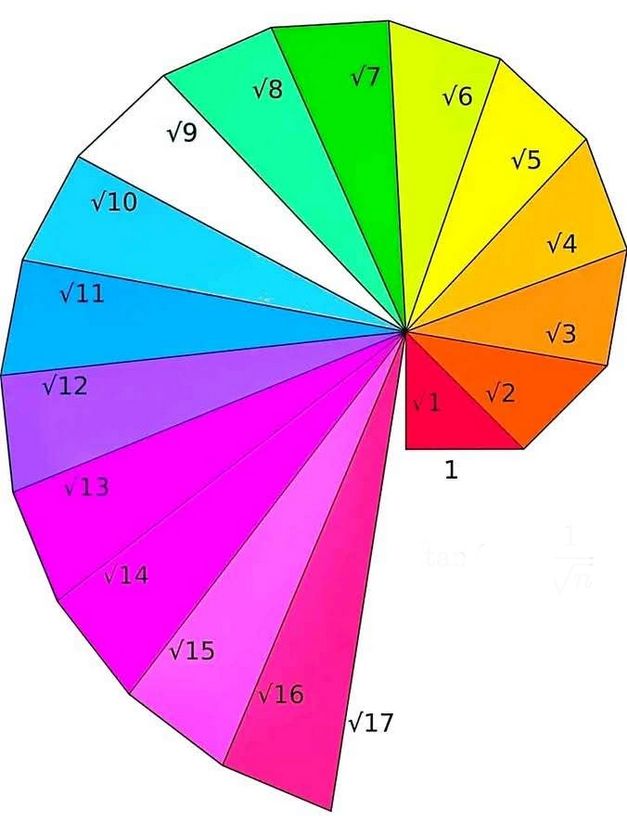
Nerd-sniped myself this morning:
I found myself wondering if the hypotenuse of one of the triangles ever lined up *exactly* with the leg of another, and if so, which one?
17.05.2025 17:07 —
👍 17
🔁 2
💬 5
📌 0
Things my students said today:
"A corner of your cheese landed on my chair." & Massive giggle fit. To her sister: "Take your earpod out of your ear, young lady." More giggles. Drops calc on own foot: "My foot. It's been attacked." Whole class loses it.
#mathstoday
#iteachmath
#YeahItsAlmostSummer
13.05.2025 22:10 —
👍 3
🔁 0
💬 0
📌 0
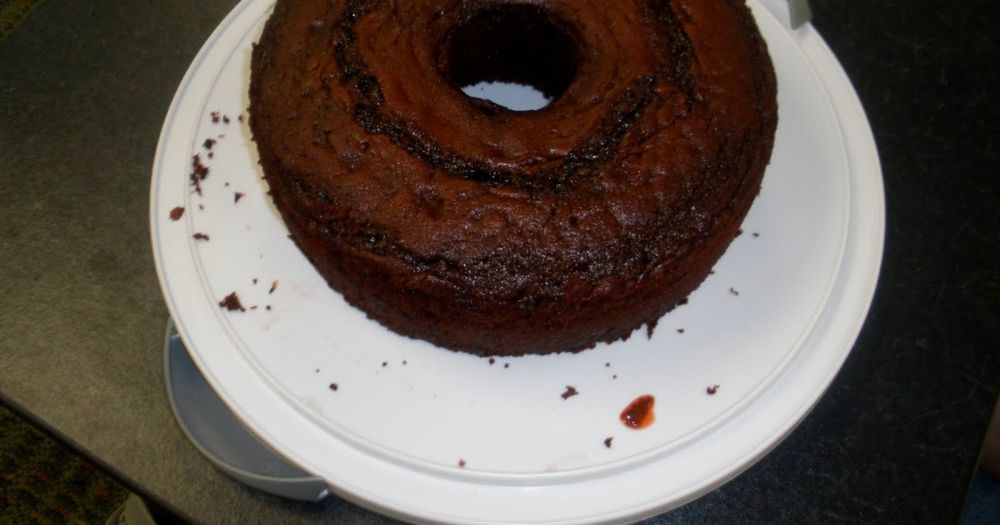
But … is there a Bundt cake of revolution?
13.05.2025 00:35 —
👍 1
🔁 0
💬 1
📌 0
Volumes by revolution
12.05.2025 12:53 —
👍 4
🔁 0
💬 1
📌 0
I began by placing the vertex on the x-axis, which happens at x^2+2x+1.
If we add a positive constant to that, the graph rises and roots are imaginary. Thus, the expression must be >1
09.05.2025 02:38 —
👍 1
🔁 0
💬 0
📌 0
I can't believe we have a Pope from Illinois. People from Chicago usually hate the Cardinals.
08.05.2025 17:51 —
👍 11644
🔁 1463
💬 350
📌 124