"It's who you know — unless you’re famous ✨: professional networks and prestige in scholarly mobility" - check out this new working paper @mpidr.bsky.social from @gergelymonus.bsky.social and coauthors
🔗https://tinyurl.com/4t79mmw3

@gergelymonus.bsky.social
sociology phd student doing research on migration and urbanization
"It's who you know — unless you’re famous ✨: professional networks and prestige in scholarly mobility" - check out this new working paper @mpidr.bsky.social from @gergelymonus.bsky.social and coauthors
🔗https://tinyurl.com/4t79mmw3

Quote from R. Kalman, "Identification from real data": For an objective outsider, much of the historical development of statistics is a long series of attempts to dodge the inevitable implications of uncertainty. Whenever the conventional statistical treatment of a problem gives a unique (certain) answer, as in maximum likelihood estimation, in least squares, ... , common sense should tell us that such a miracle is possible only if additional assumptions (deus ex machina) are imposed on the data which somehow succeed in neutralizing the intrinsic uncertainty. We shall use the technical term "prejudice" for such assumptions. In other words, statistical methodology has been handicapped because statisticians have become mesmerized by the deep-seated hope of giving certain answers to problems where the uncertainty is intrinsic. This is politics, not science. For example, least squares is very popular because it always gives a unique answer. But this is exactly where its fatal weakness lies; when we pose Nature a question, as in identification problems, we must not phrase that question in such terms that the answer is predetermined regardless of the nature of the data.
Rudolf Kalman put it nicely (and provocatively): link.springer.com/chapter/10.1...
27.09.2025 17:42 — 👍 30 🔁 9 💬 1 📌 3
Nagy bukó spotting a Battyhány téren
02.06.2025 18:09 — 👍 1 🔁 0 💬 0 📌 0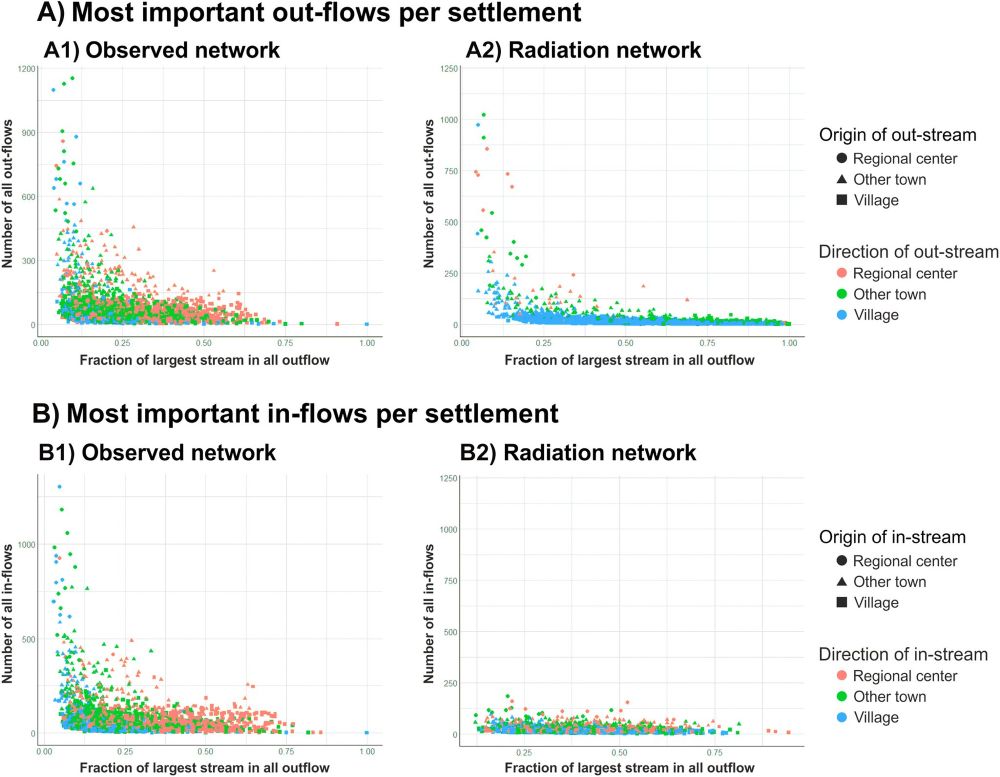
New paper by @gergelymonus.bsky.social and László Lőrincz in Cities: "Rural-urban flows determine internal migration structure across scales" 🔄
🔗 Link to paper: doi.org/10.1016/j.ci...
this is not meant as a hot take or a unique insight but it's remarkable how a lot of scientific discourse is about methods, data, and findings, whereas what really does most of the heavy lifting happens to be the assumptions
08.05.2025 17:37 — 👍 127 🔁 30 💬 4 📌 3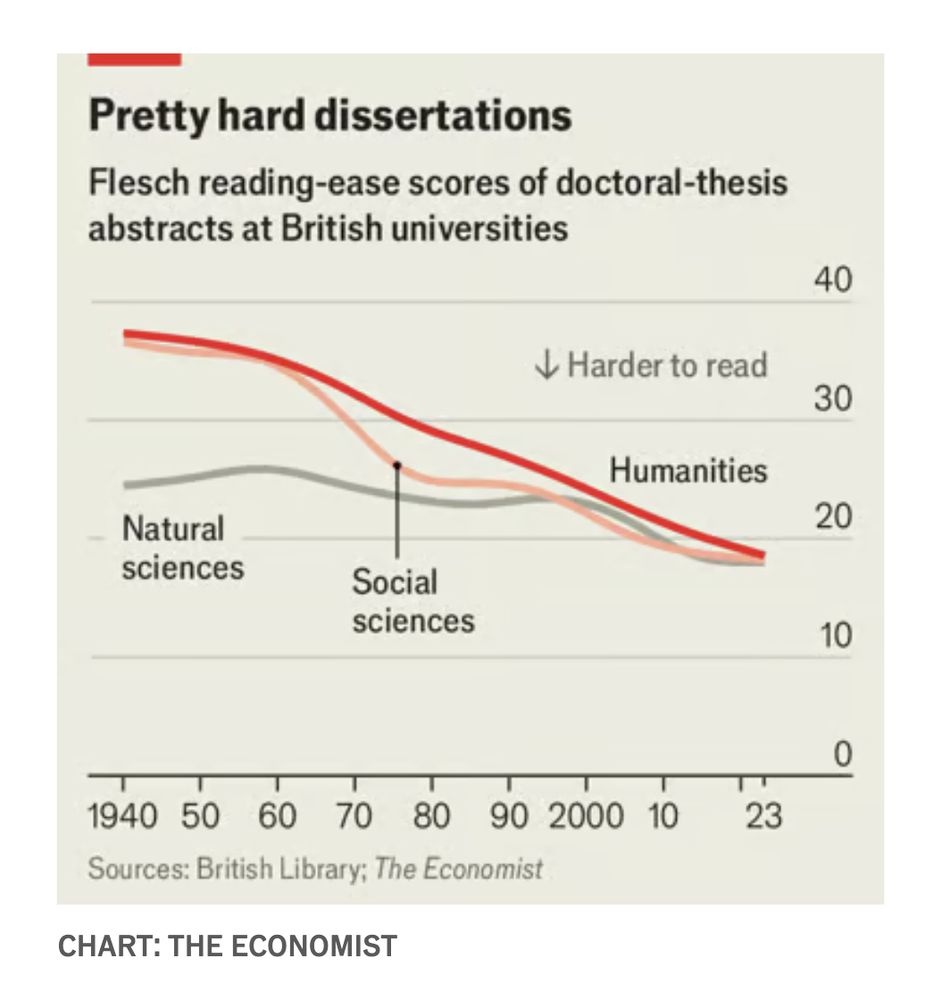
Over the past 80 years, academic writing has become substantially harder to read 📉🧪 www.economist.com/science-and-... I analysed 350k PhD thesis abstracts and found that they've become more complex in every discipline, especially the humanities and social sciences
18.12.2024 23:38 — 👍 335 🔁 90 💬 51 📌 100