YouTube video by Fungal-Worm Lab IMB Academia Sinica
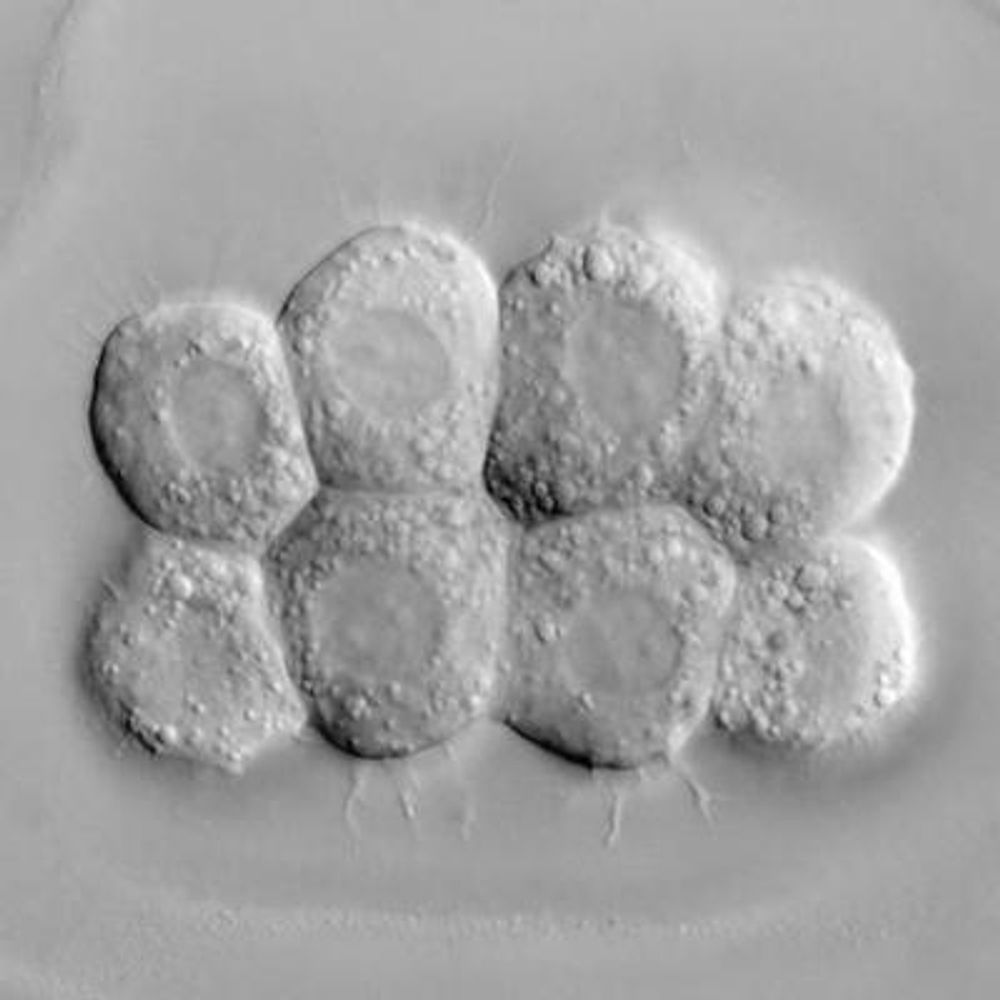
The predation process of the nematode trapping fungus Arthrobotrys oligospora.
Did you know that some fungi are CARNIVOROUS? There are lots of species that do this, but I think Arthrobotrys oligospora is especially bonkers. These fungi sense when their prey (nematodes) are nearby by eavesdropping on the chemical signals that the nematodes use to communicate with each other 🧪🪲🍄
19.11.2025 01:59 — 👍 54 🔁 15 💬 2 📌 2

A shorter green-leafed plant on the left, marked "Ctrl" is about half the size of a similar looking plant on the right.
Scientists have identified a protein in poplar that, when turned off, results in increased growth, stronger cell walls and trees that are more disease-resistant.
More: jgi.doe.gov/user-science...
@jbei.lbl.gov @axelvisel.bsky.social @biosci.lbl.gov @berkeleylab.lbl.gov
19.11.2025 18:45 — 👍 8 🔁 4 💬 0 📌 1
I tried it, it's very interesting, maybe it's an oversight but i was unable to find a way to export UMAP graph (SVG, PNG etc)
29.10.2025 10:09 — 👍 0 🔁 0 💬 1 📌 0

Gibberellin transport affects lateral root growth through HY5 in response to far-red light (Kasper van Gelderen , Kyra van der Velde , Chia-kai Kang , Jessy Hollander , Alicia Koppenol , Orfeas Petropoulos , Putri Prasetyaningrum , Tuğba Akyüz , Ronald Pierik) doi.org/10.1093/plce... #PlantScience
28.08.2025 17:43 — 👍 19 🔁 11 💬 0 📌 1

Cracking the seed code: How nitrate directly breaks ABA signaling for germination (Nitin Uttam Kamble) doi.org/10.1093/plce... #PlantScience
04.08.2025 20:59 — 👍 7 🔁 2 💬 0 📌 1
Incredible opportunity #PlantSciJobs #plantscience #AcademicJobs
04.08.2025 10:09 — 👍 7 🔁 3 💬 0 📌 0
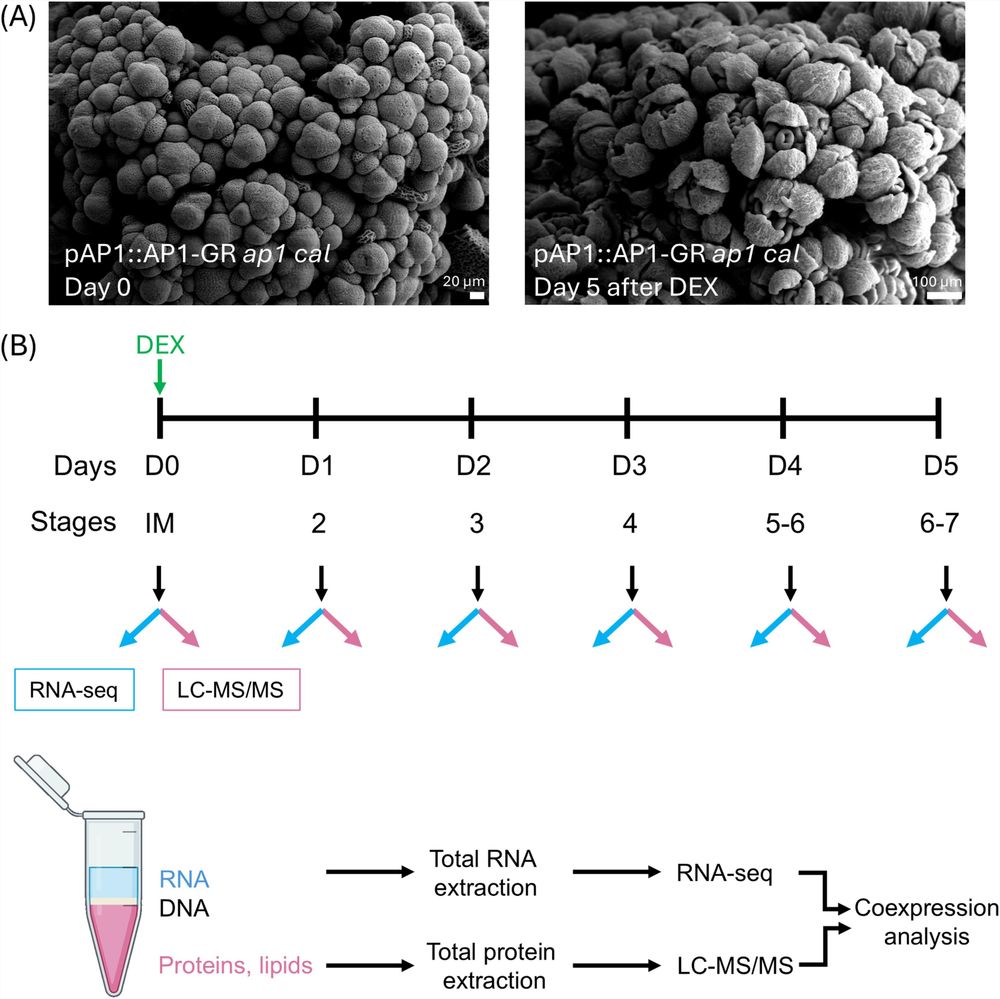
AP1 floral induction system and experimental strategy used. (A) The AP1 floral induction system (pAP1::AP1-GR ap1 cal) was used in Arabidopsis. On the left, an SEM image of overproliferation inflorescence meristems of the ap1 cal mutant and on the right, an SEM image of many synchronized floral buds 5 d after dexamethasone (DEX) treatment are shown. (B) Overview of the workflow and sampling scheme. The extraction buffer Trizol was used, so from the same tissue sample, RNA and protein could be extracted. Subsequently, RNA-seq and LC-MS/MS were performed, followed by data analyses. SEM images provided by José Luis Riechmann.
🌸🧬🔬 INSIGHT 🌸🧬🔬
Almost lost in translation: integrated transcriptome and proteome analyses for early Arabidopsis flower development - Stefan de Folter
📝 Insight: doi.org/10.1093/jxb/...
🔬 Research: doi.org/10.1093/jxb/...
#PlantScience 🧪
23.07.2025 10:34 — 👍 12 🔁 6 💬 0 📌 0
Image Text: Call for 2026 Plantae Fellows. Application Deadline: August 31, 2025. plantae.org/2025fellowsapp. Featuring the Plantae and Plantae Fellows logo on a Plantae-branded background.
📣 Are you a creative and articulate plant scientist looking to connect with other like-minded folks? Application is now open for the 2025-2026 Plantae Fellows program!🌱
👉 Learn more and apply by August 31! buff.ly/JqoDSHq
#plantscience
22.07.2025 14:10 — 👍 20 🔁 20 💬 1 📌 6


The project focuses on utilizing meta-omics approaches to explore the connection between the exudome of Arabidopsis thaliana, branched broomrape, and rhizosphere microbiota.
21.07.2025 12:28 — 👍 2 🔁 0 💬 0 📌 0
US2B – Unité en Sciences Biologiques et Biotechnologies
We're offering a Master's Level 2 research opportunity in the picturesque city of Nantes, western France, for a duration of six months starting in January. Feel free to apply or share this opportunity!. us2b.univ-nantes.fr
Link to the offer : uncloud.univ-nantes.fr/index.php/s/...
21.07.2025 12:26 — 👍 1 🔁 0 💬 1 📌 0

🤯🤯 and I ❤️ it! #2025ISMPMI @soreklab.bsky.social 👏🏻👏🏻
13.07.2025 13:47 — 👍 19 🔁 4 💬 0 📌 0

New Article: "A receptor–kinase cascade confers cold-induced root growth inhibition in Arabidopsis" rdcu.be/etNmI
A module involving KOIN and CRPK1 integrates membrane trafficking and kinase signalling to mediate cold-induced root growth inhibition.
27.06.2025 18:12 — 👍 7 🔁 3 💬 0 📌 0

Cover of the June issue of Nature Plants. The description is the following: "Accelerando for the DNA shuffle - Whereas flowers of wild-type tobacco plants have five petals, defects in DNA repair, caused by the endosymbiotic integration of a plastid DNA fragment into the plant’s nuclear genome, produce flowers with variable petal numbers (three, four or five). Such gene transfer from plastids to the nucleus occurs more frequently when double-strand break repair pathways are inactive.".
The June issue is now fully online:
www.nature.com/nplants/volu...
23.06.2025 15:46 — 👍 12 🔁 3 💬 0 📌 1
1/27 We have a new paper out! Turns out that snowflake yeast have been hiding a secret from us - they've evolved a (very!) crude circulatory system. Not with blood vessels or a heart, but through spontaneous fluid flows powered by their metabolism. 🧪🔬
www.science.org/doi/full/10....
24.06.2025 16:52 — 👍 355 🔁 146 💬 14 📌 25
Congrats
22.06.2025 15:32 — 👍 0 🔁 0 💬 0 📌 0
Towards establishing functional nitrogenase activities within plants
Biological nitrogen fixation, catalyzed by nitrogenase, can convert atmospheric N₂ into NH₃ for plant growth. Legumes form symbioses with nitrogen-fixing bacteria, but non-legumes rely on excessive nitrogen fertilizers. Efforts to engineer nitrogenase in non-legumes face major challenges, including oxygen sensitivity, metal cluster assembly complexity, and high energy demands. Nonetheless, advances in synthetic biology, and artificial intelligence (AI)-driven design – shown by partial nitrogenase reconstitution in Escherichia coli and yeast – offer promising solutions. Engineering nitrogenase in yeast mitochondria under low-oxygen conditions also helps circumvent oxygen constraints. Fully overcoming energy costs and feedback loops responsive to nitrogen levels could yield nitrogen-fixing crops, transforming sustainable agriculture and ensuring global food security. Such breakthroughs would reduce fertilizer dependence, cut pollution, and stabilize yields in diverse farming systems.
An inspiring long-term goal that is still worth pursuing -> Towards establishing functional nitrogenase activities within plants
02.06.2025 19:18 — 👍 2 🔁 1 💬 0 📌 0
![Figure 2. Distribution of detectable glucosinolate accumulation across the Brassicaceae a. Histogram showing the distribution of the number of species found to accumulate detectable levels of each glucosinolates across 339 species [11]. Specific metabolites found in a large number of species and highlighted in panel C. are labeled. b. Upset plot showing how the metabolites distribute among the major supertribes of the Brassicaceae family [11,12]. c. Distribution of widely distributed glucosinolates in species with both phylogenetic and glucosinolate information [11,12]. Colors highlight different supertribes and the outer rings represent accumulation of specific metabolites in the species. From inner ring to outer ring the metabolites are But = but-3-enyl, 20HB= 2-hydroxy-but-3-enyl, 4MSO-4-methylsulfinylbutyl, 4MT 4-methylthiobutyl, 3MSO-3-methylsulfinylpropyl, 3MT= 3-methylthiopropyl, Allyl-2-Propenyl/sinigrin.](https://cdn.bsky.app/img/feed_thumbnail/plain/did:plc:misyogthncmyejlvlflkvjbh/bafkreif3epmluhgoswt2mmopc7uqey67mhbpvhn4vvqmvech3tech2zjpe@jpeg)
Figure 2. Distribution of detectable glucosinolate accumulation across the Brassicaceae a. Histogram showing the distribution of the number of species found to accumulate detectable levels of each glucosinolates across 339 species [11]. Specific metabolites found in a large number of species and highlighted in panel C. are labeled. b. Upset plot showing how the metabolites distribute among the major supertribes of the Brassicaceae family [11,12]. c. Distribution of widely distributed glucosinolates in species with both phylogenetic and glucosinolate information [11,12]. Colors highlight different supertribes and the outer rings represent accumulation of specific metabolites in the species. From inner ring to outer ring the metabolites are But = but-3-enyl, 20HB= 2-hydroxy-but-3-enyl, 4MSO-4-methylsulfinylbutyl, 4MT 4-methylthiobutyl, 3MSO-3-methylsulfinylpropyl, 3MT= 3-methylthiopropyl, Allyl-2-Propenyl/sinigrin.
One cool consequence: This model of more rapid gene duplication & loss creates wild phylogenetic patterns, where metabolites are found throughout major lineages of a family but exhibit huge presence/absence within a lineage. Reconstructing evo history of this pathway by parsimony would be misleading
28.03.2025 17:58 — 👍 12 🔁 3 💬 1 📌 0
RESEARCH: "Flowers meet Newton: testing the role of gravitational pull in resupination of orchid flowers" - João C F Cardoso et al, doi.org/10.1093/jxb/...
#plantscience 🧪
11.02.2025 14:57 — 👍 12 🔁 3 💬 0 📌 0
Nice work, quick question, that heatmap of m/z features (probably made using metaboanalyst) is it normalized by rows or columns ? Thanks so much 😊
24.01.2025 10:42 — 👍 0 🔁 0 💬 0 📌 0
Last chance to apply for an Associate Professor position in our Plant Biology Department at SLU. Deadline Jan 20th. Come join us in Uppsala, Sweden!
08.01.2025 08:16 — 👍 17 🔁 31 💬 1 📌 1
Il se passe quoi après la thèse en fait ?
Venez, on en parle avec nos invité(e)s 🎙
Interviews, anecdotes, explications...
https://linktr.ee/apreslathese
Streaming the latest papers in evolutionary developmental biology
Website: https://evodevo.brunovellutini.com
Mastodon: https://biologists.social/@evodevo_papers
#EvoDevo #Papers #Research #DevBio #EvoBio
Plant biologist working on belowground chemical communication of plants with other organisms
Building genomic intelligence @ Tatta Bio
72, PhD, micro- + molecular biology. associated blogger @STCmicrobeblog. opinions my own.
The 💚 of Synthetic Biology
🎟️World Expo Synbio - Grand Jamboree
📆Oct 28-31, 2025 📍Paris
#iGEM2025 Competition early registration open now!
igem.org
Unité Mixte de Recherche Institut de Recherche en Horticulture et Semences
@inrae-france.bsky.social & @institutagro.bsky.social
@univangers.bsky.social
Angers, France
https://irhs.angers-nantes.hub.inrae.fr/
Sequence plasmids, amplicons, colonies, AAV, yeast, and bacterial genomes! Our advanced sequencing delivers comprehensive visibility, higher accuracy, and the ability to detect structural variations and rare mutations that other sequencing methods miss.
🌿 Plant pathologist - Seed health 🌾
🇫🇷 Working at GEVES, Angers, France
🎨 Loving art and photography 📸
The Australian Society of Plant Scientists (ASPS) promotes #PlantScience in Australia, and provides professional contact within our community #ASPS2025 #ozplants
https://www.asps.org.au/
Trends in Plant Science, leading monthly review journal in plant science, supports I&D in STEM. Posts & opinions are from the Editor, Susanne C.Brink
Discovery inspired by plants. Click the link to explore more about BTI and for our “House Rules” for Social Media Comments. linktr.ee/BTIScience
Binomica Labs independent researcher by day, warehouse worker by night
Small thoughtful science
#phylogenetics #archaea #evolution #bioinformatics
@naturepoker@genomic.social
http://naturepoker.wordpress.com
https://orcid.org/0000-0002-6977-5440
🌱 We are the European Technology Platform (ETP) representing the plant sector. We aim to promote the flow of innovation from fundamental plant-related research to the market. 🌾👩🌾🔬
https://www.plantetp.eu/
We are the American Society of Plant Biologists - Posts and links are for informational purposes and do not necessarily reflect the views of ASPB.
Learn more about ASPB at https://aspb.org/.
BSc in Biology, MSc student in Bioinformatics. Learning programming and systems biology. Lab tech. Molecular biology nerd. 🌱🔬🧬💻🇨🇴
The latest research in Life Sciences from www.cambridge.org/core/browse-subjects/life-sciences
The award-winning online home and resource hub for the global plant science community. Powered by the American Society of Plant Biologists (ASPB).
Explore Plantae at https://plantae.org/.