
Katz has been a game changer for me and my lab, so happy to see it reissued!
26.08.2025 03:43 — 👍 20 🔁 6 💬 0 📌 0Katz has been a game changer for me and my lab, so happy to see it reissued!
26.08.2025 03:43 — 👍 20 🔁 6 💬 0 📌 0
1/5 New paper on medicinal cannabis: We followed adults with clinically significant anxiety & depression who were new to medicinal cannabis using 8 weeks of EMA and 6 months of longitudinal follow up and saw significant and clinically meaningful benefits.
authors.elsevier.com/c/1lQBfbXYiy...
Excited to join the team over at UMB this December!
09.06.2025 18:20 — 👍 10 🔁 1 💬 0 📌 0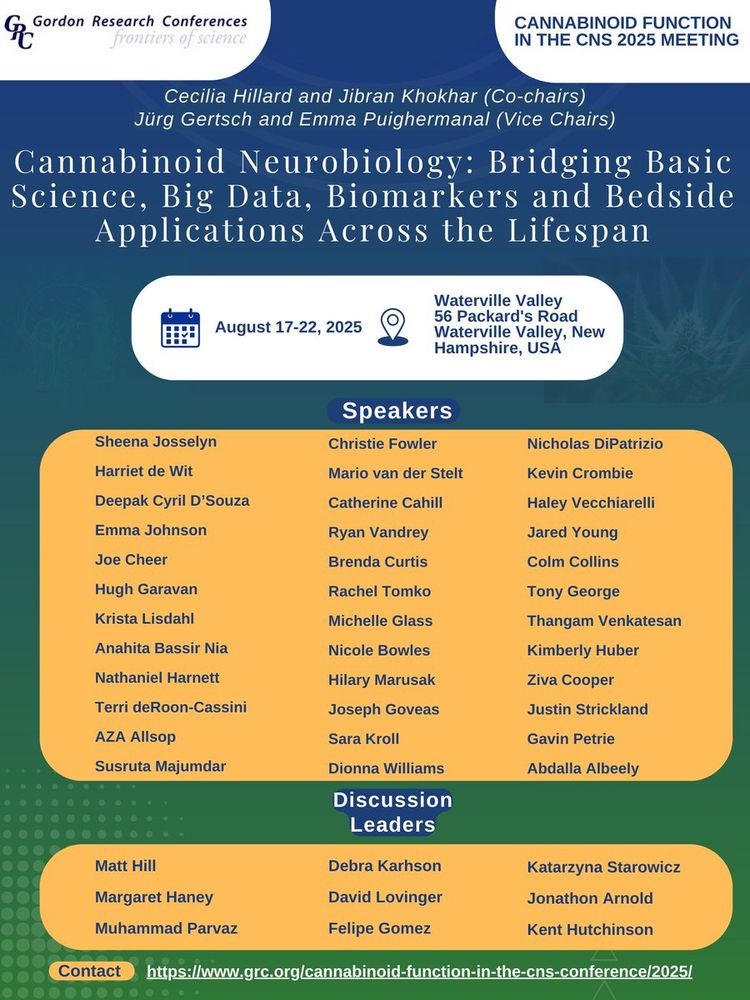
The 2025 GRC on Cannabinoid Function in the CNS: Cannabinoid Neurobiology: Bridging Basic Science, Big Data, Biomarkers and Bedside Applications Across the Lifespan final program is here! Spots are going fast! Register soon for trainee talks! Reshare please! grc.org/cannabinoid-...
03.06.2025 04:04 — 👍 16 🔁 7 💬 0 📌 0
We made a mock #cannabis dispensary for @iasatusc.bsky.social to use for research. Check out a detailed description of how we did it, including interviews w/ dispensary staff and our plan for stocking with product packaging. @uscpsychiatry.bsky.social
publications.sciences.ucf.edu/cannabis/ind...

Our second parallel session features this first symposium explores the various effects of manipulating the dopamine transporter system and highlights the therapeutic potential of these manipulations chaired by @mercecorrea.bsky.social. #EBPS2025
04.04.2025 18:23 — 👍 4 🔁 2 💬 1 📌 0
Finally, our third symposium in this parallel session, chaired by @juststrickland.bsky.social , explores cognitive and computational approaches to behaviour in substance use and related conditions. #EBPS2025
04.04.2025 18:23 — 👍 5 🔁 2 💬 0 📌 0
We want to follow #CPA2025 attendees. Will we be seeing you in PVD this week? Like this post and we’ll be sure to follow.
31.03.2025 14:11 — 👍 31 🔁 4 💬 1 📌 2The Charleston Alcohol Research Center has an opening for a #postdoctoral fellowship on the #NIAAA T32 training grant - please spread the word and contact me if interested in working in beautiful Charleston, SC @drjrink.bsky.social
20.03.2025 15:06 — 👍 2 🔁 3 💬 0 📌 1Importantly, Ethan is on the postdoc market at the moment! He's learned *A TON* of skills during his grad training (EEG, FMRI, fMRI-guided TBS, and computational modeling) and I think he will make an excellent postdoc. Let me know if you are looking for someone!
03.03.2025 16:18 — 👍 6 🔁 4 💬 1 📌 0
Work from Nada Sallam showing prenatal cannabis exposure influences glycemic control in female mice and their response to high fat diet exposure. doi.org/10.1111/bph....
03.02.2025 15:27 — 👍 8 🔁 5 💬 0 📌 0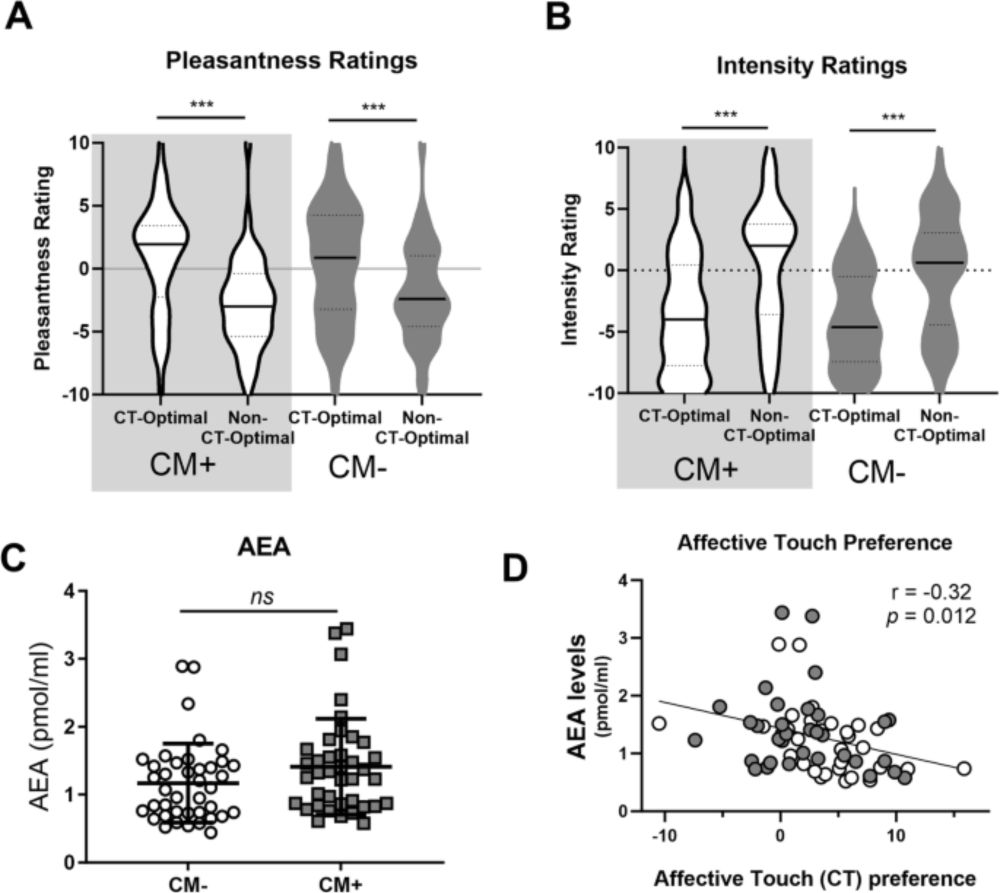
The first @pact-lab.bsky.social paper of 2025 is out now in @npp-journal.bsky.social 🤩
Led by @madeleinejones.bsky.social & @connorhaggarty.bsky.social
ft. @abby-lunge.bsky.social @cannabrain.bsky.social & others
www.nature.com/articles/s41...
I'm excited to share a new preprint: In a novel experimental paradigm, we found evidence that stress induces a computational bias during alcohol-related decision-making in favor of alcohol, but this bias was only sometimes strong enough to overcome competing considerations (e.g., taste preferences).
14.01.2025 16:45 — 👍 41 🔁 24 💬 3 📌 3
Merry Christmas and Happy Hanukkah from @lluaces.bsky.social and I!
“Informed” consent? Ethical considerations for clinicians using therapy-matching platforms.
psycnet.apa.org/record/2025-...

Efficiently Quantifying Egocentric Social Network Cannabis Use: Initial Psychometric Validation of the Brief Cannabis Social ... (new @jsadjournal.bsky.social)
@samuelacuff.bsky.social @juststrickland.bsky.social @addpsychpodcast.bsky.social @james-g-murphy.bsky.social
www.jsad.com/doi/full/10....