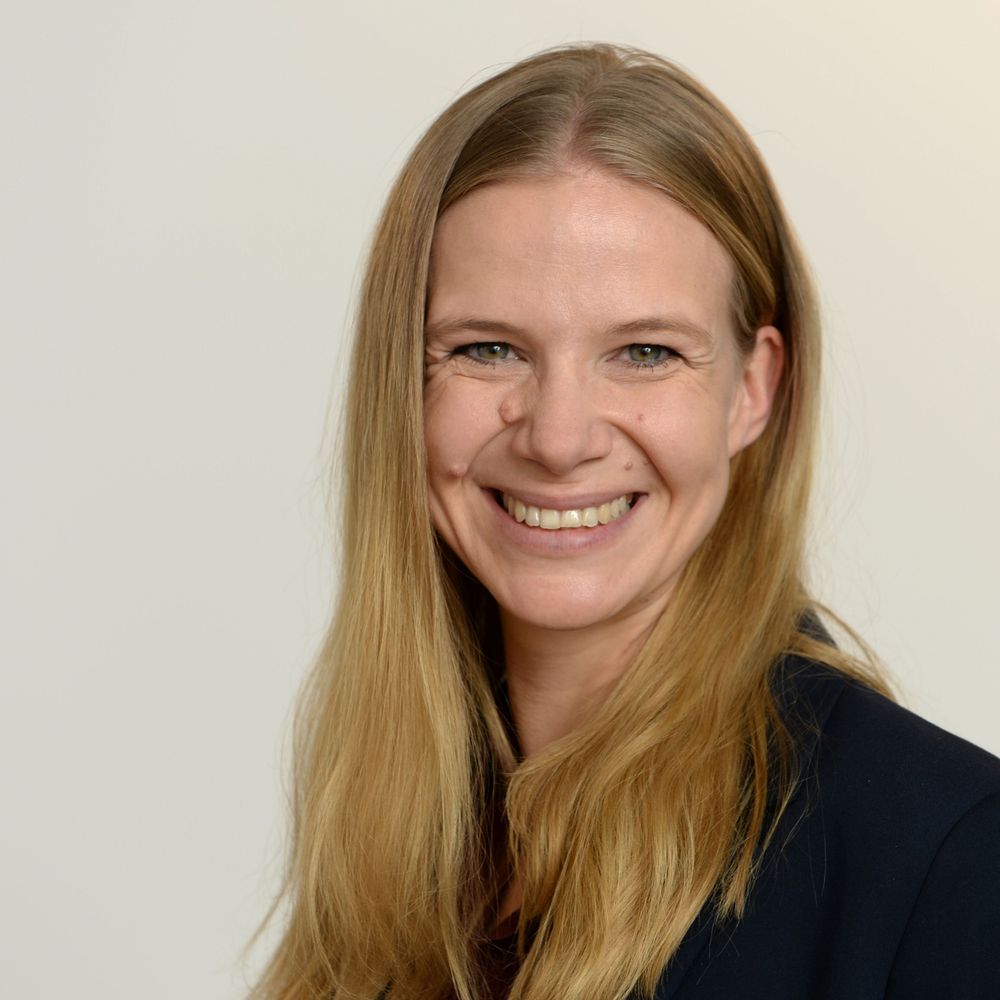
The ambitious people of the Gothenburg Research Group on Elections, Public Opinion, and Political Behavior (GEPOP) 2026!
19.02.2026 11:52 — 👍 5 🔁 0 💬 0 📌 0
@professormpersson.bsky.social
Professor, Political Science, University of Gothenburg
The ambitious people of the Gothenburg Research Group on Elections, Public Opinion, and Political Behavior (GEPOP) 2026!
19.02.2026 11:52 — 👍 5 🔁 0 💬 0 📌 0
Glad to share this entry on "Responsiveness" that Anders Sundell and I wrote for the @ipsa.org Companion to Political Science. Thanks to Daniel Stockemer, Stephen Sawyer and
@audreygagnon.bsky.social for editing. link.springer.com/rwe/10.1007/...
‼️ New paper out in @polbehavior.bsky.social !
We ask whether the politically active (in terms of electoral or other forms of participation) are better represented? See Jesper's detailed 🧵 below for more info on the paper! 👇
Fin Amelin!
07.02.2026 21:18 — 👍 0 🔁 0 💬 0 📌 0
🧵I am happy to announce a new article in Political Behavior @polbehavior.bsky.social, “Are the Politically Active Better Represented?”, co-authored with @jenny-oser.bsky.social, @rdassonneville.bsky.social, @professormpersson.bsky.social, and Anders Sundell.
link.springer.com/article/10.1...
Why do some want government spending without supporting the necessary taxation? Such a "something for nothing" mindset is often seen as an information or even sophistication problem. But we find it is equally due to rational interests among the economically vulnerable.
05.01.2026 13:22 — 👍 3 🔁 1 💬 0 📌 0
1/ Does growing up poor always lead to political apathy?
Very happy to share my first paper published (open access) in @electoralstudies.bsky.social, where I show that parents' influence mitigates the poverty gap in participation, while economic mobility does not.
🔗 shorturl.at/p5Bac
Thanks for sharing our paper!
27.10.2025 08:37 — 👍 0 🔁 0 💬 0 📌 0
Across countries, unequal congruence between high- & low-income voters & policy is driven by status quo bias, rather than unequal abilities to achieve policy
change. high-income advantage stems largely from their satisfaction with preserving the status quo
onlinelibrary.wiley.com/doi/pdf/10.1...
New in Policy Studies Journal:
Blocking the Poor: Status Quo Bias in Policy Congruence (with Anders Sundell) (1) onlinelibrary.wiley.com/doi/10.1111/...
Power endures not through dramatic shifts, but through the steady accumulation of small advantages that lock the status quo in place. (6)
22.10.2025 14:59 — 👍 0 🔁 0 💬 0 📌 0Drawing on data from 43 countries and more than 130 policy issues, we show that high-income citizens’ advantage stems largely from their satisfaction with preserving the status quo. (5)
22.10.2025 14:59 — 👍 0 🔁 0 💬 1 📌 0It is not that high-income citizens are better at achieving policy change, but that they are better at blocking reforms favored by lower-income citizens. (4)
22.10.2025 14:59 — 👍 0 🔁 0 💬 1 📌 0Using comparative data on opinions and policies, we suggest that this inequality primarily results from status quo bias; asymmetric blocking power drives unequal congruence. (3)
22.10.2025 14:59 — 👍 1 🔁 0 💬 1 📌 0Research on unequal responsiveness shows that policies tend to align more closely with the preferences of high-income citizens than low-income citizens. (2)
22.10.2025 14:59 — 👍 0 🔁 0 💬 1 📌 0New in Policy Studies Journal:
Blocking the Poor: Status Quo Bias in Policy Congruence (with Anders Sundell) (1) onlinelibrary.wiley.com/doi/10.1111/...

From our latest issue: Politicians’ Theories of Voting Behavior by Jack Lucas et al. www.cambridge.org/core/journal...
06.10.2025 13:03 — 👍 9 🔁 4 💬 0 📌 0
Abstract of the article "What matters more to politicians: the quantity or quality of public opinion signals?" by Bart Maes, Stefaan Walgrave, Emmi Verleyen, Frédéric Varone, Anne Rasmussen and Mikael Persson. Published online first in West European Politics.

Figure 1, displaying average (reversed) importance of each public opinion criterion aggregated across countries.

Figure 3, displaying the frequency distribution of the quantity vs. quality public opinion criteria scale.

Figure 4, displaying predicted values of politicians' ranking of the criteria.
What matters more to politicians: the quantity or quality of public opinion signals?
Find out in the new article by @bart-maes.bsky.social Stefaan Walgrave Emmi Verleyen Frédéric Varone @annerasmussen.bsky.social & @professormpersson.bsky.social
doi.org/10.1080/0140...
Had a *fantastic* time at the Nordic Political Behavior Workshop! Great papers, engaging discussions, and super constructive feedback. Thanks so much for organizing @finseraas.bsky.social @lchristensen.bsky.social @professormpersson.bsky.social & Peter Dinesen!
03.10.2025 13:26 — 👍 10 🔁 1 💬 0 📌 0
The 5th Nordic Political Behavior Workshop in Trondheim! @lchristensen.bsky.social @rdassonneville.bsky.social @finseraas.bsky.social et al!
03.10.2025 08:43 — 👍 18 🔁 5 💬 0 📌 2Stark duo!
29.09.2025 10:30 — 👍 2 🔁 0 💬 0 📌 0
📘 64.4
@jesperlindqvist.bsky.social, @professormpersson.bsky.social, W.Schakel & A.Sundell look at 🗳️ voters’ policy preferences often misalign with what they get in practice with the study showing how this “electoral connection” gap contributes to unequal outcomes
#OA
🔗

Abstract of the research note "Ideological bias in policy implementation: public opinion and policy outcomes in 43 democracies" by Mikael Persson and Anders Sundell. Published online first in West European Politics.

Figure 2, displaying triangles of representation, showing congruence (y-axis) and under-/over-provision of policy (x-axis).

Figure 3, displaying public support for and implementation of leftist and rightist proposals.

Figure 4, displaying policy provision and congruence. Leftist and TAN proposals are the most under-provided relative to public support.
🌟Online first:
"Ideological bias in policy implementation: public opinion and policy outcomes in 43 democracies"
Research Note by @professormpersson.bsky.social & Anders Sundell
doi.org/10.1080/0140...

New paper with Anders Sundell published in West European Politics: Ideological bias in policy implementation: public opinion and policy outcomes in 43 democracies www.tandfonline.com/doi/full/10....
03.09.2025 11:42 — 👍 15 🔁 5 💬 0 📌 0📢 Call for proposals: Submit survey module ideas for inclusion in the Swedish National Election Study 2026. Deadline: Oct 31, 2025 👉 www.gu.se/en/swedish-n...
28.08.2025 12:58 — 👍 0 🔁 0 💬 0 📌 010/
Working paper here: swopec.hhs.se/ifauwp/abs/i...
Comments are welcome!
9/
Signals are interpreted through a lens of class exposure.
Each signal carries has its specific effect.
Economic reasoning is structured, but unequally distributed.
8/
Not all voters process signals the same way:
– High-knowledge voters make more accurate and nuanced inferences
– High-income voters place more weight on stock markets
– Labor market position has surprisingly little impact
7/
– Inflation strongly affects personal/national evaluations and vote choice
– Unemployment matters for all outcomes, but less consistently
– GDP influences national more than personal assessments
– Stocks influences personal evaluations, but matters less for voting