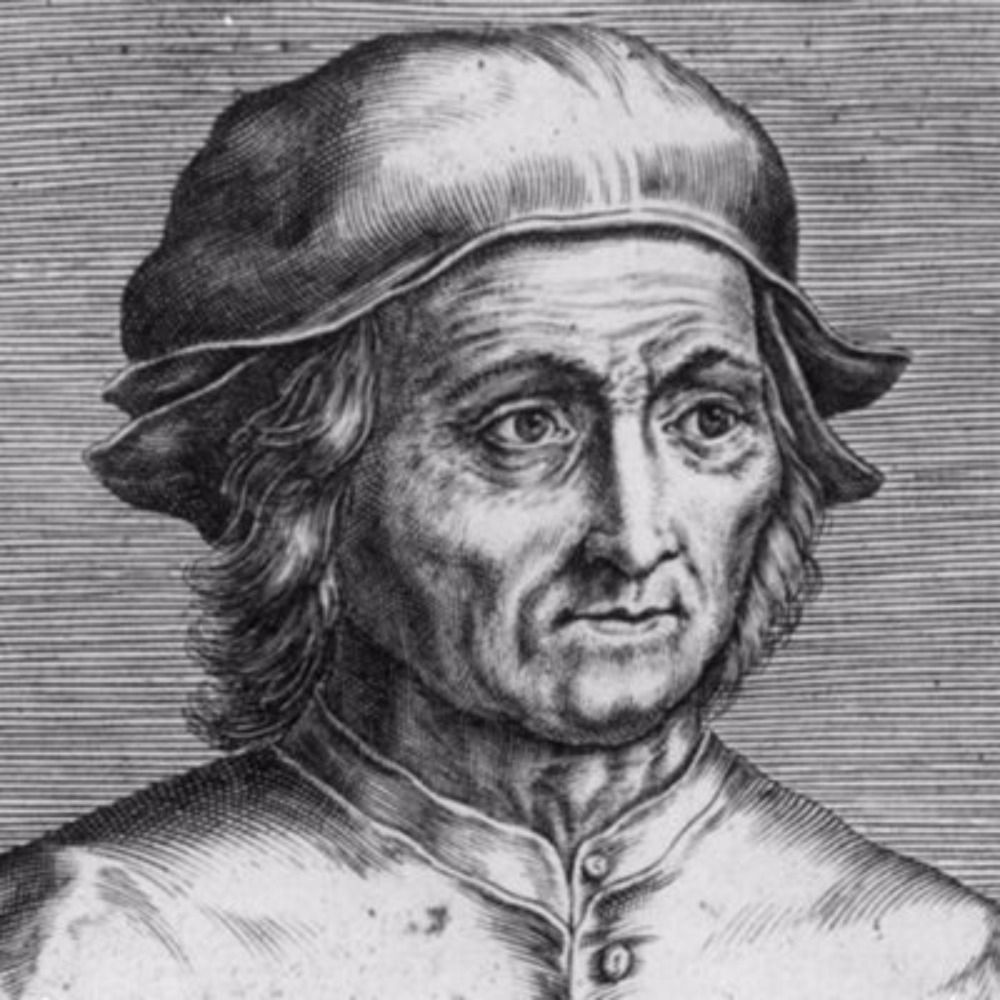
"Christ Child with a Walking Frame," attributed to the collection of Hieronymus Bosch, portrays the infant Jesus using a rudimentary walking frame, merging elements of innocence and surrealism. Bosch, known for his imaginative and often perplexing religious symbols, provides a unique interpretation that challenges traditional depictions of Christ.
Christ Child with a Walking Frame https://www.wikiart.org/en/hieronymus-bosch/christ-child-with-a-walking-frame
01.03.2026 16:03 —
👍 2
🔁 0
💬 0
📌 0

"Adoration of the Magi" by Hieronymus Bosch is a complex work featuring a dilapidated, rustic stable that acts as a backdrop for activities unfolding among both mounted figures and spectators. Bosch's distinctive style is evident in the detailed depiction of the structure and nuanced, miniature storytelling within the landscape.
Adoration of the Magi https://www.wikiart.org/en/hieronymus-bosch/adoration-of-the-magi-1516-2
01.03.2026 15:07 —
👍 0
🔁 1
💬 0
📌 0

This detail from Hieronymus Bosch's "The Garden of Earthly Delights" depicts a surreal assemblage featuring a gigantic, pierced human ear, integrating fantastical and unsettling elements typical of Bosch’s exploration of human folly and moralizing themes. The painting, part of a triptych, delves into the complexities of sin and redemption, blending vivid imagination with stark commentary on human nature.
The Garden of Earthly Delights (detail) https://www.wikiart.org/en/hieronymus-bosch/the-garden-of-earthly-delights-1515-9
01.03.2026 11:14 —
👍 1
🔁 1
💬 0
📌 0
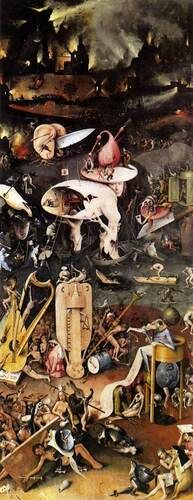
The Garden of Earthly Delights (detail)
The Garden of Earthly Delights (detail) https://www.wikiart.org/en/hieronymus-bosch/the-garden-of-earthly-delights-5
28.02.2026 18:11 —
👍 1
🔁 0
💬 0
📌 0
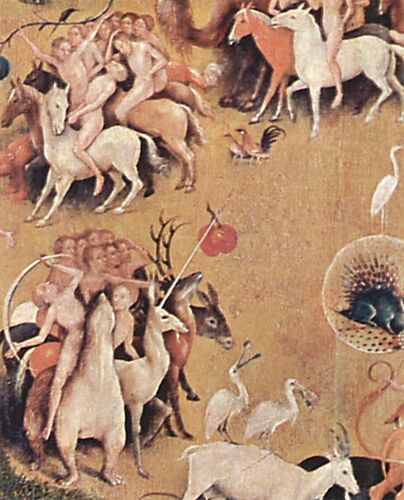
This detail from Hieronymus Bosch's "The Garden of Earthly Delights" depicts a fantastical scene of nude figures interacting harmoniously with an array of animals, including unicorns and birds, in an imaginative, dreamlike setting. The painting, part of a triptych, is renowned for its intricate detail and allegorical themes that comment on human nature and the folly of indulgence.
The Garden of Earthly Delights (detail) https://www.wikiart.org/en/hieronymus-bosch/the-garden-of-earthly-delights-1516-8
28.02.2026 13:34 —
👍 1
🔁 0
💬 0
📌 0

"Temptation of St. Anthony" by Hieronymus Bosch depicts St. Anthony surrounded by fantastical creatures in a barren landscape, illustrating the spiritual and psychological trials faced by the saint. Known for his intricate and otherworldly style, Bosch masterfully combines religious themes with surreal elements to create a haunting visual narrative.
Temptation of St Anthony https://www.wikiart.org/en/hieronymus-bosch/temptation-of-st-anthony
28.02.2026 08:02 —
👍 1
🔁 0
💬 0
📌 0

The "Triptych of Last Judgement" by Hieronymus Bosch vividly depicts the moral complexities of mankind through an intricate and surreal landscape filled with fantastical creatures. This panel, often associated with themes of pilgrimage and reflection, portrays a traveler burdened by worldly possessions, symbolizing the human journey toward salvation or damnation.
Triptych of Last Judgement https://www.wikiart.org/en/hieronymus-bosch/triptych-of-last-judgement
27.02.2026 19:41 —
👍 0
🔁 0
💬 0
📌 0

"Fall of the Damned," attributed to the style of Hieronymus Bosch, depicts a chaotic descent into hell, with tormented figures being cast into a dark, infernal abyss. The painting encapsulates Bosch's fascination with the themes of sin and punishment, explored through his signature imaginative, unsettling imagery.
Fall of the Damned https://www.wikiart.org/en/hieronymus-bosch/hell-fall-of-the-damned-1504
27.02.2026 12:02 —
👍 1
🔁 1
💬 0
📌 0

This detail from "The Garden of Earthly Delights" by Hieronymus Bosch depicts a fantastical scene filled with surreal creatures and intricate natural elements. Known for his intricate and bizarre imagery, Bosch often explored themes of morality and the human condition through his artwork.
The Garden of Earthly Delights (detail) https://www.wikiart.org/en/hieronymus-bosch/the-garden-of-earthly-delights-1516-5
27.02.2026 11:58 —
👍 1
🔁 2
💬 0
📌 0

Death of whore
Death of whore https://www.wikiart.org/en/hieronymus-bosch/death-of-whore
26.02.2026 19:27 —
👍 2
🔁 1
💬 0
📌 0

Harris Brisbane Dick Fund, 1926
Christ's Descent into Hell https://www.metmuseum.org/art/collection/search/435725
26.02.2026 13:47 —
👍 1
🔁 0
💬 0
📌 0

This detailed section of "The Haywain" by Hieronymus Bosch depicts a monk holding a goblet, surrounded by figures engaged in mundane activities, symbolizing human folly and moral weakness. Bosch's artwork is known for its intricate representations of moral and religious themes, often critiquing the excesses and failures of humanity.
Haywain (detail) https://www.wikiart.org/en/hieronymus-bosch/haywain-1500
26.02.2026 09:36 —
👍 0
🔁 0
💬 0
📌 0

In "The Ship of Fools" by Hieronymus Bosch, a group of people engaged in chaotic revelry are depicted on a drifting boat, symbolizing moral and societal folly. Bosch's work is known for its intricate details and allegorical representation of human vices, blending satire with religious themes.
The Ship of Fools https://www.wikiart.org/en/hieronymus-bosch/the-ship-of-fools-1500
25.02.2026 18:28 —
👍 0
🔁 0
💬 0
📌 0

"Group of Victims" by Hieronymus Bosch is a surreal composition filled with fantastical creatures and allegorical imagery, typical of Bosch's unsettling yet captivating style. The artwork, rich in color and detail, portrays a chaotic and symbolic scene reflecting the themes of human folly and moral consequence.
Group of Victims https://www.wikiart.org/en/hieronymus-bosch/group-of-victims
25.02.2026 13:48 —
👍 0
🔁 0
💬 0
📌 0

This detail from Hieronymus Bosch's "The Last Judgement" depicts a chaotic scene filled with nightmarish imagery and fantastical figures, embodying a vision of damnation and divine retribution. The artist's use of vivid, unsettling details and grotesque creatures emphasizes the moral themes he frequently explored in his works from the late 15th to early 16th century.
The Last Judgement (detail) https://www.wikiart.org/en/hieronymus-bosch/the-last-judgement-1
25.02.2026 08:38 —
👍 0
🔁 0
💬 0
📌 0

This detail from "The Haywain Triptych" by Hieronymus Bosch vividly captures the chaotic and surreal imagery typical of the Northern Renaissance, filled with allegorical figures and symbolic depictions of human folly and vice. Bosch's work often explores themes of morality and the human condition through fantastical, satirical landscapes teeming with creatures and exaggerated human forms.
The Haywain Triptych (detail) https://www.wikiart.org/en/hieronymus-bosch/not_detected_195349
24.02.2026 16:12 —
👍 0
🔁 0
💬 0
📌 0

This detail from Hieronymus Bosch's "The Garden of Earthly Delights" features an array of nude figures engaging in enigmatic and surreal interactions, emphasizing themes of earthly pleasures and human folly. Bosch's work is renowned for its intricate imagination and detailed depiction of enigmatic symbolism, often interpreted as a moral narrative of humanity's sinfulness.
The Garden of Earthly Delights (detail) https://www.wikiart.org/en/hieronymus-bosch/the-garden-of-earthly-delights-1515-6
24.02.2026 13:57 —
👍 0
🔁 0
💬 0
📌 0

The "St. Liberata Triptych" by the workshop of Hieronymus Bosch vividly portrays the martyrdom of St. Liberata, with her crucifixion depicted in the central panel, surrounded by emotive figures and landscapes on either side. Bosch's distinctive style is evident in the vivid expressions and fantastical details, reflecting the tension between worldly chaos and spiritual transcendence.
St. Liberata Triptych https://www.wikiart.org/en/hieronymus-bosch/st-liberata-triptych-1504
24.02.2026 09:49 —
👍 0
🔁 0
💬 0
📌 0

This artwork by an unknown follower of Hieronymus Bosch depicts chaotic scenes of humanity tormented by devils, indicative of the medieval themes of sin and retribution. The surreal imagery, reminiscent of Bosch's style, reflects the complex moral narratives and fantastical elements common in his unsettling yet captivating compositions.
Mankind Beset by Devils (reverse of Rebel Angels panel) https://www.wikiart.org/en/hieronymus-bosch/mankind-beset-by-devils-reverse-of-rebel-angels-panel-1504
23.02.2026 16:39 —
👍 1
🔁 0
💬 0
📌 0

"Crucifixion with a Donor," attributed to the workshop of Hieronymus Bosch, depicts the solemn scene of the crucifixion surrounded by figures including the Virgin Mary and St. John. The painting is notable for its vivid landscape in the background and the inclusion of a kneeling donor, reflecting Bosch's characteristic integration of religious themes and contemporary symbolism.
Crucifixion with a Donor https://www.wikiart.org/en/hieronymus-bosch/crucifixion-with-a-donor-1485
23.02.2026 12:10 —
👍 0
🔁 0
💬 0
📌 0

Hieronymus Bosch's "The Wayfarer" depicts a solitary traveler navigating a path, symbolizing life's journey and the choices one faces. The artwork is rich with details such as a rustic home and livestock, reflecting the moral themes and intricate style typical of Bosch's late 15th to early 16th-century creations.
The Wayfarer https://www.wikiart.org/en/hieronymus-bosch/the-wayfarer-1500
23.02.2026 09:26 —
👍 3
🔁 0
💬 0
📌 0

In "Triptych of the Temptation of St. Anthony (detail)" by Hieronymus Bosch, the artist depicts an otherworldly landscape filled with bizarre and fantastical creatures challenging St. Anthony's resolve. The detailed imagery reflects Bosch’s fascination with human vice and spiritual struggle, characteristic of his richly symbolic and surreal work.
Triptych of Temptation of St Anthony (detail) https://www.wikiart.org/en/hieronymus-bosch/triptych-of-temptation-of-st-anthony-1506-2
22.02.2026 14:31 —
👍 0
🔁 0
💬 0
📌 0

This drawing, titled "Mary and John at the Foot of the Cross," depicts Mary and John in profound grief, with Mary's head resting on John's shoulder. The work reflects Hieronymus Bosch's characteristic use of intricate detail and emotional intensity, capturing a moment of deep sorrow and compassion.
Mary and John (Mary and John at the Foot of the Cross) https://www.wikiart.org/en/hieronymus-bosch/mary-and-john-mary-and-john-at-the-foot-of-the-cross-1516
22.02.2026 11:30 —
👍 0
🔁 0
💬 0
📌 0

"Hieronymus Bosch's 'Ascent of the Blessed' portrays souls guided by angels towards a celestial, light-filled circle. The painting is part of Bosch's larger exploration of the afterlife, reflecting the themes of salvation and divine intervention typical of his work in the late 15th century."
Ascent of the Blessed https://www.wikiart.org/en/hieronymus-bosch/ascent-of-the-blessed-1504
21.02.2026 08:09 —
👍 0
🔁 0
💬 0
📌 0

The "Triptych of the Temptation of St. Anthony" by Hieronymus Bosch depicts the bizarre and unsettling trials of St. Anthony, surrounded by nightmarish figures and surreal landscapes characteristic of Bosch's style. This central panel, rich with symbolism and medieval iconography, captures the saint's struggle against temptation amid a chaotic and tumultuous setting.
Triptych of Temptation of St Anthony https://www.wikiart.org/en/hieronymus-bosch/triptych-of-temptation-of-st-anthony-1506-1
20.02.2026 19:34 —
👍 0
🔁 0
💬 0
📌 0

This detail from "The Garden of Earthly Delights" by Hieronymus Bosch depicts nude figures engaging in various activities amidst a lush, fruit-laden landscape. Bosch's work is known for its intricate, dreamlike compositions that explore themes of temptation, sin, and human consequence.
The Garden of Earthly Delights (detail) https://www.wikiart.org/en/hieronymus-bosch/the-garden-of-earthly-delights-1516-18
20.02.2026 13:44 —
👍 0
🔁 0
💬 0
📌 0

The Entombment
The Entombment https://www.wikiart.org/en/hieronymus-bosch/the-entombment-1507
20.02.2026 09:36 —
👍 0
🔁 0
💬 0
📌 0

"The Legend of the Mass of St. Gregory" by an artist from the circle of Hieronymus Bosch depicts the miraculous appearance of Christ on the altar during a Mass celebrated by Pope Gregory I. This painting integrates detailed iconography typical of Bosch's circle, emphasizing the intersection of the divine with the earthly in late medieval religious art.
The Legend of the Mass of St. Gregory https://www.wikiart.org/en/hieronymus-bosch/the-legend-of-the-mass-of-st-gregory
19.02.2026 19:04 —
👍 0
🔁 0
💬 0
📌 0

"Adoration of the Child" by Hieronymus Bosch depicts the Nativity scene with the Virgin Mary and Joseph gazing at the newborn Jesus, surrounded by symbolic animals. The painting reflects Bosch's distinctive style, rich in religious symbolism and intricate detail, characteristic of Northern Renaissance art.
Adoration of the Child https://www.wikiart.org/en/hieronymus-bosch/adoration-of-the-child
19.02.2026 14:51 —
👍 0
🔁 0
💬 0
📌 0

This drawing, attributed to the style of Hieronymus Bosch, depicts fantastical creatures characterized by surreal and grotesque anatomy, reflecting Bosch's fascination with blending earthly life and sinister imaginary beings. The sketch demonstrates Bosch's unique ability to combine elements of the bizarre with a meticulous attention to detail, likely serving as a preparatory study for his more elaborate paintings.
Study of Monsters https://www.wikiart.org/en/hieronymus-bosch/study-of-monsters
19.02.2026 11:18 —
👍 3
🔁 1
💬 0
📌 0