
Religion as Private Law (forthcoming @yalelawjournal.bsky.social 2027) is now available on SSRN! Looking forward to comments, questions, and critiques.
05.03.2026 14:14 — 👍 15 🔁 7 💬 1 📌 1Religion as Private Law (forthcoming @yalelawjournal.bsky.social 2027) is now available on SSRN! Looking forward to comments, questions, and critiques.
05.03.2026 14:14 — 👍 15 🔁 7 💬 1 📌 1
My new work in skrmetti and transgender rights is now on ssrn. It is about the Court’s Gender Trouble and the possibility of recentering transgender rights on “sex”
Comments welcome!
papers.ssrn.com/sol3/papers....
I am beyond proud to be a part of the team that drafted this amicus for the Korematsu Ctr & other nonprofits/race & law ctrs in the birthright citizenship case. In it, we tell the stories of the concrete harms when the government has stripped citizenship in the past and the retroactive risks now.
27.02.2026 20:15 — 👍 36 🔁 15 💬 4 📌 1
I’ve just posted my latest paper to SSRN: papers.ssrn.com/sol3/papers....
In it, I consider the possibility of mapping feminist agency theory, drawn from sex crimes literature, onto the everyday experiences of unhoused individuals.
I am grateful to the student editors at BU Law Review!

Excited to be at @usclaw.bsky.social today for the 2026 Poverty Law Conference!
I’m presenting my work, “Exploring Unhoused Agency,” which imports the concept of agency from sex crimes literature to interrogate the criminalization of unhoused individuals.
Incredible! Way to go, Hannah!
17.02.2026 21:24 — 👍 1 🔁 0 💬 1 📌 0
A wide & growing range of laws are now subject to strict scrutiny if they burden a plaintiff's sincerely held religious belief. Current doctrine requires courts to defer to a claimant's characterization of her own beliefs & burdens when deciding a religious exemption request, making this threshold test exceptionally-indeed, many scholars argue, excessively-easy to pass. But a less deferential approach would risk making civil courts the arbiter of which religious beliefs are orthodox, reasonable, or true. This Article demonstrates that SCOTUS once had an effective solution to this double-bind. Historically, the Court expected religious exemption claimants to show that they were obligated to follow a religious "law" that shared basic features with secular laws, including generality, clarity, and administrability. The Article reaches this insight by reading religious exemption cases alongside a line of cases with which they are rarely linked: church property disputes. Starting in the late 19th c., the Court encouraged churches to give their religious commitments legally cognizable form in private law instruments like trusts and church "constitutions." During the 20th c., the Court imported this practice into the context of individual religious exemption claims. The source of religious rules of conduct could now be personal conscience rather than church doctrine-but believers still needed to frame these rules in legalistic terms when invoking the protection of civil courts. The choice between deciding religious questions or deferring absolutely to religious litigants, then, is a false one. From the 1870s through the 1980s, the Court's prophylactic legality requirement prevented courts from interfering in religious doctrine and minimized frivolous religious exemption claims. Recognizing this history reveals that the current "hands-off" approach to religious belief statements not only is not constitutionally required, but carries constitutional hazards of its own.
I’m thrilled, yes, & also stunned and bewildered, to announce that my job talk paper, Religion as Public Law, will be published in the Yale Law Journal next year. 1/6
17.02.2026 16:49 — 👍 266 🔁 37 💬 21 📌 2I’m no grammarian, but 1 is what I would write.
16.02.2026 16:52 — 👍 0 🔁 0 💬 0 📌 0
So excited to announce that my latest article, “Reckless Accomplices,” will be published by Northwestern University Law Review!
The article critiques a trend of expanding criminal causation and instead calls for a new statutory form of accomplice liability.
SSRN: papers.ssrn.com/sol3/papers....
Thanks for this additional information! Even without this information, I explained to the reporter that these charges are not a slam dunk for the prosecution. The defendant had to “cause” the death and issue of causation under such circumstances is very complicated legally.
15.02.2026 22:30 — 👍 2 🔁 0 💬 0 📌 0
If any Criminal Law scholars use the Kadish casebook, you might be interested in this case out of Flagstaff, Ariz.
A man was charged with felony murder after a police helicopter crashed while pursuing him during a police encounter. (Warning: paywall)
www.azcentral.com/story/news/l...
We see this in the Eighth Amendment prison conditions context. Prison officials only violate the constitution when they act with “deliberate indifference,” a standard that is functionally equivalent to recklessness under the Model Penal Code. The result is fewer successful suits against prisons.
22.01.2026 14:47 — 👍 2 🔁 0 💬 1 📌 0
Saying goodbye to #AALS in the most touristy way possible. What a fun week!
09.01.2026 17:23 — 👍 3 🔁 0 💬 0 📌 0
Do you want lower rates of "crime"?
Do you want increased childhood development and well-being?
Do you want lower rates of homelessness?
Do you want to reduce overdose deaths?
Do you want these things cheaper than ever?
Then give people housing, food, schooling, medicine, and support, for free.
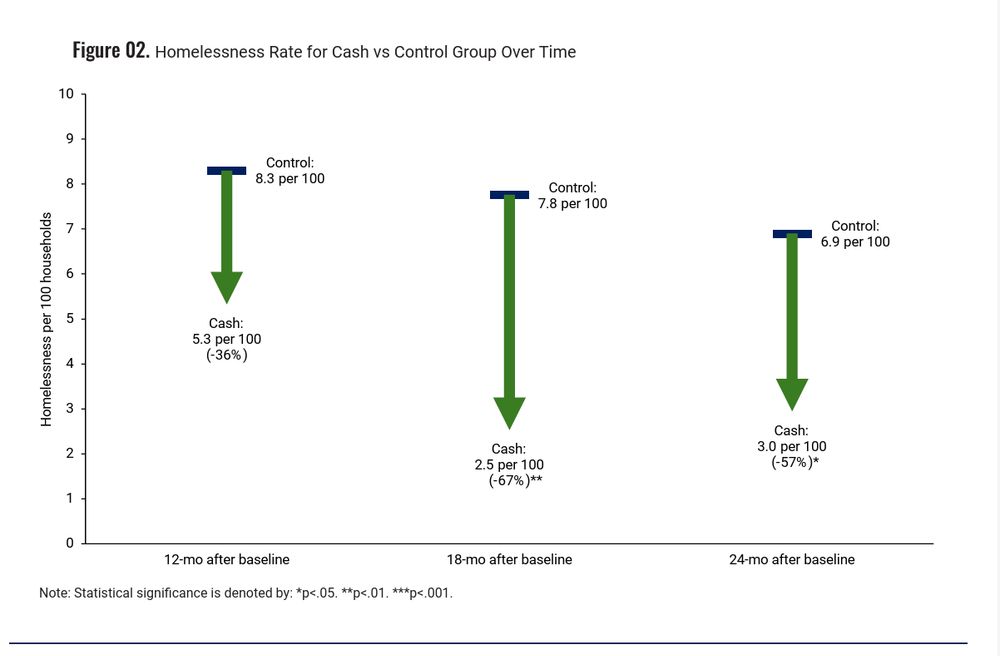
BREAKING: A new experiment in Philly shows cash rental assistance slashed homelessness rates by 57–67%.
21.08.2025 23:35 — 👍 4281 🔁 1197 💬 86 📌 221
Just wrapped up my first CrimFest! I had a fabulous time and met so many terrific young scholars. Many thanks to @cbhessick.bsky.social and @hashtagblevin.bsky.social for organizing, and Penn Carey Law for hosting!
15.07.2025 20:45 — 👍 10 🔁 1 💬 0 📌 1
Just wrapped up my first CrimFest! I had a fabulous time and met so many terrific young scholars. Many thanks to @cbhessick.bsky.social and @hashtagblevin.bsky.social for organizing, and Penn Carey Law for hosting!
15.07.2025 20:45 — 👍 10 🔁 1 💬 0 📌 1
I'm a little late in posting this, but my essay on the Supreme Court's Grants Pass decision last term is now officially out in the Washington University Law Review! If you are interested in the criminalization of homelessness, give it a read!
wustllawreview.org/2025/06/20/g...
I’ll take a look at this! Sounds interesting.
25.05.2025 19:35 — 👍 1 🔁 0 💬 1 📌 0I’ve read an early version of this article and it is very interesting! It makes a great case for systemic mercy for some offenders.
16.05.2025 01:29 — 👍 2 🔁 0 💬 1 📌 0One of the thing that angers me most about unaccountable federal police, including ICE, but also police in general--is every step over the last 30 years to aggrandize their power has been met with warnings that exactly this would happen.
09.05.2025 23:17 — 👍 5139 🔁 1230 💬 75 📌 50It’s important to pay attention to the fact that there are simultaneous efforts to criminalize mask-wearing by citizens and to standardize the wearing of face-obscuring gaiters by people purporting to be law enforcement.
09.05.2025 20:36 — 👍 1876 🔁 705 💬 25 📌 18Hi Matthew! For multiple choice that I may reuse, I do Zoom meetings where I share my screen to go through any missed questions. I’ve never had a student try to take notes (and hopefully they are not surreptitiously taking screenshots), so I don’t worry much about losing control of the material.
08.05.2025 16:56 — 👍 1 🔁 0 💬 0 📌 0
I’m proud to be one of 775 law professors who signed this amicus brief in support of Susman Godfrey.
law.stanford.edu/wp-content/u...
Well deserved!
24.04.2025 13:17 — 👍 0 🔁 0 💬 1 📌 0We can’t wait to have you!
23.04.2025 13:32 — 👍 3 🔁 1 💬 2 📌 0If the U.S. government is going to take the position that, once removed from the United States, folks can’t be brought back, then it sure seems to me that federal courts should be reflexively and categorically barring *all* removals until they’re 100 percent certain that the removals are lawful.
14.04.2025 17:54 — 👍 54389 🔁 13813 💬 1269 📌 59440%-60% of the 775,000 unhoused people in America are employed. We are a nation of the working poor. The working desperate.
13.04.2025 02:31 — 👍 534 🔁 198 💬 5 📌 8Very true!
12.04.2025 15:41 — 👍 1 🔁 0 💬 0 📌 0