
Current explanations for political divides in entertainment media use identify divergent preferences for or evaluations of content. According to the theory of normative social behavior (TNSB), extratextual information such as cues about the audience may also influence exposure intentions due to viewers’ perceptions of ingroup norms. Social media users discuss and form communities around entertainment content while conveying partisan and racial identities. A preregistered experiment exposed Black and White partisans (N = 1,259) to tweets in which a television show was endorsed by co- or out-partisans who were racial in- or out-group members. Exposure intentions were stronger when endorsement came from co-partisans; however, this effect was stronger for White partisans. Treatment effects were mediated by perceived ingroup norms and perceptions of how much of the audience consisted of ingroup members. Implications of multiple identities (i.e., race and partisanship) for the TNSB and the study of partisan entertainment divides are discussed.
🚨New pub alert!🚨 Now available open-access in @hcr-journal.bsky.social, I show how endorsements of entertainment media from ingroup members, particularly inpartisans, affect exposure intentions, with differential effects across racial lines. #PolComm #PoliSci #Politics #MediaStudies 🧵
21.01.2026 18:46 —
👍 17
🔁 12
💬 1
📌 1

Abstract: Recent political communication scholarship finds that groups and identities play a central role in the crises faced by political and media systems globally, particularly in democracies. Yet an individualist orientation in the literature has resulted in key theoretical and conceptual limitations, preventing a broader group-centric theoretical framework from emerging. We synthesize disparate bodies of theory on groups, politics, and communication to offer three basic propositions underlying a group theory of political communication. First, it is the group—not the individual—that is the fundamental organizing unit of social and political life. Second, groups are constituted through communication, which is central to how they define their politics. Third, groups and politics are reciprocally influencing forces through political communication, oriented around power. We offer a framework for studying the role of groups in political communication at the micro, meso, and macro levels, providing a concrete agenda for the study of groups in political communication.
🚨New pub alert!🚨 Now available open-access in @journal-of-comm.bsky.social, we (w/ @dkreiss.bsky.social, @danlane.bsky.social, & @shannimcg.bsky.social) critique political communication's "Identity Turn" and offer instead a foundation for studying #polcomm from a *group* perspective. 🧵
03.12.2025 18:04 —
👍 85
🔁 41
💬 2
📌 4
It's Election Day! The @cccr.bsky.social has been working hard to share research-based evidence about elections in the U.S. & how information relates to attitudes about elections, as well as public-facing work promoting voter turnout & citizen knowledge about the choices they face. Some examples: 1)
05.11.2024 15:19 —
👍 19
🔁 4
💬 1
📌 1
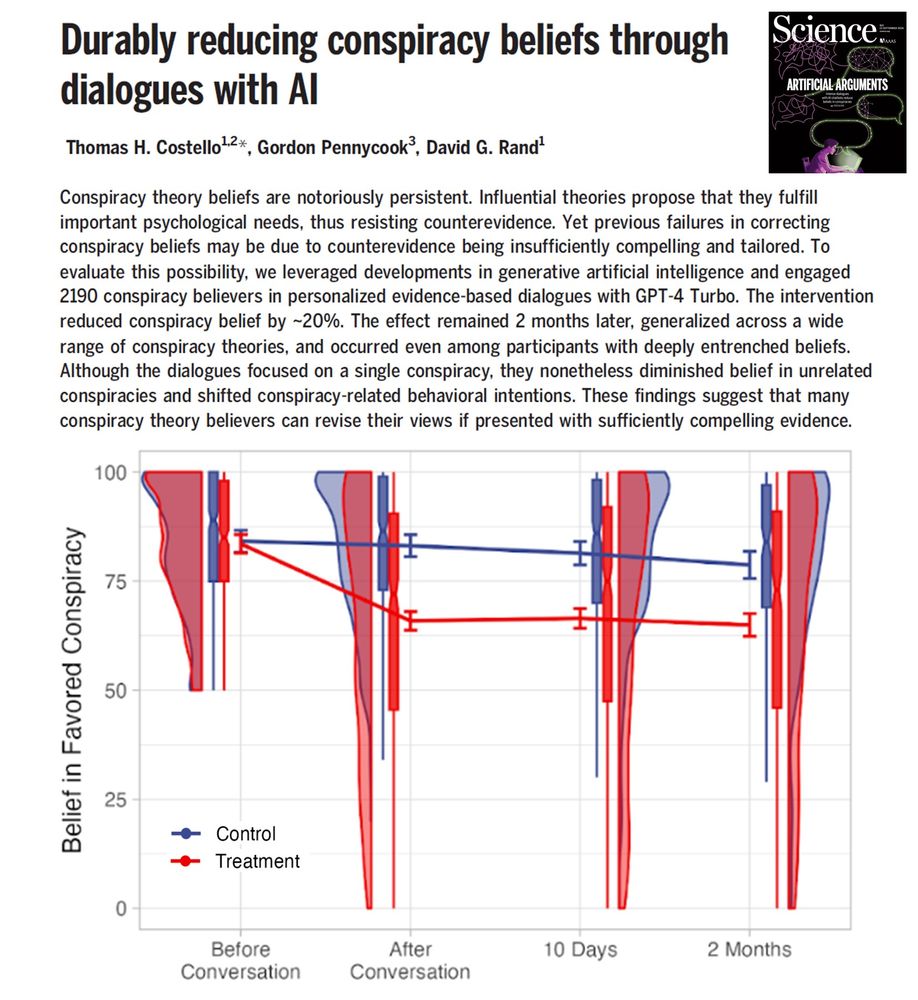
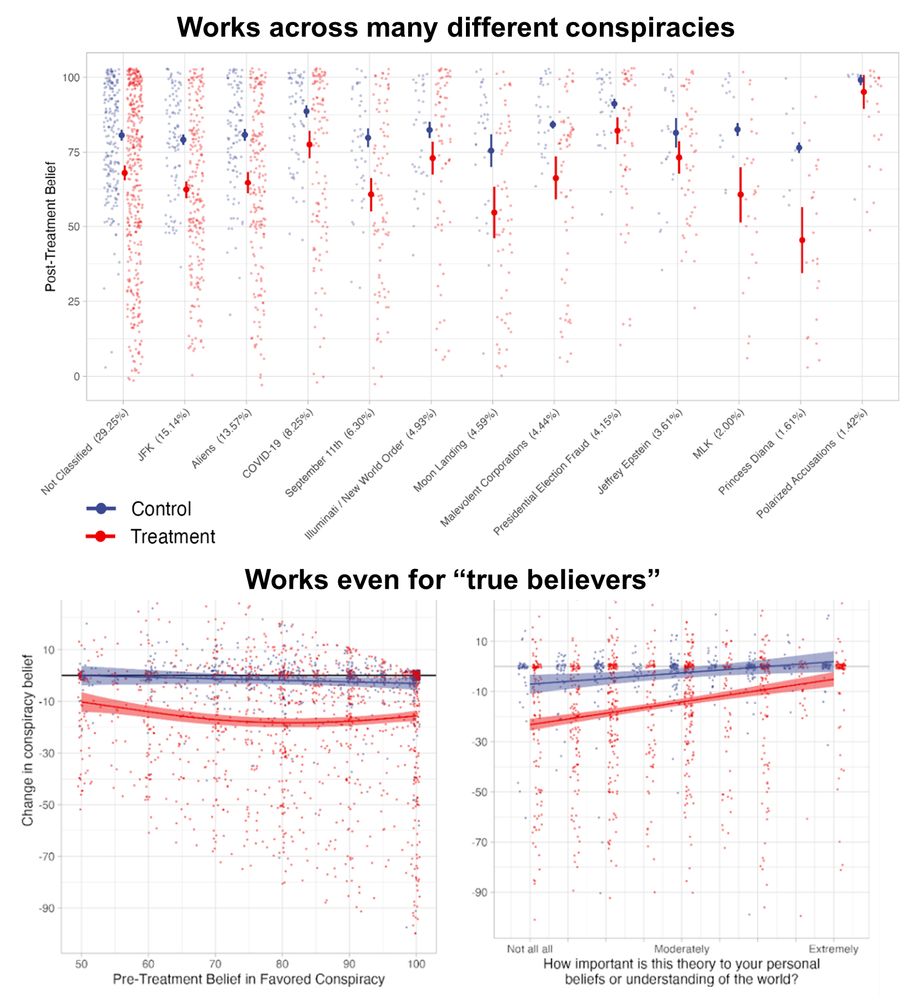
🚨Out in Science!🚨
Conspiracy beliefs famously resist correction, ya?
WRONG: We show brief convos w GPT4 reduce conspiracy beliefs by ~20%!
-Lasts over 2mo
-Works on entrenched beliefs
-Tailored AI response rebuts specific evidence offered by believers
www.science.org/doi/10.1126/...
12.09.2024 18:02 —
👍 173
🔁 69
💬 16
📌 22
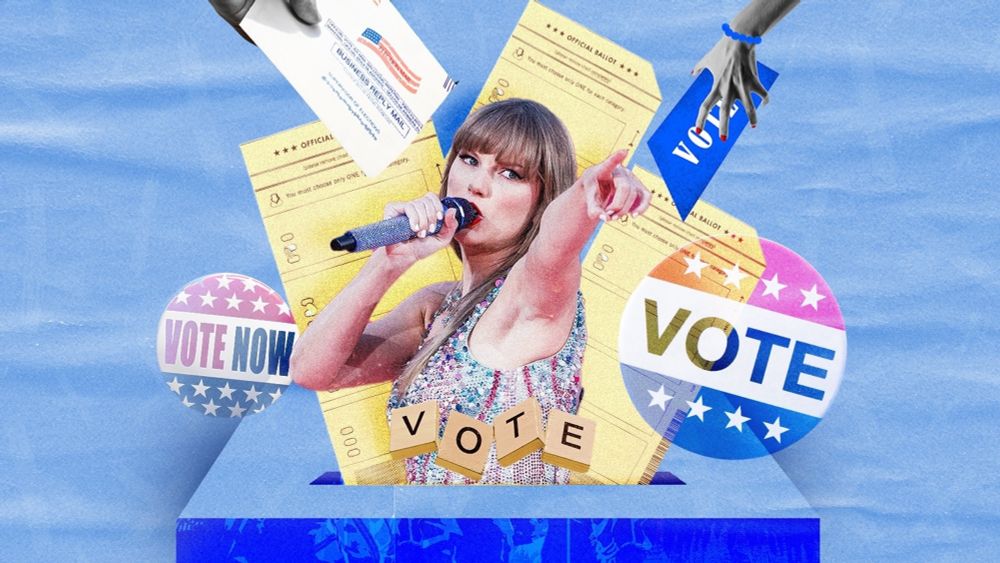
How Taylor Swift’s endorsement of Harris could change the election end game
Taylor Swift’s fans largely lean Democratic, but her support of Kamala Harris could boost engagement.
I wrote about the Swift endorsement, with a political science/communication angle. How does her endorsement matter? And how do celebrity endorsements in 2024 differ from the past? Special thanks to @jessfeez.bsky.social for speaking with me about this!
abcnews.go.com/538/taylor-s...
13.09.2024 01:24 —
👍 50
🔁 17
💬 3
📌 2

Slide for presentation titled: “I Really Go with My Gut”: Political Ontology and How Moderators Identify Political Content in Online Communities

Abstract for “I Really Go with My Gut”: Political Ontology and How Moderators Identify Political Content in Online Communities
Wonder how social media moderators as gatekeepers decide what content is political? Come see my talk today at 2pm in Franklin 12, part of @polcomm.bsky.social session on The Limits of Free Expression on Social Media! #APSA2024
07.09.2024 13:50 —
👍 10
🔁 6
💬 0
📌 4

Jetlagged and up early at #APSA2024?
Or just really eager to get thia conference started?
Come see our 8 o'clock panel on party communications!
05.09.2024 09:54 —
👍 6
🔁 1
💬 1
📌 0
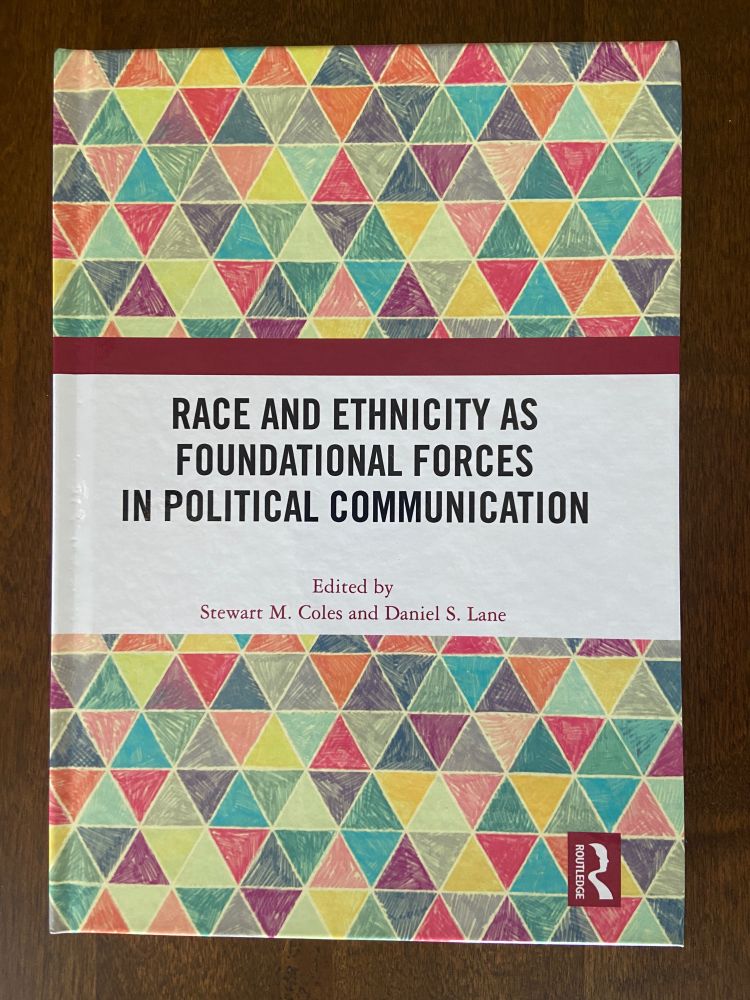
The cover of the book Race and Ethnicity as Foundational Forces in Political Communication, co-edited by Stewart M. Coles and Daniel S. Lane.
Just in time for #APSA2024, here’s Race and Ethnicity as Foundational Forces in Political Communication, co-edited by me and @danlane.bsky.social! Available now at www.routledge.com/Race-and-Eth...
01.09.2024 16:13 —
👍 37
🔁 17
💬 1
📌 0

TikTok, Reddit, and gender gaps in media ecosystems
Gender gaps in media use are a pretty new phenomenon.
For the night crew: I've written my first post for my substack, GENDER GAP. I took a small bite out of a big topic for my first post, writing about the gender gap in social media use. Hope you'll check it out:
open.substack.com/pub/meredith...
19.08.2024 04:32 —
👍 35
🔁 12
💬 1
📌 0

Abstract of paper
In their #JMPSpecialIssue article, Musa Malik, Sungbin Youk (Ewha Womans University, Seoul) and René Weber (@ucsantabarbara.bsky.social) provide initial evidence of the linkages between moral content and the saliency of audiences' expressed moral understanding.
econtent.hogrefe.com/doi/epdf/10....
06.08.2024 22:01 —
👍 2
🔁 2
💬 0
📌 0
Qualtrics Survey | Qualtrics Experience Management
The most powerful, simple and trusted way to gather experience data. Start your journey to experience management and try a free account today.
Heading to #APSA24 in Philly? Call for travel grants from the Information, Technology, and Politics section. Apply thru survey link below. Applications will be evaluated based on need & the section's commitment to increasing diversity & inclusion. Due Aug. 16.
unc.az1.qualtrics.com/jfe/form/SV_...
05.08.2024 15:46 —
👍 7
🔁 8
💬 1
📌 0

Our book "The Power Of Us" is on a huge sale today:
It's only $7.54 for hardcover + $8.96 for the audiobook
If you ever wanted a deal, now is the time to buy it:
www.amazon.com/Power-Harnes...
02.08.2024 18:02 —
👍 5
🔁 1
💬 1
📌 0

Four headlines from The Post: prediction, prognostication, and the show plus reporters writing about themselves. No stakes here, nothing to inform the electorate.
28.07.2024 11:26 —
👍 50
🔁 12
💬 3
📌 3
Happy to be included in this virtual special issue with some other great scholarship on gender and presidential elections!
26.07.2024 12:59 —
👍 19
🔁 7
💬 0
📌 0
Reveal a ggplot incrementally
Provides functions that make it easy to reveal ggplot2 graphs incrementally. The functions take a ggplot2 object and return a list of plots showing data incrementally by panels, layers, groups, the va...
📊When teaching or giving a talk, do you like presenting plots step by step, revealing e.g. one group at a time? This is often useful for walking through complex results.
I made a R package that makes it extremely easy to do this!
ggreveal: Reveal a ggplot incrementally
#rstats #dataviz #ggplot2
24.07.2024 17:49 —
👍 384
🔁 136
💬 33
📌 22
I rarely donate to federal campaigns anymore since the marginal impact of that same money is much higher for downballot campaigns.
I made an exception for Harris today, & this is why
22.07.2024 00:58 —
👍 305
🔁 45
💬 10
📌 6

1. we must say with one voice that political violence is unacceptable and wrong
2. do not amplify unverified reports until we know more
14.07.2024 01:41 —
👍 47
🔁 13
💬 3
📌 1
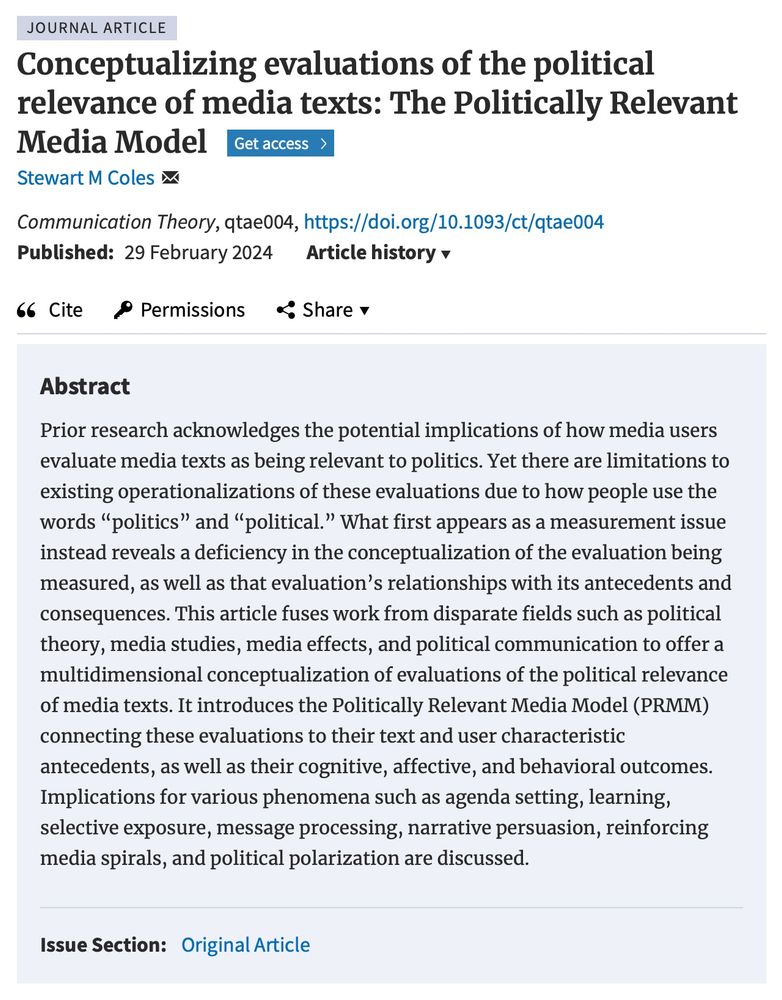
Screenshot of abstract for the article "Conceptualizing evaluations of the political relevance of media texts: The Politically Relevant Media Model," found at: https://doi.org/10.1093/ct/qtae004
🚨New pub alert! 🚨 Out now in Communication Theory, I introduce a model for how media users evaluate media texts as politically relevant, leading to cognitive, affective, and behavioral outcomes bearing a variety of consequences. A 🧵... (1/10)
01.03.2024 15:11 —
👍 44
🔁 11
💬 3
📌 14

New research across 30 countries (N = 15,202) finds that online hostility is driven by a small number of status-seeking individuals.
These folks are more hostile in situations of inequality (both online and offline) as a strategy to gain social status.
osf.io/preprints/ps...
08.02.2024 19:17 —
👍 108
🔁 59
💬 7
📌 12

De Keersmaecker et al find: political MODERATES are more knowledgeable about politics than centrists or extremists. 45 nation study.
That aligns with my personal experience discussing politics with people.
www.nature.com/articles/s41...
04.02.2024 16:04 —
👍 5
🔁 3
💬 0
📌 2
How use of online platforms–like Facebook, Instagram or TikTok–differs among some U.S. demographic groups.
YouTube Facebook Instagram Pinterest TikTok Linkedln WhatsApp Snapchat Twitter(X) Reddit BeReal
Ages
Household income
Education
Urban
Suburban
Rural
Rep/Lean Rep
Dem/Lean Dem
source: Pew
03.02.2024 14:18 —
👍 8
🔁 8
💬 2
📌 1
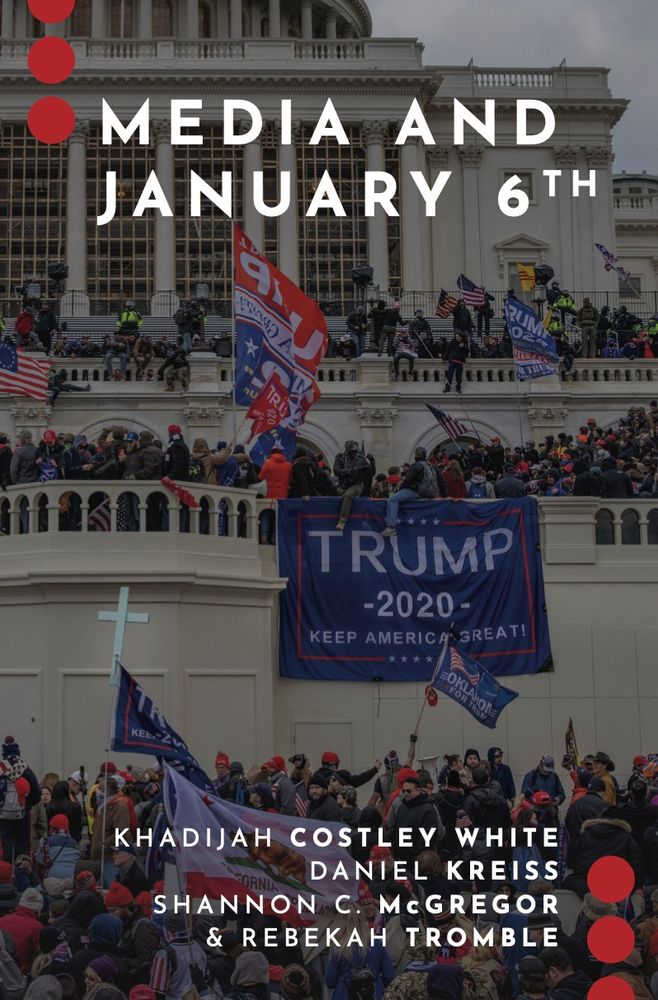
3 yrs ago the insurrectionists sought to violently halt a procedure enshrined in the US Constitution & to overturn a freely and fairly-run election. With Khadijah Costley White, @dkreiss.bsky.social & @rebekahtromble.bsky.social we’ve edited a forthcoming volume - Media & January 6th 1/x
06.01.2024 17:08 —
👍 87
🔁 36
💬 3
📌 0
Join us @APPCPenn as a Civic Science Fellow! Develop research w/ community partners focused on the science of climate communication, action, and resilience w/
@falklab
@PennCSSM
@MichaelEMann
@dalbarra
@TheNetterCenter
@danicosme
& more (detail ). Apply: bit.ly/3TB8zUy
30.12.2023 12:59 —
👍 8
🔁 12
💬 1
📌 2

We have a new paper on "Social Media and Morality" in Annual Reviews www.annualreviews.org/doi/10.1146/...
We argue that social media accelerates existing moral dynamics: amplifying outrage, status seeking, and intergroup conflict as well as social support, prosociality, and collective action.
14.12.2023 19:31 —
👍 20
🔁 9
💬 0
📌 0


