We're excited to announce a second physical location for NeurIPS 2025, in Mexico City, which we hope will address concerns around skyrocketing attendance and difficulties in travel visas that some attendees have experienced in previous years.
Read more in our blog:
blog.neurips.cc/2025/07/16/n...
16.07.2025 22:05 — 👍 45 🔁 21 💬 1 📌 2
Accepted Papers – FOCS 2025
The list of accepted papers at #FOCS2025 is up!
focs.computer.org/2025/accepte...
13.07.2025 22:59 — 👍 37 🔁 15 💬 0 📌 0
Learning distributed representations with efficient SoftMax normalization
Lorenzo Dall'Amico, Enrico Maria Belliardo
Action editor: Manzil Zaheer
https://openreview.net/forum?id=9M4NKMZOPu
#softmax #embeddings #embedding
17.07.2025 04:08 — 👍 4 🔁 1 💬 0 📌 0

The Davis-Kahan sin(θ) theorem bounds the difference between the subspaces spanned by eigenvectors of two symmetric matrices, based on the difference between the matrices. It quantifies how small perturbations in a matrix affect its eigenvectors. www.jstor.org/stable/29495...
31.03.2025 05:00 — 👍 16 🔁 1 💬 0 📌 0

Ringworlds and Dyson spheres can be stable
It's been known since forever that a ringworld orbiting a star isn't stable. But that's just when there's one star. If there are two then stability becomes possible. This is getting closer to what Iain Banks called […]
[Original post on mathstodon.xyz]
27.02.2025 05:34 — 👍 4 🔁 2 💬 0 📌 0

Nonparametric Factor Analysis and Beyond
Nearly all identifiability results in unsupervised representation learning inspired by, e.g., independent component analysis, factor analysis, and causal representation learning, rely on assumptions o...
Interesting identifiability results relevant to disentangling (for nonparametric models w nonlinear generating processes). Identify conditions in which latent variables can be identified up to permutation and component-wise invertible transformations. arxiv.org/abs/2503.16865
24.03.2025 02:51 — 👍 4 🔁 1 💬 1 📌 0

First page of the instagram post
A new #CosmicDistanceLadder post on why lunar and solar eclipses tend to come in pairs (for instance, the solar eclipse next week is paired with the lunar eclipse from last week). www.instagram.com/p/DHkS3EcA40L
24.03.2025 04:42 — 👍 29 🔁 5 💬 1 📌 0
![LaTeX source: https://pastebin.com/BeABGVqE
Let $\pi(n)$ denote the number of prime numbers $\le n$.
The prime number theorem states that
\begin{equation}
\lim_{n \to \infty} \frac{~\pi(n)~}{~\frac{n}{\log n}~} = 1. \label{eq:primes}
\end{equation}
Here's a weaker, one-sided (but non-asymptotic) result with a simpler proof:
\begin{theorem}\label{thm:primes}
For all $n \in \mathbb{N}$, we have $\pi(n) \ge \frac{n-2}{\log_2 n}$.
\end{theorem}
\begin{lemma}\label{lem:lcm}
Define $\mathsf{lcm}(n) := \min\{m \in \mathbb{N} : \forall k \in [n] ~ \frac{m}{k} \in \mathbb{N}\}$ to be the least common multiple of $[n] := \{1,2,\cdots,n\}$.
Then $\mathsf{lcm}(n) \ge 2^{n-2}$ for all $n \in \mathbb{N}$.
\end{lemma}](https://cdn.bsky.app/img/feed_thumbnail/plain/did:plc:thfnaqgktdwqbm42radc322i/bafkreiaa4qeqfxuqo2iu4wt7rwqrkpmnm2rwiqlohwiuavp7mau3ljnrui@jpeg)
LaTeX source: https://pastebin.com/BeABGVqE
Let $\pi(n)$ denote the number of prime numbers $\le n$.
The prime number theorem states that
\begin{equation}
\lim_{n \to \infty} \frac{~\pi(n)~}{~\frac{n}{\log n}~} = 1. \label{eq:primes}
\end{equation}
Here's a weaker, one-sided (but non-asymptotic) result with a simpler proof:
\begin{theorem}\label{thm:primes}
For all $n \in \mathbb{N}$, we have $\pi(n) \ge \frac{n-2}{\log_2 n}$.
\end{theorem}
\begin{lemma}\label{lem:lcm}
Define $\mathsf{lcm}(n) := \min\{m \in \mathbb{N} : \forall k \in [n] ~ \frac{m}{k} \in \mathbb{N}\}$ to be the least common multiple of $[n] := \{1,2,\cdots,n\}$.
Then $\mathsf{lcm}(n) \ge 2^{n-2}$ for all $n \in \mathbb{N}$.
\end{lemma}
Prime numbers are plentiful.
Here's a simple proof that the number of primes ≤n is ≥Ω(n / log n), which is a (small) constant factor from optimal.
08.03.2025 18:45 — 👍 33 🔁 1 💬 5 📌 1

2) They find that GRPO is biased.
- The length normalization prefers shorter correct answers, and longer incorrect answers. -> length bias
- The std normalization prefers too easy or too hard questions over average questions. -> difficulty bias
They introduce Dr. GRPO to remove above biases.
22.03.2025 02:20 — 👍 12 🔁 1 💬 1 📌 0

Understanding R1-Zero-Like Training: A Critical Perspective
1) There are biases in the base model pretraining: self-reflection behaviors, math-solving abilities are already infused before RL reinforces them by reward signals.
22.03.2025 02:20 — 👍 16 🔁 1 💬 1 📌 0

RWC 2025
Real World Crypto Symposium
Looking forward to attending Real-World Crypto '25 rwc.iacr.org/2025/ next week. I should be there from Tuesday afternoon to Friday evening.
I will present our Tor Directory Authorities (zhtluo.com/paper/Attack...) work on Friday afternoon.
22.03.2025 02:02 — 👍 5 🔁 1 💬 0 📌 0
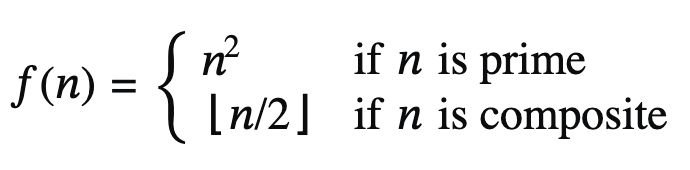
A Collatz-like function f(n) that bifurcates on the primes, I posed a decade ago. It remains unknown if it always falls into a 2/4 cycle. For n=229, f(n) shoots off to 10^{376} before returning to that cycle after 6309 iterations. mathoverflow.net/questions/20...
#MathSky
21.03.2025 22:45 — 👍 21 🔁 5 💬 1 📌 0
QEC25
Only one week left to submit a contributed talk to QEC 25!
qec25.yalepages.org
August 11 - 15, 2025, hosted at Yale University.
This promises to be the best QEC yet!
Please repost!
21.03.2025 22:54 — 👍 23 🔁 11 💬 1 📌 0
ComfyUI now natively supports Hunyuan3D 2.0 and Hunyuan3D 2.0 MV (Multi-View) model series!
3 workflows to get started:
🔹Hunyuan3D-2 mv: multi-view to 3D
🔹Hunyuan3D-2 mv Turbo: accelerated multi-view
🔹Hunyuan3D-2: single image to 3D
22.03.2025 18:03 — 👍 10 🔁 1 💬 0 📌 0
![A commutative diagram showing
* [0,1]^3, meaning the product of the unit interval with itself three times
* its three projections into [0,1]^2
* inclusions of the letters G, E, and B into each of those unit squares
* the universal property of the maximal subset of [0,1]^3 such that its three projections lie inside the letters G, E and B](https://cdn.bsky.app/img/feed_thumbnail/plain/did:plc:xpl57er4zbahuoaqis6qatin/bafkreigqvhevsxcmgdqgo472unhcmolhqlaaqcsd3yhtif5poqaejigtp4@jpeg)
A commutative diagram showing
* [0,1]^3, meaning the product of the unit interval with itself three times
* its three projections into [0,1]^2
* inclusions of the letters G, E, and B into each of those unit squares
* the universal property of the maximal subset of [0,1]^3 such that its three projections lie inside the letters G, E and B
I think it's a limit (a slightly generalised pullback), the universal thing that completes this diagram
20.03.2025 17:13 — 👍 2 🔁 2 💬 1 📌 0
![From p.1 of https://math.jhu.edu/~eriehl/context.pdf:
In 1941, Saunders Mac Lane gave a lecture at the University of Michigan in which
he computed for a prime p that Ext(Z[
1
p
]/Z, Z) � Zp, the group of p-adic integers, where
Z[
1
p
]/Z is the Prüfer p-group. When he explained this result to Samuel Eilenberg, who had
missed the lecture, Eilenberg recognized the calculation as the homology of the 3-sphere
complement of the p-adic solenoid, a space formed as the infinite intersection of a sequence
of solid tori, each wound around p times inside the preceding torus. In teasing apart this
connection, the pair of them discovered what is now known as the universal coefficient
theorem in algebraic topology, which relates the homology H∗ and cohomology groups H
∗
associated to a space X via a group extension [ML05]:
(1.0.1) 0 → Ext(Hn−1(X),G) → H
n
(X,G) → Hom(Hn(X),G) → 0 .
To obtain a more general form of the universal coefficient theorem, Eilenberg and Mac
Lane needed to show that certain isomorphisms of abelian groups expressed by this group
extension extend to spaces constructed via direct or inverse limits. And indeed this is the
case, precisely because the homomorphisms in the diagram (1.0.1) are natural with respect
to continuous maps between topological spaces.](https://cdn.bsky.app/img/feed_thumbnail/plain/did:plc:ysaiuavm2f7d4th42c4valhw/bafkreidx34fck7zb2vcc6roymvmpf5pjxf3dplzd6idmys7z5m4c5eyq7m@jpeg)
From p.1 of https://math.jhu.edu/~eriehl/context.pdf:
In 1941, Saunders Mac Lane gave a lecture at the University of Michigan in which
he computed for a prime p that Ext(Z[
1
p
]/Z, Z) � Zp, the group of p-adic integers, where
Z[
1
p
]/Z is the Prüfer p-group. When he explained this result to Samuel Eilenberg, who had
missed the lecture, Eilenberg recognized the calculation as the homology of the 3-sphere
complement of the p-adic solenoid, a space formed as the infinite intersection of a sequence
of solid tori, each wound around p times inside the preceding torus. In teasing apart this
connection, the pair of them discovered what is now known as the universal coefficient
theorem in algebraic topology, which relates the homology H∗ and cohomology groups H
∗
associated to a space X via a group extension [ML05]:
(1.0.1) 0 → Ext(Hn−1(X),G) → H
n
(X,G) → Hom(Hn(X),G) → 0 .
To obtain a more general form of the universal coefficient theorem, Eilenberg and Mac
Lane needed to show that certain isomorphisms of abelian groups expressed by this group
extension extend to spaces constructed via direct or inverse limits. And indeed this is the
case, precisely because the homomorphisms in the diagram (1.0.1) are natural with respect
to continuous maps between topological spaces.
So Mac Lane and Eilenberg invented category theory so they could prove the universal coefficient theorem, which they discovered because Saunders showed an algebra computation to Sammy and Sammy went "Huh. That's how I compute the complement of the p-adic solenoid inside a 3-sphere."
21.03.2025 03:46 — 👍 36 🔁 7 💬 3 📌 0
Stability-Aware Training of Machine Learning Force Fields with Differentiable Boltzmann Estimators
Sanjeev Raja, Ishan Amin, Fabian Pedregosa, Aditi S. Krishnapriyan
Action editor: Stratis Gavves
https://openreview.net/forum?id=ZckLMG00sO
#boltzmann #molecular #molecules
23.03.2025 04:08 — 👍 3 🔁 1 💬 0 📌 0
Researcher in applied category theory at Hertfordshire, UK, formerly at ELSI, Japan. Maths, science and random creative projects.
Numbers and shapes at Reed College. Mathematician, parent, spouse, runner, 𝔣𝔯𝔞𝔨𝔱𝔲𝔯 enthusiast. He or they.
☆ Cybersecurity reporter
★ Newsletters at Risky Business
#infosec #cybersecurity
https://risky.biz
Doing maths research (geom. analysis, metric geometry, large point configs., opt. transport, etc) since ~2010, deep learning and applied research since ~2020.
https://sites.google.com/site/mircpetrache/home
The Department of Mathematics at MIT is a world leader in pure and applied mathematical research and education.
CNRS Researcher in maths & computer science. My (current) focus is machine learning and optimization. I live & work in Nice 🇫🇷
website: https://samuelvaiter.com
reverse engineering, cryptography, exploits, hardware, file formats, and generally giving computers a hard time
Fedi: @retr0id@retr0.id
Macroblog: https://www.da.vidbuchanan.co.uk/blog/
Recreational Programming:
- http://twitch.tv/tsoding
- https://www.youtube.com/@Tsoding
- https://www.youtube.com/@TsodingDaily
⠀⢀⣰⣾⡿⣶⣿⠿⣶
⢠⣼⣿⣿⣷⣿⣿⣶⠉
⢸⣿⣿⣿⣿⣿⣿⠀⠀
Parlar ja és exagerar • Àlgebra • @uv.es
http://www.uv.es/coslloen/
Quantum computing educator and researcher. I like math, computer games, and dub techno.
I teach computer science https://cs.uchicago.edu/~timng/
Assistant professor at University of Michigan. Theoretical computer science.
Columbia CS professor. Head of Research at a16z crypto. Research on algorithms, game theory, mechanism design, blockchains/web3. Author of Algorithms Illuminated, Twenty Lectures on Algorithmic Game Theory, and Beyond the Worst-Case Analysis of Algorithms.
Mathematician, writer, Cornell professor. All cards on the table, face up, all the time. www.stevenstrogatz.com
Associate Professor, National University of Singapore. Working in information theory, machine learning, and statistics.
Algorithms for Toddlers (https://youtu.be/nnLOi3ia210) | Algorithms for Teenagers (https://tinyurl.com/2cnp39cf) | Algorithms for Grown Ups (http://dblp.org/pid/11/10308)
Super nerd here to spread the joy of learning.
📖 Publisher @quantabooks.org at @simonsfoundation.org
⚛️ Founding EIC @quantamagazine.bsky.social
💼 Prev @nytimes.com, CASW, CUNY J-School
📚 Books https://mitpress.mit.edu/author/thomas-lin-2820/
🚴🏼🎾♟️
CS Professor at UMass Amherst. Theoretical computer science, numerical linear algebra, machine learning.
Associate Professor@The Institute of Statistical Mathematics, working in ML theory
https://hermite.jp/