Grant Stewart's Avatar

Grant Stewart

@profstewartlab.bsky.social

Group leader at the University of Birmingham interested in rare diseases caused by inherited defects in DNA repair and replication. Amateur geologist/palaeontologist and shark enthusiast.

699 Followers  |  263 Following  |  15 Posts  |  Joined: 27.10.2023
Posts Following

Posts by Grant Stewart (@profstewartlab.bsky.social)

Client Challenge

We are excited to share that our latest work from the lab aimed at understanding how the tRNA nuclease SLFN11 is activated in response to DNA damage and replication stress has just been published in @natcellbio.nature.com!

Open access link: www.nature.com/articles/s41...

(1/9)

09.01.2026 14:42 β€” πŸ‘ 36    πŸ” 12    πŸ’¬ 1    πŸ“Œ 2
Preview
IFI16 senses and protects stalled replication forks Gamble et al. demonstrate that detection of stalled replication forks by the innate immune sensor IFI16 induces an early STING-dependent pro-inflammatory cytokine response independently of cGAS and DNA damage. Furthermore, IFI16 exhibits dual functionality during replication stress by protecting stalled, remodeled replication forks from nucleolytic degradation.

Online Now: IFI16 senses and protects stalled replication forks Online now:

08.01.2026 23:57 β€” πŸ‘ 16    πŸ” 9    πŸ’¬ 0    πŸ“Œ 0

Likewise! Happy holidays.

23.12.2025 09:05 β€” πŸ‘ 1    πŸ” 0    πŸ’¬ 1    πŸ“Œ 0
Preview
Loss of CTLH component MAEA impairs DNA repair and replication and leads to developmental delay - EMBO Molecular Medicine Ubiquitin E3 ligases play crucial roles in the DNA damage response (DDR) by modulating the turnover, localization, activation, and interactions of DDR and DNA replication proteins. We performed a CRIS...

Awesome collaboration with @SPJacksonGroup, @drjhujh.bsky.social, Chris Carney and Soren Hough, understanding how inherited mutations in the MEAE E3 ubiquitin ligase causes disease by compromising HR-dependent replication fork protection/restart. link.springer.com/article/10.1...

19.12.2025 17:17 β€” πŸ‘ 6    πŸ” 1    πŸ’¬ 1    πŸ“Œ 1
a model for TIMELESS positions at the active fork: one complex sits at the leading edge of the fork, while the other one is on the lagging strand ssDNA/RPA, between the Okazaki fragments

a model for TIMELESS positions at the active fork: one complex sits at the leading edge of the fork, while the other one is on the lagging strand ssDNA/RPA, between the Okazaki fragments

Ever wondered how TIMELESS/TIPIN can sit at the leading edge of the replication fork regulating its speed, but also bind polymerases and ssDNA/RPA in replication stress? We have an idea how it might work! Check out our new preprint, any feedback is highly appreciated!
www.biorxiv.org/content/10.6...

18.12.2025 15:03 β€” πŸ‘ 24    πŸ” 11    πŸ’¬ 0    πŸ“Œ 0
Preview
How DNA secondary structures drive replication fork instability DNA secondary structures, such as hairpins, cruciforms, triplexes, G-quadruplexes and iMotifs, are common, dynamic features that replication forks rou…

Our @costerlab.bsky.social review is out!

It’s a great read on the impact of DNA secondary structures on eukaryotic replication fork progression - a totally unbiased opinion, of course!

www.sciencedirect.com/science/arti...

@adityasethi.bsky.social @billiedelpino.bsky.social

10.12.2025 11:53 β€” πŸ‘ 16    πŸ” 8    πŸ’¬ 0    πŸ“Œ 1
Preview
Cohesin drives chromatin scanning during the RAD51-mediated homology search Cohesin folds genomes into chromatin loops, the roles of which are under debate. We found that double-strand breaks (DSBs) induce de novo formation of chromatin loops in human cells, with the loop bas...

Thrilled to share that my postdoc research is published today in @science.org! We found that DNA repair uses cohesin complexes to build new chromatin loops that guide the homology search and boost accurate repair! 1/n
www.science.org/doi/10.1126/...

04.12.2025 21:50 β€” πŸ‘ 133    πŸ” 41    πŸ’¬ 3    πŸ“Œ 4
Preview
Senior Research Technician at University of Birmingham An academic position as a Senior Research Technician is being advertised on jobs.ac.uk. Click now to find more details and explore additional academic job opportunities.

Interested in inherited chromosomal instability syndromes and DNA repair? We are looking for an enthusiastic person to join the Stewart lab at the University of Birmingham as a senior technician. Please checkout the job advert: www.jobs.ac.uk/job/DPH515/senior-research-technician

06.11.2025 08:34 β€” πŸ‘ 8    πŸ” 10    πŸ’¬ 0    πŸ“Œ 0
Post image

Among the anti-recombinases, FIGNL1 rules them all. So much that inactivating it brings BRCA2-deficient cells to life. Who is responsible for RAD51 loading without BRCA2/FIGNL1, check out the paper to find out! Great collaboration with @raychaudhurilab.bsky.social

www.science.org/doi/10.1126/...

30.10.2025 20:41 β€” πŸ‘ 53    πŸ” 22    πŸ’¬ 6    πŸ“Œ 1

Happy to have contributed to this interesting study from penengolab.bsky.social! another interesting example of how chromatin modifications and their readers orchestrate replication fork plasticity and protection πŸ‘πŸ‘‡

30.10.2025 13:19 β€” πŸ‘ 11    πŸ” 4    πŸ’¬ 0    πŸ“Œ 0
Preview
Transcriptional repression facilitates RNA:DNA hybrid accumulation at DNA double-strand breaks | Nature Cell Biology RNA:DNA hybrids accumulate at DNA double-strand breaks (DSBs) and were shown to regulate homologous recombination repair. The mechanism responsible for the formation of these non-canonical RNA:DNA structures remains unclear although they were proposed to arise consequently to RNA polymerase II or III loading followed by DSB-induced de novo transcription at the break site. Here, we found no evidence of RNA polymerase recruitment at DSBs. Rather, strand-specific R-loop mapping revealed that RNA:DNA hybrids are mainly generated at DSBs occurring in transcribing loci, from the hybridization of pre-existing RNA to the 3β€² overhang left by DNA end resection. We further identified the H3K4me3 reader spindlin 1 and the transcriptional regulator PAF1 as factors promoting RNA:DNA hybrid accumulation at DSBs, through their role in mediating transcriptional repression in cis to DSBs. Altogether, we provide evidence that RNA:DNA hybrids accumulate at DSBs occurring in transcribing loci as a result o

RNA:DNA hybrids increase at DSBs, crucial for repair, but form without RNA polymerase recruitment. Discover insights on hybrid accumulation. PMID:40447771, Nat Cell Biol 2025, @NatureCellBio https://doi.org/10.1038/s41556-025-01669-y #Medsky #Pharmsky #RNA #ASHG #ESHG πŸ§ͺ

30.10.2025 06:20 β€” πŸ‘ 12    πŸ” 7    πŸ’¬ 0    πŸ“Œ 0
Post image

What specific targets & roles are there for all distinct polyubiquitin chain types?
Niels Mailand, Robert Shearer et al profile a panel of #ubiquitin replacement cell lines, implicating K29 chains in chromatin regulation via SUV39H1 destabilization
www.embopress.org/doi/full/10....

27.10.2025 11:51 β€” πŸ‘ 12    πŸ” 6    πŸ’¬ 0    πŸ“Œ 0
Post image

See our paper β€œMechanism of trinucleotide repeat expansion by MutSΞ²-MutLΞ³ and contraction by FAN1”. Using biochemistry, we show how DNA incisions by the MutLΞ³ nuclease can lead to expansions, and how expansion is prevented by FAN1. Well done Issam and Valentina!

www.nature.com/articles/s41...

27.10.2025 13:12 β€” πŸ‘ 39    πŸ” 12    πŸ’¬ 1    πŸ“Œ 1
Preview
A nuclease-driven mechanism of post-replicative ssDNA gap suppression. The persistence of post-replicative ssDNA gaps following PRIMPOL-mediated replication repriming is linked to chemosensitivity, and in all models reported to date the nuclease MRE11 has been implicated...

New preprint from the lab for any DNA repair or replication stress geeks out there!

www.biorxiv.org/content/10.1...

22.10.2025 18:56 β€” πŸ‘ 21    πŸ” 6    πŸ’¬ 3    πŸ“Œ 1
Preview
DDIAS is a single-stranded DNA-binding effector of the TOPBP1-CIP2A complex in mitosis DNA double-strand breaks and unresolved DNA replication intermediates are particularly dangerous during mitosis. Paradoxically, cells inactivate canonical DNA repair mechanisms during chromosome segre...

Delighted to share our lab's first preprint identifying DDIAS as a mitotic DNA repair protein. Great collaboration with the @andrewblackford.bsky.social, @tcr-miller.bsky.social and @profstewartlab.bsky.social labs, and many more. Read the paper here: www.biorxiv.org/content/10.1...

10.09.2025 19:01 β€” πŸ‘ 28    πŸ” 6    πŸ’¬ 0    πŸ“Œ 0
The DNA replication machinery transmits dual signals to prevent unscheduled licensing and execution of centrosome duplication - Nature Communications Cell division requires strict control of DNA replication and centrosome duplication. Here, the authors reveal that DNA replication machinery transmits dual signals to control proper timing of centroso...

Great work by the Kitagawa lab about DONSON regulating centrosome duplication is finally out in Nature Comms

www.nature.com/articles/s41...

08.09.2025 10:40 β€” πŸ‘ 2    πŸ” 0    πŸ’¬ 1    πŸ“Œ 0
Preview
The RING finger E3 ligase RNF25 protects DNA replication forks independently of its canonical roles in ubiquitin signaling - Nature Communications DNA replication stress is a driver of genome instability. Here, the authors identify a role of the E3 ligase RNF25 in promoting replication stress tolerance. Mechanistically, RNF25 recruits the fork p...

Great paper by the Vaziri lab about the role of RNF25 regulating the DDR independently of its E3 ligase activity!

www.nature.com/articles/s41...

07.08.2025 16:46 β€” πŸ‘ 3    πŸ” 4    πŸ’¬ 0    πŸ“Œ 0
Preview
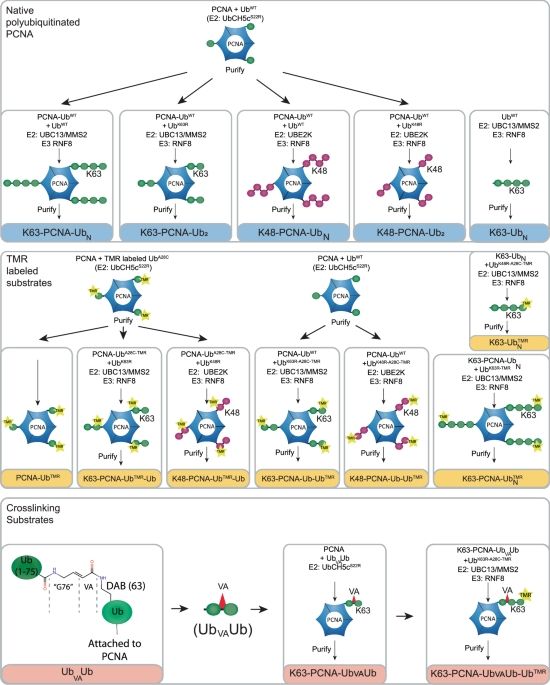
USP1/UAF1 targets polyubiquitinated PCNA with an exo-cleavage mechanism that can temporarily enrich for monoubiquitinated PCNA - Nature Communications DNA damage tolerance is regulated by ubiquitination of PCNA. Here, the authors present kinetic and structural studies showing that USP1/UAF1 prefers trimming K63- and K48-ubiquitin chains down over cl...

I'm very proud that our paper, and with that the main project of my PhD, has just been published by @natcomms.nature.com! πŸŽ‰
Here, we reveal the unique, molecular mechanism by which USP1/UAF1 cleaves ubiquitin chains on PCNA, which may direct DNA damage tolerance.

doi.org/10.1038/s414...

31.07.2025 11:53 β€” πŸ‘ 13    πŸ” 4    πŸ’¬ 0    πŸ“Œ 1

Well deserved!

01.08.2025 09:33 β€” πŸ‘ 1    πŸ” 0    πŸ’¬ 1    πŸ“Œ 0

Well done Ivan. Beautiful work!

11.07.2025 18:16 β€” πŸ‘ 0    πŸ” 0    πŸ’¬ 0    πŸ“Œ 0
Preview
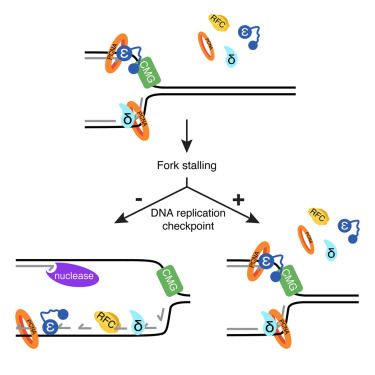
The DNA replication checkpoint limits Okazaki fragment accumulation to protect and restart stalled forks Canal et al. used biochemical reconstitution of DNA replication to show that continued Okazaki fragment synthesis after nucleotide exhaustion depletes PCNA, RFC, and DNA polymerases Ξ΅ and Ξ΄, deprotecting replication forks and impairing restart. By limiting Okazaki fragment generation and factor depletion, the replication checkpoint protects forks, allows restart, and promotes survival.

Online Now: The DNA replication checkpoint limits Okazaki fragment accumulation to protect and restart stalled forks Online now:

26.06.2025 22:57 β€” πŸ‘ 8    πŸ” 4    πŸ’¬ 0    πŸ“Œ 0
Home - Birmingham Centre for Genome Biology 2025 BCGB 2025, Birmingham Centre for Genome Biology Conference 2025

Birmingham Centre for Genome Biology 2025 Anniversary Conference, 11-12 September! This symposium covers DDR and gene regulation. Register here:
uobevents.eventsair.com/birmingham-c...

24.06.2025 16:20 β€” πŸ‘ 8    πŸ” 7    πŸ’¬ 0    πŸ“Œ 0
Preview
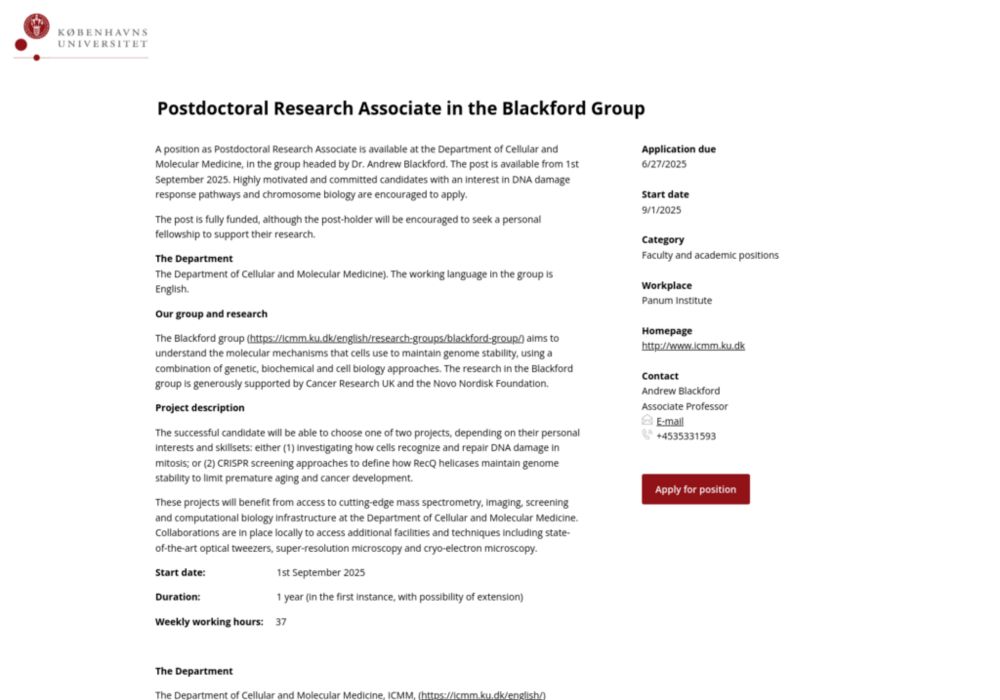
Postdoctoral Research Associate in the Blackford Group A position as Postdoctoral Research Associate is available at the Department of Cellular and Molecular Medicine, in the group headed by Dr. Andrew Blackford. Th

We’re #hiring, please share! A fully funded #postdoc position is available in my lab to work on DNA damage response mechanisms.

Please get in touch with your CV if you are interested; closing date: 27th June 2025.

More details here: candidate.hr-manager.net/ApplicationI...

29.05.2025 11:26 β€” πŸ‘ 23    πŸ” 35    πŸ’¬ 0    πŸ“Œ 0
Preview
USP37 prevents premature disassembly of stressed replisomes by TRAIP - Nature Communications The replicative helicase CMG is targeted for removal or proteolysis by the E3 ubiquitin ligase TRAIP. This study describes how the de-ubiquitylating enzyme USP37 protects genome stability by preventin...

Awesome paper from the Steve Jackson and Johannes Walter labs about USP37 and TRAIP regulating the replication response to topoisomerase inhibitors. Glad to have been a part of it. www.nature.com/articles/s41...

18.06.2025 19:28 β€” πŸ‘ 9    πŸ” 1    πŸ’¬ 0    πŸ“Œ 0

What a legend. Such a shame.

12.06.2025 16:16 β€” πŸ‘ 0    πŸ” 0    πŸ’¬ 0    πŸ“Œ 0
Preview
BRCA2 C-terminal clamp restructures RAD51 dimers to bind B-DNA for replication fork stability With detailed structural and molecular analyses, Longo et al. find that the BRCA2 C-terminal TR2, which is a critical cancer therapy resistance factor, reshapes the RAD51 dimer for B-DNA binding that is incompatible with double-strand break repair interactions but activates it in DNA replication fork protection.

BRCA2 C-terminal clamp restructures RAD51 dimers to bind B-DNA for replication fork stability

09.06.2025 22:57 β€” πŸ‘ 1    πŸ” 2    πŸ’¬ 0    πŸ“Œ 0
USP37 protects mammalian cells during DNA replication stress by counteracting CUL2LRR1 and TRAIP Villa et al. show that the USP37 deubiquitylase is tethered to the CMG helicase at DNA replication forks in mammalian cells. USP37 protects cells during DNA replication stress by counteracting two replisome-coupled ubiquitin ligases. USP37 counteracts CUL2LRR1 during DNA synthesis defects and opposes TRAIP in response to topological stress.

USP37 protects mammalian cells during DNA replication stress by counteracting CUL2LRR1 and TRAIP

27.05.2025 19:50 β€” πŸ‘ 0    πŸ” 1    πŸ’¬ 0    πŸ“Œ 0

We are looking to recruit three posts at the @crick.ac.uk in structural biology, cell biology, and pharmacology to join a 20+ strong multidisciplinary team focused on delivering the first precision medicines for the treatment of ALT cancers. Interested? Please check out the advertised jobs below:

27.05.2025 21:52 β€” πŸ‘ 3    πŸ” 4    πŸ’¬ 1    πŸ“Œ 0
Preview
ARID1A stabilises non-homologous end joining factors at DNA breaks induced by the G4 ligand pyridostatin ARID1A is a subunit of the BAF chromatin remodelling complex that is frequently mutated in cancer. It is challenging to predict how ARID1A loss impacts cancer therapy response because it participates ...

New preprint from the lab on ARID1A, G quadruplexes, and repair:
www.biorxiv.org/content/10.1...

27.05.2025 17:31 β€” πŸ‘ 20    πŸ” 10    πŸ’¬ 0    πŸ“Œ 1
Preview
Parp1 deletion rescues cerebellar hypotrophy in xrcc1 mutant zebrafish - Scientific Reports Scientific Reports - Parp1 deletion rescues cerebellar hypotrophy in xrcc1 mutant zebrafish

Loss of XRCC1 disrupts cerebellar development in zebrafish due to toxic PARP1 accumulation. Strikingly, parp1 knockdown rescues the XRCC1 phenotype, supporting PARP1 inhibition as a potential therapy in recessive XRCC1-related neurodegenerative disorders with ataxia. www.nature.com/articles/s41...

18.05.2025 16:23 β€” πŸ‘ 10    πŸ” 5    πŸ’¬ 0    πŸ“Œ 0