Sensory sharpening and semantic prediction errors unify competing models of predictive processing in human speech comprehension
Speech comprehension relies on predictive mechanisms, but models disagree on whether the brain prioritizes expected or unexpected information. This study shows that sharpening of sensory representatio...
Same sound, different perception: Do expectations change what you hear?👂🧠
We paired faces w topics and played the same ambiguous speech w different faces. The brain sharpened sensory signals toward predictions and showed gated prediction errors at higher levels.
Read @plosbiology.org. Blueprint👇
12.01.2026 10:34 —
👍 43
🔁 13
💬 1
📌 1

Synaptic input variation increases firing rates at the expense of temporal precision. Left: GBC identification based on morphological features. Top: Low-magnification image of cochlear nucleus parasagittal slice containing a biocytin-filled GBC near the AN root (arrow). AVCN, anteroventral cochlear nucleus; PVCN, posteroventral cochlear nucleus; DCN, dorsal cochlear nucleus; AN, auditory nerve. Bottom: High-magnification image of the same GBC, displaying its characteristic round soma and short dendrites. Right: Schematic of the experimental paradigm: Acoustic stimuli (top) were processed by an auditory nerve model to generate spike trains for 10 AN fibers (ANF1-10). These spike trains were convolved with the EPSC waveform to generate conductance templates with varying synaptic strengths, ranging from “no variation” (blue) to “high variation” (orange), and injected into GBCs.
In the #cochlear nucleus, the size of inputs from #auditory #nerve fibers is variable. This study shows that variable input strength enhances rate coding at the expense of temporal precision, potentially creating diverse information streams for #sensory encoding @plosbiology.org 🧪 plos.io/3YCaLMU
14.01.2026 08:55 —
👍 6
🔁 1
💬 0
📌 0
It's been great working with the
@your.neighborhoodscientist.org
team on this article!
YNS aim to improve public understanding of science, science policy and scientists, by fostering community conversations.
If you can, help them out with a donation! neighborhoodscientist.org/donate.html
09.01.2026 13:18 —
👍 3
🔁 1
💬 0
📌 0

I Tried to Be the Government. It Did Not Go Well.
My five-month quest to monitor the weather, track inflation, and inspect milk for harmful microorganisms
if you want a long read that involves udders, a hot air balloon, and some extremely dubious data on egg prices, the story I’ve been working on for the last few months where I tried to single-handedly take on every government function myself is now online! www.theatlantic.com/magazine/202...
08.01.2026 20:41 —
👍 1570
🔁 361
💬 34
📌 83
Excited to share our preprint! We show that primary visual cortex is modulated by global predictability. This effect depended on higher level brain region (area ACa), and better explained classic oddball paradigms better than “local” context effects (i.e., recent stimulus history). 1/3
08.01.2026 19:26 —
👍 8
🔁 3
💬 1
📌 0
A massive thanks to my co-authors @cgalli-io.bsky.social, @jordanhamm.bsky.social & Manolo Malmierca for all the contributions!
07.01.2026 16:30 —
👍 1
🔁 1
💬 0
📌 0
Adam Audio make consumer active monitors with a decent amount of measurement data: www.adam-audio.com/content/uplo...
31.12.2025 10:48 —
👍 1
🔁 0
💬 0
📌 0
My nonprofit @your.neighborhoodscientist.org is looking for scientists to share their stories with us in 2026! Is your New Year's resolution to communicate & interface more with your community as a scientist? Send us a pitch at audrey@neighborhoodscientist.org ! 🧪🧠🇺🇸
29.12.2025 15:46 —
👍 9
🔁 11
💬 0
📌 1

2025: A Review of the Year in Neuroscience
Enlightening the brain
Just published my review of neuroscience in 2025, on The Spike.
The 10th of these, would you believe?
This year we have foundation models, breakthroughs in using light to understand the brain, a gene therapy, and more
Enjoy!
medium.com/the-spike/20...
30.12.2025 15:52 —
👍 143
🔁 66
💬 6
📌 11

Does predictive coding work in SPACE or in TIME? Most neuroscientists assume TIME, i.e. neurons predict their future sensory inputs. We show that in visual cortex predictive coding actually works across SPACE, just like the original Rao+Ballard theory #neuroscience
www.biorxiv.org/cgi/content/...
22.09.2025 19:09 —
👍 88
🔁 27
💬 4
📌 4
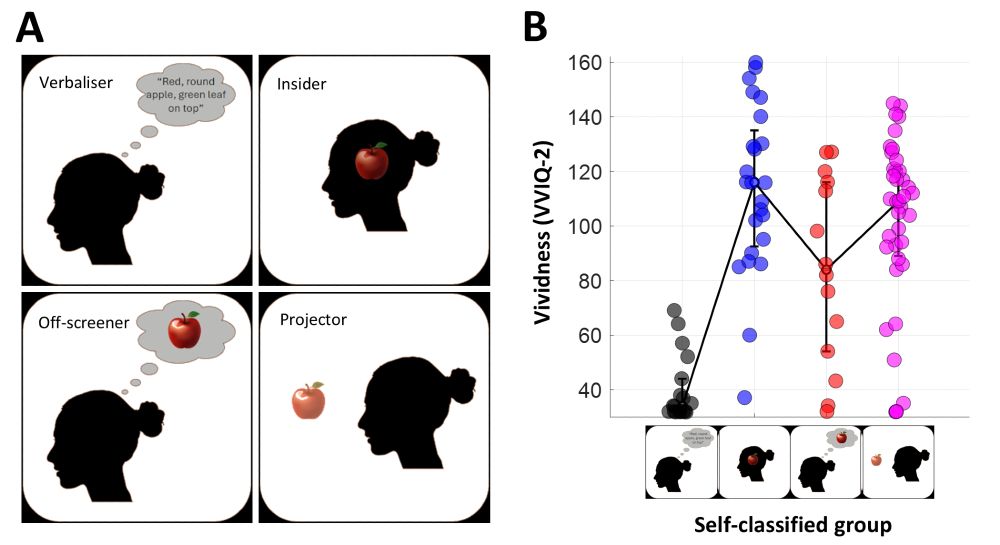
Long time in the making: our preprint of survey study on the diversity with how people seem to experience #mentalimagery. Suggests #aphantasia should be redefined as absence of depictive thought, not merely "not seeing". Some more take home msg:
#psychskysci #neuroscience
doi.org/10.1101/2025...
02.10.2025 18:10 —
👍 112
🔁 35
💬 11
📌 2

Transient conductive hearing loss (CHL) during development. Top left: Schematic of coronal section of a guinea pig skull (traced from high-resolution CT scan). A custom-made earplug is fitted within the cartilaginous ear canal (dotted line), a safe distance from the tympanic membrane (TM). Inset: View of external ear with earplug in place. Top right: Earplugs provide 10–35 dB SPL sound attenuation for frequencies >1 kHz. Bottom: Experimental timeline. Litters of newborn guinea pigs were divided into two groups at hearing onset (birth): pups that were raised with no earplug (littermate Controls) and pups that were raised with a unilateral earplug (“Early CHL”). Earplugs remained in place until adulthood (P56). Following earplug removal, animals were tested on: auditory brainstem responses (ABRs) including the binaural interaction component (BIC), a startle-based spatial discrimination task, and in vivo single-unit recordings in the auditory midbrain (i.e., inferior colliculus, IC). All testing was done within 1 week of earplug removal.
Early unilateral auditory deprivation can cause lasting spatial #hearing deficits. @anbuhlk.bsky.social &co show that unilateral #HearingLoss during development (but not adult-onset) impairs binaural #brainstem function & spatial hearing acuity in guinea pigs @plosbiology.org 🧪 plos.io/46njw1P
08.09.2025 16:27 —
👍 6
🔁 3
💬 1
📌 0

First lab outing since the move to NYC.... feeling so lucky to have such a talented and fun group! with Lital Rachmany, @adhockley.bsky.social, me, Molly Hornick, Fumiyasu Imai, and @cgalli-io.bsky.social
05.08.2025 17:08 —
👍 3
🔁 2
💬 0
📌 0

Brain mechanisms that distinguish imagination from reality discovered
Areas of the brain that help a person differentiate between what is real and what is imaginary have been uncovered in a new study led by UCL researchers.
#ICYMI Areas of the brain that help a person differentiate between what is real and what is imaginary have been uncovered in a new study led by @uclpals.bsky.social and @uclqsion.bsky.social researchers.
29.06.2025 10:08 —
👍 4
🔁 2
💬 0
📌 0
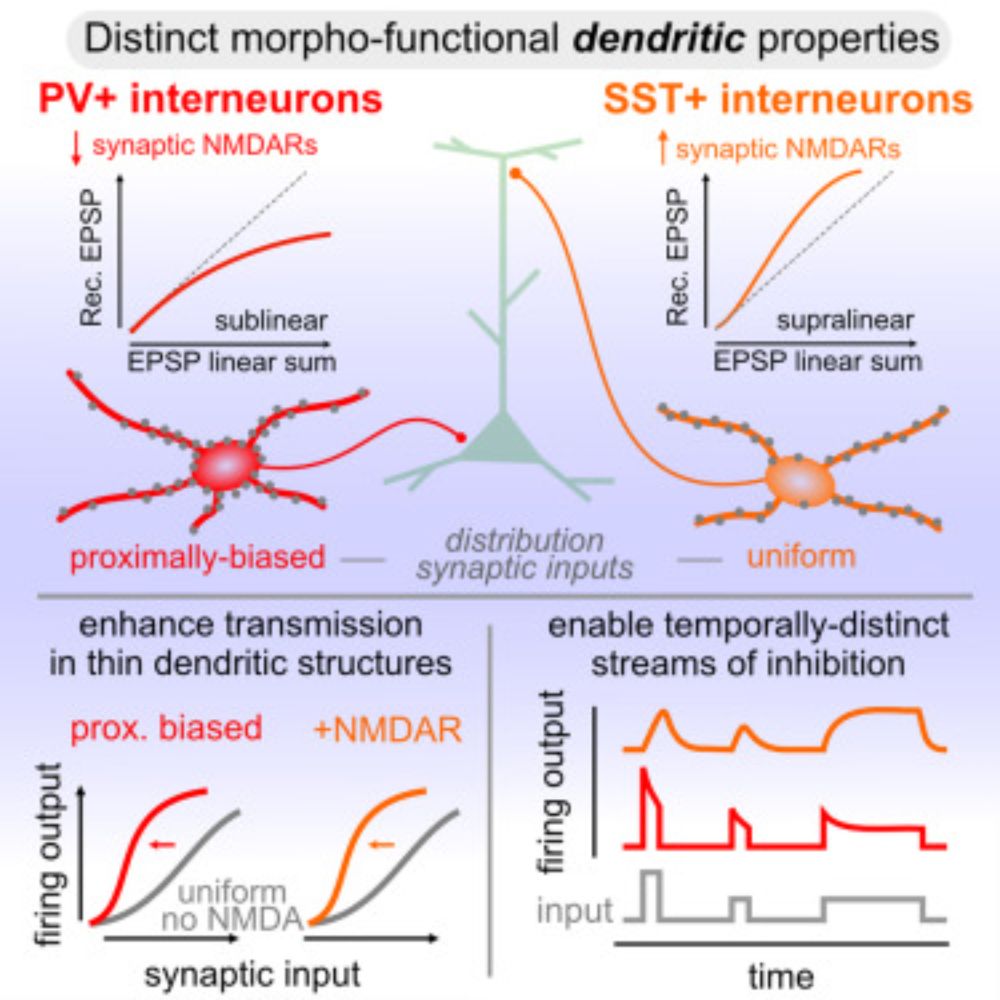
Distinct dendritic integration strategies control dynamics of inhibition in the neocortex
Dendrites critically influence single-neuron computations, but their role in neocortical GABAergic interneurons (INs) remains poorly understood. We fo…
📣New study in Neuron, featuring modeling insights: "Cell-Specific Dendritic Integration in Cortical GABAergic Interneurons"! It reveals PV & SST interneurons compute differently. This highlights how distinct dendrites enable specialized brain computations!
www.sciencedirect.com/science/arti...
03.07.2025 10:12 —
👍 35
🔁 12
💬 2
📌 0
In wakefulness, deviant stimuli may evoke more localised Up states to increase saliency of, guide attention towards, and produce behavioural responses to, unexpected stimuli.
We've presented these data before at the MMN and SfN meetings and glad to have the manuscript submitted 🎉
03.07.2025 16:00 —
👍 1
🔁 0
💬 0
📌 0
GitHub - Julie-Fabre/bombcell: Automated quality control, curation and neuron classification of spike-sorted electrophysiology data
Automated quality control, curation and neuron classification of spike-sorted electrophysiology data - Julie-Fabre/bombcell
🚀 We are excited to share that bombcell is now available in Python! 🐍 Automatically sort your units into good/MUA/noise/non-somatic using quality metrics and interpretable & adjustable classification thresholds.
pip install and play around with our toy dataset:
🔗 github.com/Julie-Fabre/...
13.06.2025 18:55 —
👍 61
🔁 23
💬 2
📌 2

A great catch up today in the Jono's @ Nottingham 🏰
12.06.2025 23:58 —
👍 1
🔁 0
💬 0
📌 0

My final day at the @incyl.bsky.social today! I've met so many amazing people here and I'll miss everyone so much 🩵 next step is back to UK for a month of hiking, cycling and camping, then heading to @jordanhamm.bsky.social lab soon! 🗽
03.06.2025 15:12 —
👍 5
🔁 0
💬 0
📌 0
Excited to share my PhD paper! In it, we use targeted 2-photon optogenetic stimulation to determine how V1 activity is read-out in a detection task. We found that network influence, not visual coding properties, predicted the impact of ensembles on behavior - contradicting our expectations (1/5).
15.05.2025 16:38 —
👍 111
🔁 36
💬 5
📌 2

Direct brain recordings reveal implicit encoding of structure in random auditory streams - Scientific Reports
Scientific Reports - Direct brain recordings reveal implicit encoding of structure in random auditory streams
1/
Excited to share our new paper just out in Scientific Reports!
🧠🎧 Using intracranial EEG, we show how the human brain automatically encodes patterns in random sounds– without attention or explicit awareness.
🔗 doi.org/10.1038/s415...
05.05.2025 10:36 —
👍 30
🔁 9
💬 1
📌 1

How does our brain predict the future? Our review of predictive processing + research program is now on arXiv arxiv.org/abs/2504.09614
50+ neuroscientists distributed across the world worked together to create this unique community project.
15.04.2025 06:58 —
👍 85
🔁 31
💬 2
📌 11