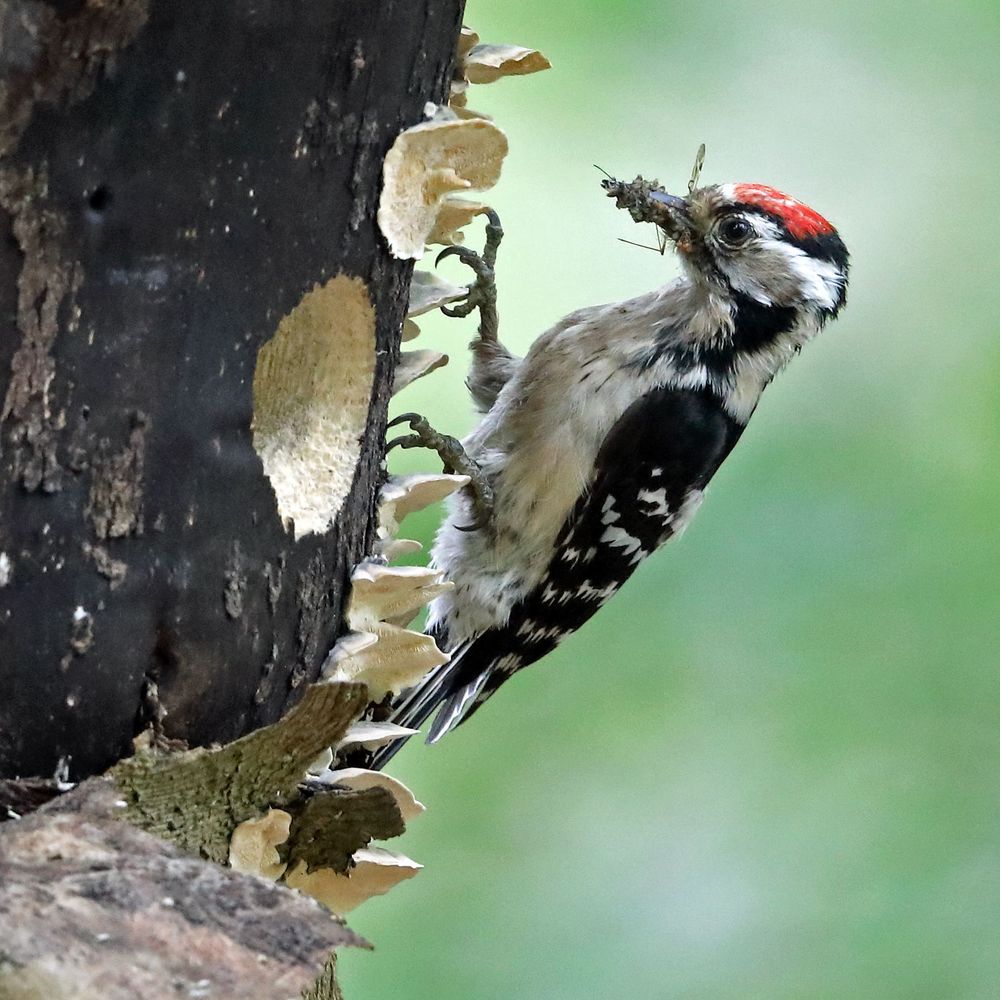
Bioacoustics as a tool for the detection and monitoring of a scarce woodland bird – the Lesser Spotted Woodpecker
Excellent @britishbirds.bsky.social paper from @lesserspotnet.bsky.social et al. using passive acoustic monitoring.
LS detected at >60% of sites in southern England, most of which had no recent records. Drums/calls very few over thousands of hours. Birders' chances of an encounter clearly very low!
03.12.2025 07:35 — 👍 21 🔁 5 💬 2 📌 1

We are happy to announce that the next EOU Conference will be in Brno, Czech Republic in 2027! Check our website eounion.org and follow us on social media for regular updates! #ornithology #EOU2027
01.12.2025 12:38 — 👍 40 🔁 25 💬 1 📌 1
When nocturnally migrating birds encounter low-level light pollution patches: a case study from the Croatian coast | www.sciencedirect.co... | Biological Conservation | #ornithology 🪶
28.11.2025 12:09 — 👍 8 🔁 4 💬 0 📌 0
Brings back happy memories of ISBE 2024 where the conversation about this paper began.. great to see it out in @natecoevo.nature.com. Thanks to co-authors and to the organisers of that brilliant conference 🙏🏽. @bbmwong.bsky.social @stuwest.bsky.social, Suzanne Alonzo🫶, Sasha Dall, “Dr Cunningham”
26.11.2025 08:16 — 👍 21 🔁 5 💬 1 📌 1
Many thanks to all authors, namely to @scienceanna.bsky.social, @lisandrinamari.bsky.social, @jtroscianko.bsky.social, V. Jelínek and T. Albrecht, to all participants that played the egg game, to our research institute @ivb-cas.bsky.social of @czechacademy.bsky.social. And of course, to all BIRDS!
26.11.2025 18:13 — 👍 2 🔁 1 💬 0 📌 0

🧵5/5
AI model outperformed participants, including experienced ornithologists! We suggest using our model ideally with information about egg-laying sequence to identify eggs laid by CBP. The complete pipeline is freely available in the suppl. material.
📸 Barn swallow © Vladimír Pokorný
26.11.2025 18:10 — 👍 3 🔁 0 💬 1 📌 0

🧵4/5
We used photographs of non-parasitized barn swallow clutches and shuffled eggs to create thousands of parasitized clutches. Then we tested the accuracy of human participants at identification of parasitic eggs and compared it with results of our AI model.
📸 Which one is the parasitic egg?
26.11.2025 18:09 — 👍 2 🔁 0 💬 1 📌 0

🧵3/5
CBP is still quite a mystery, partially because it is hard to reveal it. Eggs laid by parasitic and host females look often very similar and therefore genetic markers has been recommended to reveal this reproductive strategy.
📸 Barn swallow eggs with numbers showing the egg-laying sequence
26.11.2025 18:08 — 👍 2 🔁 0 💬 1 📌 0

🧵2/5
Conspecific brood parasitism (CBP), where females lay eggs in nests of other females of the same species, is in birds relatively common. It has been observed especially in waterfowl (pochards, goldeneyes, coots) but also in songbirds (swallows, sparrows, starlings).
📸 Common goldeneye female
26.11.2025 18:07 — 👍 4 🔁 0 💬 1 📌 0

🧵1/5 Excited about our new paper in PRSB! @royalsocietypublishing.org
Can AI make research on avian brood parasitism easier? YES!
We show that AI model can identify conspecific parasitic eggs better than an average ornithologist.
doi.org/10.1098/rspb...
📸 Barn swallow – our study species.
26.11.2025 18:05 — 👍 19 🔁 9 💬 1 📌 2
Where exactly did you see it? They should be on the way to wintering grounds in Sub-Saharan Africa.
29.10.2025 06:34 — 👍 0 🔁 0 💬 1 📌 0
Time to publish responsibly: DAFNEE, a database of academia-friendly journals in ecology and evolutionary biology.
We should not only avoid predatory journals but it's:
Time to publish responsibly: DAFNEE, a database of academia-friendly eco-evo journals ecoevorxiv.org/repository/v...
database
dafnee.isem-evolution.fr
Proud that our institute @ivb-cas.bsky.social publishes 💎open-access J. of Vertebrate Biology
22.10.2025 11:37 — 👍 4 🔁 0 💬 0 📌 0

Multi-generational vulture nests hold 700 years of human artifacts
Crossbow bolts, sandals, slingshots, and more.
super cool study found human artifacts in Bearded vulture nests, incl. "weaponry like a crossbow bolt and wooden lance, decorated sheep leather, and parts of a slingshot....a shoe made from twigs and grass is ~675-years-old." link to paper: doi.org/10.1002/ecy..... www.popsci.com/environment/... 🧪🌍🦉
03.10.2025 13:06 — 👍 2052 🔁 890 💬 27 📌 120
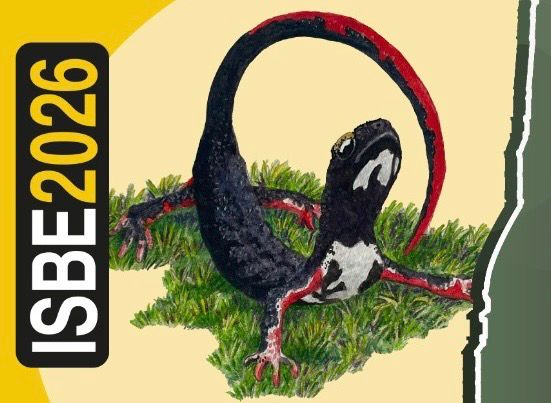
The Local Organizing Commitee welcomes behavioral ecologists from across the world and of all career stages to enjoy a five-day meeting rich in top-notch science and ample networking opportunities in Turin (Italy), 20-24 July 2026.
28.06.2025 21:24 — 👍 97 🔁 44 💬 1 📌 7

Parasitized Red-breasted Merganser nest. Photo: Emilie Knighton
NEW PAPER: Red-breasted mergansers do not move parasitic eggs to cooler nest edges, suggesting limited use of discriminatory incubation against conspecific brood parasitism, though some eggs may be selectively removed.
➡️ vist.ly/3n59e4x
#ornithology #birds #broodparasitism #eggrejection 🪶
26.05.2025 00:05 — 👍 11 🔁 2 💬 0 📌 0
:-) it didn’t nap - they are quite heavy birds so when put in the hand, they stay on their back/wings for some time. It may also be a strategy called tonic immobility (similar to tanatosis) that helps them avoid predation attack.
16.05.2025 17:23 — 👍 2 🔁 0 💬 0 📌 0

A clutch of 11 small pale speckled Blue Tit eggs in a nest lined with moss and feathers. Image by Hugh Insley/BTO. Number 1 in a green circle is bottom left of the image.

A clutch of five blue Dunnock eggs in a cup-shaped nest deep in vegetation. Image by Mike Toms/BTO. Number 2 in a green circle is bottom left of the image.

A clutch of five bright blue Starling eggs surrounded by feathers in a nest box. Image by Hugh Insley/BTO. Number 3 in a green circle is bottom left of the image.
It’s all about eggs at BTO right now, but not the chocolate kind! 🐣 We’re busy during the nest monitoring season! 🐦 You can get involved too by watching birds in your garden and submitting records to our Nesting Neighbours scheme. 👉 www.bto.org/nest-mon...
So whose eggs are these? ⬇️ #Birds
19.04.2025 18:00 — 👍 99 🔁 23 💬 3 📌 0

Map of the world showing the locations of six BTO tagged Cuckoos, with five in Spain and one (Sayaan) in Italy. Six headshots of Cuckoos with their names accompany the map. The Cuckoos featured are: Cleeve, Joe, Hafren, Sayaan, Wilfrid and Cuach Cores. Accompanying wording reads: Update 16th April. Six Cuckoos in Europe! BTO Cuckoo Tracking. BTO logo sits top right of the image.
The race is on! 📢 Six BTO Cuckoos have touched down in Europe! 🌍 So where are our frontrunners and who will be the first to reach the UK? 👇 www.bto.org/cuckoos #Ornithology #Birds
16.04.2025 18:00 — 👍 119 🔁 34 💬 4 📌 3
Egg mimicry! Cuckoos have them!
01.04.2025 19:32 — 👍 1 🔁 0 💬 1 📌 0
Birds are just very inventive creatures! 😀😉
01.04.2025 09:36 — 👍 1 🔁 0 💬 1 📌 0
We also tracked down a birder, Mr Otis from Reading, who was sitting on the dock of the bay in Southampton and caught a glimpse of a Cuckoo with a tag flying overhead! It must have been Tom cruising along to his Norfolk breeding grounds. What a journey! 🛥️🌍😀
01.04.2025 07:00 — 👍 41 🔁 2 💬 1 📌 1
Nature, and saving it. Editor Welsh Bird Report. https://birdsin.wales/
Weekly BirdNotes in Daily Post. http://www.birdnotes.wales/
Co-editor of The Birds of Wales. http://tinyurl.com/TheBirdsOfWales
Lesser Spotted Woodpecker conservation project supporting birdwatching volunteers to find & record Lesser Spots, their nests & breeding outcomes. Posts by Ken & Linda Smith, website www.woodpecker-network.org.uk
Společně pro ptáky a pro lidi už od roku 1926. https://www.birdlife.cz
Behavioural and Evolutionary Ecologist at the Edward Grey Institute of Field Ornithology. Expect science, wildlife pictures and bike stuff (but not in that particular order).
davididiaquez.wixsite.com/zurrimicle
PhD student at ANU (Ecology and Evolution) studying social behaviour of superb fairy-wrens
MSc in Biogeosciences, BSc in Natural Sciences @LaStatale, Milano
#birds #animalbehaviour #sociality
https://scholar.google.it/citations?user=jgsCs8kAAAAJ&hl=it
Alpine and urban ecology at the University of Turin
We promote the study of animal behaviour, organise conferences, fund research & support the teaching of animal behaviour. Co-publisher of #AnimalBehaviourJournal. Posts by @raccoonologist.bsky.social. For meeting posts, follow @asab-meetings.bsky.social
PhD student
https://sites.google.com/view/jahnavijoshi/research/biogeography-and-diversification/angiosperm-evolution-in-the-western-ghats?authuser=0
Behavioural Ecologist, social evolution, reproductive strategies, bioacoustics. Zoology lecturer at Salford University. She/her.
Bird science, migration, and conservation—told through thoughtful stories, research insights, and field observations. Independent & globally focused.
Post doc- sexual selection, life history
Behavioural and evolutionary ecologist, lecturer in Bangor, Wales - sociality, stress, mostly in reptiles macleodlab.weebly.com
MSc Evolutionary Biology (Lund University). Informed bird at the University of Helsinki.
Freelance ornithologist skilled in identifying guillemots from 500 m above sea level
Birder | Research Associate at Swiss Ornithological Institute @vogelwarte.bsky.social 🇨🇭
Interested in the evolution of bird movements and how they can influence evolutionary processes
https://pauldufour80.wordpress.com/
Ranní pták a věčný sýček, ředitel České společnosti ornitologické.
Behavioural & evolutionary ecologist | PhD | Interested in animal communication, evolution of bird' traits on islands, bird cognition, avian female colours and song.
She/her
www.islandbirdproject.com
Plant-Animal Interactions & Landscape Ecology lab
Dpto. Biología – INMAR, Universidad de Cádiz
https://www.paisajelab.es/
Discover new research from across the sciences and highlights from the world's longest-running journal archive. Part of @royalsociety.org royalsociety.org/journals
🪺 PhD Candidate - George Mason University
🦚 Biologist, Universidad de Antioquia
Professional science lurker.