Postdoctoral Requisition Details - Jobs@UIOWA: Search and Apply for Jobs at The University of Iowa
Jobs@UIOWA: The official place to search and apply for jobs at The University of Iowa.
I am looking to hire 2-3 post-docs over the course of the next few months to work on questions related to cognitive control in humans, broadly construed. EEG, TMS, DBS, sEEG, fMRI or related methodological experience preferred.
Apply here:
jobs.uiowa.edu/jobSearch/po...
Lab website: wessellab.org
13.02.2026 22:54 —
👍 29
🔁 36
💬 1
📌 2
The lesson for all the students out there is that science is a community project. Most of us make individually small contributions to this project. Success is measured at the collective level. Many of our professional (and personal) dysfunctions could be fixed by more fully embracing this view.
07.02.2026 11:20 —
👍 75
🔁 20
💬 1
📌 2
Why don’t neural networks learn all at once, but instead progress from simple to complex solutions? And what does “simple” even mean across different neural network architectures?
Sharing our new paper @iclr_conf led by Yedi Zhang with Peter Latham
arxiv.org/abs/2512.20607
03.02.2026 16:19 —
👍 154
🔁 41
💬 7
📌 3
arxiv.org/abs/2601.11432
I want to share an astonishing result. LLMs can "translate" Jabberwocky' texts like 'He dwushed a ghanc zawk” & even and even 'In the BLANK BLANK, BLANK BLANK has BLANK over any BLANK BLANK’s BLANK' This has profound consequence for thinking about.. 1/2
19.01.2026 03:27 —
👍 137
🔁 33
💬 15
📌 12

Academic life is just repeating this to one another until we retire
@jamiecummins.bsky.social
15.01.2026 11:40 —
👍 39
🔁 5
💬 2
📌 0
If you haven't been paying attention to Iran, please look now. Massive protests have erupted everywhere. And people are getting KILLED.
They need the world to be watching. Please share this and help keep the spotlight on them. #FreeIran
08.01.2026 19:43 —
👍 3
🔁 3
💬 0
📌 0

Inspiring talk at our research colloquium yesterday! 🧠
Using very cool games (🦀🎰🐷🃏),
@sebraem.bsky.social showed when and how individuals flexibly adapt their learning across different environments.
We enjoyed a day packed of valuable discussions and delicious food!
07.01.2026 09:02 —
👍 13
🔁 5
💬 0
📌 0

Yeah! Let's get this year started off right.
A new theoretical model for everyone's favorite sensitive and specific neural marker.
So why is it a marker of goals if it is called the Reward Positivity? 1/4
02.01.2026 16:34 —
👍 25
🔁 9
💬 1
📌 0
Modeling Speed–Accuracy Trade-Offs in the Stopping Rule for Confidence Judgments! Now out in #PsychologicalReview (aka we can finally say we do comp models)! Led by @stefherregods.bsky.social @lucvermeylen.bsky.social @pierreledenmat.bsky.social
Paper: desenderlab.com/wp-content/u... Thread ↓↓↓
16.12.2025 15:52 —
👍 31
🔁 15
💬 1
📌 0


🚨Friends, we’re happy to share that our book is available for pre-order! 🎉
We aimed to cover all the foundations of the topic in an accessible manner for a large audience.
It could help set up a bachelor-level curriculum on the topic.
Pre-orders are very key for the fate of books: shorturl.at/Dxbif
26.11.2025 11:38 —
👍 112
🔁 37
💬 2
📌 1

Why is cognitive effort experienced as costly?
A widespread observation is that people avoid mentally effortful courses of action,
and much recent work examining cognitive effort has explained subjective effort evaluation
– and, consequently, pref...
New pontification piece with @awestbrook.bsky.social and Jean Daunizeau, just out in TICS:
Why is cognitive effort experienced as costly?
(or why does it hurt to think)
never written a review paper before in my life, that was a new and unusual experience
19.11.2025 14:48 —
👍 81
🔁 22
💬 1
📌 1

Leveling up fun: learning progress, expectations, and success influence enjoyment in video games
Scientific Reports - Leveling up fun: learning progress, expectations, and success influence enjoyment in video games
What influences whether people have fun with a task?
Our paper “Leveling up fun: learning progress, expectations and success influence enjoyment in video games” with @thecharleywu.bsky.social and @ericschulz.bsky.social now in Scientific Reports!
rdcu.be/eI069
Paper summary below 1/4
02.10.2025 09:31 —
👍 58
🔁 16
💬 1
📌 0

Very happy to have presented our work on the computational basis of doomscrolling at the CocoFlex seminar (organized by @sebraem.bsky.social) in Ghent today!!!
More information about our work on the lab website sites.google.com/site/ireneco...
10.09.2025 13:58 —
👍 3
🔁 1
💬 0
📌 0
APA PsycNet
After scrolling Twitter, it will take you a while to get back into “work mode”. Why is this the case? Our new work (out now in Psych Review), led by Ivan Grahek and Xiamin Leng, explores the costs of adjusting cognitive control to meet different goals:
psycnet.apa.org/record/2026-...
🧵 A thread:
27.08.2025 16:37 —
👍 42
🔁 17
💬 1
📌 0
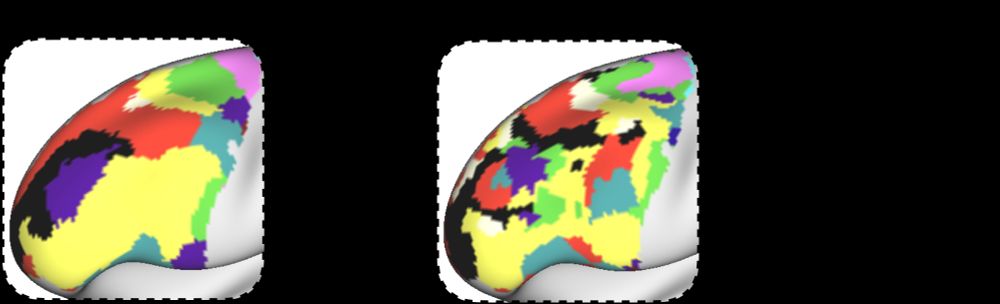
Image of brain networks in a group average and individual LPFC. Individuals show:
1) smaller FP network
2) more interdigitation
3) conserved motifs
4) idiosyncratic features
This was validated with task and rest fMRI
The lateral prefrontal cortex 🧠— which we think of as critical for goal driven behavior + is a target for psychiatric treatments— is fundamentally different in individuals relative to the group averages we’ve often studied.
👇see preprint and thread, led by Zach Ladwig
#neuroskyence #PsychSciSky
14.08.2025 15:15 —
👍 82
🔁 30
💬 3
📌 5
YouTube video by 2swap
Adventures in State Space
What makes a puzzle hard?
I found this video delightful.
23.08.2025 22:26 —
👍 132
🔁 29
💬 7
📌 8
An abbreviation (ABB) in a journal article (JA) or Grant Application (GA) is rarely worth the words it saves. Every ABB requires cognitive resources (CR) and at my age by the time I'm halfway through a JA or GA I no longer have the CR to remember what your ABB stood for.
15.08.2025 09:39 —
👍 402
🔁 123
💬 12
📌 22
![What do representations tell us about a system? Image of a mouse with a scope showing a vector of activity patterns, and a neural network with a vector of unit activity patterns
Common analyses of neural representations: Encoding models (relating activity to task features) drawing of an arrow from a trace saying [on_____on____] to a neuron and spike train. Comparing models via neural predictivity: comparing two neural networks by their R^2 to mouse brain activity. RSA: assessing brain-brain or model-brain correspondence using representational dissimilarity matrices](https://cdn.bsky.app/img/feed_thumbnail/plain/did:plc:e6ewzleebkdi2y2bxhjxoknt/bafkreiav2io2ska33o4kizf57co5bboqyyfdpnozo2gxsicrfr5l7qzjcq@jpeg)
What do representations tell us about a system? Image of a mouse with a scope showing a vector of activity patterns, and a neural network with a vector of unit activity patterns
Common analyses of neural representations: Encoding models (relating activity to task features) drawing of an arrow from a trace saying [on_____on____] to a neuron and spike train. Comparing models via neural predictivity: comparing two neural networks by their R^2 to mouse brain activity. RSA: assessing brain-brain or model-brain correspondence using representational dissimilarity matrices
In neuroscience, we often try to understand systems by analyzing their representations — using tools like regression or RSA. But are these analyses biased towards discovering a subset of what a system represents? If you're interested in this question, check out our new commentary! Thread:
05.08.2025 14:36 —
👍 170
🔁 53
💬 5
📌 0
🚨📊ɴᴇᴡ ᴘᴀᴘᴇʀ!! When we learn a new skill—like tying shoelaces or making pasta—we often start with a series of deliberate steps. But eventually, those steps blend into a smooth, single unit: an action chunk. But why and when do we chunk? 👇
📰https://authors.elsevier.com/a/1lMMD2Hx2-9B8
25.07.2025 18:15 —
👍 53
🔁 9
💬 2
📌 2
Postdoc Position – FLARE Project
🚨 We’re hiring a postdoc!
Join the FLARE project @cimcyc.bsky.social to study sudden perceptual learning using fMRI, RSA, and DNNs.
🧠 2 years, fully funded, flexible start
More info 👉 gonzalezgarcia.github.io/postdoc/
DMs or emails welcome! Please share!
18.07.2025 11:17 —
👍 22
🔁 22
💬 1
📌 3
CCN Lab
🚨 We’re hiring! The Computational Cognitive Neuroscience Lab at Virginia Tech is looking for a postdoc to join our team studying the neural + computational mechanisms of structure learning and flexible cognition: ccnvt.github.io#positions
10.07.2025 12:17 —
👍 29
🔁 19
💬 1
📌 1
We moved our symposium to a bigger room so we have a few more extra seats available now! Join us September 10th for our symosium on "Flexible Definitions of Cognitive Flexibility"
shengjiexu.ugent.be/CoCoFlex_Sem.... Poster or talk submission deadline is in two weeks: July 31st!
17.07.2025 10:22 —
👍 8
🔁 7
💬 0
📌 0
Programming in psychological science
A practical introduction
🧠💻 We (a bunch of colleagues at @cimcyc.bsky.social) just released a programming guide for psych & cog neuro students. Instead of a tutorial, this is a starting point: a collection of reflections, examples, and recommendations.
👉 Still growing, but ready to explore: wobc.github.io/programming_book/
16.07.2025 14:21 —
👍 43
🔁 28
💬 2
📌 3
Super excited to share this one!! Meta-learning sparsity and learning rate gives rise to brain-like gradients of complementary learning systems. So complementary learning systems emerge organically through behavior optimization, and it's not just two of them!!
16.07.2025 16:18 —
👍 84
🔁 25
💬 1
📌 0