#EASP2026 Pre-Conference “Navigating Social (Dis)Connection: New Perspectives on Exclusion, Stigma, and Solitude” in Strasbourg 🇫🇷 (June 30)!
🎤 Share your research on exclusion, stigma, loneliness, solitude, or belonging!
🗓 Jan 5, 2026
info: disconnectionpreconference.wordpress.com
#SocialPsych
14.11.2025 13:12 — 👍 2 🔁 1 💬 0 📌 0
thank you so so much 🫶🫶🫶
17.09.2025 20:12 — 👍 0 🔁 0 💬 0 📌 0
I am so happy and honored to receive this year's SAGE Emerging Scholar Award! 🎉
Immensely grateful to @spspnews.bsky.social, and huge congratulations to all awardees!! 👏
17.09.2025 20:02 — 👍 14 🔁 1 💬 1 📌 0

📣 Call for unpublished studies on discrimination of bisexual people!
⬇️ Please see the full call below
We are very grateful for all contributions!
#SocialPsych #PsychSciSky
09.09.2025 00:54 — 👍 10 🔁 7 💬 0 📌 0
Redirecting
Takeaway: Ghosting is a subjective experience. How long someone is willing to wait for a reply in online messaging meaningfully shapes its interpretation.
Now out in Computers in Human Behavior
💛 #OpenAccess: doi.org/10.1016/j.ch...
#SocialPsych #MediaPsych #PsychSciSky
22.08.2025 01:23 — 👍 7 🔁 0 💬 0 📌 0
Personality traits (like rejection sensitivity or #FOMO) didn’t predict response delay tolerance.
However, delay tolerance predicts users’ friendly, confrontational, or avoidant follow-up behavior.
22.08.2025 01:23 — 👍 4 🔁 0 💬 1 📌 0
Across 8,000+ ratings of chat scenarios, we found:
❗️ People feel ghosted faster when messages are urgent.
⏱️ People also feel ghosted faster when chat partners are usually quick to reply.
❌ Closeness of the relationship didn’t predict response delay tolerance.
22.08.2025 01:23 — 👍 3 🔁 0 💬 1 📌 0

When does waiting for a reply turn into #ghosting? 👻💬
@sarahlutz.bsky.social and I introduce response delay tolerance: the amount of time someone is willing to wait for a response in #online messaging before feeling ignored.
🧵
image: SORA
22.08.2025 01:23 — 👍 9 🔁 2 💬 1 📌 0

I am beyond excited to start my @snsf.ch PostdocMobility project with Prof Greg Walton @stanford.edu !
In the project we will look at how people think about their social energy 🔋🪫 and how to utilize those beliefs to make social interactions more positive and meaningful!
#SocialPsych #PsychSciSky
09.06.2025 19:32 — 👍 15 🔁 0 💬 1 📌 1
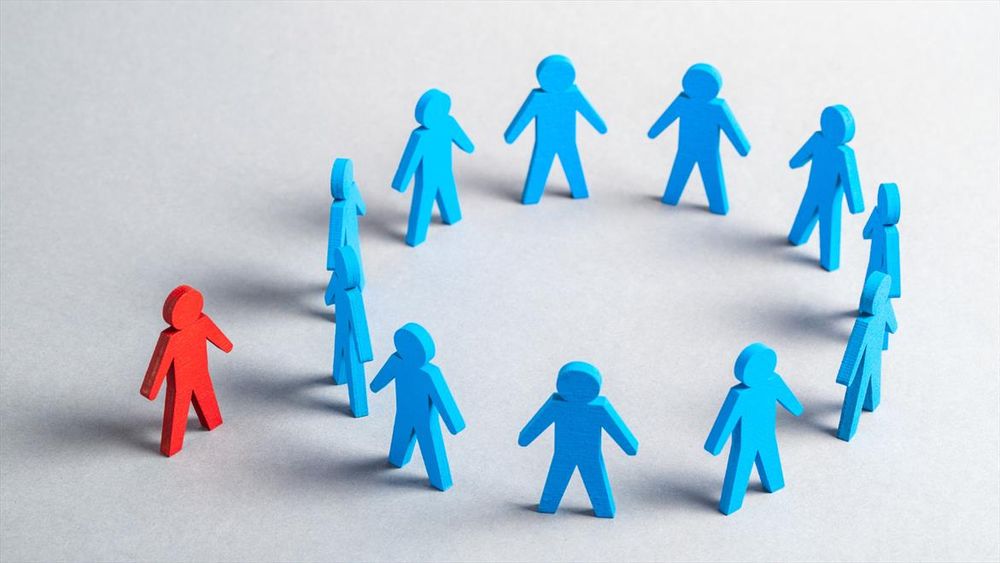
A circle of blue characters with a red character standing outside, indicating exclusion.
📊Research shows people get excluded for two main reasons: breaking group norms or seeming unable to contribute. But researchers report that exclusion decisions are strategic, not just about disliking someone.
Follow SPSP for more #EverydayPsych insights: ow.ly/sY2I50VVCa1
20.05.2025 14:30 — 👍 16 🔁 2 💬 1 📌 0
📢 New article! What happens when a message gets deleted before you can read it? 🧐📱
25.04.2025 15:23 — 👍 2 🔁 2 💬 1 📌 0
Redirecting
👉 Bottom line: #socialmedia isn’t just where exclusion increasingly often happens, it’s also where people seek reconnection. Coping with exclusion may often mean staying put; digitally speaking.
Wanna learn more? #openaccess paper: doi.org/10.1016/j.ch...
#SocialPsych #MediaPsych #PsychSciSky
25.04.2025 15:28 — 👍 4 🔁 0 💬 0 📌 0

📱We find that, after online exclusion, people were more likely to seek reconnection online.
But offline exclusion didn’t prompt more in-person coping, although in-person coping was preferred overall.
25.04.2025 15:28 — 👍 6 🔁 1 💬 1 📌 0
We captured 853 real-life episodes of social #exclusion, online and offline, using #experiencesampling (N = 323). Right after each event, participants reported how they wanted to cope: by turning to others online or offline.
25.04.2025 15:28 — 👍 0 🔁 0 💬 1 📌 0
Redirecting
🎉 Together with @sarahlutz.bsky.social: New paper out in Computers in Human Behavior Reports!
We asked: After being excluded online or offline do people cope by staying in the same space or by escaping it?
🧵:
🔗 doi.org/10.1016/j.ch...
25.04.2025 15:28 — 👍 13 🔁 5 💬 1 📌 1
Redirecting
🚨 New paper out in Journal of Affective Disorders, with @bogatyreva-nat.bsky.social, @chrbuettner.bsky.social, and Rainer Greifeneder!
How are depression and anxiety linked to ostracism? Turns out, it’s a two-way street.
Open access: 🔗 doi.org/10.1016/j.ja...
🧵👇
04.04.2025 09:04 — 👍 7 🔁 1 💬 1 📌 1
Our findings highlight how #personality traits like narcissism shape social exclusion experiences in complex ways.
Want to dig deeper?
💚 Open Access: researchgate.net/publication/...
🔗 doi.org/10.1037/pspp...
#SocialPsych #PersonalityPsych #PsychSciSky
20.02.2025 15:31 — 👍 6 🔁 1 💬 0 📌 0

🔹Mechanism 3: Reverse causality - Ostracism and narcissism reinforce each other over time.
In 14 years of #NZAVS data using #RICLPM, we show a negative loop: Narcissists report more ostracism, and ostracism predicts increases in narcissism over time.
A self-perpetuating cycle ⬇️
20.02.2025 15:31 — 👍 5 🔁 1 💬 1 📌 0
🔹Mechanism 2: Target behavior - Narcissists actually get excluded more often.
Two experiments show that people are more likely to ostracize individuals with narcissistic traits, especially those high in narcissistic rivalry.
20.02.2025 15:31 — 👍 1 🔁 0 💬 2 📌 0
🔹Mechanism 1: Negative perceptions - Narcissists are more sensitive to exclusion cues.
Four experiments show that narcissists are more likely to perceive ambiguous situations (but not unambiguous situations like #Cyberball) as ostracism.
20.02.2025 15:31 — 👍 1 🔁 0 💬 1 📌 0
First, the key findings:
Across two national surveys, a 14-day experience sampling study, and six experiments (N = 77,289), we find that grandiose narcissism is strongly linked to experiencing ostracism more frequently. But why?
We identify three mechanisms:
20.02.2025 15:31 — 👍 2 🔁 0 💬 1 📌 0

(PDF) Narcissists' Experience of Ostracism
PDF | Ostracism—being excluded and ignored—has severe, negative consequences. What is less clear is why some individuals become frequent targets of... | Find, read and cite all the research you need o...
Why do narcissists report being ostracized more often?
In Journal of Personality and Social Psychology @apajournals.bsky.social w/ @selmarudert.bsky.social @ealbath.bsky.social CSibley RGreifeneder, we examine the link between #narcissism & #ostracism.
🔗 www.researchgate.net/publication/...
A🧵:
20.02.2025 15:31 — 👍 13 🔁 3 💬 1 📌 2
@easpinfo.bsky.social
EASP is moving from X to LinkedIn
Please EASP, be sure to *start using Bluesky*. MANY of us are here now.
#SocialPsychology #PsychSciSky
07.02.2025 18:09 — 👍 45 🔁 6 💬 0 📌 0
Huge thanks to Luca Pancani & Paolo Riva for initiating a great article collection on the social influence of phubbing!
23.01.2025 16:01 — 👍 2 🔁 0 💬 0 📌 0
Why being snubbed can make you feel so hurt and enraged | Psyche Ideas
The psychology of ostracism helps explain why you can sometimes shrug it off, yet other times feel the urge to lash out
Why do people react so differently to being left out? 💔
Check out my #scicomm article for @psyche.co on how #ostracism affects us and what drives our varied responses: reaching out, backing out, or lashing out.
Read here: psyche.co/ideas/why-be...
#SocialPsyc #PsychSciSky
14.01.2025 11:15 — 👍 18 🔁 5 💬 1 📌 2
🚨ANNOUNCEMENT🚨
I am the new Associate Editor for Special Issues at @jexpsocpsych.bsky.social and I could not be more excited to be in the role!
We're looking for Guest Editors to propose potential special issues! Read all about what that means at the link below!
#SocialPsych #PsychSky
1/n
13.01.2025 13:59 — 👍 63 🔁 18 💬 5 📌 2
Social psychologist | Researcher | PhD candidate | Part-time ghostmaster 👻
Skeets in EN & TR
Assistant Professor at the University of Niš, Republic of Serbia. PhD in Social Psychology. Interested in cooperation, social exclusion, stigma and discrimination.
Social psychologist | Goal pursuit, political behavior, well-being | The psychology of maintaining what we have
Associate professor (MCF) at the University of Strasbourg (France), interested in social inequalities, stereotypes, prosocial behaviors and empathy.
Try to understand how language can shape and help maintain social inequalities.
Postdoc researcher at @liplab.bsky.social 🇧🇪. Working on impression formation and evaluative learning.
Official Bluesky account of the General Meeting of the European Association of Social Psychology that will take place in Strasbourg in 2026.
He/him. Editorial Director for Robinson Psychology, views are my own.
We invest in research, government, business, and nonprofit leaders working to solve the world's biggest social problems.
Political psychologist at the University of Kent 🏳️🌈
PostDoc @universityofgraz.bsky.social
Research on visual attention to food, disgusting stuff, and oneself. Runner @runninGraz and coach @USI-Graz. Mastodon: @jonaspotthoff@mstdn.jp
he/him
Assistant Professor at The University of British Columbia studying how stress affects couples' relationships and health. Retired swimmer. Proud cat mom to Peach & Mango. She/her
mshrout.wixsite.com/research
psych professor, MSU. personality and environments and genes and the tangle all between! Also music opinions! tedmond.net
Cultural evolution of the mind | Assistant Professor @ University of Chicago, Booth School of Business & Faculty Affiliate of UChicago Data Science Institute | He/his | https://joshuaconradjackson.com
Social-Personality Psychologist. Assistant Professor at UC Riverside. Studying self-regulation, personality, culture, health, and lifespan development. https://srchlab.ucr.edu/
PostDoc@LMU Munich. Passionate about social psych (conflict resolutions), educational psych (social disparities), and replicability. And foxes. I love foxes 🦊
Social psychologist, junior researcher & PhD student • University of Munich • #victimblaming, gender/sexual #stereotypes, #ideologies #attitudes & more • he/him
Researcher @zkfs | PhD candidate in social psychology @TUChemnitz
postdoctoral esearcher in Consumer/Cognitive/Social/Personality psych located in Bochum, Germany.
PhD student in psychology at concrete jungle
Ruhr-Uni Bochum ✨ | Social Cognition Lab of Hans Alves 👥🧠