


Today's way back home from the lab 🥹
26.01.2026 15:58 — 👍 3 🔁 0 💬 0 📌 0
Today's way back home from the lab 🥹
26.01.2026 15:58 — 👍 3 🔁 0 💬 0 📌 0
A great collaborative effort with Elisa Montero from @baclifestyle.bsky.social, who is currently working on the sequel to this story during her PhD.
Thanks to all our micro-mates @cabd-upo-csic.bsky.social @pablodeolavide.upo.es who have contributed with great discussions during these past years 😊
A beautiful example of how highly related organisms can use similar elements in their toolbox combined in different fashions to achieve disparate, or even opposite results!
18.01.2026 19:17 — 👍 0 🔁 0 💬 1 📌 0In sharp contrast, our work shows that P. putida HsbA has co-opted to repress biofilm formation by targeting CfcR, a diguanylate cyclase widespread in environmental Pseudomonas and conspicuously absent in P. aeruginosa strains.
18.01.2026 19:08 — 👍 0 🔁 0 💬 1 📌 0
The anti-sigma factor antagonist HsbA in the target of the HptB-HsbR phosphorelay pathway, highly conserved in the genus Pseudomonas.
HsbA has been long known to stimulate biofilm growth in P. aeruginosa by interacting with HsbD, a diguanylate cyclase exclusive of the P. aeruginosa lineage.

One of the big stories of my thesis is out!
We identified HsbA as a novel regulator of the starvation-induced biofilm dispersal response in P. putida that inhibits c-di-GMP synthesis by CfcR.
www.sciencedirect.com/science/arti...

Today I say goodbye to @cabd-upo-csic.bsky.social after 8 wonderful years of science. Time for a new chapter!
Thrilled to announce that I'm joining @thanbichlerlab.bsky.social at @unimarburg.bsky.social @synmikro.bsky.social as a postdoctoral @humboldt-foundation.de fellow. Exciting times ahead! 🥳
Words cannot describe how excited I am to share the findings from the second half of my postdoc in @aaronwhiteley.bsky.social's lab where we discover that bacteria use functional amyloids to defend themselves from predatory bacteria. rdcu.be/euu5Y. See thread for details on this epic adventure 1/.
02.07.2025 20:10 — 👍 165 🔁 52 💬 6 📌 4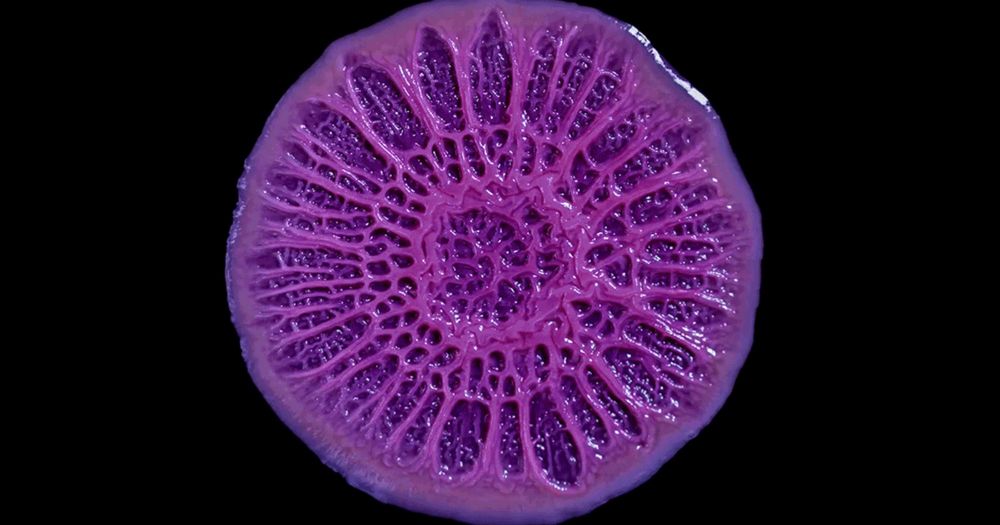
Reading:
How a Biofilm’s Strange Shape Emerges From Cellular Geometry www.quantamagazine.org/how-a-biofil... via @QuantaMagazine
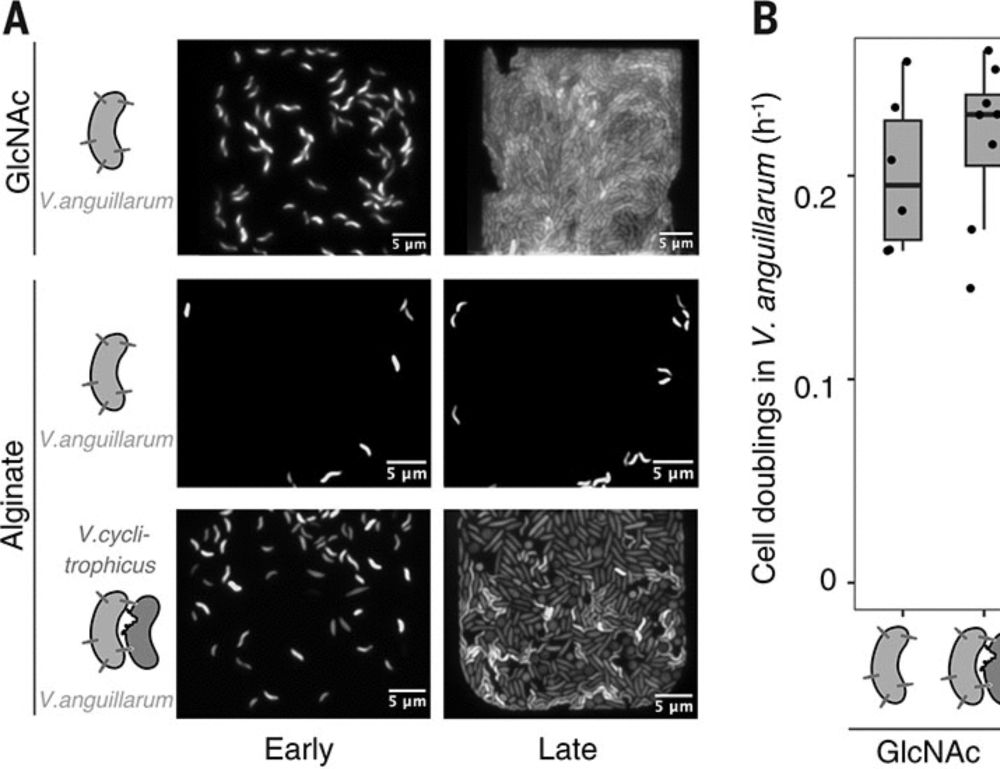
Thrilled to share our new paper in @science.org describing our discovery that bacteria can switch from competitors to bonafide predators when resources run dry—arming nanoscale “spears” (T6SS) to stab & consume neighbours.
www.science.org/doi/10.1126/...
#MicroSKy #Microbiology

Finally, and most importantly, I have to thank my awesome labmates and micro-guys who I don't deserve at all, and the rest of members from @cabd-upo-csic.bsky.social and @pablodeolavide.upo.es.
They all have been guilty for turning every single day at work into a whole new adventure 🥹
It's been a long delivery 😅 Thanks Rubén!
11.06.2025 19:15 — 👍 1 🔁 0 💬 0 📌 0Thank you guys! Thanks Carmen for coming (in the middle of a heat wave!) and for our little science conversations during all these past years 🥹
11.06.2025 19:14 — 👍 1 🔁 0 💬 0 📌 0
On the contrary, thank you for coming here without hesitation 🥹 It's been super nice to meet you in person and hear about those cool projects you guys have in your hands.
We'll keep in touch!

It's been a veeery long road, and I couldn't have asked for any better supervisors to guide me through this journey: @fgovrom.bsky.social and Aroa López.
Not all PhD students are lucky enough to call their bosses "friends".


Seems like I can't escape the "is there a doctor in the room?" question anymore!
Huge thanks to my thesis committee @thethormannden.bsky.social @type3lab.bsky.social @icanper.bsky.social. Science, when shared and discussed with such enthusiasm tastes much better ☺️
Nobody warns you about the true agony of the day before your thesis defense: having to clean and tidy up your entire place so your visiting family can get unrealistic expectations on how you live.
08.06.2025 11:41 — 👍 1 🔁 0 💬 1 📌 0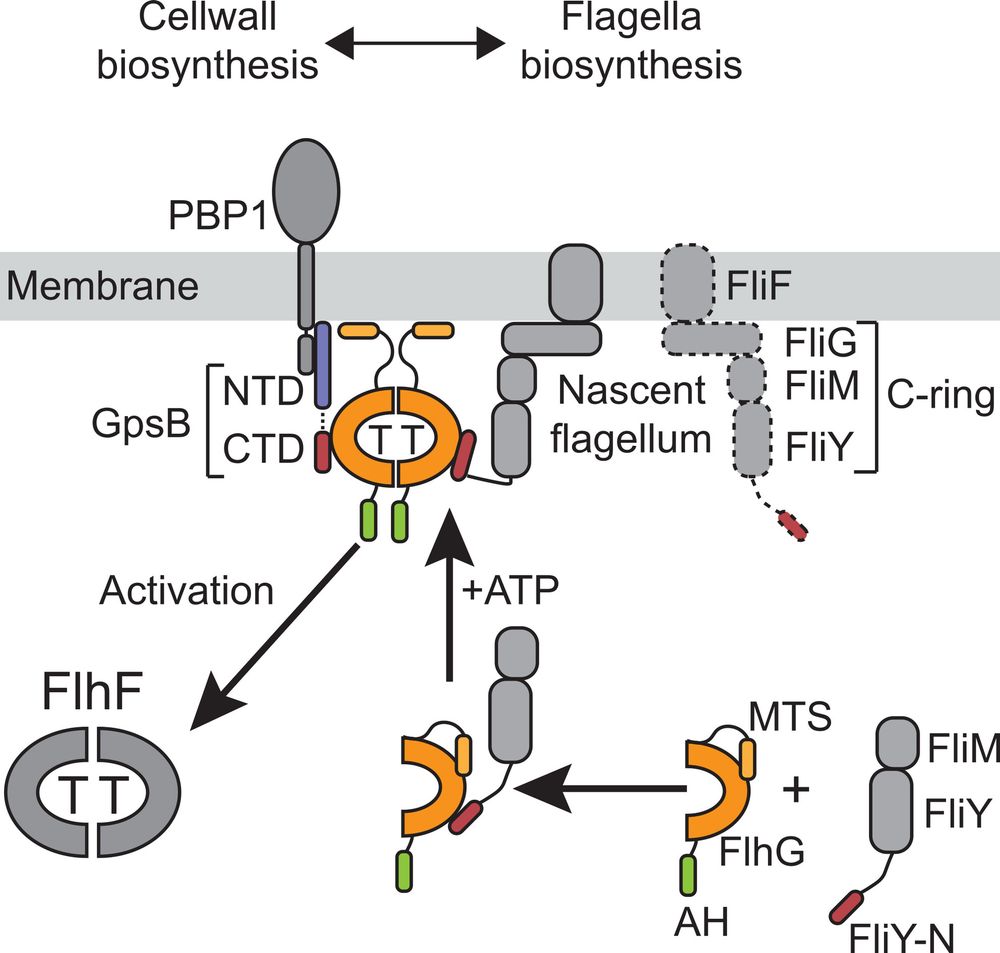
onlinelibrary.wiley.com/doi/10.1111/... @synmikro.bsky.social @unimarburg.bsky.social
19.05.2025 15:15 — 👍 8 🔁 3 💬 0 📌 0
New preprint led by @brunoluviano.bsky.social & Fernando Santos.
We show that filamentation enhances bacterial survival under toxic stress — not as collateral damage, but as a regulated morphological response.
TL;DR: Filamentation isn’t a symptom, it’s a strategy!
www.biorxiv.org/content/10.1...
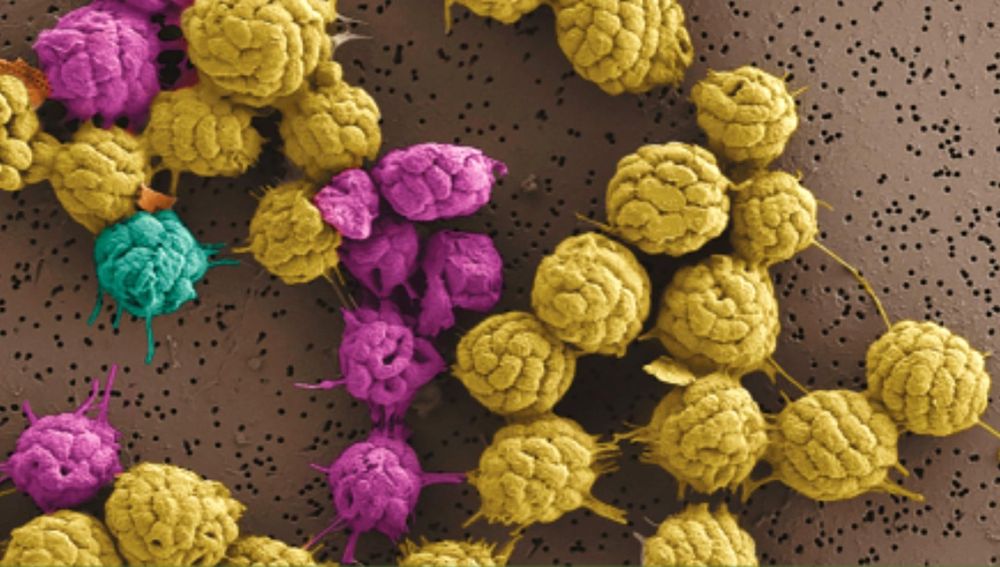
Fascinating new PLoS Biology paper from George Schaible et al in the Hatzenpichler Lab at Montana State
“𝘈𝘴 𝘵𝘩𝘦 𝘰𝘯𝘭𝘺 𝘦𝘹𝘢𝘮𝘱𝘭𝘦 𝘰𝘧 𝘣𝘢𝘤𝘵𝘦𝘳𝘪𝘢 𝘵𝘩𝘢𝘵 𝘦𝘹𝘩𝘪𝘣𝘪𝘵 𝘰𝘣𝘭𝘪𝘨𝘢𝘵𝘦 𝘮𝘶𝘭𝘵𝘪𝘤𝘦𝘭𝘭𝘶𝘭𝘢𝘳𝘪𝘵𝘺, 𝘔𝘔𝘉 𝘱𝘳𝘰𝘷𝘪𝘥𝘦 𝘢𝘯 𝘪𝘮𝘱𝘰𝘳𝘵𝘢𝘯𝘵 𝘦𝘹𝘢𝘮𝘱𝘭𝘦 𝘰𝘧 𝘱𝘰𝘴𝘴𝘪𝘣𝘭𝘦 𝘮𝘦𝘤𝘩𝘢𝘯𝘪𝘴𝘮𝘴 𝘣𝘦𝘩𝘪𝘯𝘥 𝘵𝘩𝘪𝘴 𝘱𝘳𝘰𝘧𝘰𝘶𝘯𝘥 𝘴𝘵𝘦𝘱 𝘪𝘯 𝘭𝘪𝘧𝘦’𝘴 𝘦𝘷𝘰𝘭𝘶𝘵𝘪𝘰𝘯𝘢𝘳𝘺 𝘩𝘪𝘴𝘵𝘰𝘳𝘺 𝘰𝘯 𝘌𝘢𝘳𝘵𝘩”

🧪
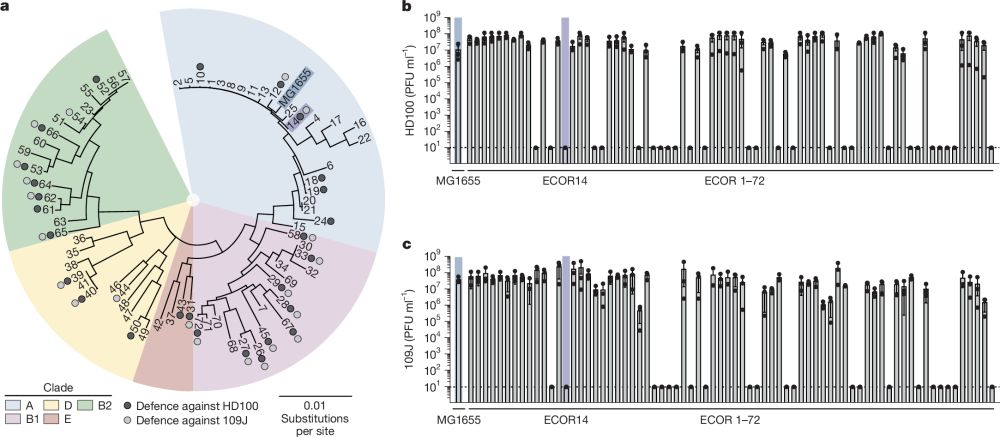
Finally out after peer review, our work showing that "Mobile #Integrons carry Phage Defense Systems" is now published in Science 🎉
Short 🧵
www.science.org/doi/10.1126/...

A 5-year work, straight from the oven! #Microsky
08.04.2025 09:19 — 👍 4 🔁 0 💬 0 📌 0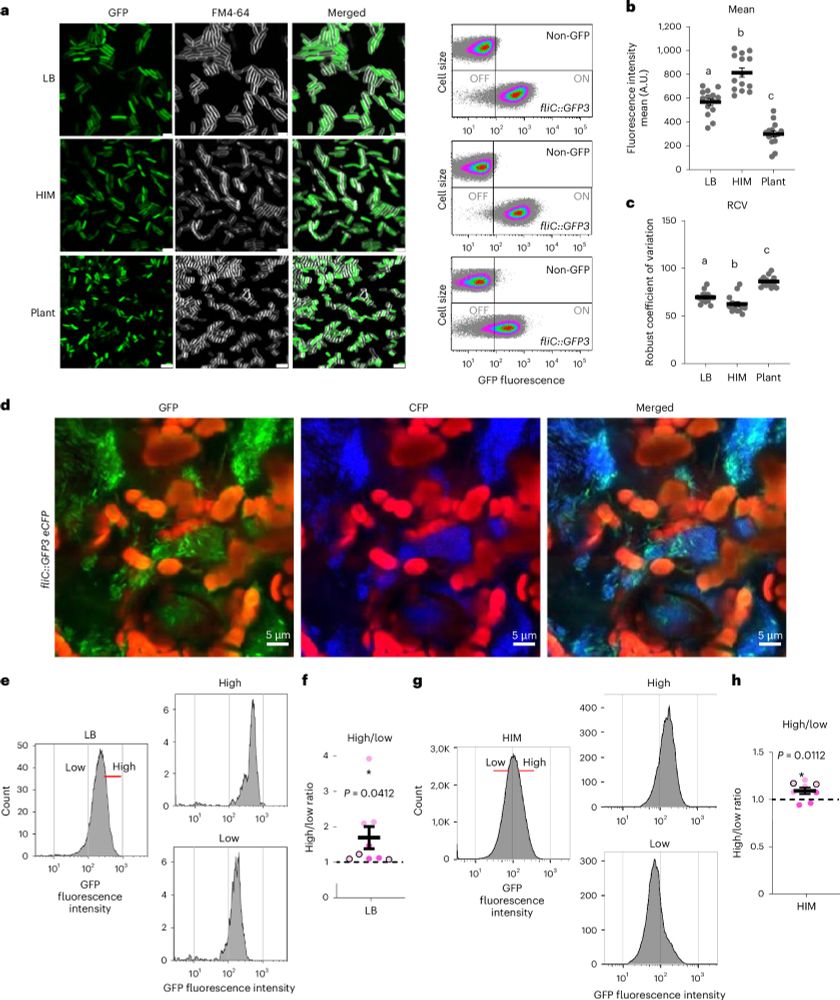
How Bacteria Outsmart Plants—Then Flee the Scene!
#MicroSky #PlantScience #Pseudomonas
Our new research in Nature Microbiology uncovers the sophisticated teamwork of Pseudomonas syringae, a notorious plant pathogen.
🔗 rdcu.be/egczU
I’m very happy to share our latest work on the ParABS system. We investigated the dynamic interaction between the ATPase ParA and the CTPase ParB mediating chromosome segregation in Myxococcus xanthus. I would like to thank all the people involved.
15.03.2025 18:35 — 👍 27 🔁 15 💬 2 📌 0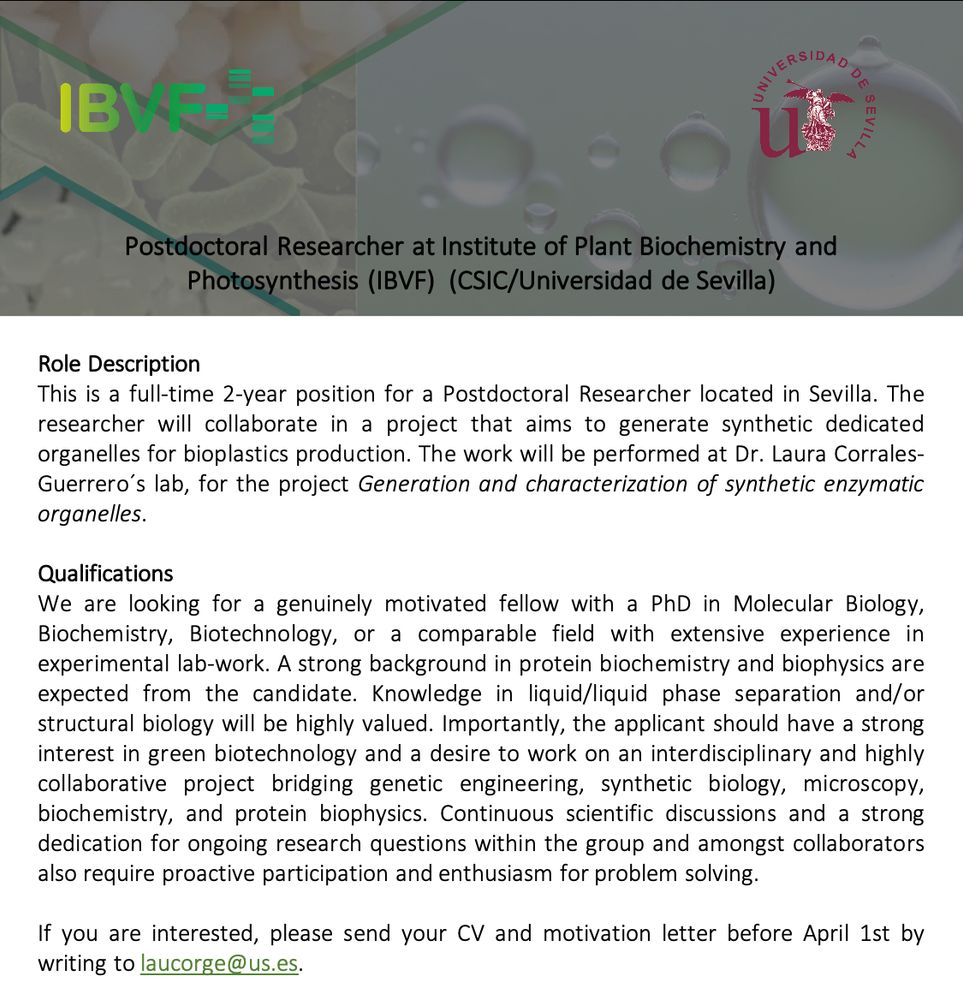
New postdoc position available at IBVF!
19.03.2025 13:41 — 👍 1 🔁 3 💬 0 📌 0
Happy 37th birthday to the LTEE!
the-ltee.org/history/

Excited to share our latest preprint! A fascinating story of chemical dialogue and microbial warfare: the Bacillus extracellular matrix acts as a key driver in the antagonistic interaction with Botrytis, while the fungus mounts a multi-layered defense.
🔗
www.biorxiv.org/content/10.1...
Thanks to the awesome communication team at @pablodeolavide.upo.es for always having our backs in spreading science beyond the lab walls (and also for taking my first-ever "pretend to work" picture 😄).
14.02.2025 17:47 — 👍 3 🔁 0 💬 1 📌 0
Bacteria go to a lot of trouble to control their flagellation pattern 🦠
Late as always, but I just moved from the other side. Hope you enjoy our latest work describing how FimV, FlhF and FleN regulate the polar flagella assembly in Pseudomonas putida. www.sciencedirect.com/science/arti... #MicroSky
