
 19.12.2025 13:32 —
👍 1
🔁 0
💬 1
📌 0
19.12.2025 13:32 —
👍 1
🔁 0
💬 1
📌 0
 18.12.2025 21:49 —
👍 5
🔁 0
💬 0
📌 0
18.12.2025 21:49 —
👍 5
🔁 0
💬 0
📌 0

The Global Carbon Project has just published the most comprehensive Global Hydrogen Budget to date.
H2, although not a GHG, has an indirect Global Warming Potential 37 times more potent than CO2.
Carbon Brief:
www.carbonbrief.org/hydrogen-emi...
Research paper:
www.nature.com/articles/s41...
Last couple of days, if you are interested. Even if you don't want or qualify for funding, you might be interested in participating in this new activity with your in-kind support.
27.11.2025 23:14 — 👍 1 🔁 0 💬 0 📌 0
2/2
Even if you don't apply for funding, but you are interested, worth going for it. See the requirements in the link:
www.sparkclimate.org/funding-oppo...

1/2
For Biospheric Modelers
There is a new activity led by @benpoulter.bsky.social at SPARK, supported by the GCP, called Warming Induced Emissions-Model Intercomparison (WIE-MIP).
There is a call for involvement and a funding opportunity with a deadline at the end of November.
The atmospheric CO₂ growth rate was off the chart in 2024!
14.11.2025 19:00 — 👍 143 🔁 70 💬 6 📌 3
It is worth a reminder that each year we revised the carbon budget in all years, not just the last year
www.carbonbrief.org/analysis-fos...
This year we had a rather big adjustment in land-use change emissions, including the change in carbon density due to CO2 fertilisation, etc.
rdcu.be/ePDDS

The 2025 update of the Global Carbon Budget is out.
While fossil CO2 emissions rise again and carbon sinks are weakened by climate change, deforestation emissions are down and many countries decarbonise their energy.
No global emissions peak yet though.
theconversation.com/the-worlds-c...

Global fossil CO₂ emissions
1) Fossil fuel
Still no peak. Emissions are projected to increase by 1.1% in 2025, reaching 38.1 GtCO2. An all time high.

Published today in Earth System Science Data: The Global Carbon Budget 2025
essd.copernicus.org/preprints/es...

1/2
We just published the Global Carbon Budget 2025, with a mix of bad news (CO2 emissions continue to grow) and encouraging news (35 countries saw emissions decline over the past decade while growing their economies).
Read the highlights in a short article:
theconversation.com/the-worlds-c...

📢Global Carbon Budget 2025📢
Fossil CO2 emissions continue to rise in 2025 while the terrestrial carbon sink recovers to pre-El Niño strength.
The key findings are covered in two reports this year:
* ESSDD (preprint): essd.copernicus.org/preprints/es...
* Nature: www.nature.com/articles/s41...
1/
Dear Zeke, it is the reverse, falling luc emissions offset to some extent the rising fossil fuel emissions
13.11.2025 07:05 — 👍 0 🔁 0 💬 1 📌 0
The new 2025 Global Carbon Budget finds that fossil fuel emissions will reach a new high in 2025. Total CO2 emissions (including land use) remain flat at 2024 levels.
While the land sink is up from 2024, carbon sinks are weakening: www.carbonbrief.org/...

2/2
And a second paper describing all the research advances the group and the broader community have achieved, leading to this year's much-improved and constrained Global Carbon Budget.
essd.copernicus.org/preprints/es...
www.nature.com/articles/s41...

1/2
To support this year's Global Carbon Budget, 2025, we are publishing
The big paper, made possible by the strong commitment of a core group of scientists, with @pfriedling.bsky.social at the lead, working with a network of equally committed contributors from 102 research organizations worldwide

2/2
If you are interested in diving deeper into the data, global and national trends, summary PPT, and a myriad of figures, visit the Global Carbon Budget page:
www.globalcarbonproject.org
1/2
We just published the Global Carbon Budget 2025, with a mix of bad news (CO2 emissions continue to grow) and encouraging news (35 countries saw emissions decline over the past decade while growing their economies).
Read the highlights in a short article:
theconversation.com/the-worlds-c...

There is increasing talk about overshoot of 1.5°C, particularly that *now* we can only achieve 1.5°C by first overshooting 1.5°C.
Well, sorry to tell you, 1.5°C have always been overshoot scenarios. Here from the original 'SSP' 1.5°C scenarios published in 2018.
[Overshoot is a scenario design]

As part of the GCP-Regional Carbon Cycle Assessment and Processes-2, we recently published the Australasia's CH4 and N2O Budgets. The carbon budget was published in 2023, both papers, led by Yohanna Villalobos and a great team of collaborators.
agupubs.onlinelibrary.wiley.com/doi/10.1029/...
Atraura pluges nomes es possible quan es fa aforestacio a gran escale i no es garantit depened de les la circulacio atmosferica de la region. Atraura pluja es el que algun estudis han trobat del programs d'aforestacio al Loess Plateau de la Xina. No hi ha massa examples cientificament provats.
08.09.2025 06:25 — 👍 1 🔁 0 💬 0 📌 0
2/2
Kudos to the Australian National Environmental Science Program (NESP2)-Climate Systems Hub and CSIRO for being so committed to building a long-term working relationship between Western science and First Nations knowledge.
Access the paper: www.publish.csiro.au/ES/ES24048

1/2
I feel privileged to have had the opportunity to make a small contribution to this paper, just published.
"Building relationships between First Nations Peoples and Western scientists to increase capacity to understand, respond and adapt to climate change"

New assessment on the biophysical potential of forestation to sequester carbon. As expected, we found just a fraction of what other assessments found, because we considered the obvious no-nos, such as risk to biodiversity, excess water use, and regional warming.
theconversation.com/the-climate-...
3/3
Comparing the results with the Gross Primary Production estimates from biospheric models (e.g., Dynamic Global Vegetation Models), the study concludes that the modelled GPP in Northern Hemisphere ecosystems needs to be higher to match the increasing seasonal variations in atmospheric CO2.
2/3
It also shows that the increase in CO2 uptake is almost proportional to the increase in atmospheric CO2, further cementing this process as the key driver for the role of terrestrial ecosystems in slowing down global warming.

1/3
A new study, led by Matthias Cuntz and our dearest late Vanessa Haverd, shows beautifully how the increase of the seasonal variation in atmospheric CO2 in the Northern Hemisphere over the past 40 years can only be explained by an increase in the CO2 uptake by plants.
doi.org/10.1029/2025...

Interesting new article showing the overwhelming role of tropical forests in past climates. Hard not to wonder about what it means for today’s climate crisis and the changes we see in tropical regions and particularly the Amazon.
theconversation.com/around-250-m...
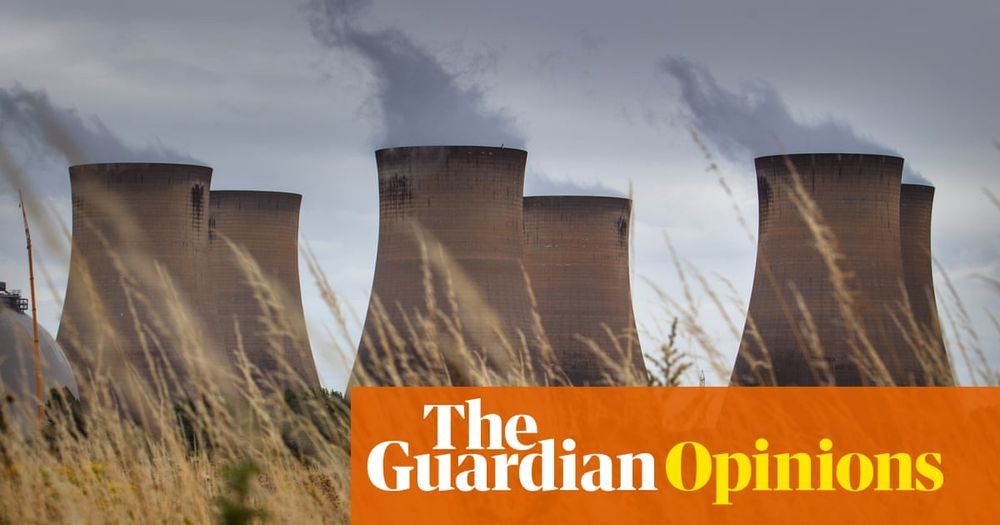
Tree-burning #Drax power station is UK’s largest single source of CO₂ emissions—and a major air polluter.
Yet ludicrously, UK Gov pretends its emissions are zero.
Reports on its impact on primary forests have been covered up.
Ministers are being played. Again.
Great article by @dalevince.com