 06.02.2026 15:36 —
👍 3
🔁 4
💬 0
📌 0
06.02.2026 15:36 —
👍 3
🔁 4
💬 0
📌 0

(B) PER conditioning assays. (1) Initial feed and water desensitisation. Harnessed bees given 3–5 μl 30% (w/w) sucrose; antennae touched with water. (2) Acclimatisation. 1 h in darkness (lab cabinet), 22–25°C, 35–40% relative humidity. (3) Conditioning. Five citral presentations (5 μl 95% v/v on filter paper in 20 ml syringe) each reinforced with 30% sucrose. (4) Filter. Discard bees showing PER to first odour presentation or no PER to sucrose. (5) Memory tests. Three trials same day+three trials next day. Group assignment: Good Learners=PER in all six tests; Poor Learners=no PER in any test. (6) Storage. Freezing at −80°C for later molecular work.
Simon Loughran, @fmanfredini.bsky.social & co explore how natural deformed wing virus infections and cognitive ability shape brain gene expression in honey bee foragers. doi.org/10.1242/bio....
#Transcriptomics #HoneyBees

🦠 A new #SafeguardResearch examines how viruses spread between managed honey bees and wild pollinators - and the results challenge some common assumptions.
👉 Read the full study: onlinelibrary.wiley.com/doi/10.1111/...
#EUPollinators #honeybees #wildpollinators

Nice to be starting 2026 with our new paper with @sei.org on making #CitizenScience biological recording more inclusive @savebutterflies.bsky.social doi.org/10.5334/cstp...
12.01.2026 17:46 — 👍 19 🔁 8 💬 1 📌 0
If youre looking for a conference this summer, join us at the IUSSI international Congress in Freiburg.
If you need somewhere to submit an abstract, some wonderful colleagues and I are hosting a symposium on Conserving Wild Social Insects. Take a look at the brief!
iussi2026.org/scientific-s...

🌼Sown wildflower plantings can help counter pollinator decline by restoring key resources. A #SafeguardResearch looks into how higher flower diversity supports bees & butterflies - especially in flower‑poor seasons.
👉 Read the full study: www.sciencedirect.com/science/arti...

Heather nectar metabolites reduce within-colony epidemics of the bumblebee parasite Crithidia bombi showing that anti microbial compounds in nectar are effective at improving bee health at colony levels. @rbgkew.bsky.social
@markjfbrown.bsky.social
royalsocietypublishing.org/rspb/article...

New IUCN Red List data shows worsening trends for Europe’s wild #pollinators: 100 more bee species are now threatened, and the percentage of vulnerable butterfly species is up 76% in a decade.
More at: www.safeguard.biozentrum.uni-wuerzburg.de/News/ViewNew...

PhD position at the University of Bristol (with me!) entitled 'The legacy impacts of extreme climate events on animal behaviour, physiology, and fitness'.
Fully funded and is available for UK-domiciled students of black heritage. Please reach out with any questions.
tinyurl.com/5n7s8yp9
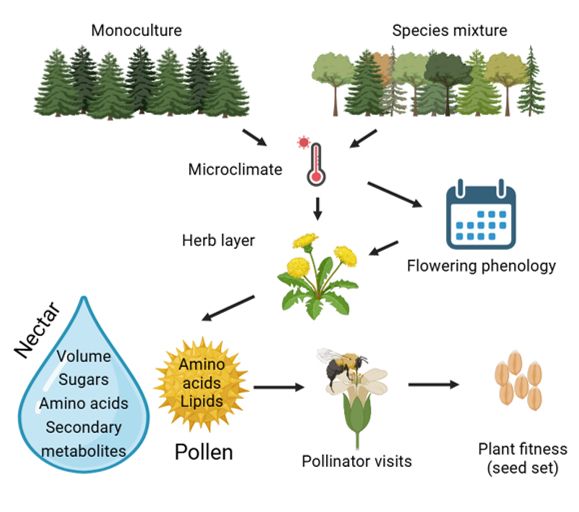
PhD applications are now open @treesdla.bsky.social for 2026 intake. Have a look at a project on effects of forest diversity on floral reward production for pollinators that we advertise with @philstevenson.bsky.social. Do apply/get in touch if you are interested! www.trees-dla.ac.uk/projects/eff...
21.10.2025 11:17 — 👍 30 🔁 30 💬 1 📌 1

We are delighted that our Winter Meeting 2025 in Leuven 🇧🇪 is approaching!
Abstract submissions now open: www.iussi-nweurope.org/meetings
Date: December 18-19
Abstract deadline: October 15
Host: Laboratory of Socioecology and Social Evolution at KU Leuven
Plenary: Ido Pen & @rmash.bsky.social
And if you want proof I now know every single flower in all our 32 project gardens ...
12.09.2025 20:03 — 👍 0 🔁 0 💬 0 📌 0
Find out more about my research and the Pollinator Pathmaker Constantine Network on Gardeners' World this week.
A great overview of the Pollinator Pathmaker and the great community on which our research is based.
www.bbc.co.uk/iplayer/episode/m002j9sh

Common Blue butterfly resting on heather against a dark pink background. Text overlay reads 'the results are in' with Butterfly Conservation's Big Butterfly Count logo. Photo credit Matt Berry
The #BigButterflyCount results are in and it's official...
2025 was an average year for butterflies.
See the full results and what can be done to help butterflies and moths 👇
https://butterfly-conservation.org/big-butterfly-count-results-2025

UK Butterfly abundance Indicators for 1976-2024 have been released, showing an 18% decline in overall butterfly abundance for the UK. Habitat specialists have fared worse, declining by over a third.
Check out the full statistics here ⬇️
buff.ly/1AIDB3J

New Europe-wide study finds that efforts to provide pollinator habitat in urban areas - such as sowing wildflower mixes - really do work, boosting numbers of bees and butterflies: onlinelibrary.wiley.com/doi/10.1111/...
19.08.2025 09:51 — 👍 173 🔁 80 💬 3 📌 4Thank you! And what an honour to be appointed Director of the amazing @zoologymuseum.bsky.social Sad to leave @rhulbiology.bsky.social after a wonderful 16.5 years, but very excited by this new challenge and amazing opportunity. I can’t wait to get started!
13.08.2025 10:40 — 👍 34 🔁 6 💬 7 📌 1Hardly any down in Cornwall but it also seems a bit quiet across the board this year. We're hoping it's just still early...
29.05.2025 11:29 — 👍 1 🔁 0 💬 0 📌 0One of our tagged bees spotted foraging
23.05.2025 16:41 — 👍 1 🔁 0 💬 0 📌 0After a bit of trouble shooting glue types, our mass bee tagging was under way in the village of Constantine
23.05.2025 16:41 — 👍 2 🔁 0 💬 1 📌 0


Field work has begun ... Here's to a camera roll full of insects 🦋🐝
For my sanity, please pray for enough rain to keep gardens growing but not so much that our large sampling plan fails

Find out what pollinators are, why they are important and why they are declining:
www.europarl.europa.eu/topics/en/ar...
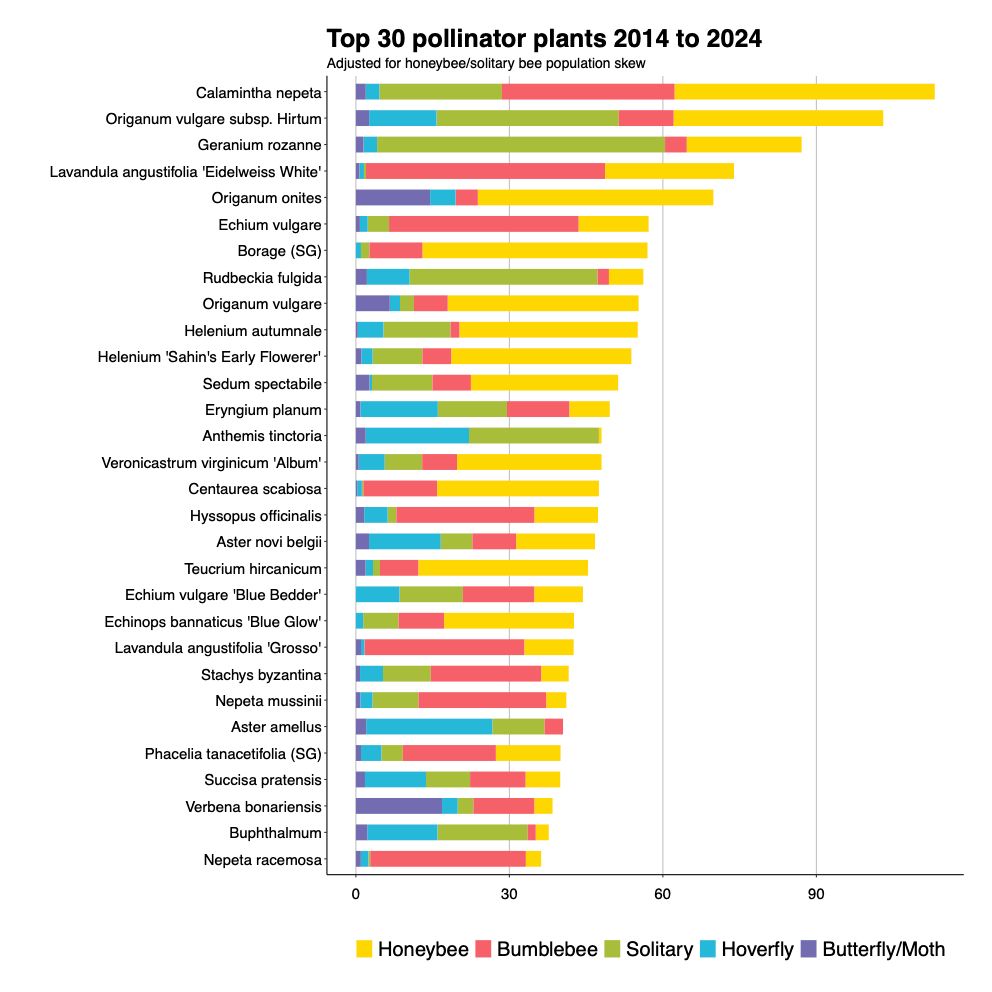
We are have updated our research into which garden plants attract the most pollinators. Our original research included 5 years of data. We then moved house so this is now 9 years of data over 2 different locations.
www.rosybee.com/research-study

A brilliant week of citizen scientist pollinator identification training on for the participants of the Pollinator Pathmaker Constantine Network
Shout out to these hairy footed flower bees for being the tricky candidate for is it a solitary bee or bumblebee

In a new paper that I co-authored we suggest that #Biodiversity Net Gain may be falling short for some of the most vital, yet overlooked, members of our ecosystems: invertebrates.
Read more about it here, with a link to download the open-access paper:
jeffollerton.co.uk/2025/03/28/i...
First pollinator spotted (and chased with a camera) on our Pollinator Pathmaker Constantine Network living artworks!!
Prepare yourself for a flurry of photos of pollinators this summer 🌸🐝


A few snapshots of the prep for the Pollinator #PathmakerProject in Constantine over the last few weeks
It's been great to get the plants in the ground over the last few days 🧑🌾
Stay tuned for when these are in full bloom!! 🌼🌸🪻

📢 New study: Insect Biomasse & abundance were similar in protected areas & urban wastelands, but 🐝wild bee diversity was higher in urban areas! Protected areas (Natura 2000) may need targeted management to support pollinators.
👇
www.sciencedirect.com/science/arti...
@wilosterman.bsky.social

[new paper] EuPPollNet: A European Database of Plant-Pollinator Networks
onlinelibrary.wiley.com/doi/10.1111/... Another wonderful paper of @joseblanuza.bsky.social making open more than >1500 networks and looking at their properties. Come for the data, stay for the cool figures!

📢 New paper from #poshbee on effects of repeated sulfoxaflor exposure during key stages of bumblebee queen life cycle
We found no effects of single or repeated exposure on 👑🐝
We urge future studies to consider repeated exposure when assessing impacts of pesticides
doi.org/10.1002/2688-8319.70011


