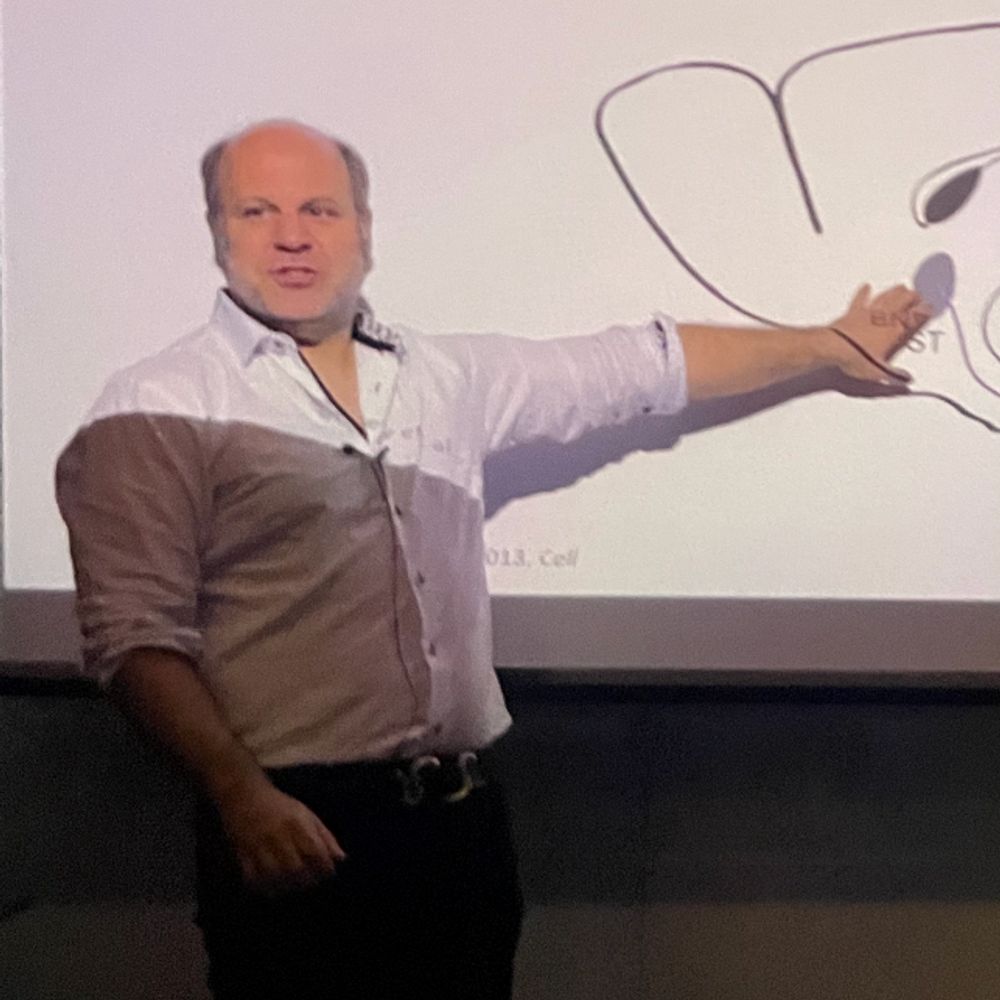
Thanks also to Mark Hargreaves, Dayu Lin, and Alan Watts for insightful comments and their time to meet with Bethany.
24.02.2026 21:08 —
👍 0
🔁 0
💬 0
📌 0
After training, increasing SF1 neuron activity can push performance beyond the typical endurance plateau. Could this be a potential target of “exercise-mimetics”?
15.02.2026 15:40 —
👍 2
🔁 0
💬 1
📌 0
With repeated training, this VMH SF1 circuit strengthens (anatomically + physiologically).
This increase in post-exercise activity of SF1 neurons is required for endurance improvements.
15.02.2026 15:40 —
👍 1
🔁 0
💬 1
📌 0
VMH SF1 neurons are activated during running AND they stay active after exercise.
That sustained post-exercise signal is a key driver of training benefits.
15.02.2026 15:40 —
👍 1
🔁 0
💬 1
📌 0
Endurance gains aren’t just muscle/heart/lung adaptations.
We find the brain is a critical intermediate in how training rewires the body.
15.02.2026 15:40 —
👍 1
🔁 0
💬 1
📌 0

🧠🏃 New in Neuron (open access): “Exercise-induced activation of VMH SF1 neurons mediates improvements in endurance”
Finally able to share what we learned about the brain & exercise 🧵
15.02.2026 15:40 —
👍 7
🔁 2
💬 1
📌 0
Tomorrow, we will be sharing with the world, some of what we have learned about how the hypothalamic activation effects metabolism and adaptation after exercise! Stay tuned…
11.02.2026 09:37 —
👍 1
🔁 0
💬 0
📌 0
We found a massive upregulation of neural activity (via Fos) throughout the brain! In the video below, you can see the brainwide changes observed in an exercised animal compared to a sedentary control. Some regions of interest to our lab are highlighted.
11.02.2026 09:37 —
👍 1
🔁 0
💬 1
📌 0
This is your brain.
This is your brain on exercise.
This dataset collected over 5 years ago captivated our neuroscience lab.
11.02.2026 09:37 —
👍 5
🔁 2
💬 1
📌 0


What’s brewing in the Betley Lab at UPenn? ☕️🧠 Thrilled to welcome Elisa Caffrey! Elisa studies fermented foods and the microbes/metabolites they produce—how do they shape our bodies and brains after we eat? Excited for this new frontier!
10.02.2026 10:21 —
👍 3
🔁 0
💬 0
📌 0

lways fun to collaborate with the Thaiss Lab and excited about what is coming next. If you are interested in how the gut rapidly transduces health signals to the brain, read the review: authors.elsevier.com/c/1mUfe3BtfH... #gutbrainaxis #interoception
30.01.2026 19:52 —
👍 1
🔁 0
💬 0
📌 0
Therapeutic outlook: “interoceptomimetics” = molecular interventions that stimulate the right body↔brain signaling with the goal of restoring homeostasis.
30.01.2026 19:52 —
👍 3
🔁 0
💬 1
📌 0
When interoception breaks, disease risk rises. Disrupted body→brain feedback loops appear across many conditions (not just GI).
30.01.2026 19:52 —
👍 0
🔁 0
💬 1
📌 0
Environment + lifestyle shape these circuits. What we eat, when we eat, and other exposures can recalibrate gut→brain signaling over time.
30.01.2026 19:52 —
👍 1
🔁 0
💬 1
📌 0
Many of these messages are rapid. Sensory pathways (alongside endocrine + immune routes) help the brain keep a running readout of internal state and adjust appetite, metabolism, inflammation, and other systems accordingly.
30.01.2026 19:52 —
👍 0
🔁 0
💬 1
📌 0
The gut is the body’s biggest interface with the outside world. It samples dietary nutrients, microbial metabolites, hormones, neurotransmitters, immune cues (and more)… then converts that information into gut→brain messages.
30.01.2026 19:52 —
👍 0
🔁 0
💬 1
📌 0
The gut isn’t just for digestion. It is a sensory organ that reports our internal state to the brain in real time. Our Neuron review explores “intestinal interoception”: how gut signals tune physiology + behavior.
30.01.2026 19:52 —
👍 2
🔁 0
💬 1
📌 0
Thanks to all of our collaborators and funding and congratulations to all the authors who were a fantastic team. In particular, Nitsan Goldstein for the creativity and determination that were vital to this entire project and publication.
08.10.2025 16:14 —
👍 2
🔁 0
💬 0
📌 0
Implications? We think persistent Y1R neural activity represents a neurophysiological signature of enduring pain and can be used as a physiological biomarker for therapies designed to reduce chronic pain.
08.10.2025 16:14 —
👍 1
🔁 0
💬 1
📌 0
With Amadeus Maus and Ann Kennedy, we built a model to quantify pain-state in animal models. Animals perform coping behaviors to alleviate perceived pain. This model shows persistent Y1R neural activity resembles modeled pain and competing need signals integrate at Y1R neurons to reduce pain.
08.10.2025 16:14 —
👍 0
🔁 0
💬 1
📌 0
We identified multiple ‘pain-killing’ circuits in the brain that suppress pain by release of NPY in the PBN. Thus the brain has an efficient, tunable biological system whereby increased NPY in the PBN suppresses lasting pain.
08.10.2025 16:14 —
👍 0
🔁 0
💬 1
📌 0
These Y1R neurons are anatomically and molecularly heterogeneous – instead they form a functionally defined ensemble that transcends discrete molecularly and anatomically defined populations.
08.10.2025 16:14 —
👍 0
🔁 0
💬 1
📌 0
In the study we found neurons in the hindbrain (Y1R neurons) that broadcast a message of enduring pain state. These neurons may underlie the chronic unpleasantness of pain that is a widespread clinical problem.
08.10.2025 16:14 —
👍 0
🔁 0
💬 1
📌 0
What's next for the #BetleyLab? We're diving deep into #EXERCISE! 🏃♀️💪
Our emerging studies show exercise doesn't just change your body – it literally rewires brain circuits and impacts #dopamine response. It’s a whole new world of #body-brain interaction. Stay tuned !
13.08.2025 20:07 —
👍 4
🔁 1
💬 1
📌 0