Submit your thematic session proposal by Friday, 16 January!
@nordicjbotany.bsky.social @ecography.bsky.social @oikosjournal.bsky.social @wildlifebiology.bsky.social @avianbiology.bsky.social
13.01.2026 09:53 — 👍 5 🔁 4 💬 0 📌 1

You can join my free online lecture on GitHub Copilot (Thu 18.12., 4-5 pm CET)
I’ll show context-aware code completion, chatting with your scripts and projects & responsible use.
I'll use R/Python + Positron; but works similarly in other languages/editors.
👉 Details & link: tinyurl.com/2xubc787
15.12.2025 16:26 — 👍 4 🔁 3 💬 0 📌 0
With more and more Arctic plant folks joining 🌱❄️, what better excuse to drop this starter pack again? 🔁💎 If you want to join in, just give me a shout!
07.10.2025 11:47 — 👍 4 🔁 2 💬 0 📌 0

3 year Postdoctoral Research Fellow position in Landscape Multifunctionality here in beautiful Bergen jobbnorge.no/en/available... please repost
08.09.2025 10:54 — 👍 28 🔁 33 💬 3 📌 1
Great fun indeed to win our institute´s volleyball tournament with the migration ecology team including @ramonaheim.bsky.social 🤩
06.06.2025 07:34 — 👍 1 🔁 1 💬 0 📌 0

High microplastic pollution in birds of urban waterbodies revealed by non-invasively collected faecal samples | www.sciencedirect.co... | Science of The Total Environment | #ornithology 🪶
05.06.2025 07:30 — 👍 8 🔁 8 💬 0 📌 0

#Fieldwork update from our PyroDiv project (uni-goettingen.de/en/690609.html): A Kazakh-German field team is now collecting data on the Great Steppe to reveal the impact of fire legacies and grazing on biodiversity. Great collab between @acbk.bsky.social @consbiogoe.bsky.social and @uni-muenster.de.
03.06.2025 14:14 — 👍 8 🔁 2 💬 1 📌 0

Illustration of a Greenlandic landscape, showing in the foreground Rhododendron lapponicum on a cliff, with sea ice and icebergs in the background. Illustration by Alberto S. Ballesteros (@asbillustration.bsky.social)
🌸Plant diversity dynamics over space and time in a warming Arctic 🌸
Our new study @nature.com analysed plant diversity change in >2000 tundra plots over 4 decades. We found that plants changed unevenly, mostly driven by warming and biotic interactions.
www.nature.com/articles/s41...
🧵 (1/7) 🌐🧪🌱🌍
30.04.2025 15:14 — 👍 178 🔁 62 💬 7 📌 12
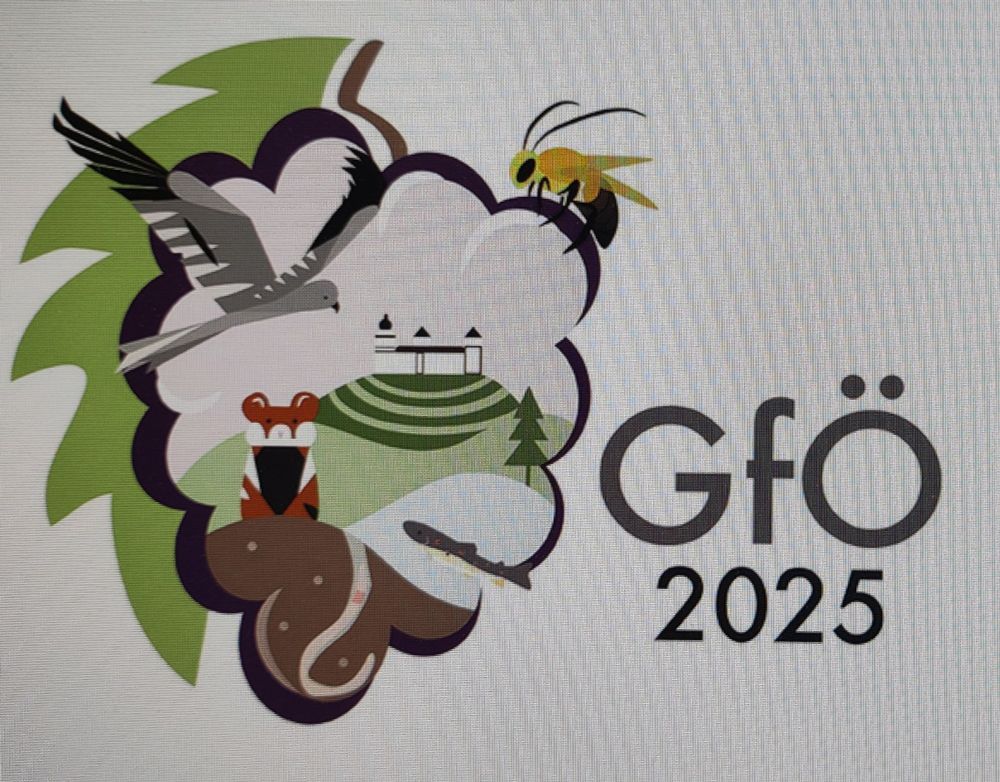
Logo of the 2025 Annual Meeting of the GfÖ in Würzburg, Germany.
Fellow Ecologists,
The #gfoe2025 @gfoesoc.bsky.social call for papers has just been published. Please submit your abstracts for exciting talks and engaging posters to present in Würzburg in September!
gfoe-conference.de/index.php?ca...
@uni-wuerzburg.de @globalchangeeco.bsky.social
02.04.2025 12:22 — 👍 33 🔁 23 💬 1 📌 0
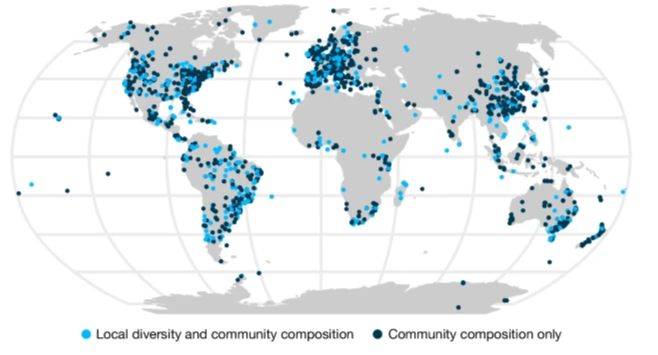
World map showing origin of the data
Our study ‘The global human impact on biodiversity’ is out in Nature!
Through an unprecedented synthesis (2133 studies!) we show that humans are not only shrinking species numbers—but reshaping entire communities across the planet. 🌍🌐🐟🌿🪲
www.nature.com/articles/s41...
26.03.2025 16:31 — 👍 170 🔁 77 💬 3 📌 5

Stationary sites of a Bluethroat breeding Central Siberia and tracked with light-level geolocators in comparison with previously tracked Bluethroats from Europe and East Siberia.
New #ornithology paper ⏰
#birdmigration of a Bluethroat from Siberia along the Central Asian flyway to India/Pakistan
doi.org/10.1007/s103...
Based on BSc thesis of Sarah Strubbe & together with many collaborators 🇷🇺🇩🇪🇩🇰🇨🇭 incl. @ramonaheim.bsky.social
Great fieldwork in Siberia during pre-war times
18.03.2025 08:22 — 👍 8 🔁 4 💬 0 📌 1
🌳 These heterogeneous burn areas contain small unburned patches that may be crucial for post-fire vegetation recovery.
🏞️ Pre-fire topography and vegetation conditions were key predictors for burn patterns, offering potential improvements for future fire spread models.
17.03.2025 10:51 — 👍 0 🔁 0 💬 0 📌 0
🛰️ We used high-resolution (3 m) satellite imagery to map patchy tundra fire scars from the extreme 2020 Siberian fire season.
🔍 Our fine-scale analysis revealed mixed burned/unburned areas missed by previous studies, potentially underestimating fire effects like carbon emissions.
17.03.2025 10:51 — 👍 0 🔁 0 💬 1 📌 0
Associate Senior Lecturer in Earth and Environmental Data Science
Associate Senior Lecturer in Earth and Environmental Data Science
At the Department of Earth Sciences, we
🚨We are hiring🚨ECR with a PhD within 7 years? Tenure track position (akin to Assistant Prof) in Earth and Env Data Science at U of Gothenburg, Sweden. Expertise in remote sensing and machine learning. Work on climate change, Earth systems, biodiversity, #EO, #UAV Deadline May 10 tinyurl.com/58ft38du
15.03.2025 15:22 — 👍 74 🔁 58 💬 2 📌 4
Thank you, Robert!
16.03.2025 08:10 — 👍 0 🔁 0 💬 0 📌 0
Thanks a lot for this Pack! Could you add me as well, please?
16.03.2025 06:40 — 👍 1 🔁 0 💬 1 📌 0

Coloured dots on a circumpolar Arctic map show data from the 15 datasets included.
We call for future studies to address possible tundra ecosystem shifts linked to fires, using methods that cover greater temporal and spatial scales.
15.03.2025 14:01 — 👍 0 🔁 0 💬 0 📌 0
We hypothesise that post-fire tundra recovery, coupled with climate change, may not return to pre-fire conditions.
We propose two climate-fire driven trajectories:
1) Low fire frequency 🔥: Increased woody vegetation 🌳
2) High fire frequency 🔥🔥🔥: Grass dominance 🌾
15.03.2025 14:01 — 👍 0 🔁 0 💬 1 📌 0

Trends in the long-term development of vegetation cover of five plant functional types after tundra fires
Our review synthesises current knowledge on post-fire vegetation cover trajectories in Arctic tundra ecosystems:
15.03.2025 14:01 — 👍 2 🔁 0 💬 1 📌 0

Postdoctoral Researcher, Biodiversity Change
Postdoctoral Researcher, Biodiversity Change
Fab-looking postdoc in biodiversity change with Julia Kemppinen at @helsinki.fi to work on plant-microclimate relationships:
jobs.helsinki.fi/job/Helsinki...
31.01.2025 14:04 — 👍 7 🔁 5 💬 0 📌 1
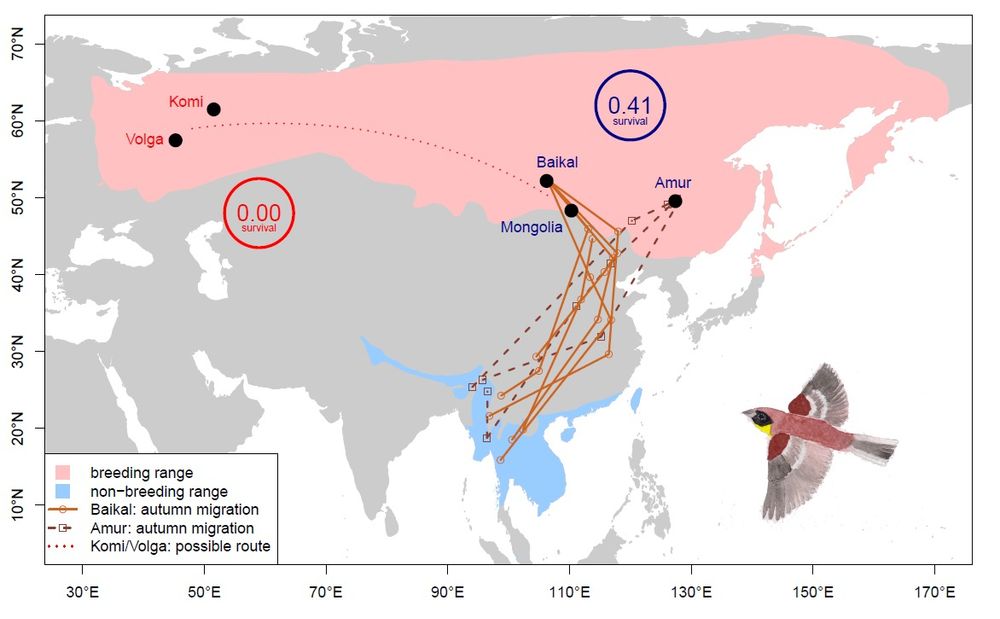
Possible migrations routes and survival estimates for eastern and western populations of Yellow-breasted Bunting.
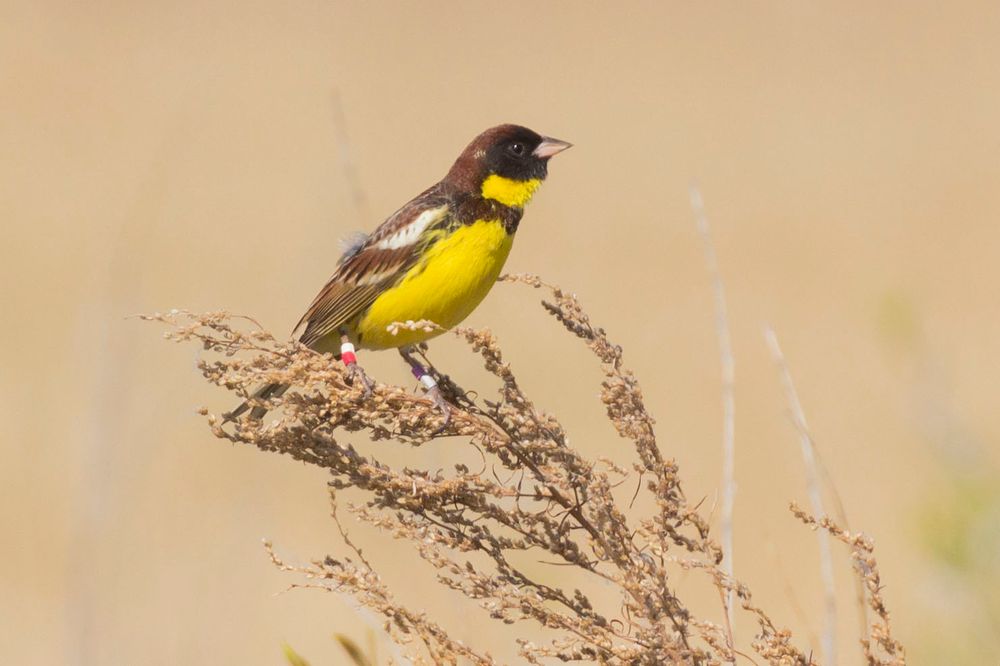
Yellow-breasted Bunting with coloured leg rings and tracking device (geolocator) on its back
Finally published: migration routes and adult survival of the critically endangered Yellow-breasted Bunting
doi.org/10.1038/s415...
-moderate survival in E but no returning birds in W
-long autumn (moult) stopovers in China
Many thanks to all collaborators in 🇷🇺🇩🇪🇲🇳🇹🇭🇲🇲
#animalmigration #ornithology
08.01.2025 14:55 — 👍 40 🔁 25 💬 0 📌 0
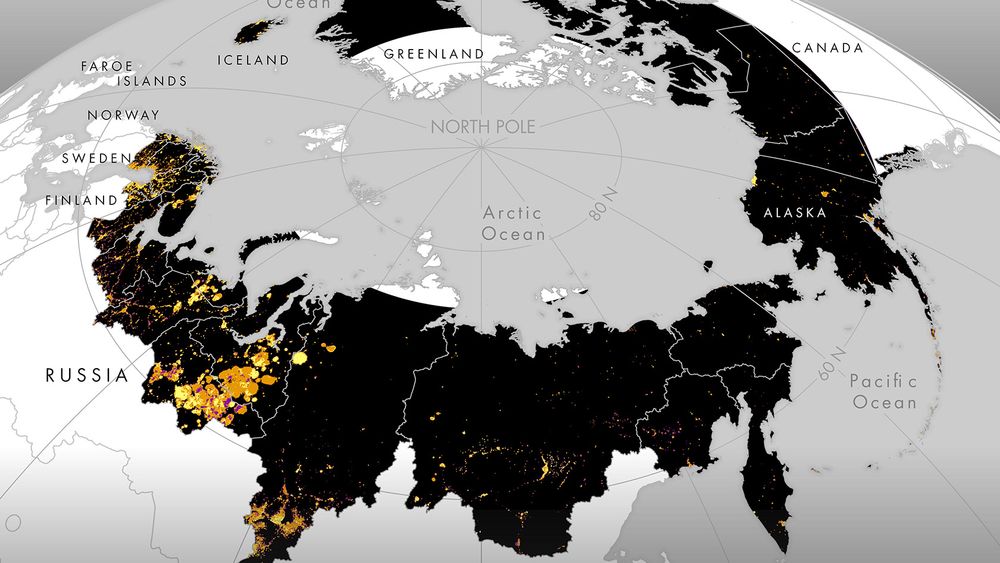
Oil and gas extraction regions are the hotspots of light-emitting human activity in the Arctic
Industrial activity in the Arctic is rapidly increasing and now we can map hotspots of development at pan-Arctic scale. Our latest paper is out.
www.pnas.org/doi/10.1073/...
22.10.2024 08:06 — 👍 4 🔁 3 💬 0 📌 0
Polar biogeoscientist at Durham University, working on sea ice reconstruction.
Palaeoenvironments | geochemistry | dendrochronology | Arctic environment & climate
PhD student at ANU (Ecology and Evolution) studying social behaviour of superb fairy-wrens
MSc in Biogeosciences, BSc in Natural Sciences @LaStatale, Milano
#birds #animalbehaviour #sociality
https://scholar.google.it/citations?user=jgsCs8kAAAAJ&hl=it
Cognitive zoologist investigating the evolution of animal cognition, particularly in response to fire (pyrocognition). Amateur wildlife photographer based in southern Sweden. More interested in rare behaviours than rare species.
International research centre for regional development and planning located in the heart of Stockholm. We are bridging policy and research for a thriving, sustainable Nordic region and beyond.
Professor in Theoretical ecology with a special interest in ecological networks
Geographer asking ecological questions 🍃☘️🌿 Assistant professor in biodiversity change at University of Helsinki 🏔️ Subject editor at Oikos helsinki.fi/biodiversity-change
Tundra community ecology postdoc @TeamShrub @UBC | He/Him | Data science and ecology nerd 🛰🌲| hobbies include dancing, cycling and hiking 🎶 🚲 🏕
University of Copenhagen I Forest Ecology | Wildlife Ecology | Trophic Interactions | Human-Wildlife Coexistence | Arctic-Boreal-Temperate-Tropical
International Biodiversity Consultants Ltd (IBC) is an independent biodiversity and ecology specialist consultancy dedicated to conserving and enhancing our environment with experience worldwide. Link: https://linktr.ee/ibioconsultants
Doctoral researcher at the University of Helsinki looking into Arctic biodiversity
Doctoral student at @arctic_centre / @helsinki.fi
Interested in #plantecology, #ecosystemfunctioning and #socioecology of the cold and remote regions of the globe 🗻 Avid hiker and climber
Assistant Prof of Forest Ecology in southern Appalachia. Interested in climate change effects on forest plants, especially phenology, ecophys, and species interactions. He/him
Views my own
🧪🌎🌱📜🌐
More at https://peacchlab.com
Arctic & Alpine Ecology | Ecosystem gas fluxes | R programming | Fieldwork safety & inclusivity | Open science | Free-heeler & Cyclist
🇨🇭 🇨🇦 🇽🇰 🇩🇰 🇬🇱 🇷🇺 🇦🇹 🇧🇻 (in that order)
jogaudard.github.io/CV_jgaudard
Professor passionate about student success & team science #firstgen #Brassica enthusiast walking Dogs of the Plant World
#Agriculture #Food #HigherEd #EduSky #Agsky #SciComm & more
#Soil #Crop #Science ; opinions mine
Peer-organised workshops for PhD-, MSc- and BSc- students in Ecological Modelling. We nurture a community among scientists of the future!
Working group of the GfÖ
Birder, photographer, recordist - serious about: migration, traveling and palearctic passerines - based in Germany.
Birds and other stuff (and drones) 🐣
PhD student at Uni Münster | Remote Sensing and Spatial Modelling Research Group
Led by Prof. Ingolf Steffan-Dewenter, we’re the 🐝-hive of biodiversity research at the University of Würzburg’s Biocenter, Germany 🇩🇪 From buzzing tropical forests to European farmlands, we decode how climate and land use changes shape the web of life.
Double Degree International Master Program between 🇩🇪 Würzburg & 🇳🇴 Bergen in 🌱Ecology, 🌿Conservation & 🌡️Global Change
https://www.ecology-conservation.de/