📢 Study out in Research & Politics!
We (@lukasbirkenmai1.bsky.social @wurthmann.bsky.social @msaeltzer.bsky.social) find that directly elected MPs talk more about local & deprived places than list MPs on social media.
🔍 doi.org/10.1177/2053...
Some Highlights [1/3]
25.02.2026 17:33 —
👍 47
🔁 19
💬 4
📌 1

Meet @tevoelker.bsky.social, one of our Visiting Scholars from
@wzb.bsky.social. Join her TODAY for a seminar on “Democratic Resilience: How Parties, Civil Society, and the Media Resist Far-Right Politics.”
🗓️ Feb 25 @ 2:00 - 3:15pm
🔗 ces.fas.harvard.edu/events/2026/...
25.02.2026 14:58 —
👍 17
🔁 6
💬 0
📌 0

As we write our final editorial for European Societies, we return to the spirit of our first editorial (Präg, Ersanilli and Gugushvili, 2022) and to the question that guided our tenure: did we deliver on what we promised? At the outset, we set out a twofold vision. We wanted to keep European Societies a genuinely general sociology journal with a focus on Europe and European sociology, open to all substantive areas and to authors worldwide. At the same time, we wanted to modernize the journal by lowering barriers to participation, moving toward open access and open science, and by running peer review as fairly, comprehensively, and efficiently as possible. Looking back, we believe the direction of travel has been consistent with that agenda, even if some constraints have become more pronounced as submissions have grown.
The most tangible step toward barrier reduction has been the shift in the journal's publishing model. The move to MIT Press and the adoption of a noncommercial, diamond open-access model have made the journal free to read and free to publish in. This has mattered not only as an institutional achievement by ESA, but also as a signal of what a flagship journal of the European Sociological Association can be: a truly public scholarly resource rather than a gated space shaped by the ability to pay. In parallel, we worked to reduce friction in submission and production by making procedures more predictable and less resource-intensive for authors, and by strengthening the journal's commitment to transparency, including the routine expectation of replication materials for quantitative work published in the journal (Präg, Ersanilli and Gugushvili, 2025). We have thought of these changes as working on “access” and “voice” simultaneously. By “access,” we mean making it easier for people to read the journal and to submit their work. By “voice,” we mean that a broader range of scholars, institutions, and regions appears on our pages and shapes the debates. Bot…

European societies in motion, and a commitment to voice
A general sociology journal should reflect the major currents shaping European societies, not by chasing headlines, but by publishing sociological work that helps explain how Europe is changing. Over the past years, the journal has continued to engage research on inequalities and social stratification, climate change and ecological transition, migration and shifting borders, transformations in work and welfare, population aging and health inequalities, and the reconfiguration of social trust and political contestation. The full-scale Russian invasion of Ukraine in 2022 further underlined how quickly the horizon of “normal” European development can rupture, and how urgent it becomes to understand societies that have too often been treated as peripheral in general sociological publishing. The Special Issue on understanding Ukrainian society before and after the invasion (Martsenyuk et al., 2024) was therefore an attempt to contribute to that understanding while also practicing what we had argued for from the start: that underrepresented parts of Europe should not appear only through external observation, but should be visible through scholarship that is locally grounded, rigorously theoretical, and fully integrated into European sociology.
Throughout our tenure, we also sought to ensure that the journal provided space for the plurality of sociological traditions across Europe. European sociology remains multi-paradigmatic and unevenly structured by regional and institutional inequalities. We therefore aimed to combine a high threshold for publication with broad openness to different intellectual styles, methods, and substantive agendas, and to keep ourselves accountable by paying attention to patterns in submissions and editorial outcomes across regions and approaches. This is unfinished work, but it is work that cannot be postponed if we want a journal that represents European sociology as it exists, rather th…

the structural reality remains that a general journal with finite capacity cannot publish all of the strong sociology it receives, even when that sociology deserves a wide readership.
This pressure is intertwined with another growing challenge: the difficulty of securing peer reviewers. Reviewing is the central infrastructure of scholarly publishing, but it rests on time and goodwill that are increasingly stretched. Across our term, it has become harder to find the right expertise quickly, particularly for more specialized topics or for underrepresented contexts where the pool of suitable reviewers is smaller. We therefore want to thank reviewers once more, not as a ritual, but as recognition that the journal's quality and fairness depend directly on their labor. We also hope that our community continues to treat reviewing as part of academic reciprocity, because without a sustainable reviewing culture, no editorial team can reliably balance speed, rigor, and equity.
Thanks, acknowledgments, and handover
We owe special thanks to Patrick Präg, who left his editorial role slightly earlier but contributed enormously to the journal's direction and to the everyday work that makes a journal function. His intellectual judgment, practical ambition, and commitment to fairness and transparency shaped many of the changes implemented during our tenure, and the journal is stronger because of his contributions. We also thank our associate editors, without whom our work would have been impossible: Plamen Akaliyski (Lingnan University), Çetin Çelik (Koç University), Roxanne Connelly (University of Edinburgh), Ivana Dobrotić (University of Zagreb), Marta Dominguez Folgueras (Sciences Po), Magne P. Flemmen (University of Oslo), Pablo Gracia (Autonomous University of Barcelona), Mobarak Hossain (London School of Economics and Political Science), Mathieu Ichou (INED), Katya Ivanova (Tilburg University), Cyril Jayet (Sorbonne University), Agnieszka Kubal (University of Oxford), Anna K…
An era has come to an end
04.02.2026 10:30 —
👍 61
🔁 5
💬 6
📌 4


Last week I started as Visiting Scholar at Harvard's Center for European Studies, and I'm super excited to be here!
Thanks to @dziblatt.bsky.social & everyone at the Center for hosting me and the warm welcome.
I'm here til early May -> let me know if you're in the Boston area and want to catch up!
04.02.2026 14:16 —
👍 23
🔁 0
💬 0
📌 0
Herzlichen Glückwunsch!!🎉🎉
27.01.2026 07:31 —
👍 1
🔁 0
💬 1
📌 0

Postdoctoral Position at the Cluster of Excellence “The Politics of Inequality”
Deadline: 20 February 2026, 12:00 pm CET
🚨 Postdoctoral Position at the University of Konstanz 🚨
We’re hiring a post-doc for our @excinequality.bsky.social project on political elites and decision-making.
4-year position | Deadline: Feb. 20 | Start: Sept 2026
Please share widely 🙏
The ad is here stellen.uni-konstanz.de/jobposting/f...
23.01.2026 12:44 —
👍 51
🔁 55
💬 0
📌 1


In just over eight months, Berlin will hold its 20th state election since 1946. While its well known East West divide in voting behaviour is often attributed to the city’s former split into capitalist and socialist halves, these differences existed even before the city’s division. A thread. 🧵
23.01.2026 07:11 —
👍 99
🔁 28
💬 6
📌 0

Promotional graphic from Cologne Graduate School showing a person holding a doctoral certificate folder. Text reads: “Interested in a doctoral programme? Apply now. Doctoral Scholarship Business Administration.”
🎓 Advance your academic career!
The Cologne Graduate School (Univ. of Cologne) offers a 3-year PhD scholarship in Business Administration starting Oct 1, 2026. 🌐
Focus: analytics, AI & digital transformation.
Apply by Mar 15, 2026 👉 uni.koeln/JQGW2
#DoctoralScholarship #PhDOpportunity #wisocgn
22.01.2026 12:12 —
👍 2
🔁 1
💬 0
📌 0

Markets and Mobility: How Employers Structure Economic Opportunity

Intergenerational mobility, measuring the ability to achieve economic success regardless of family background, is a critical reflection of a society’s commitment to equality of opportunity. Rising income inequality has raised concerns about the potential erosion of upward mobility. While education has traditionally been viewed as the path to mobility, its transformative power is facing challenges in a rapidly evolving job market. This project reorients the focus of intergenerational mobility research by highlighting the labor market as an arena for the reproduction of advantage. It employs a comparative approach, using administrative data from four countries: Sweden, Austria, England, and the United States. It also incorporates evidence from a broader set of nations through cross-national surveys, longitudinal household surveys, labor force surveys, secondary data, and digital trace data. The project employs cutting-edge empirical methods, including quasi- experimental designs, event studies, within-family comparisons, decomposition analyses, counterfactual simulations, and diagnostic checks to rigorously assess the extent of inequalities in the labor market. The research investigates how family background influences the sorting of individuals to employers and workplaces, accounting for education and occupation, and explores variations in career progression within and between employers. It comprehensively catalogues and assesses mechanisms shaping workplace inequality, contributing to the development of social closure theory. Additionally, the project evaluates intervention strategies, encompassing both employer practices and government actions, to promote fair opportunity in the labor market.
JOB! I'm hiring a postdoc for 2 years on my ERC MaMo project.
Looking for someone with strong quant methods, ongoing work close to the project's aims, and a desire to publish in sociology. Start flexible in the next 12 months.
Formal call out shortly, but contact me first.
21.01.2026 12:32 —
👍 101
🔁 109
💬 0
📌 6

Happy to share this new paper @jeppjournal.bsky.social with my great colleagues @dweisstanner.bsky.social & Carsten Jensen.
In "Winning with equality", we show "how left-wing parties attract votes but [in doing so] amplify electoral cleavages"
www.tandfonline.com/doi/full/10....
Key points in 📈👇
19.01.2026 09:45 —
👍 42
🔁 15
💬 1
📌 0
That looks great. I’ll see you there in a few weeks!
09.01.2026 13:40 —
👍 3
🔁 0
💬 0
📌 0

"Walk like a penguin." 🐧❄️
Good advice for snowy days in French media.
07.01.2026 15:22 —
👍 5
🔁 3
💬 1
📌 0


📣 Kicking off 2026 with a new article in @eepolitics.bsky.social!
When do voters with left-wing economic views support populist radical right parties?
Many supporters of 🇵🇱 PiS are left-authoritarians (left-wing econ & authoritarian socio-cult views)... 1/4 👇
www.tandfonline.com/eprint/EISET...
07.01.2026 11:40 —
👍 30
🔁 13
💬 1
📌 2
🧵 PhD position (75%) in Political Behavior / Political Communication / CSS
📍 LMU Munich | ⏳ 3 years | 🗓 start March–May 2026
We’re hiring for DemocraGPT, a @bidt.bsky.social-funded project developing an AI-based training for difficult conversations in times of growing polarization
06.01.2026 09:32 —
👍 44
🔁 41
💬 2
📌 1
Was übrigens alle dieser Bücher gemeinsam haben, ist, dass sie sich mit dem Schutz unserer Demokratie vor Bedrohungen von innen oder außen beschäftigen - das für mich 2025 und auch 2026 wichtigste Thema. Aufgeben ist keine Option!
28.12.2025 09:19 —
👍 85
🔁 16
💬 1
📌 1
„Wo wir wie wählen“ von @hudde.bsky.social: „Das Buch verknüpft die Analyse von Wahlergebnissen mit sozialstrukturellen Daten und Gesprächen vor Ort und zeichnet dadurch kenntnisreiche Lokalportraits ausgewählter deutscher Orte.“ (Klappentext)
2/6
25.12.2025 07:27 —
👍 32
🔁 1
💬 1
📌 0
Freut mich riesig, mit "Wo wir wie wähle" in dieser Top-5-Sachbuchliste zu sein!
Gemeinsam mit @camlinger.bsky.social @onachtwey.bsky.social @jhillje.bsky.social @carlomasala1.bsky.social @heatherweigandt.bsky.social.
27.12.2025 16:59 —
👍 4
🔁 0
💬 0
📌 0

Lektor at home verabschiedet sich in die Weihnachtspause. Am 5. Januar öffnet er sein Homeoffice wieder. Für gute Lektüre ist bis dahin gesorgt, mit Büchern u.a. von @meronmendel.bsky.social, @alexanderthiele.bsky.social, @hudde.bsky.social und @detlef.bsky.social.
17.12.2025 10:24 —
👍 12
🔁 2
💬 1
📌 1

Germany has a lawyer problem
Its endless bureaucratic rules trap would-be reformers
This long-term thread will collect stories about Germany's absurd, over-lawyered and court-heavy bureaucracy following my Free Exchange column this week. www.economist.com/finance-and-...
16.12.2025 10:45 —
👍 69
🔁 16
💬 6
📌 4

Research Position / PhD Researcher (m/f/d) - CRC 1...
<div style="text-align: justify;">The Collaborative Research Centre (CRC) 1342, "Global Dynamics of Social Policy," has been...
🚨Job alert: We are looking for a PhD Researcher at Bielefeld University
✨Research on policy learning, and work-family policies in Mexico & Germany, within the @sfb1342.bsky.social on global dynamics of social policy
Applications until 12.1.26, details at: uni-bielefeld.hr4you.org/job/view/473...
15.12.2025 08:14 —
👍 9
🔁 8
💬 0
📌 1

Trigger Points
Trigger Points - Inequality and Political Polarization in Contemporary Society; Available open access digitally under CC-BY-NC-ND licence. Is society really polarized? This book explores key conflicts...
An English translation of our book "Trigger Points. Inequality and Political Polarization in Contemporary Society" will come out @brisunipress.bsky.social: bristoluniversitypress.co.uk/triggerpoints
It studies the social bases of political divides over migration, climate, diversity & redistribution
04.12.2025 11:37 —
👍 95
🔁 25
💬 0
📌 0

A dark basemap of the area around Cologne, showing the noise levels produced by road traffic. Highways and major roads with noise levels of 75 dB(A) or more are visible. Noise spreads from these roads, affecting slightly distant areas, too.
Road traffic is a major source of environmental noise. This map shows 24-hour LDEN levels for roads in and around Cologne, based on data from highways, primary roads, and additional urban streets with relevant traffic volumes.
[CORRECTION]
#30DayMapChallenge Day 29: Raster #rstats #ggplot2
30.11.2025 17:16 —
👍 10
🔁 2
💬 1
📌 0
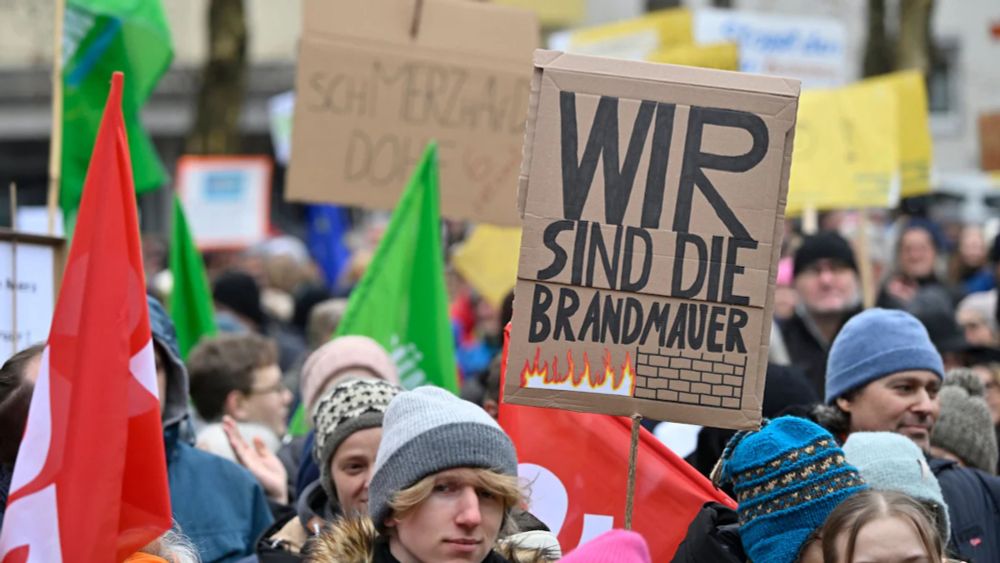
Demokratie: Wenn die Rechte mitregiert, wird sie nicht geschwächt – im Gegenteil
Eine Untersuchung von 57 Ländern zeigt: Wenn die Rechte in Verantwortung kommt, gewinnt sie dazu. Daraus lässt sich für Deutschland lernen.
📣 New op-ed in Süddeutsche Zeitung: What the data say about the “Brandmauer”
I summarize key findings from a study with @anninahermes.bsky.social across 57 democracies
➡️ Far-right parties don’t get weaker in government, they get stronger (~6 points by the next election)
tinyurl.com/4j6jaud2
18.11.2025 20:51 —
👍 186
🔁 77
💬 3
📌 12
YouTube video by ECONtribute: Markets & Public Policy
Frauen links, Männer rechts? ReStart Talk mit Ansgar Hudde
Vielen Dank für die spannende Diskussion bei unserem virtuellen #ReStart Talk "Frauen links, Männer rechts?" mit @hudde.bsky.social! Den Vortrag gibt’s nun auch auf unserem YouTube-Kanal👉: www.youtube.com/watch?v=JZvC.... @barbaraboelmann.bsky.social @unicologne.bsky.social @wisocologne.bsky.social
17.11.2025 14:51 —
👍 8
🔁 3
💬 0
📌 1
That was such an insightful talk and a fun discussion. Many thanks to @hudde.bsky.social and the @econtribute.bsky.social team! 😊
17.11.2025 20:52 —
👍 4
🔁 1
💬 0
📌 0
Interesting to see that in 2025 the gender gaps for the first time almost perfectly align with the Left (women) - Right (men) divide.
14.11.2025 19:35 —
👍 14
🔁 5
💬 0
📌 1

Welche Folgen haben die zunehmenden Unterschiede im Wahlverhalten auf das Beziehungsleben junger Menschen? Beim virtuellen #ReStart Talk spricht @hudde.bsky.social @unicologne.bsky.social über seine Forschungsergebnisse zu Geschlecht und politischer Polarisierung 👉: econtribute.de/de/event/res...
12.11.2025 08:41 —
👍 3
🔁 1
💬 0
📌 0

The Parental-Happiness Fallacy
Where commentary on moms’ satisfaction goes wrong
JMF in the media: The Atlantic referenced JMF research in a piece exploring "how parental well-being and socioeconomic status interact": tinyurl.com/2u6dn5v3
The JMF article looked at the associations between parenthood and life satisfaction and meaning in life: tinyurl.com/3z8rfarx
04.11.2025 21:20 —
👍 3
🔁 1
💬 0
📌 0