An image of the Barrington Hippo skeleton from behind showing off the discrepancy in hip size. The left hip is much larger than the right.
Notice anything strange? 🦛
You may have spotted a difference in the size of its hip bones. This is because the Barrington Hippo is a composite skeleton. One hip bone is from a female individual and the other comes from a male! The larger hip bone is from a female.
#FossilFriday #BarringtonHippo
23.01.2026 16:50 —
👍 10
🔁 1
💬 0
📌 0

A staff member holding the horseshoe crab specimen. Behind it the cabinet containing the other Solnhofen specimens can be seen. The crab itself is the size of a palm and it’s main body is a characteristic horseshoe shape with a long tail.

A close up of the horseshoe crab showing in more detail the exceptional preservation of the specimen. It looks like a perfect impression of the animal.
The first #FossilFriday of 2026 is this beautifully preserved horseshoe crab.
This horseshoe crab is from the Limulus genus and was found in Solnhofen, a site known for its exceptional preservation of fossils.
#FossilFriday #HorsehoeCrab #Palaeontology #SedgwickMuseum #Solnhofen
09.01.2026 16:50 —
👍 15
🔁 2
💬 0
📌 0

Snowy cave bear sculptures on the outer staircase to the Sedgwick Museum.
The thermostat's reading Pleistocene at the @sedgwickmuseum.bsky.social.
05.01.2026 08:52 —
👍 29
🔁 2
💬 0
📌 0


Heading to @nhmlibraryarchives.bsky.social today on the trail of this woman: Gertrude Elles, graptolite palaeontologist extraordinare. Left: the young Victorian hammer-wielder, from a photo in the @sedgwickmuseum.bsky.social. Right: her sagely postwar portrait at Newnham College, Cambridge.
16.12.2025 08:15 —
👍 35
🔁 8
💬 0
📌 0

Jack Ashby, a man wearing a green jumper, standing in front of a Giant Deer.

Richard Fallon, wearing a Sedgwick Museum t-Shirt, standing with a diplodocus model speaking to visitors.

A collections team staff member wearing a Sedgwick Museum t-shirt pointing to an Ichthyosaur snout. They are speaking to visitors.

The Sedgwick Museum Archivist standing at their stall talking to 2 visitors. The stall has archive facsimiles on it.
Behind the Scenes at the Sedgwick Museum. 🦖
We explored our Collections Team’s favourite specimens, the archive and the evolution of scientific ideas with @richardfallon.bsky.social.
We heard from @jackdashby.bsky.social about his new book on Natural History Museums.
Thank you for coming!
28.11.2025 17:05 —
👍 12
🔁 3
💬 0
📌 0


A beautiful microscope in the @sedgwickmuseum.bsky.social collections connected — although we're not yet sure in what manner — with Gertrude Elles.
28.11.2025 10:28 —
👍 14
🔁 1
💬 0
📌 0

A drawer of rocks. There are rocks of many colours from grey to orange to red to purple. They are arranged in a gradient.

A drawer of shells. Most are spiral shells of a white colour sitting against the blue colour of the bottom of the drawer.
Sedgwick Museum Lates: Behind the Scenes uncovered
Free, 18+ evening event.
Thursday 20th November, 6-9pm
Delve into our work behind the scenes. Featuring @jackdashby.bsky.social ‘in conversation’ as we discuss his book ‘Nature’s Memory, Behind The Scenes at the World’s Natural History Museums’.
19.11.2025 15:49 —
👍 6
🔁 2
💬 0
📌 1

Sedgwick Museum Lates: Behind the Scenes Uncovered
Explore the Museum in an atmospheric evening setting, as we share our work and collections behind the scenes.
CALLING ALL #CAMBRIDGE MUSEUM & NATURAL HISTORY NERDS!
This Thursday, the fabulous @sedgwickmuseum.bsky.social opens late for "Behind the Scenes Uncovered" - alongside a bunch of cool activities, I'll be doing an "in-conversation" about my book #NaturesMemory.
www.eventbrite.co.uk/e/sedgwick-m...
17.11.2025 09:43 —
👍 35
🔁 16
💬 0
📌 0

Close-up of an ichthyosaur jaw, Myopterygius campylodon (Carter). Location: Madingley Road, Cambridge.
Walking down the Madingley Road today I'll be sure to look out for ichthyosaurs. In the @sedgwickmuseum.bsky.social, of course.
13.10.2025 07:05 —
👍 45
🔁 9
💬 1
📌 0
Please note - we advertised a similar role recently, but the role description and person specification have changed. Please do take some time to read over the further particulars before applying to check it’s the job for you! We look forward to hearing from you.
03.10.2025 09:14 —
👍 1
🔁 0
💬 0
📌 0

A picture of two Sedgwick Museum staff members looking at a book from the Archive. Across the picture are the words ‘We’re hiring’.

A page of text that reads:
Archive Assistant
Interested in developing your career in archives management?
This new role provides an exciting opportunity to work alongside the Museum Archivist, and contribute to the development and promotion of the Museum's archive as an international focus for collections research.
Hours: Full time, Fixed term (4 years)
Salary: £27,319-£31,236
Closing date: 12th October 2025
Interested in developing your career in archives management?
Keen to contribute to delivering a high quality service to archive users, and a great communicator?
This role could be for you.
Further information:
www.cam.ac.uk/jobs/archive...
03.10.2025 09:13 —
👍 5
🔁 7
💬 1
📌 0

A Planorbis discus from the Bembridge Limestone of the Isle of Wight, presented to the @sedgwickmuseum.bsky.social by none other than Lord Tennyson. There rolls the deep where grew the tree!
02.10.2025 13:36 —
👍 26
🔁 6
💬 0
📌 0
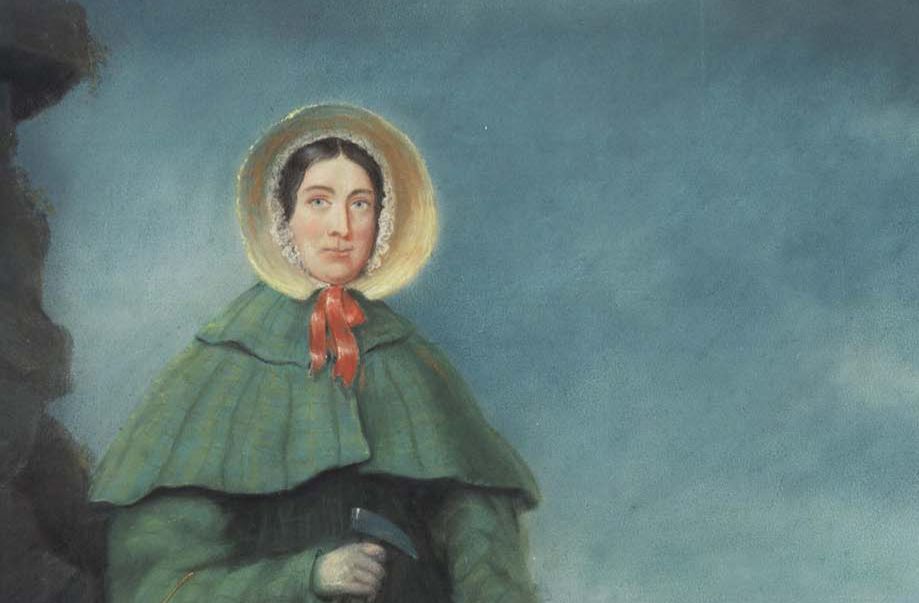
Portrait of Mary Anning wearing a green cloak and a straw bonnet tied with a red ribbon.

Portrait of a youngish Adam Sedgwick in a dark jacket and academic gown.
![Extract of a letter from Mary Anning to Adam Sedgwick: [I] 'trust you will be gratified with the Ichthyosaurus when you see it - I directed it to Professor Sedgwick Geological Society Somerset House'.](https://cdn.bsky.app/img/feed_thumbnail/plain/did:plc:vcl75pfg74dsskrzvynq5rez/bafkreielr3rwea5skxp4iqs5fd6bapiccsv7nt2tuja576qlose7uibcjm@jpeg)
Extract of a letter from Mary Anning to Adam Sedgwick: [I] 'trust you will be gratified with the Ichthyosaurus when you see it - I directed it to Professor Sedgwick Geological Society Somerset House'.
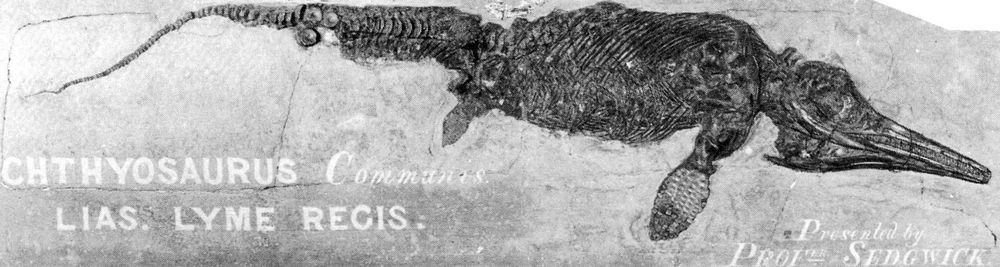
The ichthyosaur skeleton referred to in Mary Anning's letter, purchased by Adam Sedgwick and presented by him to the Cambridge University geological collection. Its head with its long, pointed jaws to the right and tail to the left and well-preserved body and paddles. The mount has a painted label 'ICHTHYOSAURUS Communis Lias. Lyme Regis. Presented by Profr. SEDGWICK.'
23 September 1835: Mary Anning writes to Cambridge geologist Adam Sedgwick in Dent, Yorkshire, anxious to hear that the £50 ichthyosaur she sent him earlier in the month, ℅ the Geological Society, met with his approval. It clearly did and it is still in the collections @sedgwickmuseum.bsky.social
23.09.2025 09:02 —
👍 22
🔁 4
💬 0
📌 0

An igneous rock with a large biotite crystal held in the hand of a Sedgwick Museum staff member. The crystal is so large, it is all you can see from this angle. It is green-back in colour but appears black in the image. Its sheet- like texture can be seen on its surface.

The same rock held at an angle that allows you to see other crystals in it. The other crystals are pink and white I colour. Another angle shows the sheet like texture of biotite from the side. The thin sheet layers can be seen clearly.
Today’s #MineralMonday is Biotite.
Biotite is a silicate mineral which is usually found in igneous or metamorphic rocks and commonly black or dark green in colour. It is a mica mineral which gives it the characteristic property of fracturing into fine, flexible sheets.
#Biotite #SedgwickMuseum
01.09.2025 15:18 —
👍 5
🔁 1
💬 0
📌 0
An illustration with text in the centre reading Summer at the Museums, What will you discover this summer? Surrounded by museum drawings, including a sun, crayons, butterfly, magnifying glass, telescope and dinosaur.
What will you discover this #SummerAtTheMuseums?
☀️🔎🔭🎨💎🦖
Check out our full summer events calendar online from today!
Browse all events and book your place: museums.cam.ac.uk/theme/summer
11.07.2025 10:01 —
👍 10
🔁 2
💬 0
📌 2

Pecten maximum held up outside the Museum with the building in the background. The fossil shell is the width of two of the staff member’s hands holding it up. It is an orangy-red colour. There are beautiful ridges in the shell.

A closer look at the fossil shell. A few marks can be seen on the shell which look like they were barnacles.
This majestic fossil shell is a #StaffFavourite. 🌊🐚
Commonly known as a scallop, this shell belongs to the Pectinidae family.
This fossil is approximately 3 million years old but Pecten maximus can still be found along the English coast today.
#Pectinidae #Bivalve #SedgwickMuseum
01.07.2025 15:46 —
👍 13
🔁 2
💬 0
📌 0
An illustration with text in the centre reading Summer at the Museums, What will you discover this summer? Surrounded by museum drawings, including a sun, crayons, butterfly, magnifying glass, telescope and dinosaur.
Sign up for family fun this #SummerAtTheMuseums! 💌 ☀️ 🗓️
Enjoy a great value day out with your family at local museums this summer. Join us to spark your imagination, explore big topics and enjoy time together.
Sign up to hear when the full events calendar launches: bit.ly/SummerAtTheMuseums
01.07.2025 08:56 —
👍 2
🔁 3
💬 0
📌 0

A window on which is our collaborative artwork. There are black letters stating ‘Everybody’s Welcome’ around them are a collage of coloured acetate paper. Some is different colours others have rocks under a microscope printed on them.

Visitors sitting and making their contribution to the collaborative artwork. There is microscopes through which you can look at minerals under a microscope. These were used as inspiration for the art.
We had a wonderful time celebrating Pride Month on Wednesday with everyone who attended our late opening, ‘Rock Up and Chill'. 🏳️🌈🏳️⚧️🦖
Thank you to everyone who attended the event and contributed to our collaborative artwork.
#PrideMonth #RockUpAndChill #QueerHistory #SedgwickMuseum #EarthSciences
27.06.2025 15:58 —
👍 4
🔁 0
💬 0
📌 0

A cut and polished stromatolite fossil held up in front of the Museum building.

A close up of the stromatolite fossil showing the layers and domes formed within. The layers are no more than a mm thick.
How old are the oldest known fossils?
This fossil is called a stromatolite which are the most ancient known fossils dating back approximately 3.5 billion years. Stromatolites were among the earliest lifeforms on our planet.
#Stromatolites #SedgwickMuseum #EarthSciences #EarthHistory
24.06.2025 15:13 —
👍 5
🔁 1
💬 0
📌 0
Want to find out more about trilobites and other ancient animals that evolved long before the dinosaurs? Drop in to our family, half-term holiday event on Tuesday 27th May and Friday 30th May from 10am – 1pm.
20.05.2025 10:21 —
👍 2
🔁 1
💬 0
📌 0
You can meet with Lara Uttinger, a scientist in the Department of Earth Sciences, to chat about long extinct animals and find evidence of them in the Museum. You will also get the chance to explore real fossils and use them to create your own trilobite replica fossil to take home.
20.05.2025 10:21 —
👍 1
🔁 0
💬 0
📌 0
Information and Support:
LGBT Foundation – Contact their helpline 0345 3 30 30 30 or email HELPLINE@lgbt.foundation
MindOut – Telephone 0300 7729855 or email info@mindout.org.uk.
Terrence Higgins Trust – Call 0808 802 1221 or email info@tht.org.uk.
07.05.2025 08:49 —
👍 1
🔁 0
💬 0
📌 0
At the Sedgwick Museum, we will always warmly welcome people from trans, non-binary, intersex and queer communities. We strive to nurture a space where everyone feels accepted and celebrated.
The minerals in the image are arranged in the colours of the transgender and non-binary flags.
07.05.2025 08:48 —
👍 2
🔁 0
💬 0
📌 0

Two pairs of hands holding a variety of minerals which are different colours. On the left, 5 minerals which are blue, pink and white are held in the same configuration as the transgender flag. On the right, 4 minerals which are yellow, white, purple and black are held in the same configuration as the non-binary flag. Underneath the hands is green foliage acting as a backdrop.
“Minerals are from the Earth and the Earth belongs to everyone. So everyone should be welcome in society.” – Y10 work experience student, 2022
07.05.2025 08:47 —
👍 8
🔁 1
💬 2
📌 0

A photograph of a skull belonging to an alligatoroid with the generic name of Dyplocynodon. The skull is sitting in a museum cabinet with other specimens on the shelf just below.

The Diplocynodon skull photographed at a closer angle to see the teeth in more detail. Other specimens in the cabinet can be seen in the background.
This toothy grin could once have been found in parts of England 35 million years ago. 🐊
This fascinating fossil is an extinct relative of the alligator and is thought to have enjoyed a similar diet of fish, mammals and birds. Its generic name is Diplocynodon.
#SedgwickMuseum #EarthSciences
01.05.2025 11:21 —
👍 6
🔁 2
💬 0
📌 0

A photograph taken in the Collections Research Centre in our Second Palaeontology Store. In the foreground is a drawer containing bivalves from the Jurassic. Behind the drawer is Julia photographing bivalves with Michael sitting just behind her. Cabinets full of drawers can be seen around them.

A close up of the drawer that Julia and Michael were working on when the photograph was taken. Each specimen is sitting in a small cardboard tray with a label in. The fossils are all creamy-white in colour.
Did you know bivalve fossils can provide information about past environments? 🌊
Michael and Julia, from the University of Cologne, have been studying fossil bivalves in our collection to understand if bivalve morphology is linked to the environmental conditions in which they lived.
#FossilFriday
25.04.2025 13:29 —
👍 9
🔁 4
💬 0
📌 0

A Gryphaea fossil held by a Sedgwick Museum staff member. The fossil is positioned standing up so we can see the two valves showing the characteristic curved thick walls.

A Gryphaea fossil held by a Sedgwick Museum staff member. The fossil is positioned side on so we can see the curve of the shell which is very reminiscent of a toenail.
Did you know this fossil is commonly referred to as a ‘Devil’s toenail’?
Gryphaea got the name ‘Devil’s toenail’ from British folklore. They were associated with the Devil due to their characteristic large, thick, curved shells that resemble toenails.
#MolluscMonday #SedgwickMuseum #EarthSciences
14.04.2025 15:45 —
👍 3
🔁 0
💬 0
📌 0
What kind of labour gets recognised, when we think about minerals in museums?
Who do we involve in recovering and telling their stories?
Helpful prompts from @ellietheelement.bsky.social in @originalgcg.bsky.social EDI symposium this morning, relevant to our thinking @sedgwickmuseum.bsky.social
09.04.2025 10:45 —
👍 10
🔁 5
💬 0
📌 2