Very excited to announce that I will be joining the Department of Psychological Science at Kennesaw State University as an Assistant Professor this upcoming Fall! ☺️
22.01.2026 17:10 — 👍 3 🔁 1 💬 0 📌 0
@rying.bsky.social
Cog Psych PhD candidate @ Iowa State University | eyewitness ID researcher | she/her | rcying.wixsite.com/site
Very excited to announce that I will be joining the Department of Psychological Science at Kennesaw State University as an Assistant Professor this upcoming Fall! ☺️
22.01.2026 17:10 — 👍 3 🔁 1 💬 0 📌 0
"AI-Faces by Illinois" include 1,152 AI-generated images of children by age (3-15), gender, eight racial background, and emotion (smile, angry, sad). Images (osf.io/vurm5/) and Preprint available(doi.org/10.31234/osf...) with @brendacstraka.bsky.social and @Dr. Michael Rizzo!
15.11.2025 03:54 — 👍 14 🔁 5 💬 1 📌 1
Excited to present in the Artificial Intelligence and Human Memory symposium at 3:45 alongside some really great researchers. Hope y’all can drop by! #psynom2025 @psychonomicsociety.bsky.social
21.11.2025 20:23 — 👍 1 🔁 1 💬 0 📌 0It's been 20+ years since researchers recommended that police videorecord lineups. But no one has empirically tested the diagnostic value of these videos... until now.
Here, we provide a compelling case to mandate the videorecording of lineup procedures.
Finding #3:
Witnesses' lineup behavior can diagnose high-confidence mistaken identifications. When witnesses are highly confident but their behavior indicates a weak and disfluent recognition experience, the CJS system should doubt their accuracy.
Finding #2:
Not only did witness behaviors discriminate between accurate and inaccurate decisions, but they also improved classification performance over and above confidence and decision speed.
Finding #1:
Accurate witnesses behaved markedly different than inaccurate witnesses—a strong and fluent recognition experience implied accuracy and a weak and disfluent recognition experience implied inaccuracy.
🚨 New preprint 🚨
Why should police video-record lineups?
We videorecorded 1496 witnesses as they completed lineups. We coded the behaviors that these witnesses demonstrated and subjected the resulting data to machine learning analyses.
Link and findings below!
Why are lineup rejections less diagnostic of innocence than suspect identifications are of guilt?
Take a look at our preprint for insight on this all-too-common finding of the eyewitness id literature.
 29.07.2025 23:57 — 👍 0 🔁 0 💬 0 📌 0
‼️ Another new preprint ‼️
Here, we find that video recordings of lineup procedures can aid us with diagnosing witness accuracy (over and above confidence and decision time).
This project provides even more evidence that the legal system should mandate video recording lineups.
That’s kinda the idea behind dual process signal detection theory (DPSDT)! DPSDT posits that positive decisions are governed by two processes - recollection and familiarity- whereas negative (rejection) decisions are only governed by familiarity.
29.07.2025 23:02 — 👍 2 🔁 2 💬 1 📌 0These findings contradict recent inferences that in the context of eyewitness lineups, target variability is less than or equal to lure variability and brings models of eyewitness memory in line with longstanding findings from the basic recognition literature!
29.07.2025 22:31 — 👍 0 🔁 0 💬 0 📌 0Here, we examined DPSDT and UVSDT models & found that they were able to account for residual asymmetry (& improved model fit relative to the EVSDT model). These models suggest that the visual recognition system is better at detecting target presence than target absence.
29.07.2025 22:30 — 👍 1 🔁 1 💬 2 📌 0When lineups are modified so that we always get suspect-specific confidence (see prev work on the Rule Out), the rejection-inferiority effect is reduced but not eliminated.
29.07.2025 22:30 — 👍 0 🔁 0 💬 1 📌 0Lineups are a flawed measurement tool. Suspect IDs & confidence directly map on to how well the suspect matches the witness’s memory for the culprit- a good proxy for guilt. Conversely, rejection decisions & confidence often measure memory strength of a filler.
29.07.2025 22:30 — 👍 0 🔁 0 💬 1 📌 0
🚨 New preprint available!
In this paper, we look at why lineups better inculpate the guilty than they do exculpate the innocent (the rejection-inferiority effect).
W/ Andrew Smith, Jim Lampinen, @nydia-ayala.bsky.social, & Ian Dobbins
🔗 www.researchgate.net/publication/...
Very excited to publicly share news about a new tool, Papercheck, that @debruine.bsky.social and me started to develop more than a year ago! In an introductory blog post, we explain our philosophy to automatically check scientific papers for best practices. daniellakens.blogspot.com/2025/06/intr...
17.06.2025 11:15 — 👍 178 🔁 79 💬 5 📌 6
For anyone interested in conducting lineup identification research, check out this valuable database of research materials generously shared by #SARMAC2025 presenter Ryan Fitzgerald, Stefana Juncu, @evaribbers.bsky.social and @evarubinova.bsky.social osf.io/vrj3u @sarmac2025.bsky.social
13.06.2025 15:30 — 👍 21 🔁 13 💬 1 📌 0Good luck on your talk- wish I could be there to see it!!! I’m really feeling the FOMO this year with so many cool eyewitness sessions 🫠
09.06.2025 21:16 — 👍 1 🔁 0 💬 0 📌 0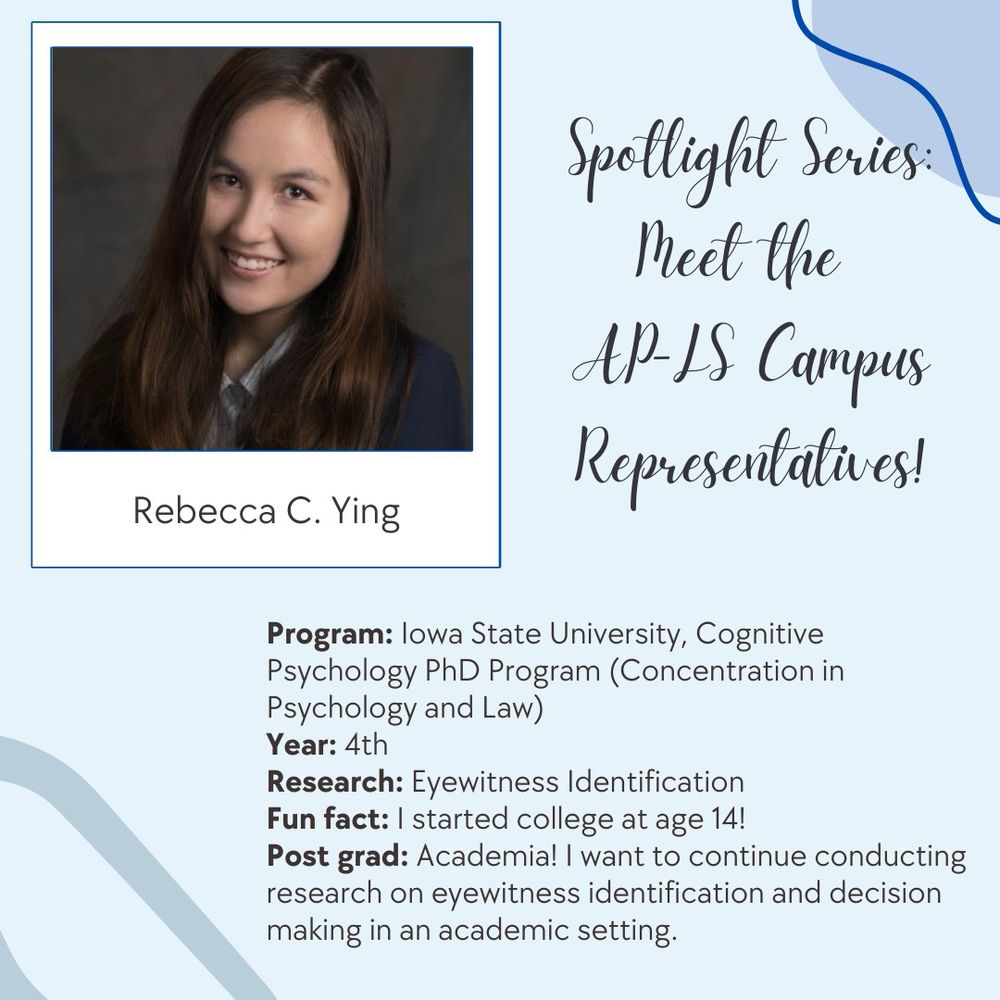
Meet the AP-LS Campus Representatives! Today we have Rebecca Ying from Iowa State University's Cognitive Psychology Ph.D. program.
01.04.2025 15:31 — 👍 5 🔁 2 💬 0 📌 0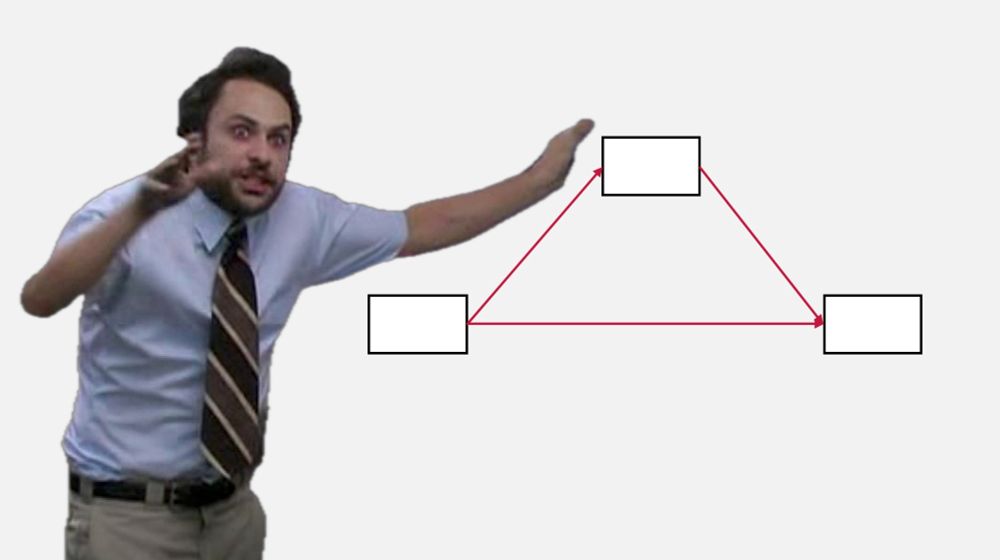
New blog post! In which I explain the issue with mediation analysis and sketch out one way to deal with the underlying causal inference problem -- in just a bit over 1,000 words!
If you have never found the time to read up on this, now is your chance.
www.the100.ci/2025/03/20/r...
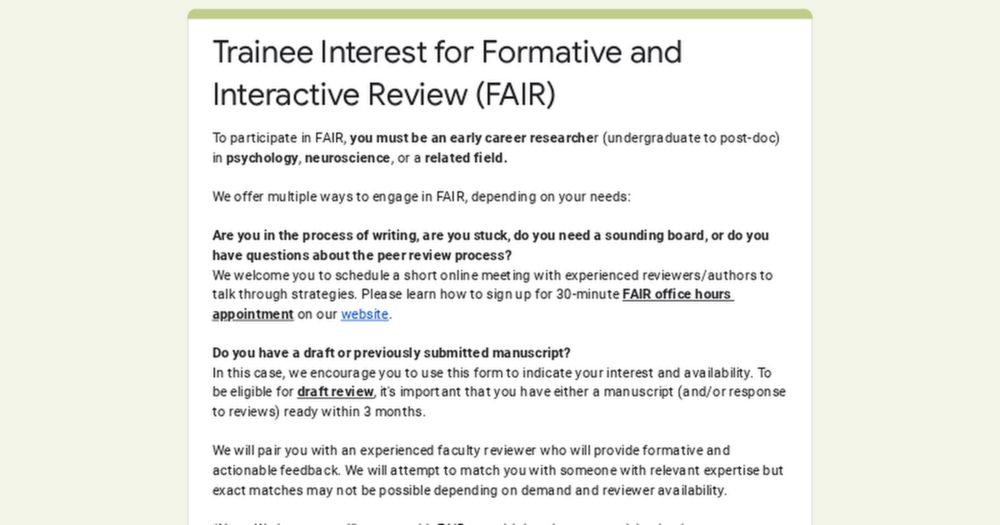
📚 Are you an early career researcher (undergrad to postdoc) in psych, neuro, or a related field?
Are you seeking feedback on an unsubmitted manuscript or a response to reviews?
Our “pre-review” program offers feedback from experienced reviewers!
👇 Learn more & apply:
go.iu.edu/rzfair
In Australia,
Risk assessment is the big
Forensic question.
(Not like the US,
Where competency is the
Biggest referral)
@tessneal.bsky.social
#APLS2025 #PsychLaw
#AcademicHaiku
Forensic tools used
In Australia pass the
Quality test more
(Compared to past look
At the psych tests we’ve used in
US court evals)
@tessneal.bsky.social
#APLS2025 #PsychLaw #AcademicHaiku
Double-blind lineups
are still susceptible to
admin influence.
- Jones, “Blind Lineup Administrators’ Behaviors and Eyewitness Identifications”
#APLS2025 #AcademicHaiku #PsychLaw
✨Back to doing APLS haikus ✨
Ideologies
mediate guilt perceptions
of extremist groups.
- Cunius, “Justification of Decisions Toward an Extremist Group Member”
#APLS2025 #Psychlaw #AcademicHaiku
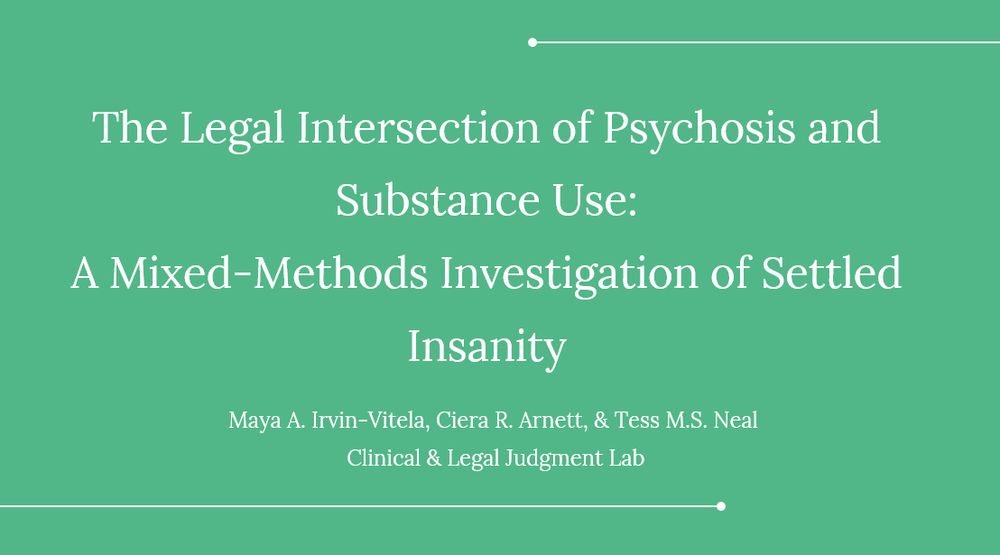
"The Legal Intersection of Psychosis and Substance Use: A Mixed-Methods Investigation of Settled Insanity" by Maya Irvin-Vitela, Ciera Arnett, & Tess Neal of the Clinical & Legal Judgment Lab.
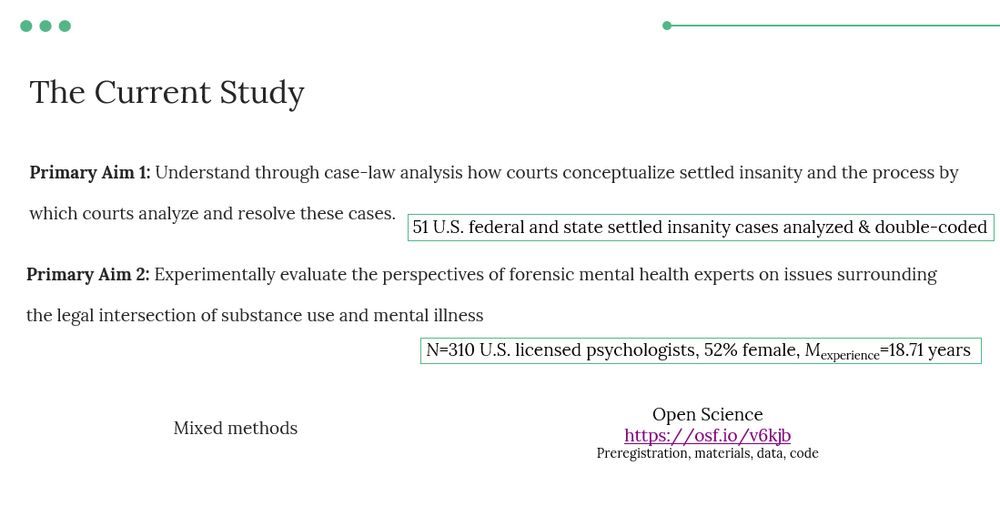
"The current study" slide that details the primary aims of the two studies comprising this work (case-law analysis of settled insanity cases in the U.S., and an experiment with 310 forensic mental health experts as participants). This work was preregistered and materials, data, and code are available on the OSF.
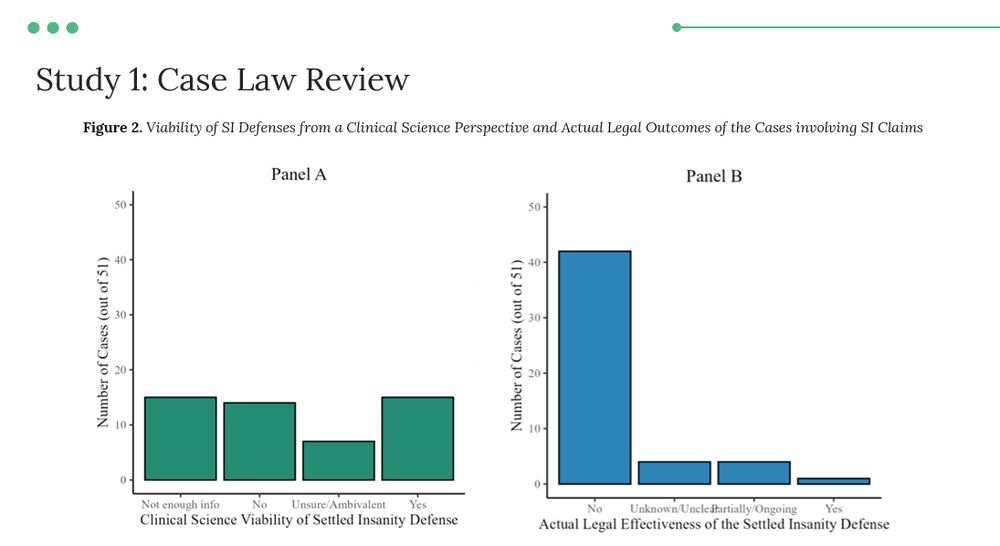
Case Law Review results showing that coders with clinical science training found about 30% of the cases reviewed as having some viability for settled insanity defense from a clinical science viewpoint, contrasted with the actual legal outcome of these cases in which just one case (2% of the sample) actually had a successful settled insanity claim.
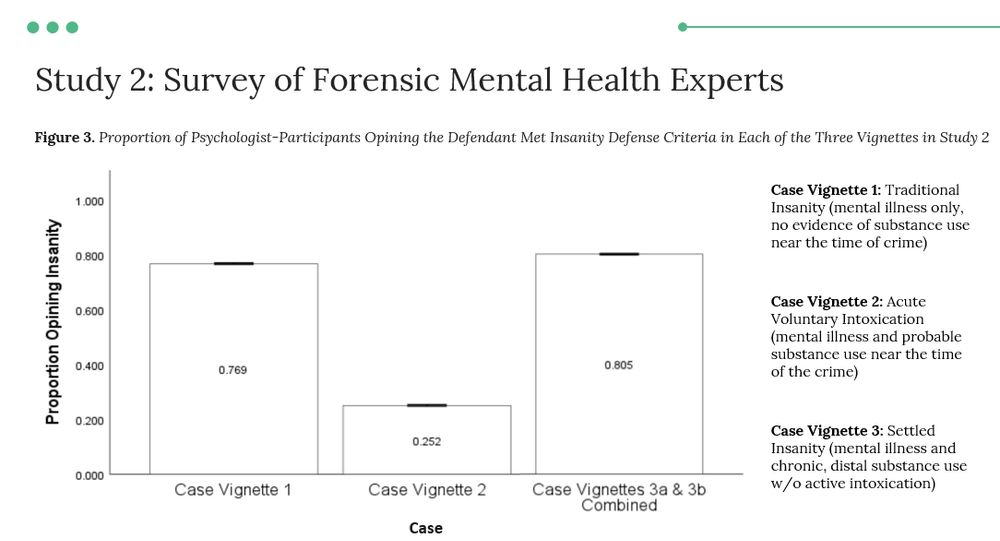
Results from experiment with forensic mental health experts, showing that mental health experts generally saw settled insanity as redundant to traditional insanity. Findings across the two studies showed legal and mental health professionals agree that acute, voluntary substance intoxication at the time of a crime generally precludes the use of an insanity defense...but cases where substance use is more distal are more complicated.
Maya Irvin-Vitela will be presenting this work in the Saturday 3/15 datablitz (5pm-6pm) in San Cristobol. This work is from Ciera Arnett's dissertation (Maya helped as a coder!). Interesting work & findings about psychosis, substance use, & insanity. #APLS2025 #Law #Psychology #PsychLaw #CLJLab
13.03.2025 21:09 — 👍 9 🔁 3 💬 0 📌 0I am! :)
20.02.2025 04:25 — 👍 1 🔁 0 💬 0 📌 0How could AI be used to assess eyewitness identification accuracy? Andrew Smith, @nydia-ayala.bsky.social and @rying.bsky.social discuss three ways AI could prove useful! @officialsarmac.bsky.social #PsychLaw psycnet.apa.org/doi/10.1037/...
12.02.2025 10:14 — 👍 5 🔁 4 💬 0 📌 0