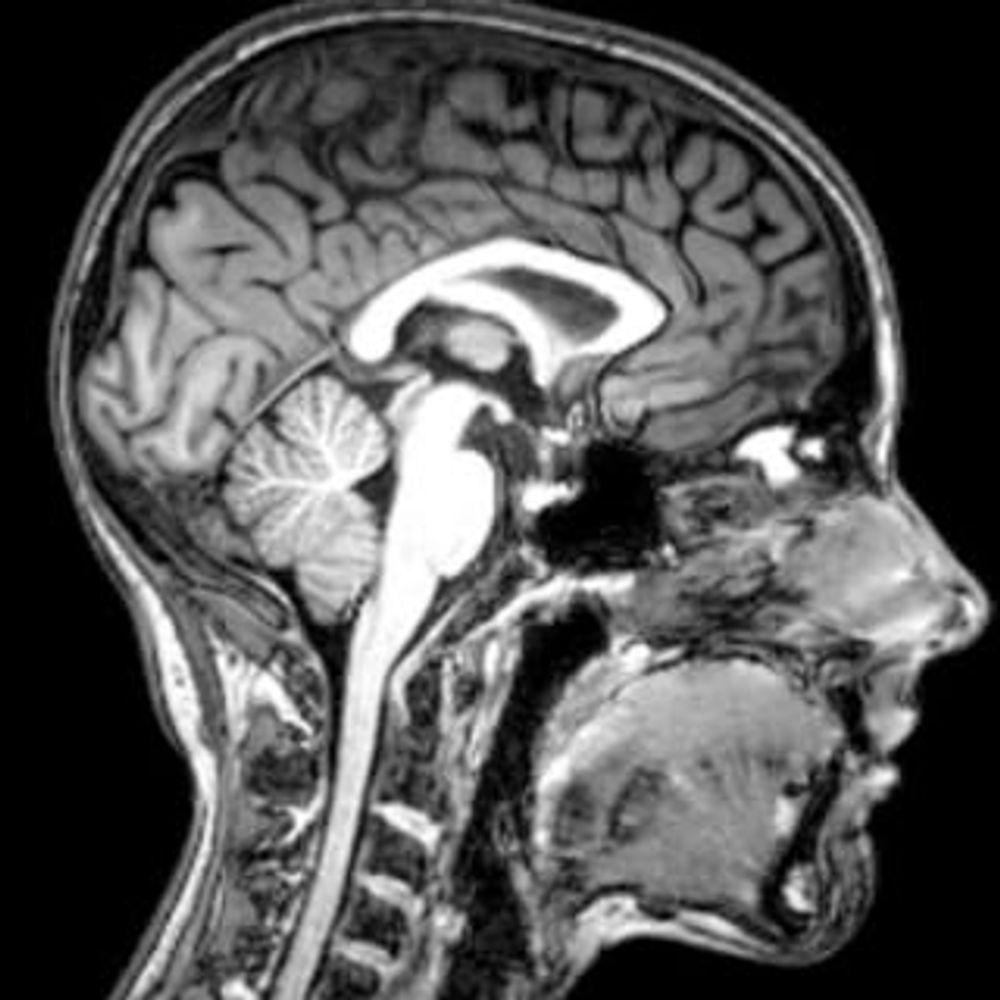
The manuscript of my @iai.tv opinion piece on why science as we know it can't explain consciousness is now also on Philpapers at: philpapers.org/archive/LISW...
05.02.2026 09:04 — 👍 7 🔁 1 💬 0 📌 0
@clist.bsky.social
Professor of Philosophy and Decision Theory, LMU Munich. Co-Director of the Munich Center for Mathematical Philosophy. Account used for academic purposes. Further info at: https://christianlist.net/
The manuscript of my @iai.tv opinion piece on why science as we know it can't explain consciousness is now also on Philpapers at: philpapers.org/archive/LISW...
05.02.2026 09:04 — 👍 7 🔁 1 💬 0 📌 0
The manuscript of my @iai.tv opinion piece on why science as we know it can't explain consciousness is now also on Philpapers at: philpapers.org/archive/LISW...
05.02.2026 09:04 — 👍 7 🔁 1 💬 0 📌 0
Another older paper presents an axiomatic characterization of plurality rule, generalizing May's theorem about majority voting. Interestingly, if the balloting format allows each voter to vote for more than one candidate, then approval voting, not plurality-rule, is supported by similar conditions.
30.01.2026 15:33 — 👍 1 🔁 0 💬 0 📌 0
And a second older paper: philpapers.org/rec/LISSCT-2.
30.01.2026 13:55 — 👍 2 🔁 0 💬 1 📌 0
I'll be uploading on Philpapers the preprints/manuscripts of some older papers, for continuing green open access, beginning with this one: philpapers.org/rec/LISXWW
30.01.2026 07:46 — 👍 10 🔁 0 💬 1 📌 0New on the Archive:
DeBrota, John B. and List, Christian (2026) A Heptalemma for Quantum Mechanics. [Preprint]
https://philsci-archive.pitt.edu/27977/

Newly published: "Interview with Christian List", in Catherine Herfeld (@cherfeld.bsky.social), Conversations on Rational Choice, @universitypress.cambridge.org, 2025, philpapers.org/archive/LISI...
23.12.2025 11:10 — 👍 18 🔁 8 💬 0 📌 0
🔥 My book Conversations on Rational Choice is finally out: Conversation partners include Kenneth Arrow, Gary Becker, C. Bicchieri, D. Kahneman, P. Suppes, Christian List, Vernon Smith, Tom Schelling, L.A.Paul, C. Camerer, Martin Shubik, R. Kranton, and many others. www.cambridge.org/core/books/c...
16.01.2026 20:13 — 👍 30 🔁 16 💬 0 📌 2
What action-guiding judgments should we rely on in cases of moral uncertainty? We show that the problem of moral uncertainty resolution can be modelled as a belief-binarization problem: how to arrive at all-out (“accept/reject”) judgments on some propositions based on our credences in them.
19.12.2025 13:06 — 👍 9 🔁 2 💬 0 📌 1
What action-guiding judgments should we rely on in cases of moral uncertainty? We show that the problem of moral uncertainty resolution can be modelled as a belief-binarization problem: how to arrive at all-out (“accept/reject”) judgments on some propositions based on our credences in them.
19.12.2025 13:06 — 👍 9 🔁 2 💬 0 📌 1
We present a seven-pronged no-go result for quantum mechanics (QM). Seven initially plausible theses about physical reality are jointly inconsistent with QM, while any six are consistent. Different interpretations of QM can then be taxonomized in terms of which theses they retain and which not.
15.12.2025 10:49 — 👍 11 🔁 3 💬 0 📌 0
We present a seven-pronged no-go result for quantum mechanics (QM). Seven initially plausible theses about physical reality are jointly inconsistent with QM, while any six are consistent. Different interpretations of QM can then be taxonomized in terms of which theses they retain and which not.
15.12.2025 10:49 — 👍 11 🔁 3 💬 0 📌 0
The 2026 application round for the MA in Logic and Philosophy of Science at @lmumuenchen.bsky.social is now open. Please help us spread the word. www.philosophie.lmu.de/en/study/deg...
17.11.2025 09:59 — 👍 8 🔁 10 💬 0 📌 0
The criteria for free will in AI systems are similar to those for free will in corporate agents. The key question is whether the kinds of non-biological entities that increasingly play decision-making roles in society (whether corporate or AI) should be viewed as intentional agents with free will.
05.09.2025 13:32 — 👍 3 🔁 1 💬 1 📌 1
Can AI systems have free will? - das fragt unser Mitglied
@clist.bsky.social im folgenden #OpenAccess - Artikel:
link.springer.com/article/10.1...
#KI #AI #KuenstlicheIntelligenz #ArtificialIntelligence #FreierWille #FreeWill #Philosophy #Philosophie

Here is a broader discussion of the parallels between corporate agency and AI. Both involve non-human goal-directed agents that affect the social world, often in high-stakes settings, and so they raise similar moral and regulatory challenges, which we must address for the sake of protecting humans.
08.09.2025 08:48 — 👍 3 🔁 1 💬 0 📌 0
Here is a broader discussion of the parallels between corporate agency and AI. Both involve non-human goal-directed agents that affect the social world, often in high-stakes settings, and so they raise similar moral and regulatory challenges, which we must address for the sake of protecting humans.
08.09.2025 08:48 — 👍 3 🔁 1 💬 0 📌 0
The criteria for free will in AI systems are similar to those for free will in corporate agents. The key question is whether the kinds of non-biological entities that increasingly play decision-making roles in society (whether corporate or AI) should be viewed as intentional agents with free will.
05.09.2025 13:32 — 👍 3 🔁 1 💬 1 📌 1
Thrilled to announce that Sebastian Bender is joining LMU Munich as Professor of Early Modern Philosophy. His expertise in 17th-18th c. metaphysics & epistemology (Leibniz, Spinoza, Kant) will boost our History of Philosophy section. Welcome, Sebastian! sebastianbender.net
08.07.2025 15:36 — 👍 15 🔁 2 💬 0 📌 0
Here is a repost of a talk on the picture of free will that lies in the background. Free will, I argue, requires intentional agency, alternative possibilities, and causal control. Free will is a multiply realizable capacity, which can occur not only in biological agents but also in artificial ones.
04.09.2025 08:56 — 👍 2 🔁 0 💬 0 📌 0
To determine whether an AI system has free will, we shouldn't look for any mysterious property, ask if the system is unpredictable, or expect its algorithms to be indeterministic. We should ask: are there explanatory reasons to view the system as a choice-making agent with alternative possibilities?
02.09.2025 11:54 — 👍 30 🔁 8 💬 4 📌 2
To determine whether an AI system has free will, we shouldn't look for any mysterious property, ask if the system is unpredictable, or expect its algorithms to be indeterministic. We should ask: are there explanatory reasons to view the system as a choice-making agent with alternative possibilities?
02.09.2025 11:54 — 👍 30 🔁 8 💬 4 📌 2
Here is now the published version: doi.org/10.1007/s112...
24.08.2025 10:37 — 👍 2 🔁 1 💬 0 📌 0Another summer read from the MCMP.
11.08.2025 12:00 — 👍 1 🔁 1 💬 0 📌 0Now forthcoming in Synthese: "Can AI systems have free will?", preprint available at: philsci-archive.pitt.edu/26166/3/Free...
08.08.2025 15:31 — 👍 11 🔁 1 💬 2 📌 1
From why-why-why to global justice: LMU philosopher Laura Valentini asks fundamental questions about human coexistence. www.lmu.de/en/newsroom/...
04.08.2025 13:06 — 👍 5 🔁 2 💬 0 📌 0
Feeling what others feel: In a world battered by crises, what does empathy really mean? An interview with philosopher Monika Betzler on empathy and morality.
www.lmu.de/en/newsroom/...
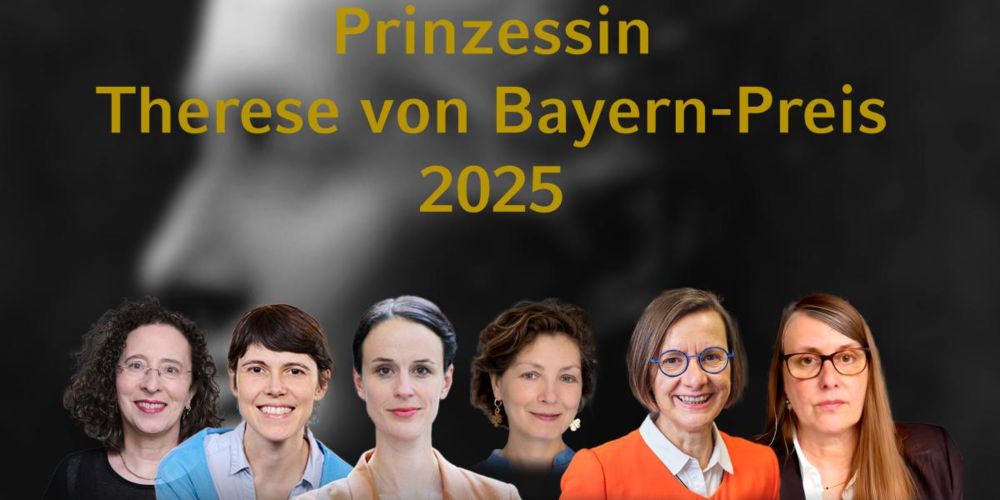
LMU philosophers Prof. Monika Betzler and Prof. Laura Valentini have each been awarded a Princess Therese of Bavaria Prize 2025. www.lmu.de/en/newsroom/...
04.08.2025 12:15 — 👍 1 🔁 2 💬 0 📌 0
At this year's MCMP Summer School, we had wonderful lectures by Professors Francesca Boccuni (San Raffaele), Hilary Greaves (Oxford), and Alyssa Ney (LMU). Many thanks to our speakers and especially to the fabulous participants from all over the world! www.mathsummer.philosophie.uni-muenchen.de
01.08.2025 15:51 — 👍 7 🔁 1 💬 0 📌 1
Recently published: "A quadrilemma for theories of consciousness", by Christian List, Philosophical Quarterly, 2025, academic.oup.com/pq/article/7...
13.06.2025 07:45 — 👍 15 🔁 7 💬 0 📌 0