
💥New paper alert! Dyadic Decisions About Effort: How Caregivers Shape Young Children’s Persistence (with @reutshachnai.bsky.social)
One of my favorites! If you’re curious about what we’ve been up to in @leonardlearnlab.bsky.social, take a look!
journals.sagepub.com/doi/10.1177/...
03.02.2026 13:49 —
👍 68
🔁 28
💬 2
📌 0
Yay!! 🤩
14.01.2026 21:31 —
👍 1
🔁 0
💬 0
📌 0
Thank you Aleija!! 😊
14.01.2026 21:30 —
👍 0
🔁 0
💬 0
📌 0
APA PsycNet
Here's the paper: doi.org/10.1037/xge0.... It was so so fun to think and write with this group! Stay tuned for more 🥳
14.01.2026 15:03 —
👍 0
🔁 0
💬 0
📌 0
Our findings support the account that people flexibly evaluate disparate impact policies in response to context, and we identify strong justifications as a lever that promotes moral acceptance of these policies across development. (6/7)
14.01.2026 15:03 —
👍 0
🔁 0
💬 1
📌 0
Finally, politically conservative adults were more accepting of the disparate impact policy when it impacted girls, but not when it impacted boys (a school club only admitted children with long hair). (5/7)
14.01.2026 15:03 —
👍 0
🔁 0
💬 1
📌 0
But, when provided with strong justification for the policy ("the short-hair rule prevents harm"), acceptance of the policy increased. A circular justification ("because I make the rules") did not increase acceptance. (4/7)
14.01.2026 15:03 —
👍 0
🔁 0
💬 1
📌 0
We presented a disparate impact policy that indirectly discriminated against girls (a school club only admitted kids with short hair). Participants (5-10-yos and adults) negatively evaluated the disparate impact policy starting at 7 years old, strengthening into adulthood. (3/7)
14.01.2026 15:03 —
👍 0
🔁 0
💬 1
📌 0
Some examples of disparate impact policies are voter ID laws and height/strength requirements in the workplace. We propose that these policies are often morally ambiguous, so people judge them flexibly depending on evidence of intentional discrimination. (2/7)
14.01.2026 15:03 —
👍 1
🔁 0
💬 1
📌 0

So excited to share this new paper, out in JEP:G with the incredible @jamieamemiya.bsky.social, Gail Heyman, and @carenwalker.bsky.social! We tested how children and adults reason about disparate impact policies: formally neutral laws or rules that are indirectly discriminatory. (1/7)
14.01.2026 15:03 —
👍 15
🔁 5
💬 1
📌 2
@xphilosopher.bsky.social and I tried to study what beliefs do (or at least, what people think they do).
Across hundreds of participant generated beliefs and first/third party ratings, we found they express identity and/or represent facts, in the pattern described in this post.
1/
26.12.2025 18:29 —
👍 14
🔁 7
💬 1
📌 0
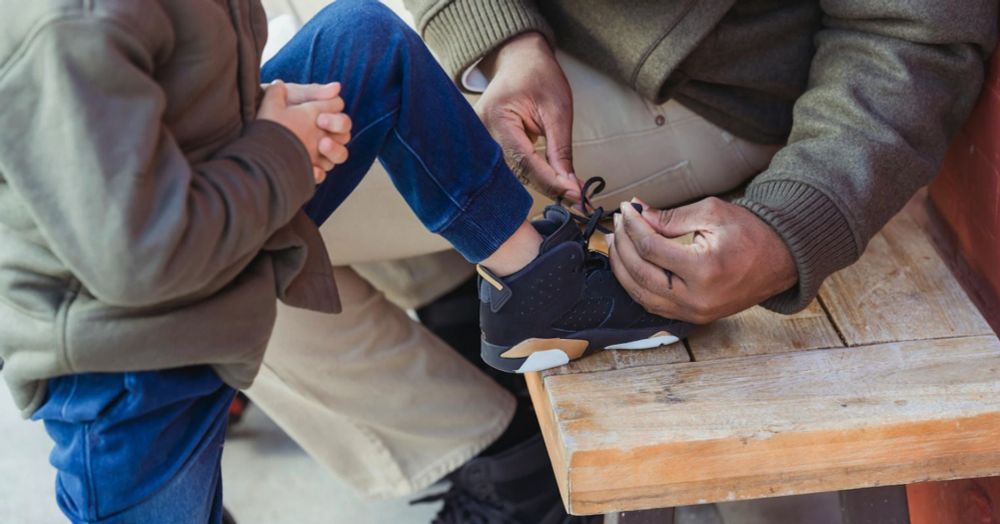
Overparenting Is Holding Kids Back—Here’s What to Do Instead
Overparenting can hinder kids' independence. Research shows that reframing everyday tasks as learning opportunities helps parents step back and let kids grow.
Overparenting can hold kids back—but our research shows that framing tasks as learning opportunities helps parents step back and foster kids' independence! ✨ Read more in our latest Psychology Today piece: www.psychologytoday.com/us/blog/deve...
@julia-a-leonard.bsky.social @mika-asaba.bsky.social
10.03.2025 16:34 —
👍 24
🔁 11
💬 1
📌 1
